 Haaland Has Seven Goals and Norway Runs Entirely Through Him
⚽️2026 FIFA WORLD CUP
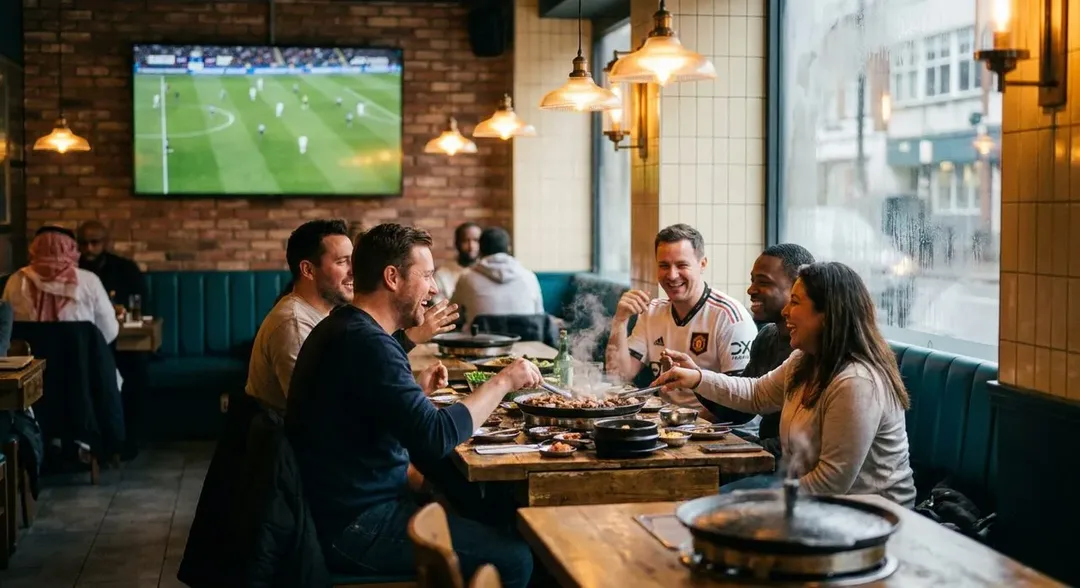
Koreatown Lights Up: LA's World Cup Viewing Scene When South Korea Plays
When the Taegeuk Warriors take the pitch at World Cup 2026, Vermont Avenue transforms into something between a street festival and a collective prayer. The galbi keeps coming, the soju never stops, and 40,000 hearts beat as one.
The 2002 ghost still walks Vermont
You feel it the moment South Korea's fixtures get announced. Restaurant owners on Vermont Avenue between 6th and Olympic start making calls. The projector screens come out of storage. Someone always mentions the 2002 semi-final run, when the national squad defied every prediction and Koreatown didn't sleep for a week. That energy—half euphoria, half disbelief—lives in the neighborhood's muscle memory. When World Cup 2026 kicks off across North America, with South Korea in Group A alongside Mexico, South Africa, and Czechia, the anticipation builds differently here. This isn't casual fandom. The restaurant managers know they'll run out of beer before halftime. The parking lots will overflow by kickoff minus-thirty. And if Son Heung-min scores, the roar will rattle windows three blocks away.
Where the screens go up first
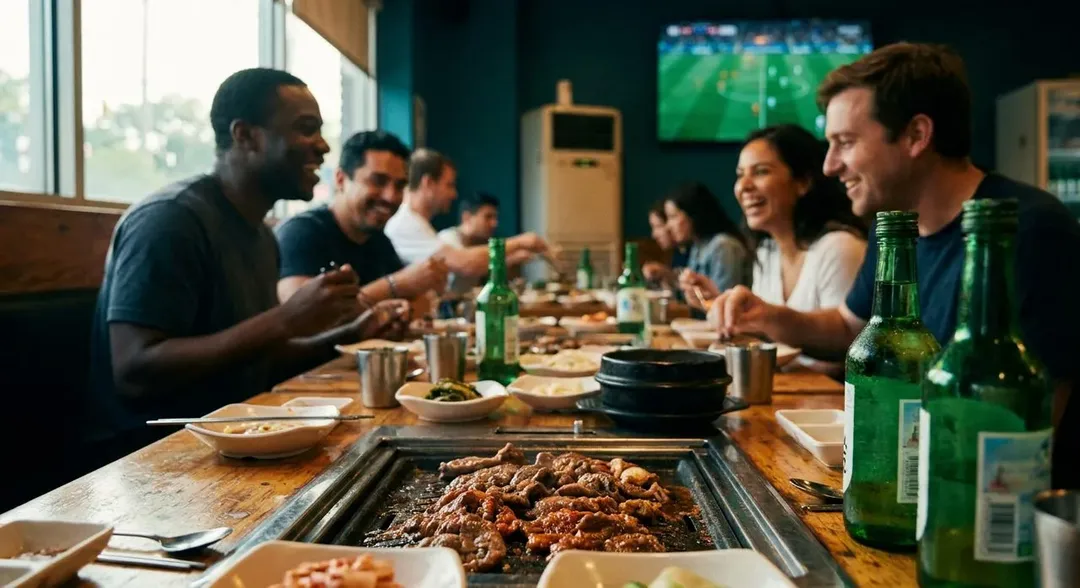
Korean BBQ restaurants on Vermont don't wait for official announcements. Their oversized screens get mounted in back dining rooms weeks before Korea's first match, visible from the prime tables that regulars book the moment fixtures drop. Across the neighborhood, galbi joints set up dual screens in their main halls, angled so the grill smoke doesn't obscure the action. The staff has a system: they pre-marinate extra short rib inventory and prep banchan stations that can turn over faster than usual. The restaurants have learned to keep the ventilation at maximum even before doors open—the combination of packed bodies, multiple grills running, and tournament tension creates its own microclimate. Request corner booths near the bar if you want optimal screen angles without neck strain.
The soju calculus
Koreatown's bars understand the mathematics of tournament drinking. A 90-minute match plus stoppage time, multiplied by nervous energy, divided by the number of dangerous counter-attacks Korea faces. The result: multiple bottles of soju per person for a group-stage match, scaling up if they reach the knockout rounds. The cramped spots with handwritten menus stock extra bottles before Korea plays. Their makgeolli goes fast too, especially among the older crowd who prefer the cloudy rice wine's lower proof for marathon viewing sessions. The bartenders at vintage cocktail lounges that become unexpected viewing venues perfect Korea-themed shots: soju, plum extract, and a whisper of citrus. Match days only.
Vermont Avenue closes itself
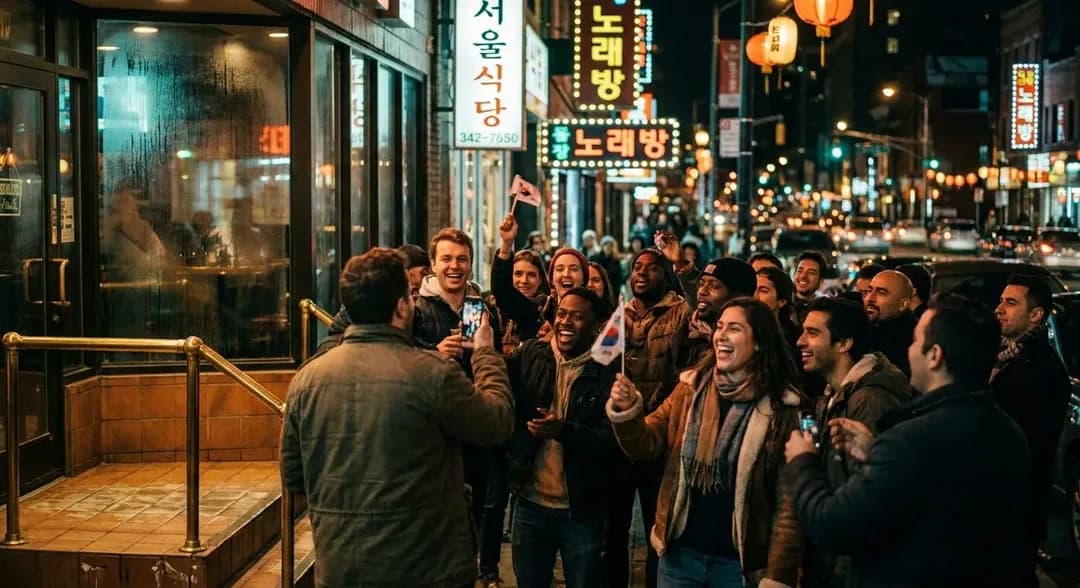
No official permits get filed, but when South Korea scores, Vermont Avenue between 7th and 8th effectively shuts down. People pour out of restaurants mid-meal, still holding their ssam wraps. Car horns become a percussion section. Someone always has a Korean flag the size of a beach towel. During past tournaments, when Korea has pulled off upsets, celebrations have lasted into the early morning hours, and the LAPD's Olympic Division has found the safest approach is to block the street and let it happen. Officers position themselves at intersections, directing traffic around the spontaneous street party. Expect the same approach in 2026, especially with Hong Myung-bo's squad in Group A. The noise ordinance exists in theory. In practice, the entire neighborhood has an unspoken agreement: tournament rules apply.
The generational split in viewing styles
Watch where people position themselves and you'll see the divide. First-generation immigrants claim the tables closest to screens, where they can dissect every tactical decision and argue about formation choices in rapid Korean. They've followed the national team for decades. They remember the lean years. Second and third-generation Korean Americans cluster near the bars, code-switching between English and Korean, posting social media stories between plays. This creates a natural ecosystem: the dining rooms become tactical analysis seminars, while the bar areas pulse with younger energy. Both groups unite during penalty kicks, when language becomes irrelevant and everyone just screams. The managers position themselves between both sections, translating commentary and keeping soju flowing to both demographics.
The food that fuels four years of waiting
Galbi becomes sacramental during Korea matches. The short ribs hit the grill in waves, their marinade caramelizing into that essential char. Korea matches generate significantly more meat orders than typical weekend nights. The rhythm matters: you need something on the grill during tense defending, something to do with your hands. The kimchi jjigae that's been simmering since morning sells out by halftime of important matches. Ox bone soup, normally an older crowd favorite, becomes universal comfort food when Korea goes down a goal. The pajeon arrives in oversized rounds, crispy-edged and scallion-heavy, perfect for stress eating during corner kicks. Order it the moment you sit down. It takes time to prepare, and you'll want it ready before kickoff.
When the final whistle changes everything
Victory or defeat, the post-match hours reveal Koreatown's real character. Win, and the celebration migrates to the karaoke rooms on Western Avenue, where traditional songs and K-pop anthems blend into hours-long catharsis. Lose, and the neighborhood turns contemplative but not defeated—more soju, quieter conversations, already analyzing what needs to change for the next match. The restaurants stay open past normal closing. The staff is exhausted but wired. Owners have described cleaning up from Korea matches in silence, everyone still processing what they witnessed. By the time World Cup 2026 arrives, with matches at SoFi Stadium in nearby Inglewood and the tournament spanning the continent, Koreatown will be ready. The screens are in storage. The soju suppliers are on notice. Vermont Avenue is waiting.
Practical notes
Koreatown's viewing venues cluster along Vermont Avenue, Wilshire Boulevard, and Western Avenue, accessible via Metro B and D lines to Wilshire/Vermont station. Korean BBQ restaurants and bars throughout the neighborhood set up screens for Korea matches—reservations recommended when fixtures are announced. Street parking becomes difficult on match days; use public lots or metro in. Most venues open hours before Korea kickoff times. The neighborhood energy peaks for group stage and knockout matches. South Korea is in Group A with Mexico, South Africa, and Czechia; Son Heung-min leads the squad under head coach Hong Myung-bo. World Cup matches in the LA area take place at SoFi Stadium in Inglewood.
Tags: #KoreatownLA #WorldCup2026 #SouthKoreaFootball #VermontAvenue #KoreanBBQ #SojuNights #LAWorldCup #KoreatownEats #WorldCupViewing #GalbiAndGoals #TournamentFever #LAKoreanFood #KoreatownVibes #WorldCupLA #KoreanFootball
Please drink responsibly. Must be of legal drinking age.
All trademarks are the property of their respective owners.
Ask Karpo for more information.
Keep reading
- Haaland Has Seven Goals and Norway Runs Entirely Through Him
 World Cup Trophy Ceremony Timing Medals and Postmatch Celebrations
 Olise and France's Attack: The Semifinal Tactical Question