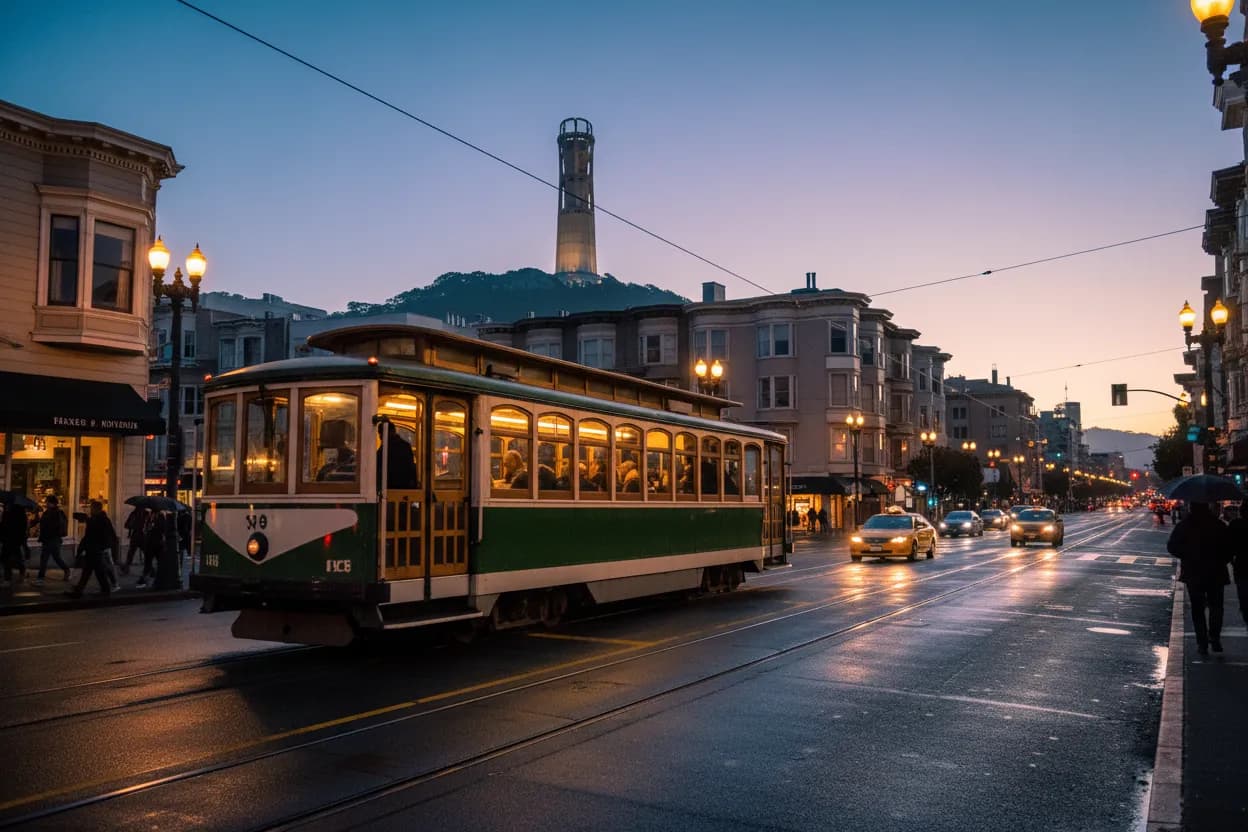
The locked headline joe amabile: A Practical San Francisco Neighborhood Guide should not send anyone chasing rumors across San Francisco. Treat the name as a timely search hook, then ask the practical question: which neighborhood plan can you execute with public information today? San Francisco rewards people who verify before they move. Muni conditions can change, public-space access can shift, and a busy corridor can feel completely different after a transit alert or a street-use update. This guide keeps the promise modest: no claimed appearance, no endorsement, no private access, and no guarantee that a trend maps to a local event. The goal is a usable city plan with transit checks, timing choices, access review, crowd risk, and a backup.
Want a fast sanity check before you cross town? Text Karpo with your starting point, target neighborhood, timing window, and backup preference for a verification-first plan.

Translate the headline into a neighborhood question
A celebrity-linked search term can create urgency, but urgency is not evidence. If joe amabile is what brought you here, the useful move is to translate curiosity into a normal San Francisco planning question: where can you spend two to four hours with the least wasted movement, the clearest transit path, and a backup if the first idea gets crowded or inconvenient?
Start with purpose, not rumor. Are you trying to meet a friend, take a walk, find a food stop, use a public park, or move between neighborhoods without driving? The official SFMTA site is built around that kind of task-based planning: it offers a Trip Planner and separates ways to get around by Muni, walking, biking, driving and parking, taxi, and accessibility. That matters because a neighborhood guide is only useful if it survives the trip from your door to the curb.
The cleanest plan is public and repeatable. Pick one primary neighborhood area, one nearby second choice, and one trigger for switching plans. A trigger can be simple: a delay alert on your route, a travel update affecting the destination, an access concern on an official page, or a crowd level that makes the outing stop feeling worth it.
Choose the area by the actual task
San Francisco is small on a map and slow in real life when your route is poorly chosen. Do not choose a neighborhood because a name is trending. Choose it because the task fits the geography. If your task is transit access, use SFMTA’s Muni routes and stops information before you commit. If your task is a visitor-style day, SFMTA also maintains information for visitors on seeing San Francisco by Muni transit, bike, foot, or car.
For a current public-space example, SFMTA’s Travel & Transit Updates list includes Hayes Valley Shared Spaces on Fridays and Saturdays in August 2026. That does not mean it is the right plan for every reader, and it does not prove anything connected to joe amabile. It simply shows why official updates matter: street conditions and public-space use can affect how a neighborhood feels, how you arrive, and whether you should keep a nearby alternative ready.
A practical city-scope choice looks like this: select a primary area that matches your errand or social plan, then check whether transit updates, service changes, or alerts affect the route. SFMTA’s homepage also flags service-change information, including Muni service changes starting Aug. 29. If your outing falls near a change window, treat yesterday’s route advice as stale until you verify it.
Use transit exits as planning anchors
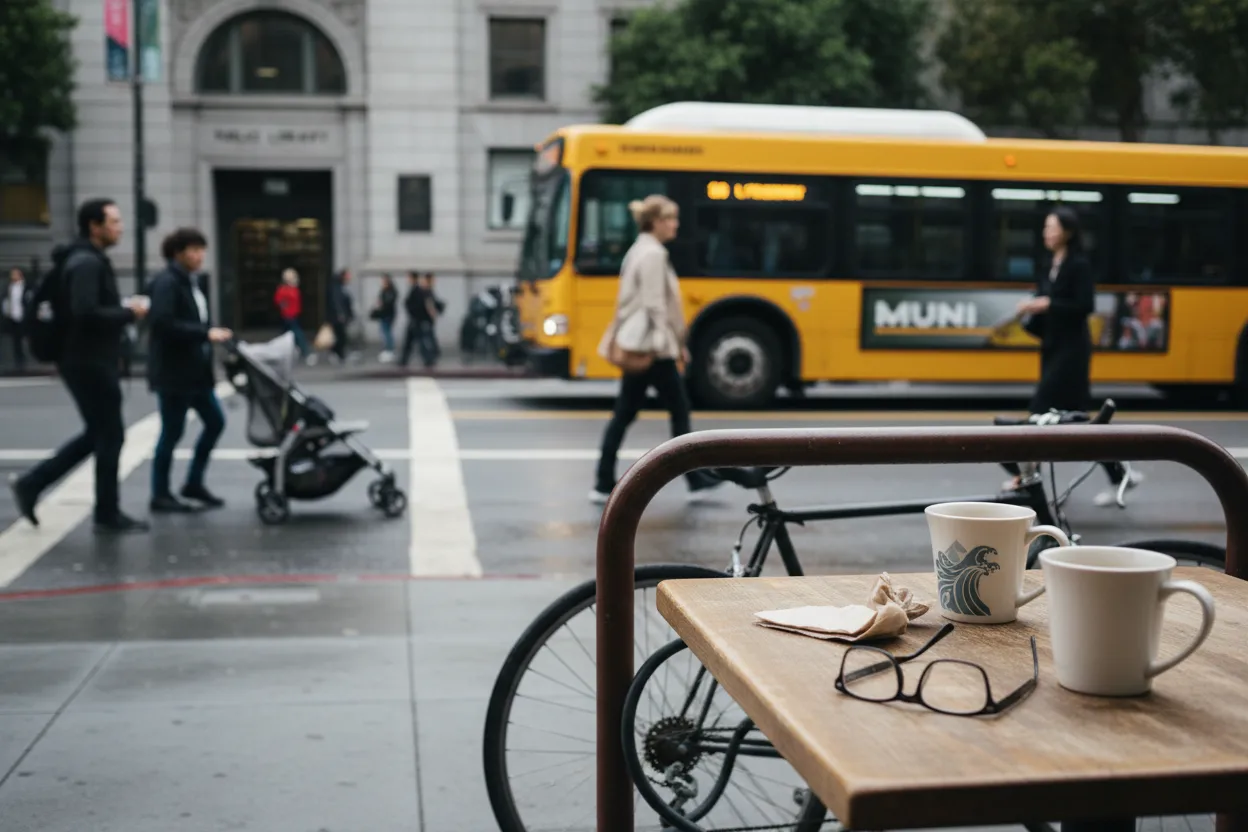
The most reliable San Francisco neighborhood plan begins at the exit, not the destination. Decide where you will get off Muni, where you will regroup if the platform or stop area is busy, and how far you are willing to walk before switching plans. SFMTA’s Trip Planner is the official place to test a starting location, ending location, and travel mode before you leave.
Build your timing around checks, not assumptions. Before departure, look at SFMTA alerts and Travel & Transit Updates. The official page shows that alerts can be specific and temporary; one example in the extract notes that a delay at Randolph and Orizaba had cleared and inbound M Ocean View service was resuming. The lesson is not that this exact issue affects you now. The lesson is that conditions can change quickly enough to justify one last check.
If you are traveling with someone who needs step-free routing, less walking, or extra transfer time, make accessibility part of the first plan rather than an apology later. SFMTA lists accessibility among its getting-around resources. Verify the relevant route and stop information on the official page, and do not rely on a social post, an old screenshot, or a memory of how a station worked last month.
Add one indoor and one outdoor backup
Every neighborhood plan should have two backups: one indoor and one outdoor. The indoor backup is for weather, fatigue, crowding, or a plan that runs short. The outdoor backup is for full rooms, long waits, or the simple need to keep moving. Because access, hours, reservations, and closures can change, verify each backup on its official page before you treat it as available.
For outdoor planning, use San Francisco Recreation and Park information as the verification source for park-related details. The provided official-source extract notes that the site should be checked directly because rendering failed during review. That is exactly the right mindset for a local guide: do not assume a lawn, court, restroom, trail, or facility is usable just because it appears in a map result.
For an indoor backup, choose a public-facing place with an official page you can check before leaving, then keep it close enough to your transit anchor that switching does not become a second trip. The backup is not a consolation prize; it is what lets you stay calm when a corridor is crowded, a route is delayed, or online attention has sent more people into the same part of town than expected.
Avoid treating online attention as a local promise
There is a difference between a searchable name and a San Francisco fact. This article does not claim that joe amabile is appearing in the city, affiliated with any local venue, reachable through any neighborhood plan, or connected to a public event. If another page implies otherwise, ask for an official source before changing your route, spending money, or waiting in a crowd.
Crowd risk is still real even when the premise is fuzzy. A festival, a street-use update, a service change, or a cluster of people following the same vague tip can alter your experience. SFMTA’s Travel & Transit Updates include public notices such as the SF Pizza, Bagel, Beer Festival listed for Saturday, August 15, 2026. Details like that should be checked on the official update before you route through or around the area.
The skeptical approach is not negative; it is local. San Franciscans learn to separate what is happening online from what is happening at the curb. If the only evidence for a plan is a repost, a caption, or a trend, downgrade it to entertainment and keep your actual itinerary based on transit, access, official updates, and a backup you can reach.
Verify conditions before crossing the city
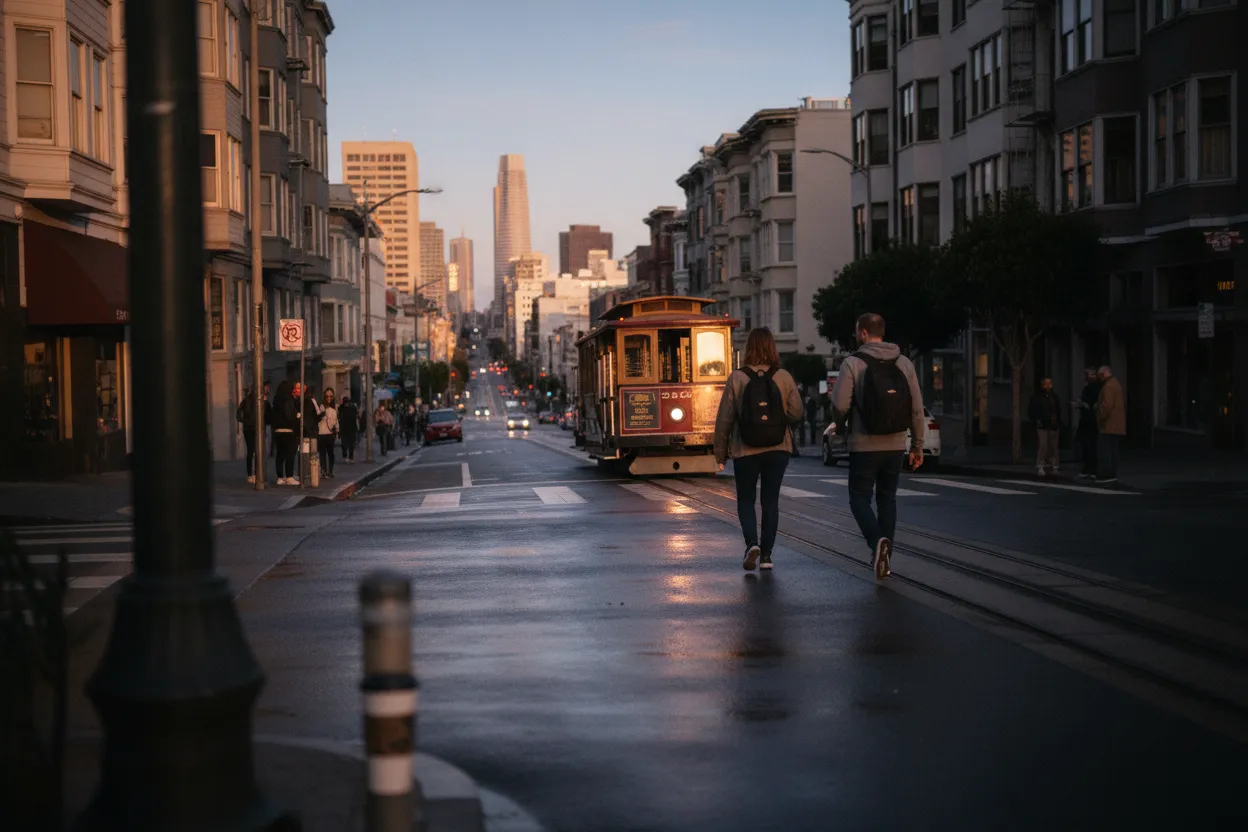
Use a short verification sequence before you leave: check SFMTA’s Trip Planner for the route, scan alerts, review Travel & Transit Updates, confirm any park or public-space detail on the relevant official page, and decide your switch point. If you are outside San Francisco and need city service help, SFMTA lists 311 and an outside-SF number, along with TTY access and free language assistance.
Keep your plan timed but flexible. Set a latest-departure time, a latest-arrival time, and a no-drama cutoff for changing neighborhoods. If a route delay appears, if a public-space update affects your destination, or if your backup cannot be verified, do not force the original idea. San Francisco is easier when you let official information beat momentum.
The final version of the plan should fit in one message: primary neighborhood, transit route to verify, exit or stop area, indoor backup, outdoor backup, and the condition that makes you switch. That is the difference between chasing the energy around a headline and using it to build a sane public city day.
Tags: #AskKarpo #BeforeYouGo #neighborhood_guides #SanFrancisco #SFNeighborhoods #Muni #SFMTA #TransitPlanning #CityGuide #LocalLife #CrowdCheck #PublicSpaces #TravelUpdates #VerificationFirst
Sources consulted: sftravel.com · sfmta.com · sfrecpark.org
All trademarks are the property of their respective owners.
Ask Karpo first
Ask Karpo first when a San Francisco plan starts with online buzz instead of confirmed details. Send your starting point, time window, mobility needs, and preferred neighborhood, and Karpo can help turn the idea into a verified route, access check, and backup plan.


