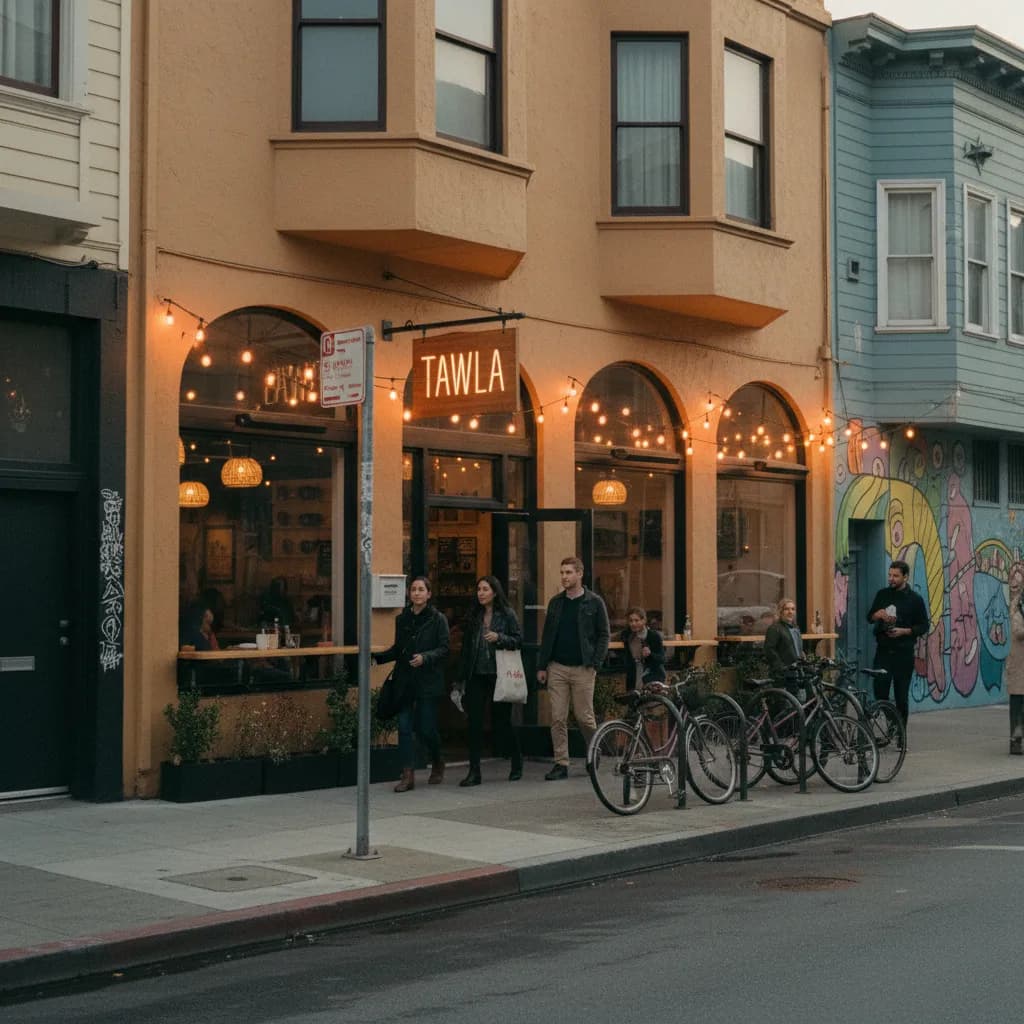
 Mission's Best Mediterranean Food: Tawla's Mezze and Wood Oven Magic
Neighborhood Guides
jeff dean: SOMA Tech Bookstore and Lecture Hall Walking Map
Use jeff dean as a search hook, then spend a weekend afternoon in SoMa testing how deep San Francisco’s public learning infrastructure really goes. This walking map favors verifiable stops, flexible research time, and solo-friendly places to compare books, talks, work rooms, and community access.
The keyword jeff dean is useful here because it points to a bigger local question: where can a motivated solo learner in San Francisco move from AI headlines into fundamentals, research habits, and community context without relying on hype? This SoMa walking map is built for a weekend afternoon with moderate walking, public transit backups, and a bias toward places you can verify before committing time. The route starts with public research depth near the Main Library, moves toward the tech and university-extension orbit around downtown and SoMa, then stretches toward Mission Bay and Potrero when you want a quieter second act. Treat bookstore AI shelves, coworking reading groups, cafe reputations, and lecture access as things to confirm the same day, not fixed promises. The value is the comparison: depth, openness, and friction.
Want to explore SOMA's AI research learning resources after reading about Jeff Dean? Text Karpo with your machine learning background level, available weekend hours, whether you prefer self-study or group learning, and walking distance comfort. We'll map a three-stop route through bookstores and public lecture spaces, send current AI event schedules, and provide a backup online learning community if you prefer remote engagement first.
Start With Public Research Depth Before Chasing Buzz
Begin at the San Francisco Public Library Main Library because it gives the walk a grounded baseline. The official library listing places Main at 100 Larkin Street, with weekend hours shown as Saturday 10 to 6 and Sunday 12 to 6 in the supplied extract. For an AI learning walk, that matters because a public library is more stable than a rumored meetup, a cafe sighting, or a fast-changing bookstore shelf. Use the first stop to search the catalog, scan computer science, mathematics, statistics, ethics, and business shelves, and decide what level you actually need. A headline about jeff dean may spark curiosity, but the library helps separate durable fundamentals from news-cycle fascination.
The decision tradeoff is depth versus serendipity. A library may not feel as socially charged as a coworking space, but it is usually the better first filter for a solo learner who wants to avoid shallow browsing. Check whether the event page has relevant talks or workshops before you go, since the supplied San Francisco Public Library events extract shows a large events system but does not guarantee any specific AI session for your chosen afternoon. If nothing fits, use the library anyway as a research anchor. Capture three questions before leaving: one technical, one career-oriented, and one cultural. Those questions make the rest of the walk sharper.
Walk Into SoMa With A Verification Mindset
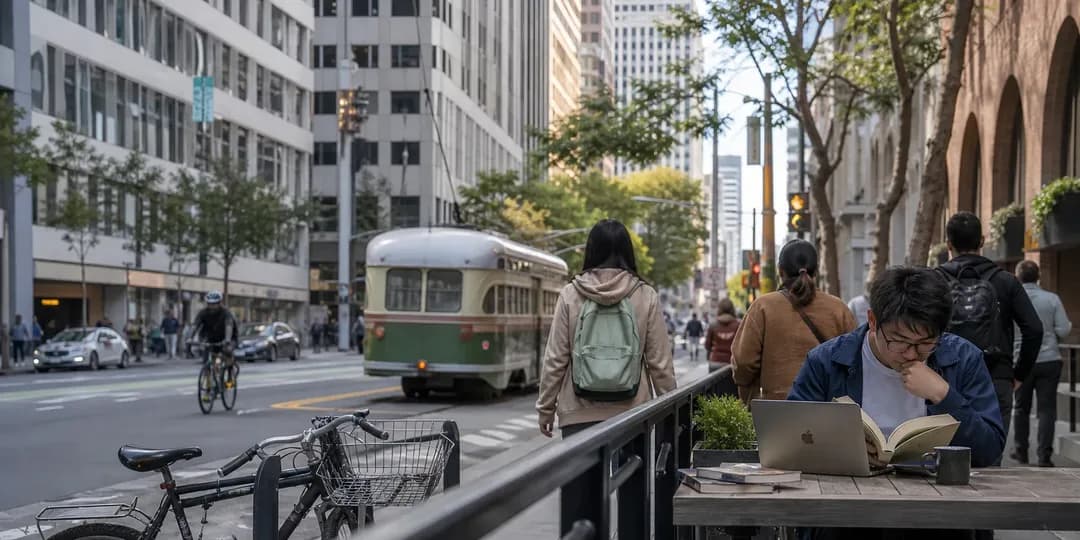
From Civic Center and the edge of Mid-Market, move into SoMa as a working neighborhood rather than a themed AI district. The official SFMTA extract is useful here because it frames San Francisco travel as a mix of Muni, walking, biking, driving, taxis, and accessibility resources. For this route, walking is the main mode, but Muni gives you a practical escape valve if weather, fatigue, or event timing changes the plan. Before leaving the first stop, open current transit and walking directions instead of assuming a straight line will be pleasant or efficient. A moderate route should feel investigative, not punishing, especially if you plan to read between stops.
Use SoMa for comparison rather than confirmation bias. A bookstore with strong technical shelves, a university-extension venue with public lectures, and a coworking space with visible programming all offer different kinds of access. The problem is that availability changes quickly: shelves rotate, lecture rooms may require registration, and reading groups can be private, paused, or member-only. Do not count a place as a meaningful stop until you have verified its current public page, event calendar, or front-desk policy. That extra step protects the afternoon from becoming a tour of locked doors. The goal is to map resource depth and community accessibility, not to prove that every AI rumor has a physical address.
Compare Bookstores, Lecture Rooms, And Work Tables
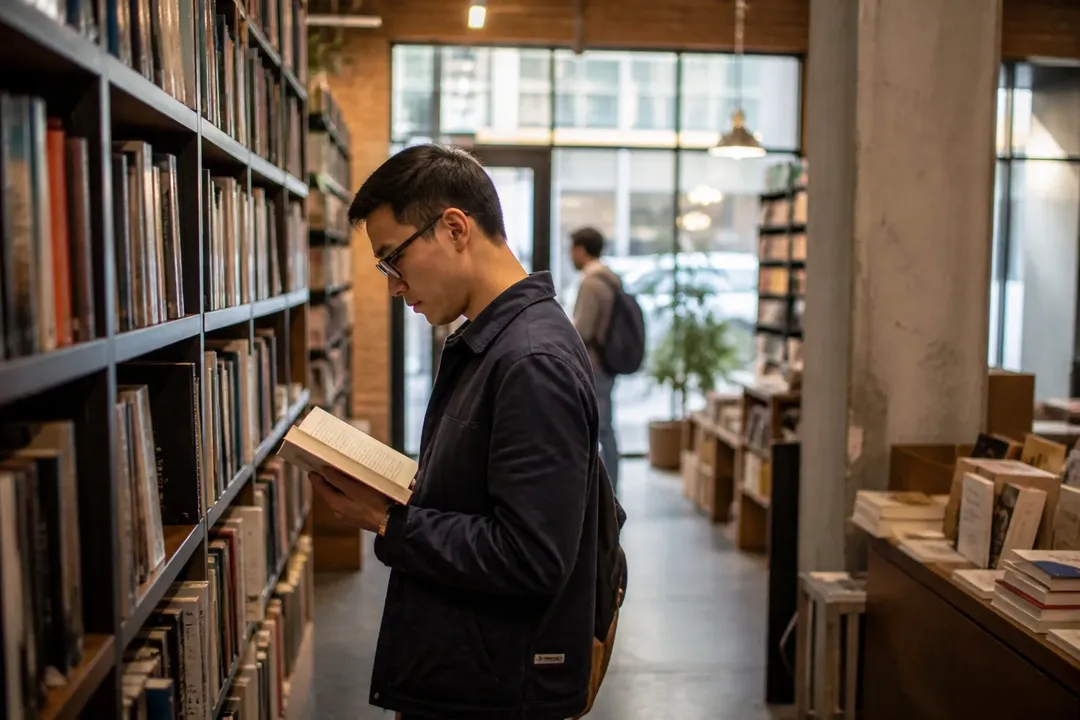
When evaluating a tech bookstore or general bookstore with an AI section, look past the label on the shelf. A useful AI shelf should let you climb from accessible introductions into machine learning, linear algebra, statistics, systems, product thinking, and responsible deployment. A thin shelf may still be worth a stop if it carries recent practitioner books or creates a strong browsing environment, but it should not become the whole plan. Your decision rule can be simple: if the store helps you pick a next reading path within fifteen minutes, stay; if it only mirrors trending names and covers, move on. The jeff dean search hook should lead to fundamentals, not celebrity adjacency.
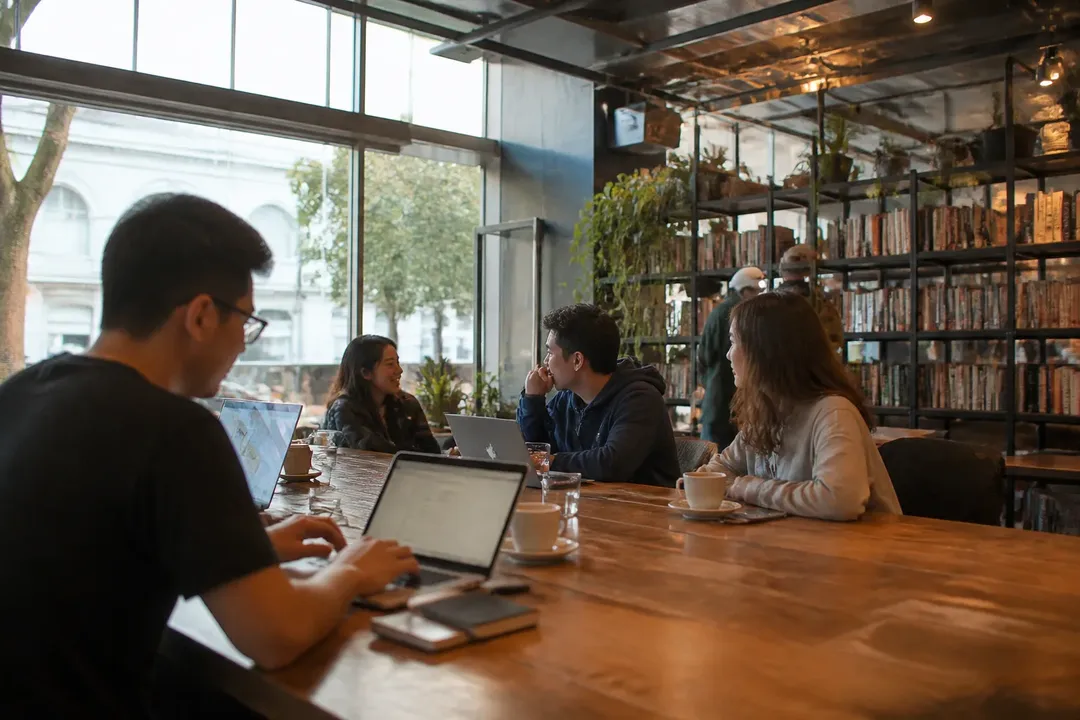
Lecture halls and university-extension spaces serve a different purpose. They are less about browsing and more about access: whether a talk is public, whether registration is required, whether recordings exist, and whether non-students can participate. A weekend afternoon may not align with live programming, so judge the venue by how clearly it publishes calendars and attendance rules. Coworking spaces sit between the two. They may host reading groups, founder sessions, demo nights, or study circles, but accessibility varies sharply. Some events welcome outsiders; others are effectively closed networks. The strongest stop is not always the most prestigious one. It is the one where a solo visitor can understand the rules before arriving.
Use Cafes As Reading Pauses, Not Proof Points
Cafes matter on this walk because serious solo learning needs pauses. They are good for reviewing notes, comparing two books, rewriting a question, or checking whether an event listing is worth a detour. They are not good evidence for claims about who works there. Without explicit source proof, do not assume Google researchers, AI founders, or specific public figures are present in any cafe. That boundary keeps the article useful and honest. Choose a cafe by practical criteria: enough seating visible from the door, a noise level that supports reading, a table setup that works for a laptop or notebook, and a location that does not trap you far from transit.
A good cafe stop also helps you decide whether to continue deeper into Mission Bay or Potrero. The supplied library extract lists Mission Bay Branch at 960 4th Street and Potrero Branch at 1616 20th Street, which gives the wider route two public alternatives if private spaces are closed or too crowded. Mission Bay may suit someone looking for a research-campus feel, while Potrero can make sense for a quieter branch-based reset. Because this is a weekend afternoon plan, check live conditions before extending the walk. The National Weather Service extract for August 6, 2026 flags dangerous heat in the wider West and elevated to near-critical fire weather conditions, so comfort and air quality should shape the route.
End With A Useful Map, Not A Perfect Itinerary
The best version of this SoMa walk ends with a personal learning map you can reuse. Mark each stop by what it actually gave you: deep reference material, current event leads, a possible reading group, a reliable table, or simply a transit connection. SFMTA’s travel updates page is worth checking before and during the outing because the supplied extract shows advisories can include walking, transit, traffic, events, stop relocations, and weekend disruptions. Around August 7 to 9, 2026, for example, the extract lists Outside Lands, while August 8 includes the Pistahan Parade advisory. Even if those are not in SoMa, citywide movement can still affect timing.
This route fits a solo learner with intellectual ambition who wants to turn AI news curiosity into a more serious habit. It is less ideal for someone who needs guaranteed networking, a scheduled class, or a fully indoor itinerary with no uncertainty. The practical payoff is clarity: you learn which resources are public, which require registration, which are worth a repeat visit, and which sounded stronger online than they felt in person. Use jeff dean and similar names as search entry points, then make the city answer a better question: where can you reliably learn, think, and meet the edge of a technical community without depending on unverified access or manufactured buzz?
Tags: #SanFrancisco #SoMa #NeighborhoodGuides #AIlearning #walkingmap #soloweekend #techculture
Sources consulted: Source 1: sfmta.com · Source 2: sfpl.org · Source 3: sfmta.com · Source 4: weather.gov
All trademarks are the property of their respective owners.
Ask Karpo first
Ask Karpo to turn this San Francisco idea into a current plan for your date, budget, companion, transit preference, and energy level. Karpo can narrow the route and flag what to verify before you go.
Ask Karpo for more information.
Keep reading
- Mission's Best Mediterranean Food: Tawla's Mezze and Wood Oven Magic
 Mourad SoMa: San Francisco's Premier Mediterranean Food Destination
 Alemany Farmers' Market Bernal Heights: Essential Food Places Near Me