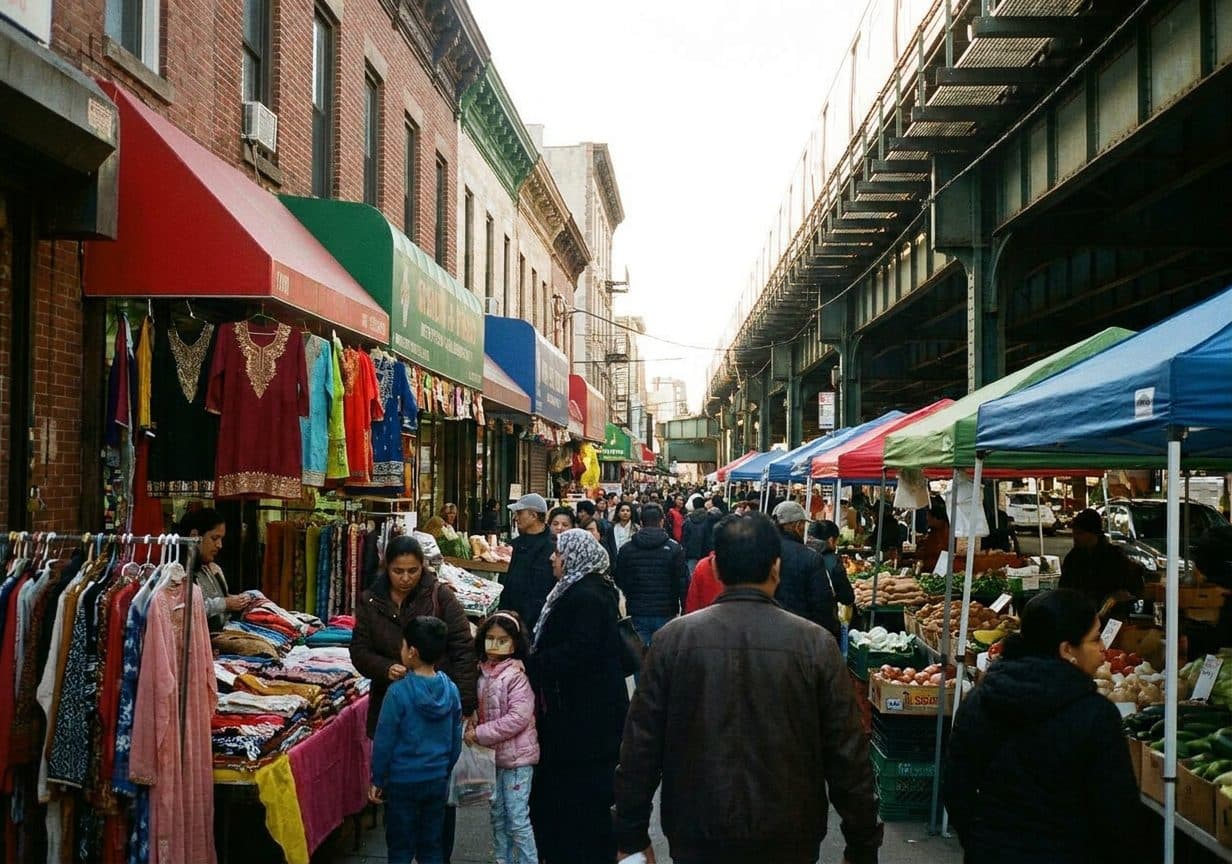
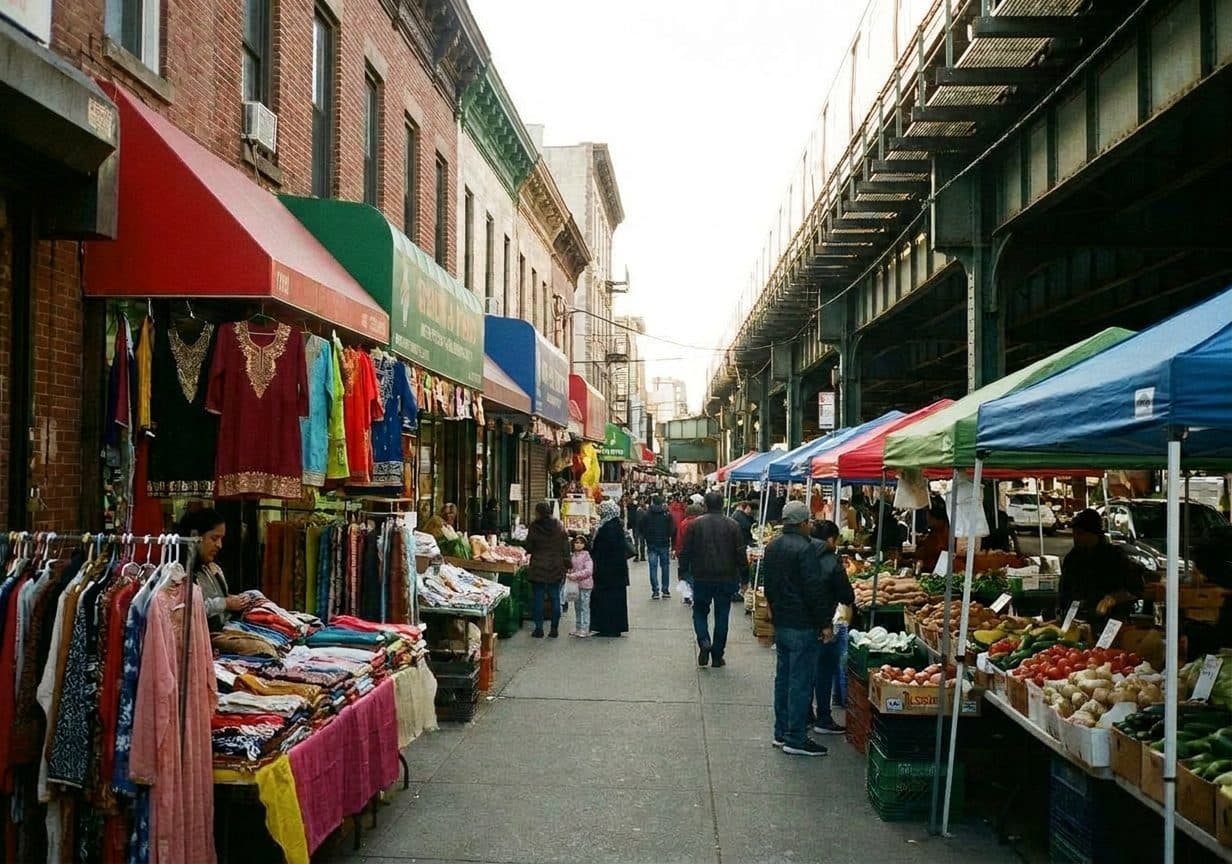
The 7 train deposits riders into a Sunday morning already in progress, the elevated platform above Roosevelt Avenue offering a view of the choreography below: families in church clothes crossing paths with vendors wheeling coolers, the smell of frying plantains rising to meet the screech of arriving cars. Jackson Heights, Queens, occupies roughly eight blocks where four continents conduct business in overlapping shifts, and Sunday is when the neighborhood runs at full capacity.
Where the Flags Tell the Story First
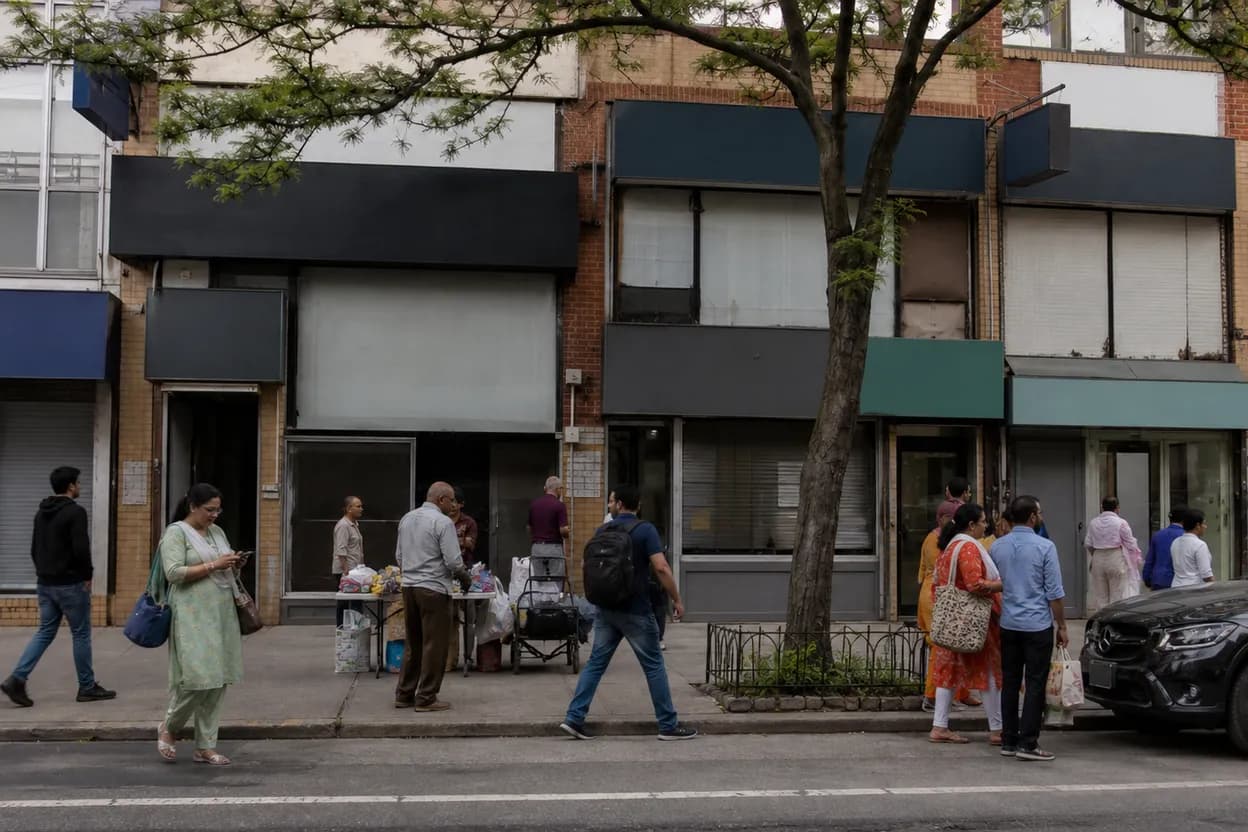
The stretch between 74th and 82nd Streets operates as a kind of open-air census, storefronts announcing allegiances through fabric and color. Lately, the yellow-blue-red of Ecuador has been everywhere—draped over bakery awnings, taped inside tienda windows, fluttering from rearview mirrors of double-parked sedans. The Germany vs Ecuador World Cup matchup sent a particular charge through the neighborhood, turning Sunday morning errands into something closer to a vigil. Ecuadorian families gathered early at cafes with wall-mounted televisions, nursing coffees that stretched into second and third cups. The Colombian tricolor appears in equal measure a few doors down, and the Bangladeshi green shows up closer to 73rd, while saffron and white mark the Indian grocers anchoring the eastern blocks. The flags function as wayfinding, a visual grammar that tells newcomers which cuisine awaits behind which door.
The Fruit Cart Negotiations of 79th Street
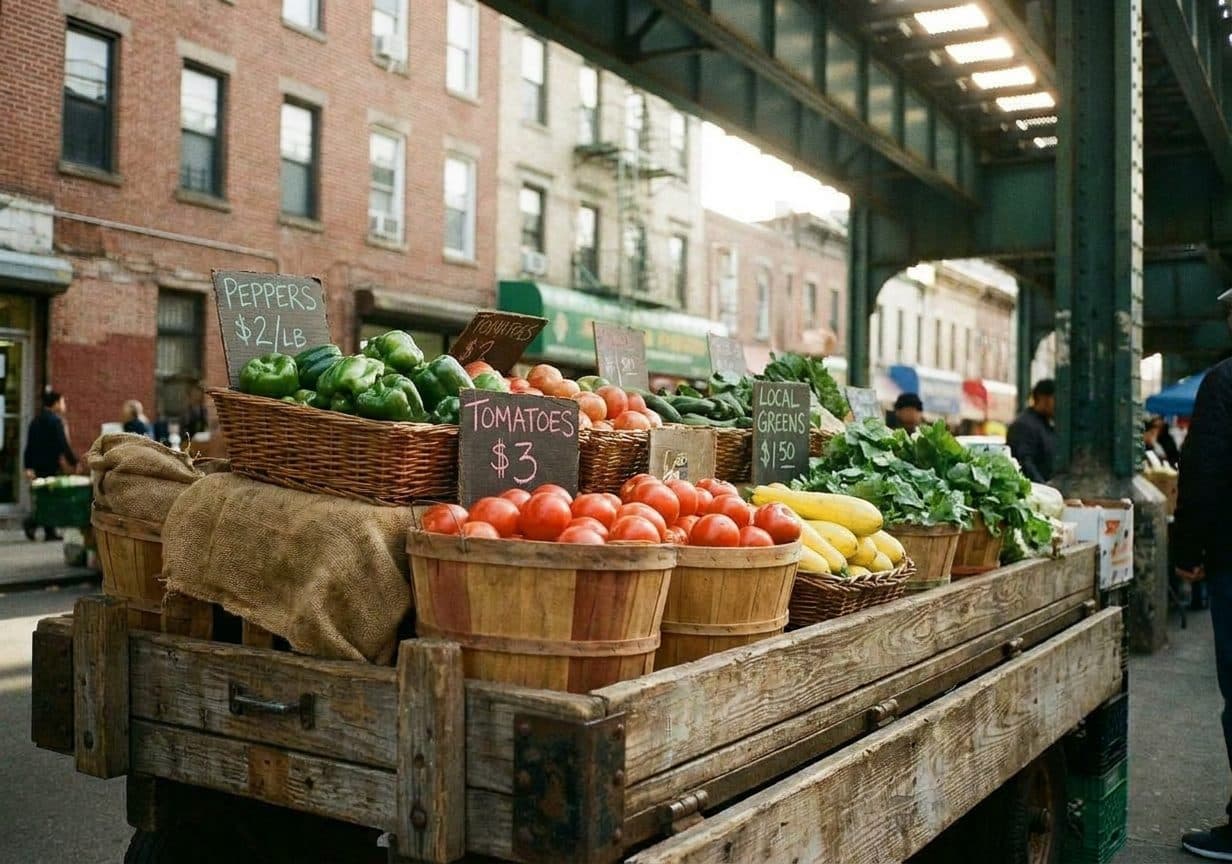
One particular block near 79th Street hosts a Sunday morning ritual that operates on unspoken rules. Ecuadorian and Colombian fruit vendors set up within shouting distance of each other, their carts heavy with mamey, guanábana, and maracuyá still dusty from whatever warehouse supplied them before dawn. The price negotiation here is less transaction than theater—regulars know to inspect the fruit slowly, to shake their heads at the first number offered, to walk three steps toward the competing cart before being called back with a better offer. First-timers who pay the initial ask mark themselves immediately. The vendors, for their part, seem to enjoy the performance, their rapid-fire Spanish punctuated by laughter when someone plays the game well. By noon, the best fruit is gone, and the carts begin their slow retreat.
A Sweets Shop That Keeps Sunday Hours
Tucked along the Bangladeshi stretch closer to 74th, one small sweets shop maintains a schedule that confounds the logic of commerce: open only on Sunday mornings, closed by early afternoon, dark the rest of the week. The display case fills with rasgulla, sandesh, and chamcham in colors that seem borrowed from a painter's palette—pale pink, saffron orange, the particular white of fresh chhena. The shop draws a specific crowd: older Bangladeshi men who arrive alone and leave with boxes destined for family gatherings, young couples splitting a single piece over tea, the occasional curious outsider who wandered in following the scent of cardamom. The owner works the counter with minimal conversation, wrapping orders in paper that absorbs the syrup, conducting transactions that feel almost ceremonial in their brevity.
Jackson Diner and the Unwritten Reservation
The neighborhood's most famous sit-down destination operates on a Sunday timeline that rewards the early and punishes the optimistic. Jackson Diner, the sprawling Indian restaurant that has anchored this stretch for decades, fills its Sunday seating without formal reservations—but the window for walking in without a wait closes sharply around 11 a.m. By quarter past, the line extends toward the door, families with strollers and groups of friends settling in for the duration. The lunch buffet draws most of the crowd, though the regulars at the end of certain tables order from the menu, their familiarity with the kitchen evident in requests for specific preparations. The room itself is vast by neighborhood standards, yet somehow every corner fills, the clatter of serving spoons against chafing dishes providing a constant percussion beneath the conversation.
The Sidewalk Between Services
Sunday mornings in Jackson Heights operate on a split schedule dictated by worship. The Catholic churches release their congregations around noon, sending waves of families in pressed shirts and careful dresses toward the restaurants and bakeries. The mosques follow their own calendar, and the Hindu temples add another layer to the foot traffic. The result is a sidewalk that shifts character by the hour—quiet and purposeful at 9 a.m., crowded and celebratory by 1 p.m. The bakeries understand this rhythm, timing their fresh batches of pan de bono and empanadas to emerge from ovens just as the hungry faithful appear. Those who find the neighborhood early catch it in its preparatory mode, vendors still arranging displays, shop owners hosing down sidewalks. Those who arrive late find the party already underway.
Practical Notes
The 7 train to 74th Street–Broadway delivers visitors to the heart of the action, the elevated station providing immediate orientation. The E, F, M, and R trains stop at Roosevelt Avenue as well, though the walk from those platforms adds a few blocks. Sunday parking approaches the impossible—residential streets fill early with churchgoers, and the commercial stretches enforce restrictions that vary block by block. Most food carts and bakeries operate on cash-preferred terms, though the sit-down restaurants accept cards. The neighborhood runs hot from mid-morning through late afternoon; those seeking the full experience should plan to arrive before 11 a.m. and stay through lunch. The crowds thin by 4 p.m., and by evening, the Sunday energy has largely dispersed, the flags still flying but the sidewalks returned to their weekday calm.
The Logic of the Layered Block
What makes Jackson Heights function is not diversity as abstraction but diversity as logistics—the practical reality of four communities sharing limited commercial real estate and finding ways to coexist that benefit everyone. The Ecuadorian bakery next to the Bangladeshi grocery next to the Indian jewelry shop creates foot traffic that feeds all three. The Sunday morning rush brings customers who might stop for sweets and stay for lunch, who might buy mangoes and notice the sari shop across the street. The neighborhood has been doing this for decades now, long enough that the arrangement feels less like accident than design. Whoever walks these blocks on a Sunday morning witnesses something rarer than it appears: a working model of the crowded, complicated city, seven blocks where the experiment continues.
Tags: #JacksonHeightsQueens #SundayInQueens #QueensFoodScene #EcuadorianFood #ColombianBakery #BangladeshiSweets #IndianCuisine #JacksonDiner #NYCNeighborhoods #QueensEats #RooseveltAvenue #WorldCupVibes #StreetFoodNYC #ImmigrantCuisine #QueensNY
Sources consulted: timeout.com · nytimes.com · ny.curbed.com
All trademarks are the property of their respective owners.
Ask Karpo first
Want to know which blocks are busiest by food activity on a given Sunday, whether the weekend street vendors are out in the 82nd Street stretch, and how to build a full afternoon from a single subway stop? Ask Karpo for a live Jackson Heights Sunday guide and a sequence that actually works.