 Haaland Has Seven Goals and Norway Runs Entirely Through Him
⚽️2026 FIFA WORLD CUP
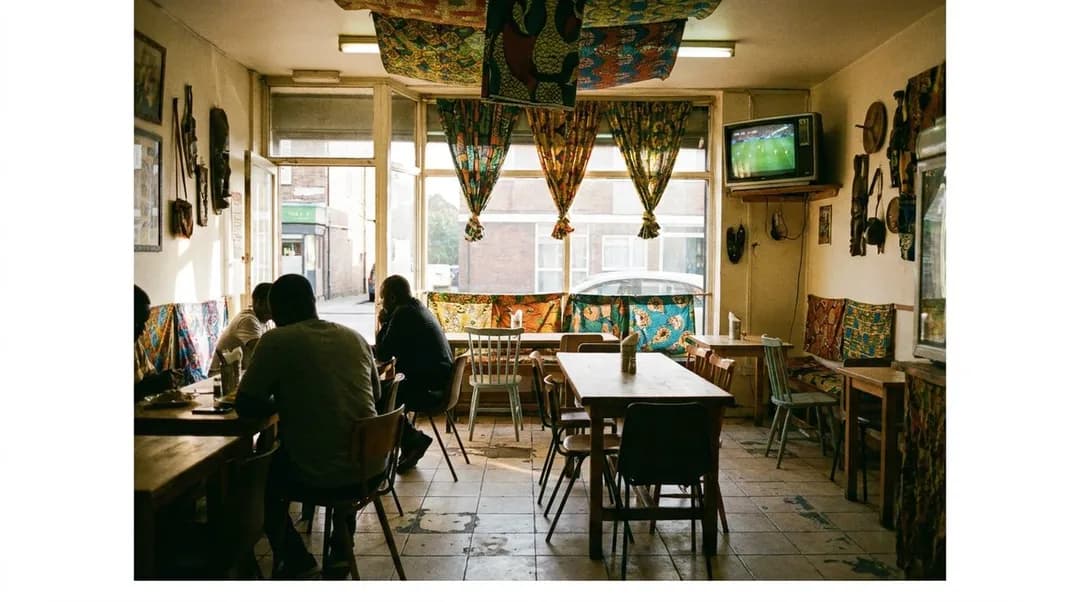
Harlem's West African World Cup Houses: Little Senegal Tunes In
116th Street's Senegalese and Central African restaurants in Harlem fill every chair for African World Cup fixtures in summer 2026, thieboudienne and cafe Touba on the table.
You walk west on 116th Street between Frederick Douglass and Adam Clayton Powell Jr. Boulevards on a June afternoon in 2026, and every storefront television glows blue with match coverage. The Senegalese flags draped across restaurant awnings ripple in the breeze while men in boubous lean against doorframes, smoking and arguing in Wolof about formation choices. This stretch of Harlem—Le Petit Senegal—becomes a living room for the entire West African diaspora when the World Cup arrives, and the restaurants that usually serve lunch to cab drivers and construction workers transform into packed viewing houses where thieboudienne gets passed family-style and strangers become brothers over ninety minutes of football.
The Morning Scramble for Prime Real Estate
Doors open at Chez Laye around 8am on match days, two hours before kickoff, and the owner's nephew Mohamed already has the projector warming up in the back room. You want the corner table near the kitchen—table seven, the one with the wobbly leg that gets propped with folded cardboard—because it gives you sightlines to both screens and puts you close enough to the kitchen that you catch the first plates of akara coming out hot. The regulars know to arrive before 9am for noon matches, claiming seats with prayer mats and jackets, then stepping outside for cigarettes and morning prayers at the mosque two blocks south on 114th. By 10am every chair fills, and latecomers stand three-deep along the back wall, plates balanced on upturned milk crates.
What Actually Lands on Your Table
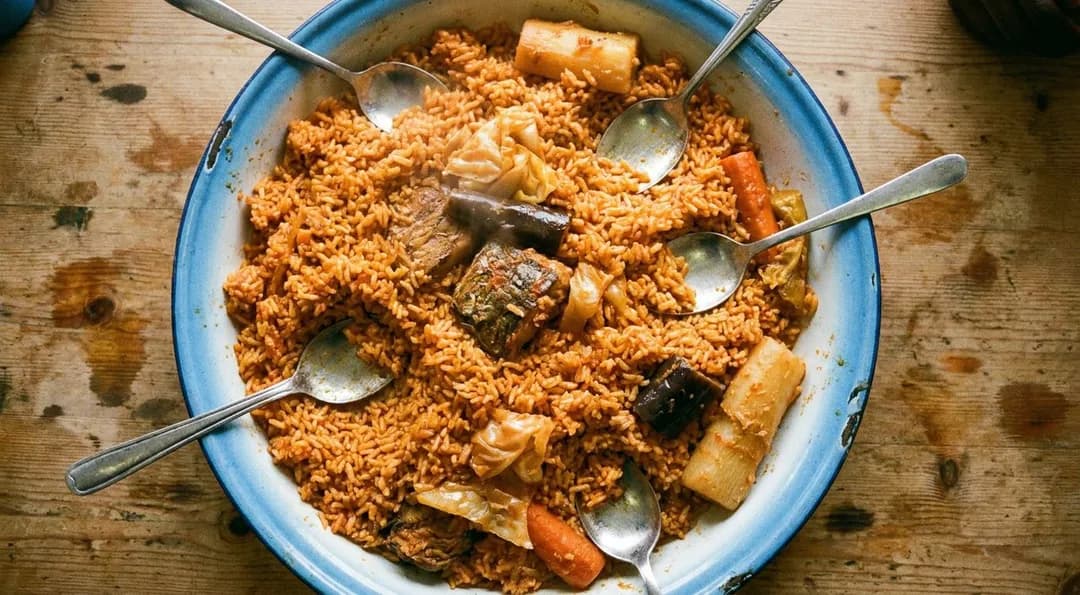
The menu shrinks to essentials during tournament weeks. You're getting thieboudienne—the Senegalese national dish of broken rice cooked in tomato and fish stock, served with grouper, cassava, cabbage, and carrots—or you're getting yassa poulet with its sharp onion marinade. At Cafe Rue Dix, they run a World Cup special: fifteen dollars gets you a heaping plate, a bottle of Gazelle beer from Senegal, and a glass of cafe Touba, the spiced coffee brewed with Guinea pepper and cloves that tastes like liquid earth and keeps you alert through extra time. The thieboudienne here comes with nokoss—the crusty, caramelized rice scraped from the bottom of the pot—which regulars request by name and which runs out by halftime. Don't ask for forks. You eat with your right hand, rolling rice into compact balls, and if you fumble it the aunties sitting nearby will demonstrate without being asked.
The Soundtrack Beyond the Broadcast
The television commentary runs in French, but the real audio track comes from the crowd. Every near-miss produces a collective hiss, a sucking of teeth that sounds like steam escaping. Goals trigger eruptions—chairs scraping, men leaping, the entire room surging forward—and then the immediate replay analysis in five languages simultaneously. Wolof dominates, but you hear Bambara, Fulani, Lingala, French, and English all layering over each other. The women working the kitchen bang wooden spoons against pots when Senegal scores, a rhythm that matches the drumming that spontaneously breaks out in the back corner where three guys from Kaolack keep djembes under their table. Between halves, someone always plugs their phone into the house speakers and plays Youssou N'Dour or Orchestra Baobab, and the energy shifts from anxious to celebratory even if the score doesn't warrant it yet.
The Unspoken Hierarchy of Seating
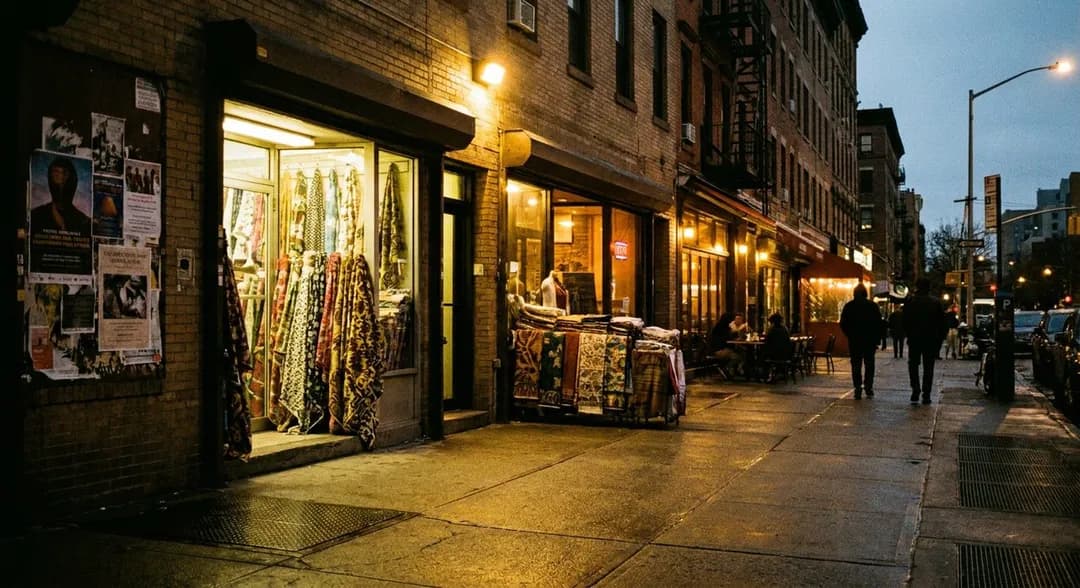
The tables nearest the main screen belong to the elders—men in their sixties and seventies who've been coming to this block since the 1980s, who remember when this strip was Dominican and before that Jewish. They get served first, their tea glasses refilled without asking, and when they speak during the match everyone else goes quiet. The younger guys, the livery drivers and construction workers still in their boots, take the tables by the windows where they can see the street. Tourists and curious outsiders get directed to the standing section unless they arrive with a regular who vouches for them. There's a white guy named Dave who's been coming to Keur N'Deye for six years—he speaks passable Wolof and once drove the owner's cousin to a hospital in Jersey at 3am—and he sits with the elders now, gets called "Dauda," receives extra pieces of fish in his thieboudienne.
The Economic Ecosystem of Match Day
The restaurants operate at a loss during World Cup weeks, charging 2018 prices for 2026 portions, but the owners understand the math differently. These viewing parties are investments in community infrastructure, in maintaining Le Petit Senegal as an actual neighborhood and not just a gentrification casualty. The real money flows around the edges: the women selling homemade thiakry—a sweet couscous pudding with yogurt—from Tupperware containers they carry table to table, five dollars a cup. The guys hawking counterfeit jerseys on the sidewalk between matches. The halftime rush to the Senegalese grocery next door where they triple their usual sales of Gazelle beer and bissap juice. After evening matches, when Senegal wins, the celebration spills into the street and the car services do brisk business shuttling people to the afterparties in the Bronx and Brooklyn, twenty dollars a head, four to a car.
When Your Team Isn't Playing
The non-Senegalese African matches draw smaller but equally intense crowds. When Cameroon plays, the energy shifts to Chez Khadim, three doors down, where the owner is Bamileke and the walls display Indomitable Lions memorabilia. Nigeria's matches pack Calabar Kitchen on 115th, though Senegalese fans still show up out of continental solidarity. The unwritten rule: you support all African teams until they face each other, and then the trash talk becomes operatic. During a hypothetical Senegal-Nigeria quarterfinal, the block would essentially split in half, with rival restaurants becoming temporary embassies. But for group stage matches against European or South American opponents, Le Petit Senegal unifies completely, every restaurant showing the same feed, the entire neighborhood functioning as one enormous living room with a shared emotional heartbeat.
Practical Notes
Most restaurants along the 116th Street corridor open at 8am on match days, with Chez Laye (at 2223 Frederick Douglass Blvd) and Cafe Rue Dix (2178 Frederick Douglass Blvd) being the largest. Arrive 90 minutes before kickoff for guaranteed seating. The B or C train to 116th Street-Columbia University puts you two blocks east. Cash strongly preferred—most places don't take cards under twenty dollars, and the ATM at the bodega on the corner charges a four-dollar fee. Plates run $12-18, drinks $3-6. Reservations aren't a thing, but if you call ahead and explain you're bringing a group, they'll try to hold a section. Matches involving African teams draw the biggest crowds; knockout rounds require even earlier arrival. The neighborhood stays lively until midnight after wins, with drum circles and dancing in the street. Respect the space—this isn't a theme park, it's someone's community center that you're being allowed to join.
Tags: #WorldCup2026 #LittleSenegal #HarlemEats #WestAfricanFood #Thieboudienne #SenegaleseCuisine #NYCHiddenGems #FootballCulture #DiasporaDining #AfricanWorldCup #HarlemNeighborhoods #CafeTouba #AuthenticNYC #FredDouglassBoulevard #CommunityViewing
Sources consulted: fifa.com · espn.com · timeout.com
All trademarks are the property of their respective owners.
Ask Karpo for more information.
Keep reading
- Haaland Has Seven Goals and Norway Runs Entirely Through Him
 World Cup Trophy Ceremony Timing Medals and Postmatch Celebrations
 Olise and France's Attack: The Semifinal Tactical Question