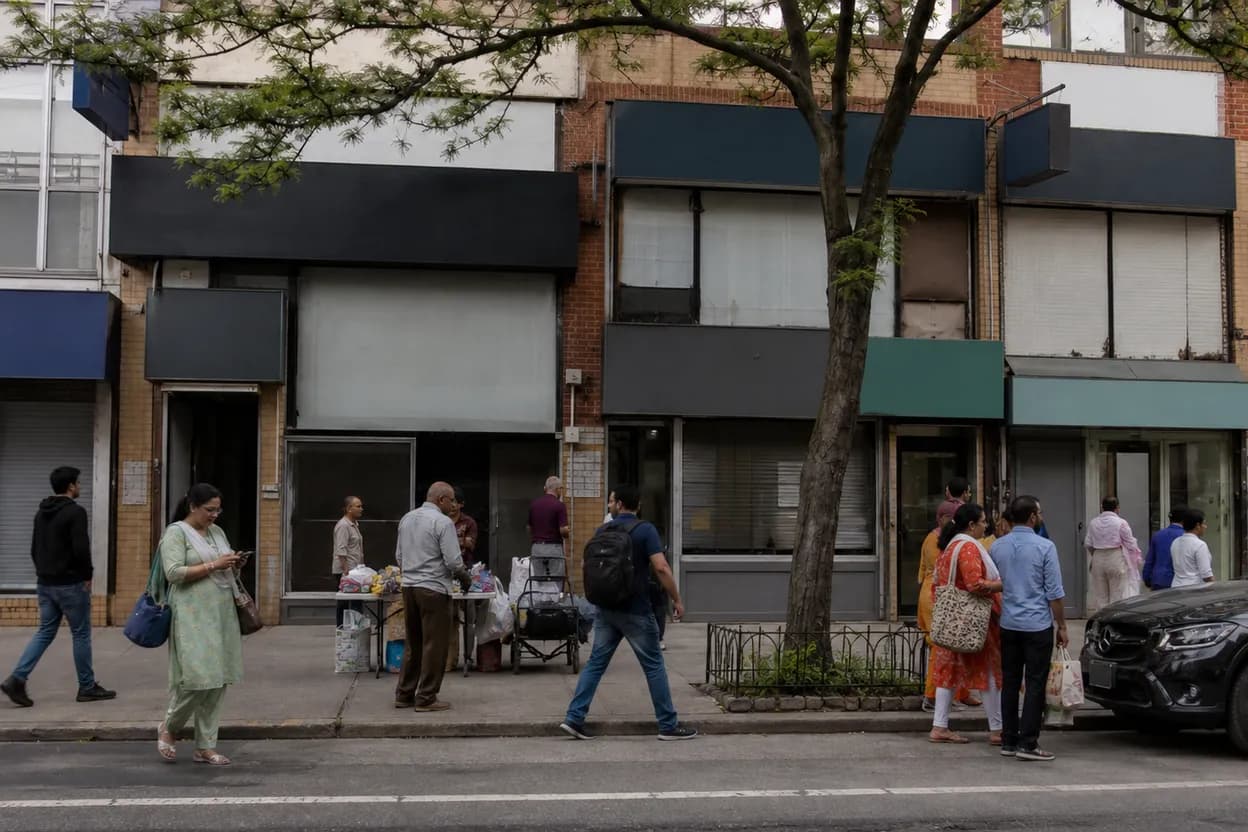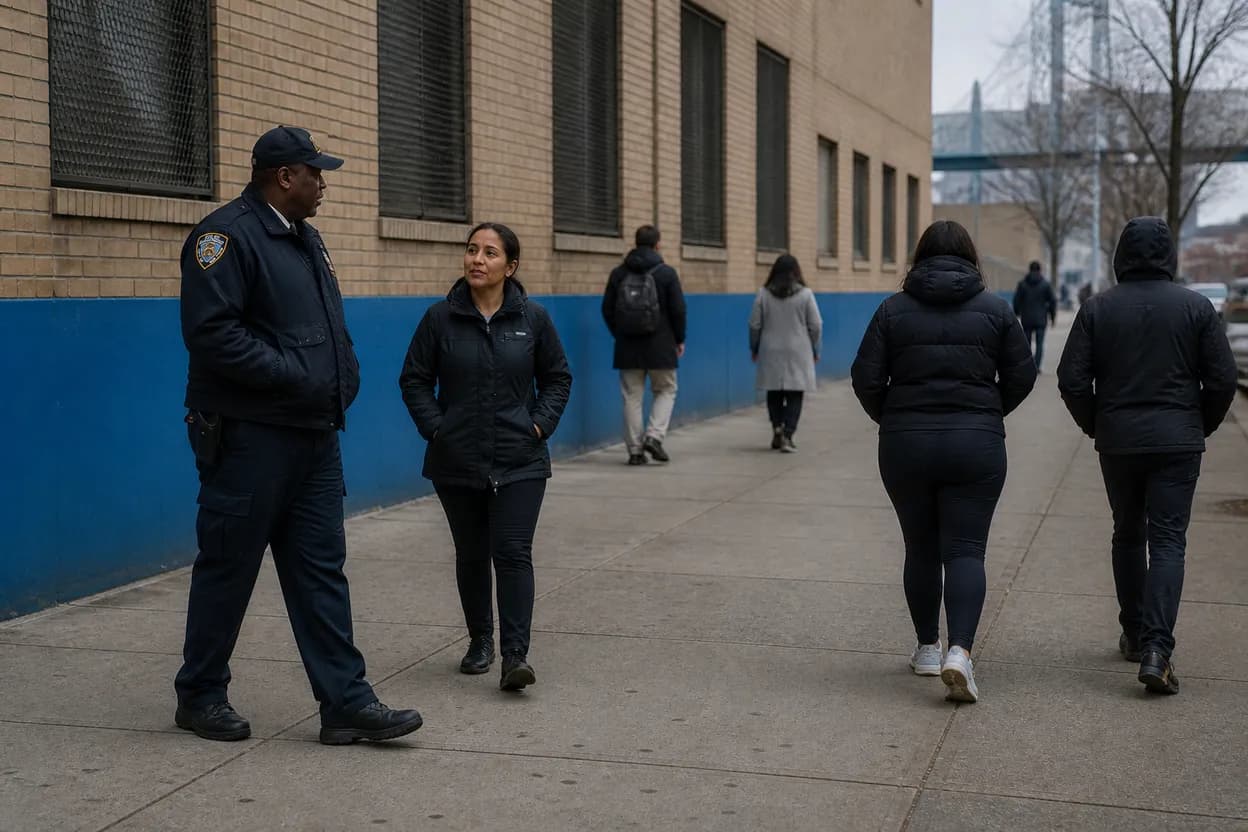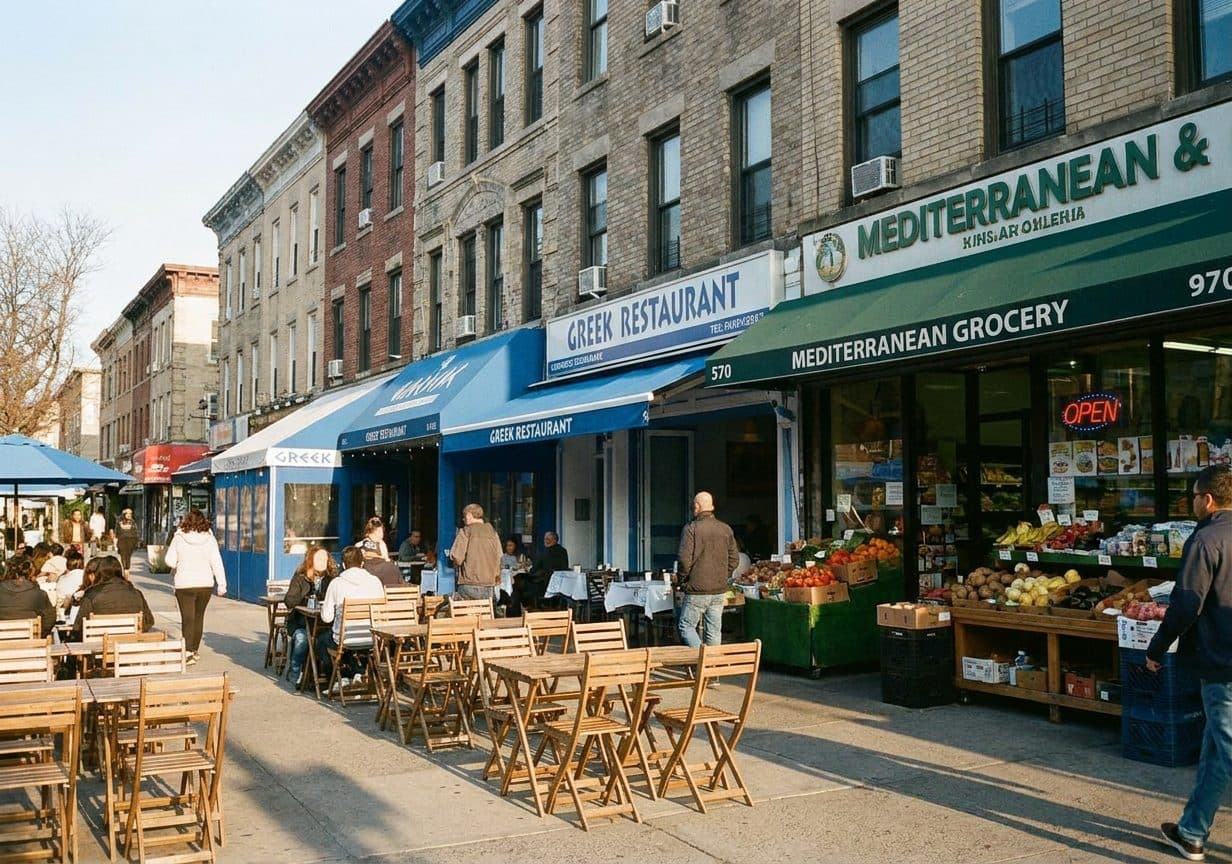
The corner kafeneion on 31st Street has occupied the same storefront since the early 1990s, its awning faded to a particular shade of sun-bleached blue that signals permanence rather than neglect. Inside, the same men claim the same tables every afternoon, coffee cups refilled without asking, backgammon tiles clicking in a rhythm that predates the neighborhood's recent discovery by renters priced out of Astoria proper. Ditmars-Steinway remains what it has been for decades: a Greek enclave where the fish comes in daily from the Bronx Terminal Market and the pastry shops operate on Athens time, which means the first trays emerge around 7 a.m. and the last customers leave well after the subway has thinned to its overnight schedule.
The Geography of Appetite
Ditmars Boulevard runs east-west as the northernmost commercial strip in Astoria, a corridor that feels distinct from the hipper blocks closer to the train's southern stations. The Greek presence here is institutional rather than trendy—family businesses that opened when the surrounding blocks were still heavily Italian and Irish, establishments that survived by serving a specific community rather than chasing broader appeal. Walk the stretch between 31st and Steinway Streets and the pattern repeats: fish market, pastry shop, taverna, kafeneion, repeat. The storefronts are narrow, the interiors deep, the signage often bilingual with the Greek letters larger than the English translation. This is infrastructure, not scenery.
Where the Ice Tells the Story
The fish restaurants along Ditmars display their inventory in waist-high cases just inside the entrance, whole fish bedded on crushed ice under bright lights. Lavraki, tsipoura, barbounia—the day's arrivals arranged by size, eyes still clear, the smell of brine and lemon cutting through the street heat. First-timers hesitate at the threshold, uncertain whether to point or wait for a menu. Regulars walk straight to the case, gesture at a specific fish, hold up two fingers to indicate the number of people sharing. The transaction is brief. The kitchen knows what to do: salt, olive oil, lemon, charcoal. The fish arrives whole, filleted tableside with the efficiency of a decades-practiced motion, the head and bones left on the plate as proof of freshness.
The Pastry Shop's Morning Calibration
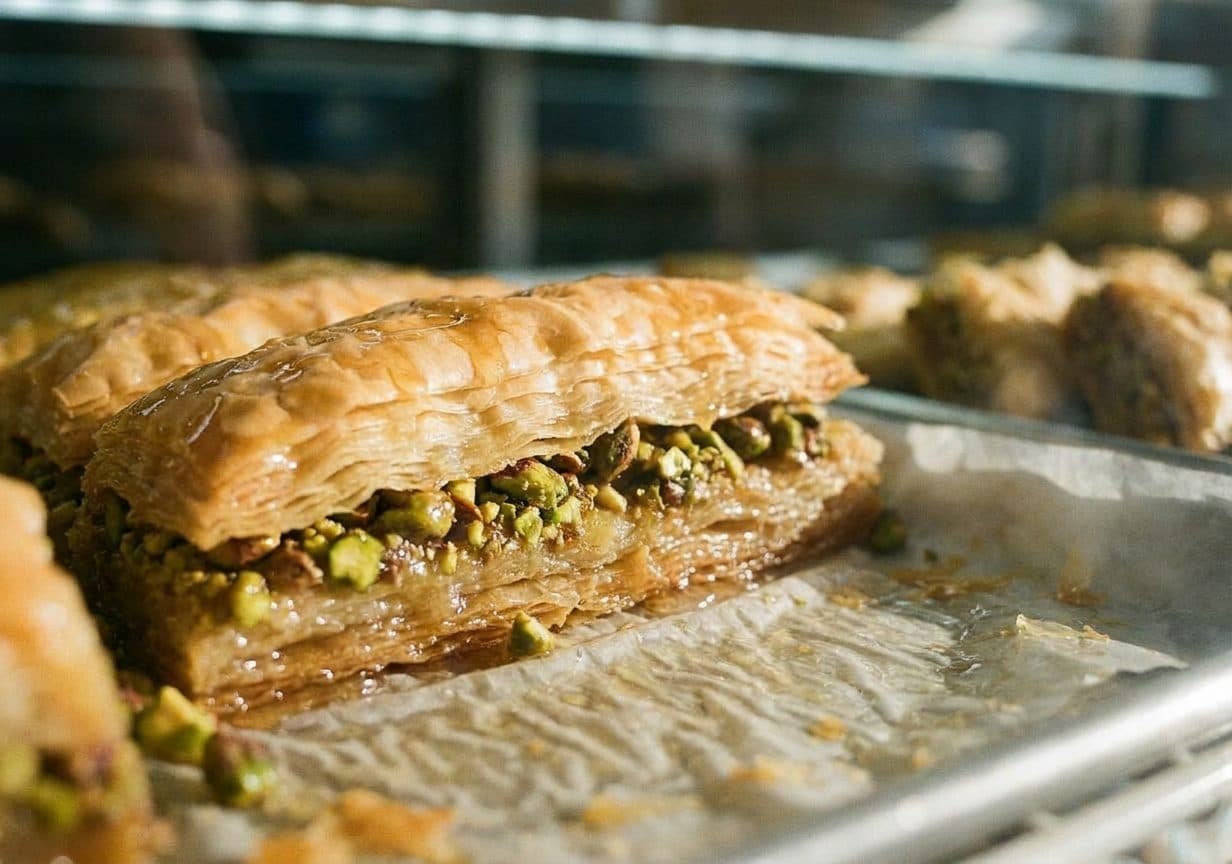
The zaharoplasteia operate on a schedule that rewards early risers and night-shift workers. By 7:30 a.m., the display cases are fully stocked—galaktoboureko still warm, the custard barely set, the phyllo shattering at the slightest pressure. Kataifi, baklava, loukoumades arranged in precise rows, each tray labeled in Greek with a handwritten card. The morning crowd is local: older women buying a single piece wrapped in wax paper, construction workers ordering three at once with a coffee to go. By mid-afternoon, the trays have gaps. By evening, only the sturdier items remain, the delicate custards long sold. Those who arrive late learn to arrive early.
The Kafeneion's Unspoken Seating Chart
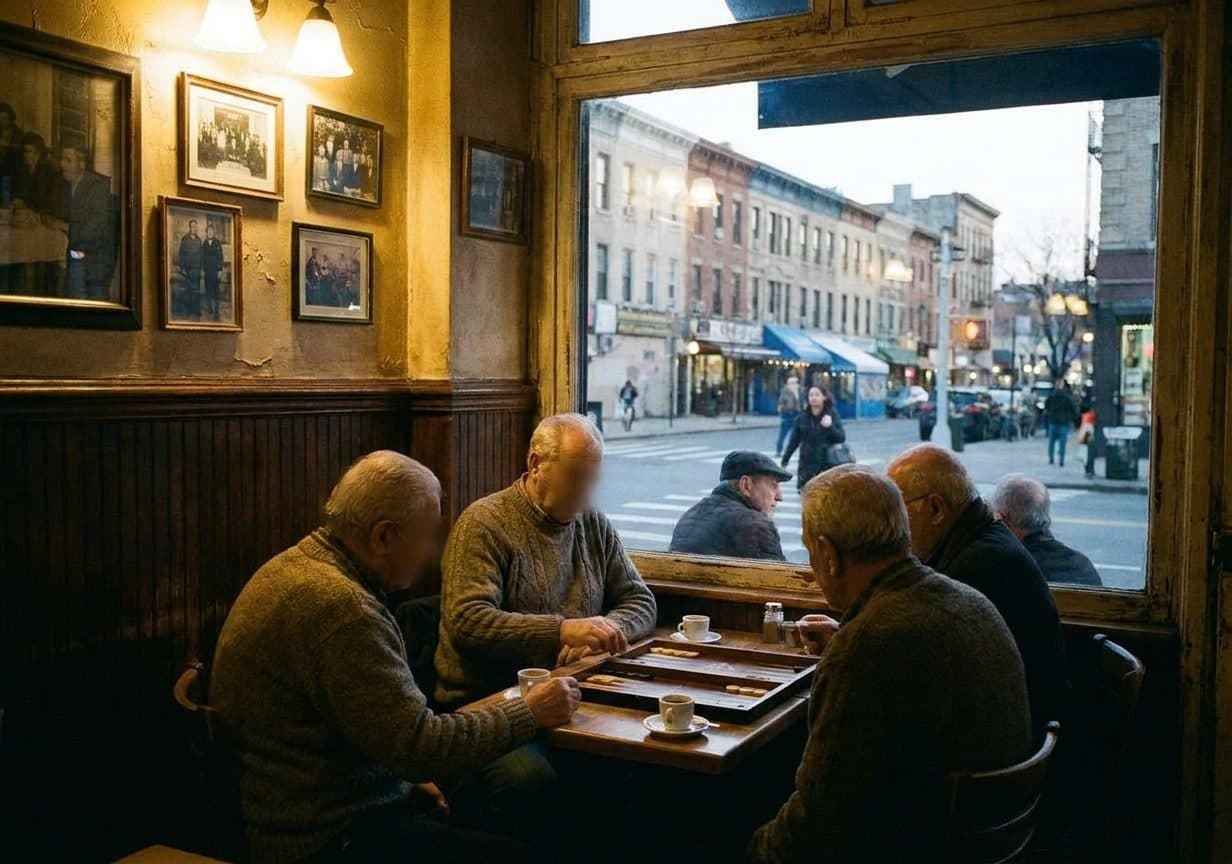
The corner kafeneion observes a hierarchy legible only to those who have watched it unfold over years. The tables by the window belong to the afternoon regulars, men in their sixties and seventies who arrive after 2 p.m. and stay until the light changes. The back tables accommodate larger groups, families, the occasional birthday gathering. The counter seats are for quick espressos, the in-and-out crowd. No one enforces this arrangement; no one needs to. A first-timer who claims a window table at 3 p.m. will find the atmosphere subtly resistant—not hostile, just waiting. The staff knows. They bring the coffee but not the backgammon board. The message is polite and absolute. By the second visit, most people understand where they belong.
When the Diaspora Gathers
During major tournaments, the kafeneion and tavernas become extensions of living rooms, screens mounted in corners, volume turned up, tables pushed together. The crowd skews older and male but not exclusively—families come for the atmosphere, the shared investment in a match that feels personal even when the players are strangers. The rhythm of these gatherings follows a script refined over decades: arrival well before kickoff, orders placed early, the room settling into focused silence punctuated by collective eruptions. The staff moves efficiently, anticipating refills, clearing empties without blocking sightlines. For those three hours, the room operates as a single organism, and the neighborhood's Greek identity is not a marketing angle but a lived fact.
The Timing Tricks No One Mentions
Arrive at the fish restaurants between 6 and 7 p.m. on weeknights and the tables turn quickly, the kitchen in full rhythm but not yet slammed. Later, after 8, the pace slows and the room fills with extended families, multi-generational tables that linger over meze and wine. The pastry shops restock their cases around 4 p.m., a second wave of production timed for the after-work crowd. The kafeneion is quietest between 11 a.m. and 1 p.m., the morning regulars gone, the afternoon shift not yet settled. This is when the staff takes breaks, when the owner sits at a back table with paperwork, when the room feels most like what it is: a small business operating on thin margins and long hours, sustained by ritual rather than novelty.
Practical Notes
The Ditmars Boulevard N/W station sits at the neighborhood's heart, a short walk to the main commercial stretch. Most establishments operate on Mediterranean schedules: fish restaurants open for lunch and dinner, pastry shops from early morning until evening, kafeneia from dawn until late. Reservations are uncommon except for larger groups on weekends; walk-ins are the norm. The fish restaurants price by weight, the pastries by the piece, the coffee at rates that have barely shifted in a decade. Cash is preferred though cards are accepted. The neighborhood is most itself on weekday afternoons and Sunday mornings, when the rhythm is local rather than exploratory. Greek is the primary language in many establishments, but English is understood and the menus are bilingual. The experience rewards patience and observation over questions.
Tags: #DitmarsSteinway #AstoriaQueens #GreekNeighborhood #Kafeneion #GreekFood #FishRestaurants #Galaktoboureko #NewYorkGreeks #QueensDining #NeighborhoodSpots #AuthenticEats #DiasporaCulture #LocalQueens #NYCFood #TheLongWayHome
Sources consulted: timeout.com · atlasobscura.com · nycgo.com
All trademarks are the property of their respective owners.
Ask Karpo first
Want to know which Greek restaurants and pastry shops the locals go to in Ditmars?
Ask Karpo for Ditmars-Steinway dining recommendations and what to order before you head out.