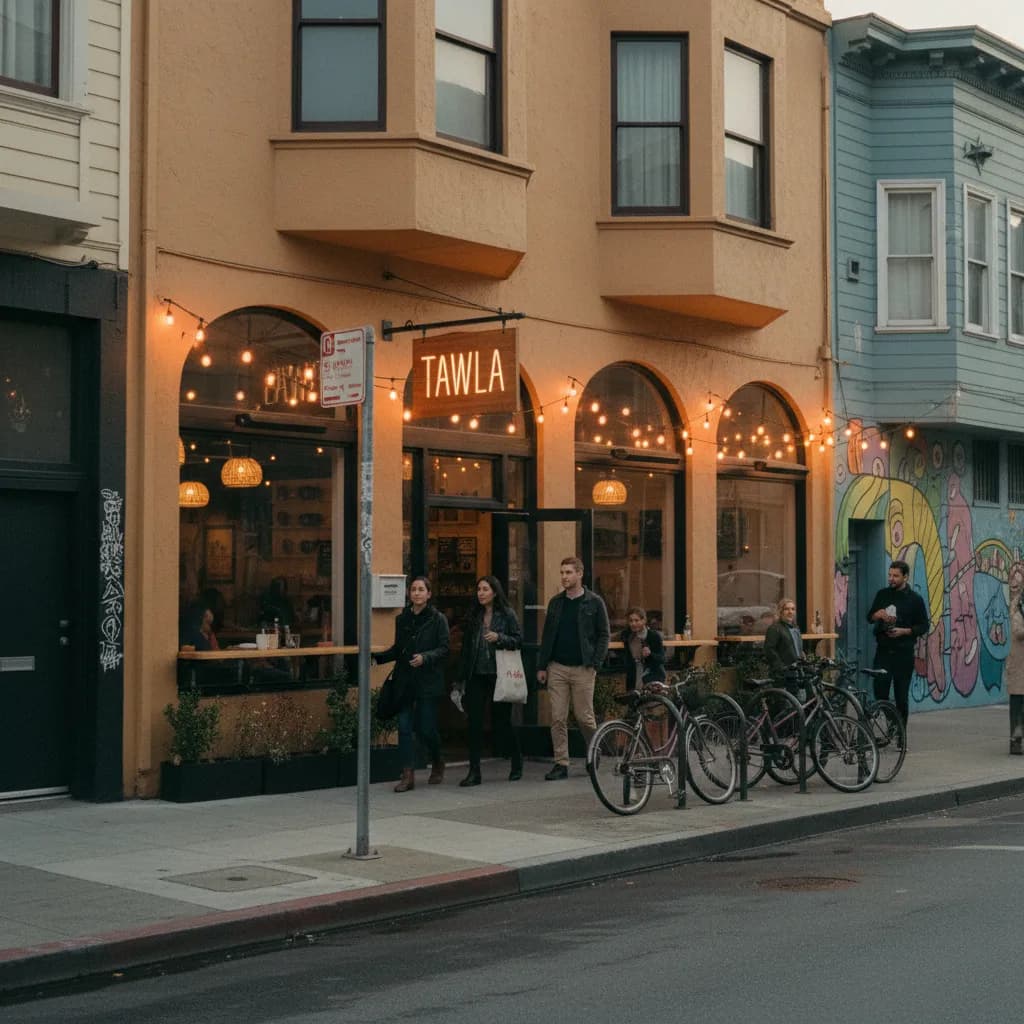
 Mission's Best Mediterranean Food: Tawla's Mezze and Wood Oven Magic
Neighborhood Guides
georgina rodríguez: A Transit-Smart San Francisco Area Guide
A practical San Francisco route for turning a viral name into smarter neighborhood, transit, timing, and backup decisions.
A spike around georgina rodríguez can make San Francisco feel suddenly full of clues: a neighborhood rumor, a photo angle, a waterfront idea, or a claim that one area is “the spot.” Treat that attention as a prompt, not evidence. The useful question is not whether a famous person is in town; it is whether your own city plan can survive basic uncertainty. For a verification-first day, build around what the official SFMTA extract supports checking: Muni routes and stops, trip planning by Muni, bike, walk, drive and park, taxi, and accessibility, neighborhood information, projects, permits, citations, alerts, calendar items, travel and transit updates, maps and guides, and help contacts. That turns a loose headline into a local route you can adjust before you cross town.
Want a transit-smart San Francisco plan before you move? Text Karpo to check Muni routing, neighborhood access, current SFMTA travel updates, and indoor-outdoor backup logic.
Translate the headline into a neighborhood question
The phrase georgina rodríguez may be why you opened the map, but it should not decide where you spend the afternoon. The official extracts do not confirm a San Francisco appearance, affiliation, endorsement, event, schedule, venue, route, restaurant, hotel, or public sighting. They also do not support any claim about ticketing, reservations, prices, broadcast availability, venue capacity, opening hours, or transit travel times. That means the strict local move is to separate the attention from the plan.
Start with a practical question instead: what do you need the neighborhood to do for you? If you want a transit-forward plan, SFMTA’s homepage points you toward Muni routes and stops, a trip planner, travel maps and guides, and neighborhood information. If you want to compare ways to move, the supported trip-planning modes include Muni, bike, walk, drive and park, taxi, and accessibility. If you need official help, the extract lists SF 311, 511 Regional Info, and SFMTA contact links. The headline can start the search; it should not carry the burden of proof.
Choose the area by the actual task
For a San Francisco neighborhood plan, choose the area by what you need to accomplish and what the official extract actually says. Hayes Valley is a useful example because SFMTA lists “Hayes Valley Shared Spaces: Fridays & Saturdays, August 2026” under Travel & Transit Updates. That does not prove specific street conditions, hours, closures, businesses, or crowd levels. It does give you one actionable reason to check current SFMTA travel and transit updates before assuming curb access, a quiet approach, or a simple pickup point.
Chinatown is another verification-heavy choice because SFMTA lists “Chinatown Construction: July 30-August 9, 2026” under Travel & Transit Updates. That does not identify every affected block in the extract, and it does not say a neighborhood should be avoided. It does mean a plan involving Chinatown during that date range should include a same-day check before you rely on a usual walking path, drop-off, or group meeting point.
West Portal belongs in the same mental map for a more limited reason. SFMTA’s Latest News & Blog section lists “Numbers Are In: West Portal Changes Bring Calmer Streets, Improved Station Area.” The extract does not provide the full article, implementation details, or a route recommendation. It supports only a cautious planning note: if West Portal is in your plan, treat station-area orientation and current local conditions as facts to verify, not assumptions to inherit from older habits.
Use transit exits as planning anchors
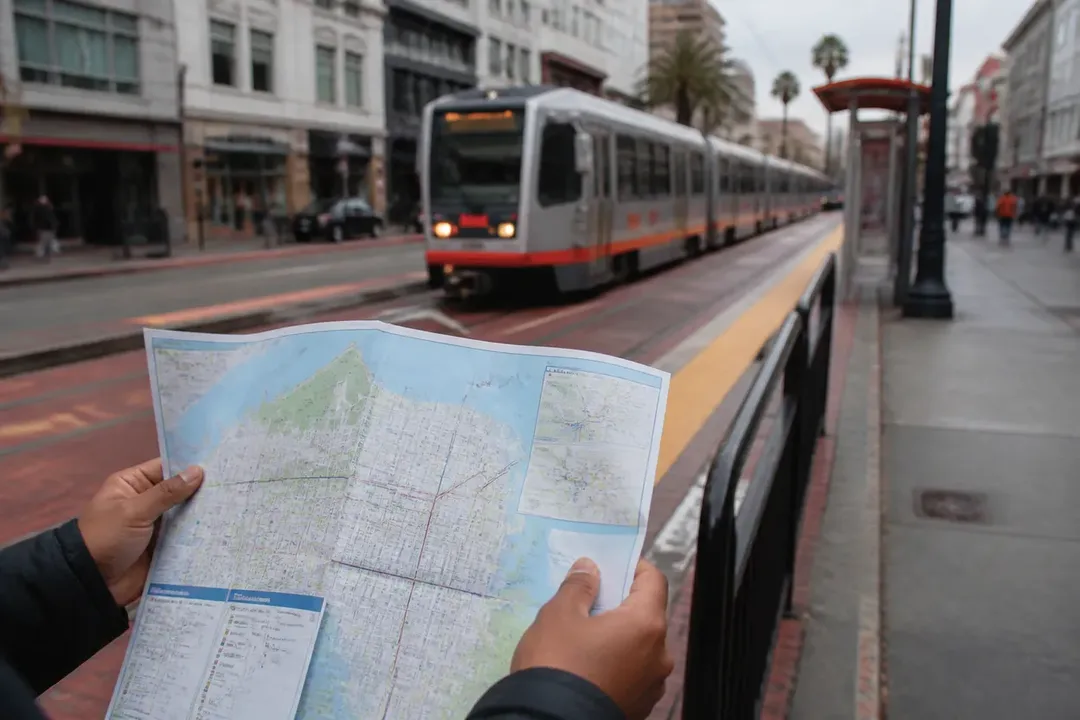
San Francisco plans get better when you start with exits, not attractions. The SFMTA extract shows a Trip Planner with starting location, ending location, and “How I want to travel.” It also lists travel choices as Muni, walk, bike, drive and park, taxi, and accessibility. Use that menu as a checklist. Pick the neighborhood, then identify the mode you will actually use if the first idea changes. If Muni is your main path, use SFMTA’s Muni Routes & Stops information before choosing a final meeting point. If accessibility matters, make it part of the first check, not a late correction.
The practical route is simple: select a primary neighborhood, choose a transit anchor, choose a nearby second option, and choose an exit that does not require retracing every step. For Hayes Valley, the supported detail is the listed Shared Spaces update for Fridays and Saturdays in August 2026, so verify current conditions before treating a curbside meeting point as easy. For Chinatown, the supported detail is the July 30-August 9, 2026 construction update, so verify the latest travel information before assuming your regular path still fits the day.
Do not let a trending name make you chase across the city. If georgina rodríguez is the hook, the transit anchor is the discipline. The SFMTA alert text in the extract says a delay near 19th & Holloway had cleared and inbound M Ocean View service was resuming, while also showing more alerts in the last 48 hours. That is enough to support a clear habit: check close to departure, because an earlier view of conditions may no longer describe the trip you are about to take.
Add one indoor and one outdoor backup
A good San Francisco plan has two backups: one indoor and one outdoor. The official extracts here do not provide venue hours, ticketing, prices, capacity, reservation rules, entry policies, attraction schedules, or weather guidance. Because those details are unsupported, treat every venue-specific claim as something to verify directly with the venue or the relevant official source before you go.
For the indoor backup, choose something near the same transit anchor rather than building a second plan across town. The extract supports using SFMTA for trip planning, neighborhood information, Muni routes and stops, travel maps and guides, and accessibility. It does not support saying a specific museum, cafe, store, lobby, hotel, restaurant, or gallery is open, available, affordable, or accepting walk-ins. Keep the backup general until you confirm the actual place.
For the outdoor backup, choose a public-space route that does not depend on one doorway. Hayes Valley can be a candidate only after checking the current SFMTA travel and transit update connected to Shared Spaces on Fridays and Saturdays in August 2026. Chinatown can be a candidate only after checking the construction update for July 30-August 9, 2026 if your date falls in that window. If either area looks complicated, move the outdoor portion closer to your arrival point or simplify the sequence.
Avoid treating online attention as a local promise
The fastest way to waste a San Francisco day is to convert online attention into local certainty. A name trending online does not mean the person is in the city, appearing at a venue, connected to a neighborhood, attached to an event, or endorsing a plan. This article uses georgina rodríguez as a planning hook only. The official extracts do not confirm any local appearance, affiliation, event, visit, endorsement, schedule, ticket, or public route.
That distinction matters because a vague plan can fail for ordinary reasons. The extract supports checking SFMTA alerts, Muni routes and stops, neighborhood information, projects, travel and transit updates, and trip-planning modes. It also shows SFMTA services related to permits, parking permits or street closures, citations, towing information, maps and guides, and visitor transportation information. Those are planning tools, not celebrity evidence.
Keep the hype in its place. Let it tell you what people are talking about, then let official and venue-level checks tell you what is possible. Ask what has actually been verified: the current SFMTA travel update, the relevant neighborhood page or project information, the chosen mode, the accessibility need, and the nearby backup. The result is a better day: fewer unnecessary crossings, clearer meeting points, and less pressure on one unsupported stop.
Verify conditions before crossing the city
Before you leave, run the plan through a short San Francisco verification pass. Use SFMTA’s trip planner for your real mode: Muni, walk, bike, drive and park, taxi, or accessibility. Check Muni routes and stops if transit is the main path. Look at alerts and Travel & Transit Updates before committing. The extract lists “Outside Lands Aug 7-9” with the line “Let Muni Move You Through the Summer,” so movement around August 7-9 deserves a current transit check even if your own plan is not event-related.
Then check neighborhood-specific friction. Hayes Valley has a listed Shared Spaces update for Fridays and Saturdays in August 2026. Chinatown has a listed construction update for July 30-August 9, 2026. SFMTA also lists “Improvements Are Coming: Muni Service Changes Start Aug. 29,” which is useful for future planning but does not automatically change a trip before that date based on the extract alone. These are not reasons to avoid those areas. They are reasons to verify before choosing your order of stops.
Finally, decide what would make you cancel, reroute, or simplify. If the primary stop depends on unsupported facts, use the backup. If an alert affects your line, change the order. If curb access is uncertain, meet at a transit stop or another clearly identifiable public point after checking the current route. If you need city help, the SFMTA extract lists 311, outside-San-Francisco contact at 415.701.2311, and TTY at 415.701.2323. A good route is not rigid. It is verified enough to change cleanly.
Tags: #georginarodriguez #SanFrancisco #NeighborhoodGuides #AskKarpo #BeforeYouGo #SFMTA #Muni #TransitSmart #HayesValley #ChinatownSF #WestPortal #SFTravelTips #PublicSpaces #CityPlanning
Sources consulted: sftravel.com · sfmta.com · sfrecpark.org
All trademarks are the property of their respective owners.
Ask Karpo first
Ask Karpo first when the headline is loud but the local facts are thin. For this San Francisco plan, Karpo can help compare SFMTA routing, current travel updates, access needs, and nearby backups before you commit to crossing the city.
Ask Karpo for more information.
Keep reading
- Mission's Best Mediterranean Food: Tawla's Mezze and Wood Oven Magic
 Mourad SoMa: San Francisco's Premier Mediterranean Food Destination
 Alemany Farmers' Market Bernal Heights: Essential Food Places Near Me