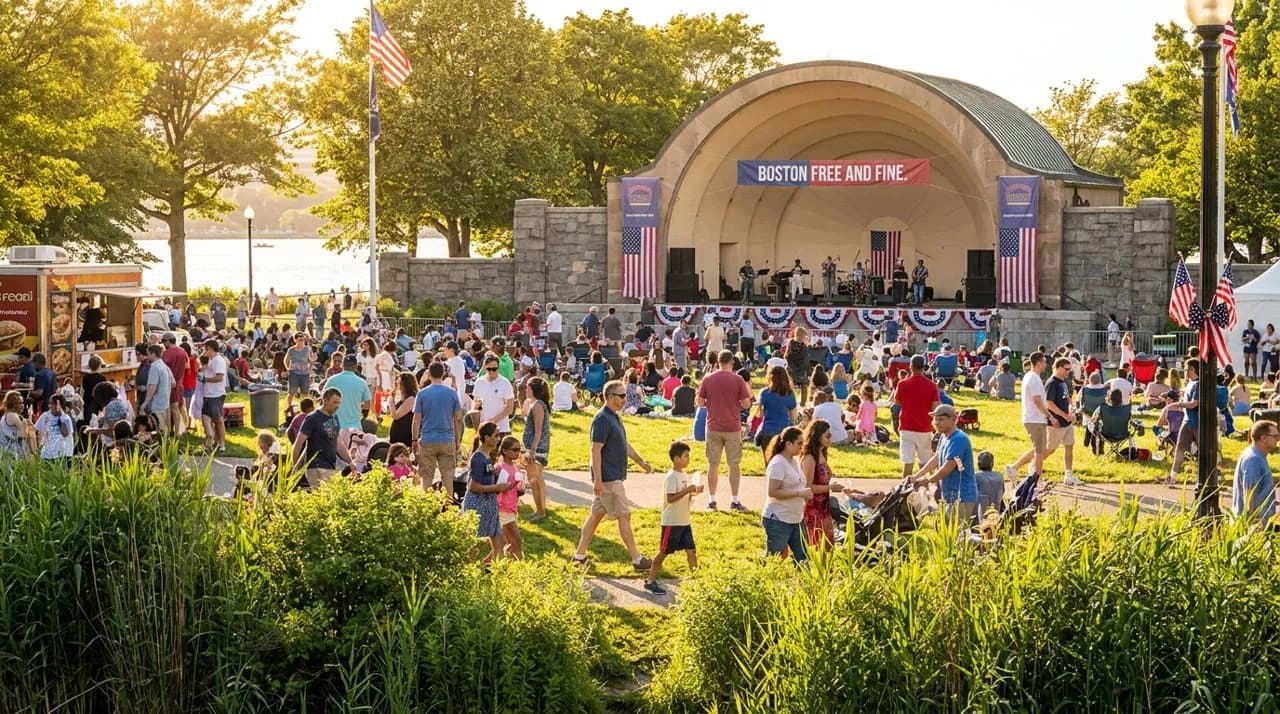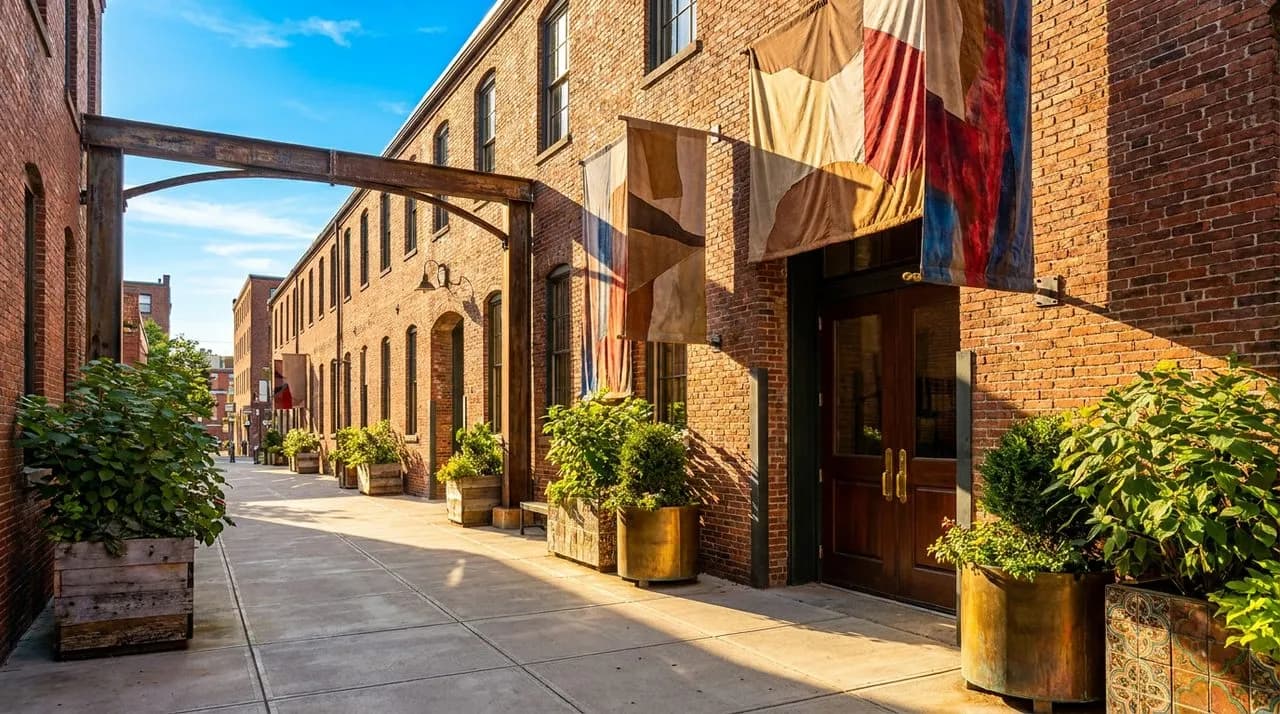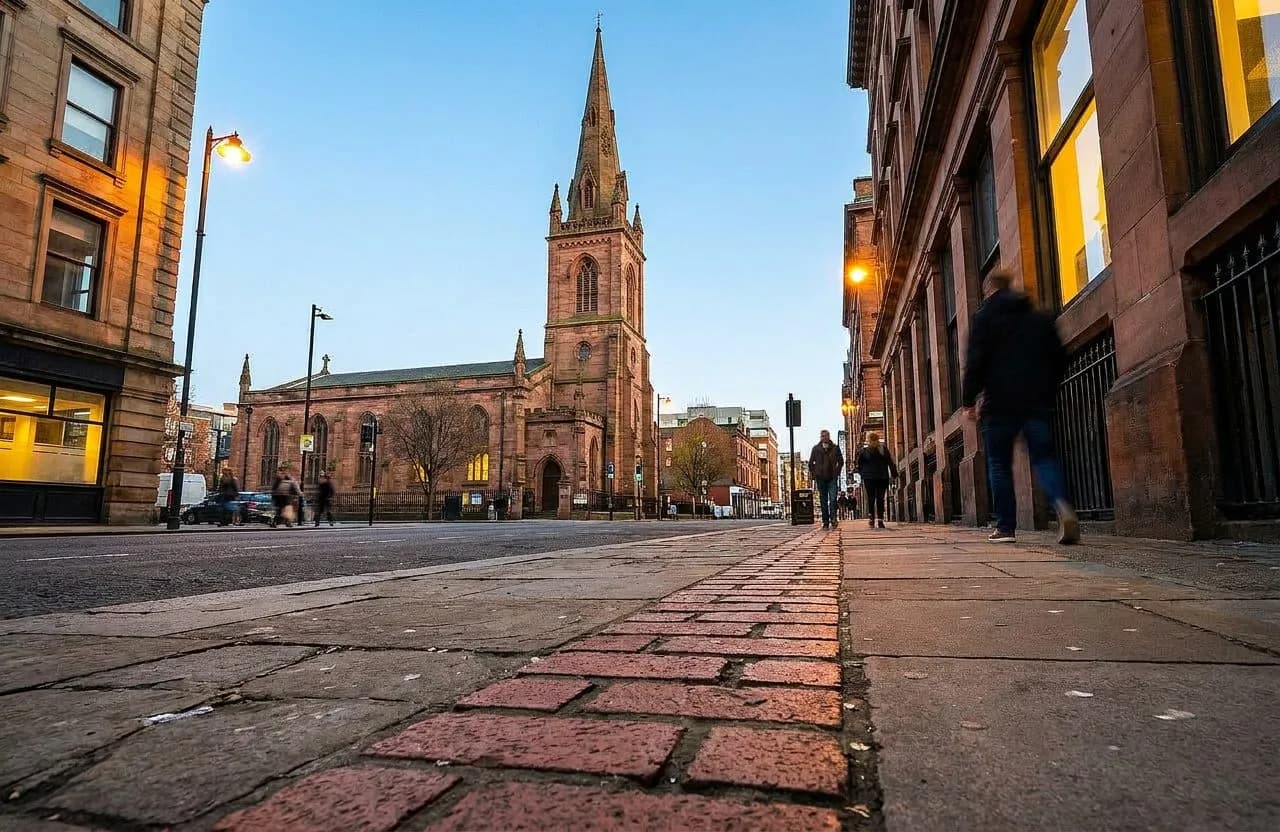
The red-brick line appears underfoot near the corner of Tremont and Park, threading through crosswalks and cobblestone like a breadcrumb trail designed by urban planners with a sense of theater. Boston's Freedom Trail is the rare civic project that works exactly as advertised: a self-guided 2.5-mile walk connecting 16 sites from the Revolutionary War era, no tour group or audio wand required. You follow the bricks. They lead you past burial grounds, meeting houses, a ship, and eventually up a monument with a view that makes the climb worth every wheeze. Summer 2026 brings the usual crowds, but the route absorbs them; there's always a quiet corner if you know where to step off the line.
Start at the Common, Then Duck Into History
Boston Common sprawls green and worn at the trail's southern anchor, its paths grooved by centuries of foot traffic. Established in 1634 as a cow pasture and public gathering ground, it's the kind of space that refuses to be precious. Skateboarders carve the perimeter, office workers eat lunch on the benches, and tourists study maps with the focused bewilderment of people trying to orient themselves against a grid that predates grids. The Freedom Trail officially begins near the visitor center on Tremont, marked by a plaque and the first stretch of painted brick.
From here the path leads northeast toward the State House, its gold dome catching afternoon light like a beacon for anyone who wandered off course. The route is straightforward enough that getting lost requires effort, though the freedom to explore free walking tours boston makes possible—pausing for coffee, backtracking for a photo, skipping a stop that doesn't call to you—is part of the appeal. You're the docent and the audience both.
Granary Burying Ground and a Stone Most Miss
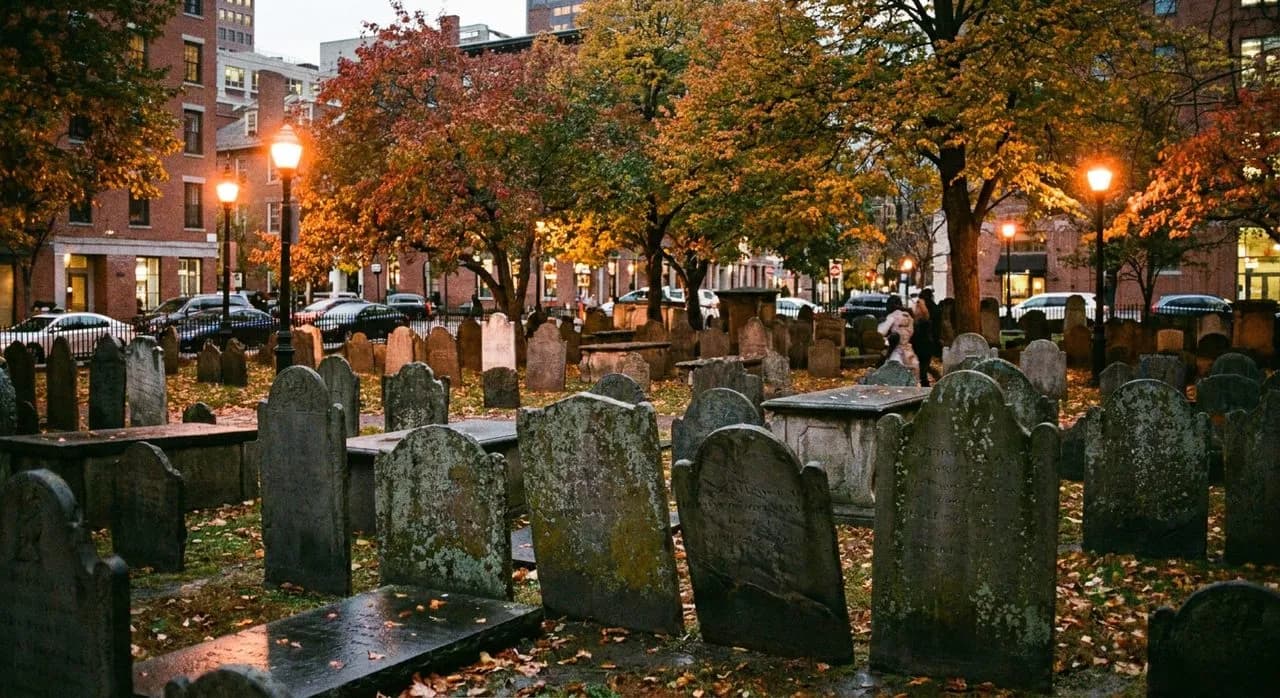
The Granary Burying Ground sits a few blocks along Tremont, tucked behind an iron fence and shaded by old trees that soften the edges of the grave markers. It's where Paul Revere, John Hancock, and the Adamses are buried, and most visitors make a beeline for those famous names, phones out, checking off a mental list. The stones tilt at odd angles, their inscriptions worn faint by weather and two centuries of thumbs trying to trace the letters.
But the northwest corner holds a flatter stone that tends to escape the shuffle—a table tomb inscribed "Here lies buried in one tomb, Crispus Attucks..." marking the resting place of the five victims of the Boston Massacre. Attucks, a man of African and Indigenous descent, was the first to fall in the 1770 confrontation, and this shared grave tells a more complicated story than the tidy narrative the trail sometimes suggests. Linger here. The quiet makes room for it.
Paul Revere's House and the Light You Want
The freedom trail boston snakes through the North End, Boston's oldest residential neighborhood, where the scent of espresso and baking bread drifts from cafés with names that end in vowels. The Paul Revere House stands narrow and timber-framed at 19 North Square in Boston's North End, the oldest remaining structure in downtown Boston and a rare survivor of the area's frequent fires. It charges five dollars for entry, which buys you a walk through small, low-ceilinged rooms furnished in period style and docents who know their material.
But the courtyard and exterior are free to photograph, and if you're watching your budget or short on time, the view from outside captures plenty. The best angle is from the cobblestone alley on the north side, ideally around ten-thirty in the morning when the light slants in clean and warm, picking out the weathered clapboard and the bronze plaque without harsh shadows. The house photographs like it belongs on a postcard, which is exactly what it does on a few thousand phones every day.
Old North Church to the Harbor
The trail continues uphill to the Old North Church, its white steeple a landmark sailors once used for navigation. "One if by land, two if by sea"—the lantern signal that warned of British troop movements—happened here in 1775, and the church leans into its origin story without tipping into kitsch. Inside, the box pews and brass chandeliers feel lived-in rather than museum-stale, partly because it's still an active Episcopal congregation. There's no admission fee, though donations are encouraged.
From the church the path slopes down toward the waterfront and across the Charlestown Bridge, a span that offers wide views of the harbor and the kind of breeze that feels earned after two miles of pavement. The rhythm changes here—fewer buildings pressing close, more sky, the occasional boat horn punctuating the traffic hum. Charlestown itself is quieter than downtown, residential blocks giving way to the Navy Yard and the trail's final landmarks.
USS Constitution and Bunker Hill's Climb
The USS Constitution floats at permanent anchor in the Navy Yard, a three-masted warship launched in 1797 and still technically in commission. Tours are free, led by active-duty sailors who know the rigging and the gun decks and the cramped quarters where crews slept in hammocks stacked like cordwood. The ship smells of tar and old wood and salt, the kind of sensory detail that sticks longer than any plaque text.
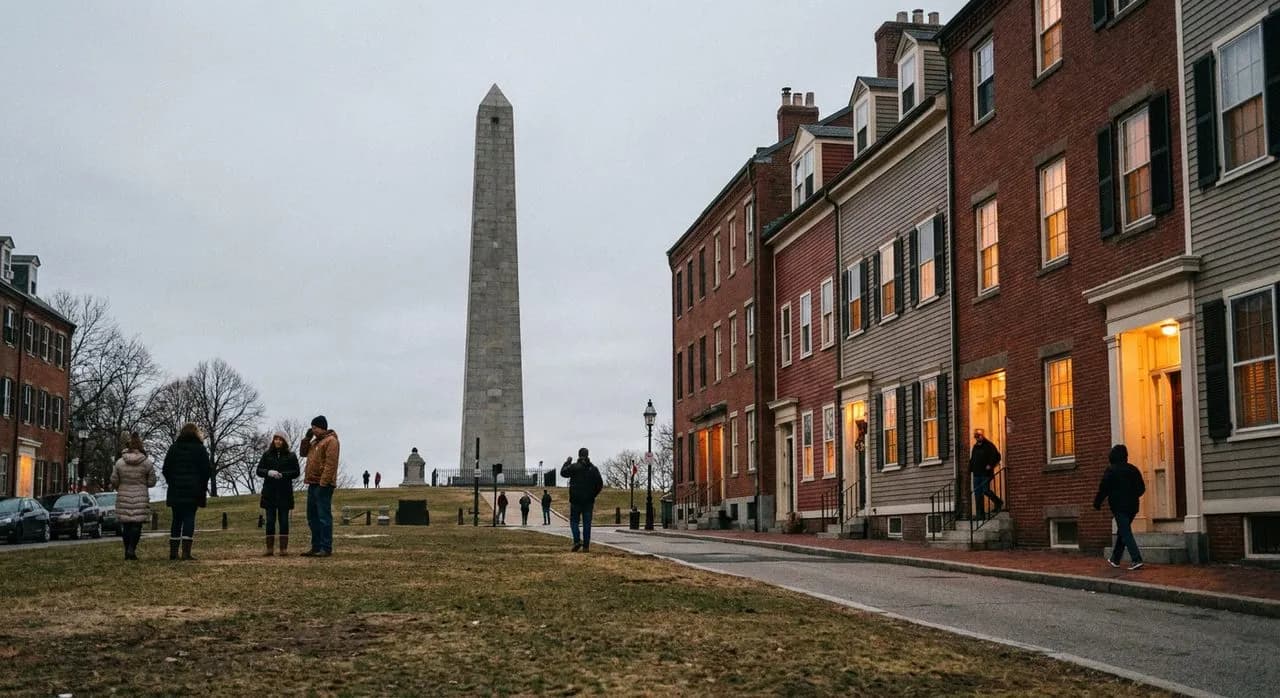
A short walk away, Bunker Hill Monument rises 221 feet 5 inches, a granite obelisk commemorating the 1775 battle that wasn't quite a victory but proved the colonial forces could hold their ground. The 294-step spiral staircase to the top is free and worth every burning quadricep, delivering 360-degree views of Boston, Cambridge, and the harbor. The monument closes at four-thirty sharp, and rangers begin ushering visitors down at four-fifteen, so plan accordingly if you want the climb. Late afternoon light up there is spectacular—golden and slanting, the city spread out below like a map you just walked.
What to Skip, What to Savor
Not every stop demands equal time. The Old South Meeting House charges admission and offers solid exhibits on the Boston Tea Party debates that unfolded within its walls, but if your budget is tight or your feet are protesting, the exterior and historical context are available for free. The Old State House, by contrast, is worth the entry fee for its small museum and the balcony where the Declaration of Independence was first read to Bostonians in 1776—a moment you can almost hear if you stand still long enough.
Between landmarks, the trail threads through neighborhoods that reward wandering. The North End invites a pastry detour; Charlestown's side streets are lined with brick rowhouses and window boxes that soften the Revolutionary solemnity. Treat the red line as a suggestion rather than a leash, and the walk opens up into something richer than a checklist.
Practical Notes
The Freedom Trail runs from Boston Common (Tremont Street at Park Street) to Bunker Hill Monument in Charlestown. Nearest T stops: Park Street (Red/Green lines) at the start; Community College (Orange line) near Bunker Hill. Street parking in downtown Boston is scarce and expensive; garage rates often run $30-plus for the day. The trail is mostly accessible, though cobblestones and some historic interiors present challenges. Bring water, comfortable shoes, sunscreen for summer walking, and a light jacket if the harbor breeze picks up. Most outdoor sites are always open; indoor venues keep varied hours, so verify directly if a specific stop is a priority.
Tags: #FreedomTrail #BostonWalks #FreeAndFine #RevolutionaryHistory #SelfGuidedTours #BostonCommon #NorthEnd #BunkerHill #WalkingBoston #HistoricBoston #Summer2026 #CityWalks #BostonTravel #UrbanHiking #FreeBoston
Sources consulted: Freedom Trail - Wikipedia · The Freedom Trail Official Site · Boston Parks · Boston - Wikipedia · Boston National Historical Park
All trademarks are the property of their respective owners.