Miami does not have a restaurant district. It has a dozen neighbourhoods, each with its own cuisine, its own price level and its own rhythm, separated by drives long enough that nobody moves between them casually. Searching for food near me here returns whatever is closest, which in a city this spread out is almost never the same as what is good. The more useful question is which neighbourhood you should be in tonight, and that is a question with a clear answer for almost every kind of meal.
Miami rewards driving twenty minutes to the right neighbourhood over walking five to the wrong one. Ask Karpo which one fits what you feel like eating tonight.
Little Havana and Coral Way: Cuban, all day
Southwest Eighth Street through Little Havana is the city's most legible eating corridor and the one visitors find first. What is worth understanding is that it operates on two levels: the restaurants, which are large, loud and open late, and the ventanitas, the walk-up windows selling cafecito and croquetas that run on their own schedule and cost a couple of dollars. Versailles at 3555 SW 8th Street, open since 1971, is the landmark; the block around it is thick with smaller rooms doing the same food for less.
Coral Way, running west from Brickell, is where the same cuisine lives without the audience. It is a residential corridor with cafeterias, bakeries and steak-and-rice rooms serving people who live nearby, and the ratio of quality to price is better than on Calle Ocho for exactly that reason. If Little Havana feels like a performance on a Saturday night, drive fifteen blocks south and eat the same meal in a quieter room.
Little Haiti and Buena Vista: griot, and what came after
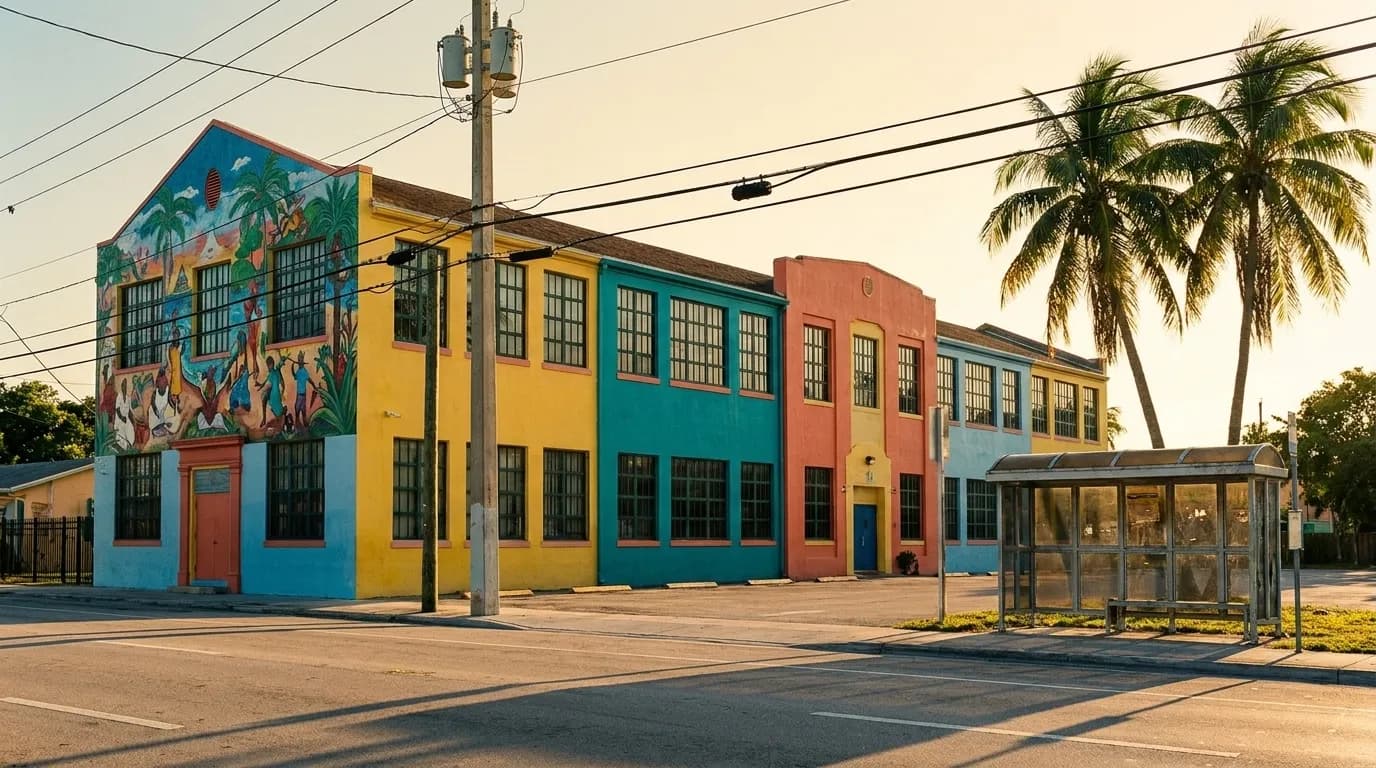
Little Haiti, north of the Design District along Second Avenue and 54th Street, is the centre of the largest Haitian community in the United States and the food follows: griot, the twice-cooked pork shoulder that is the national dish, served with pikliz, the fiery pickled cabbage that cuts it, and diri kole, rice cooked with beans. This is not a polished restaurant scene and it is not trying to be. It is bakeries, takeaway counters and a handful of full dining rooms, and it is one of the genuinely distinctive things about eating in Miami.
Immediately south, Buena Vista and the Design District have gentrified hard over the last fifteen years, and the food there now is expensive, international and often very good. The two neighbourhoods sit within a few blocks of each other and represent the two ends of the city's price range, which makes the pair a useful evening: eat in one and have a drink in the other.
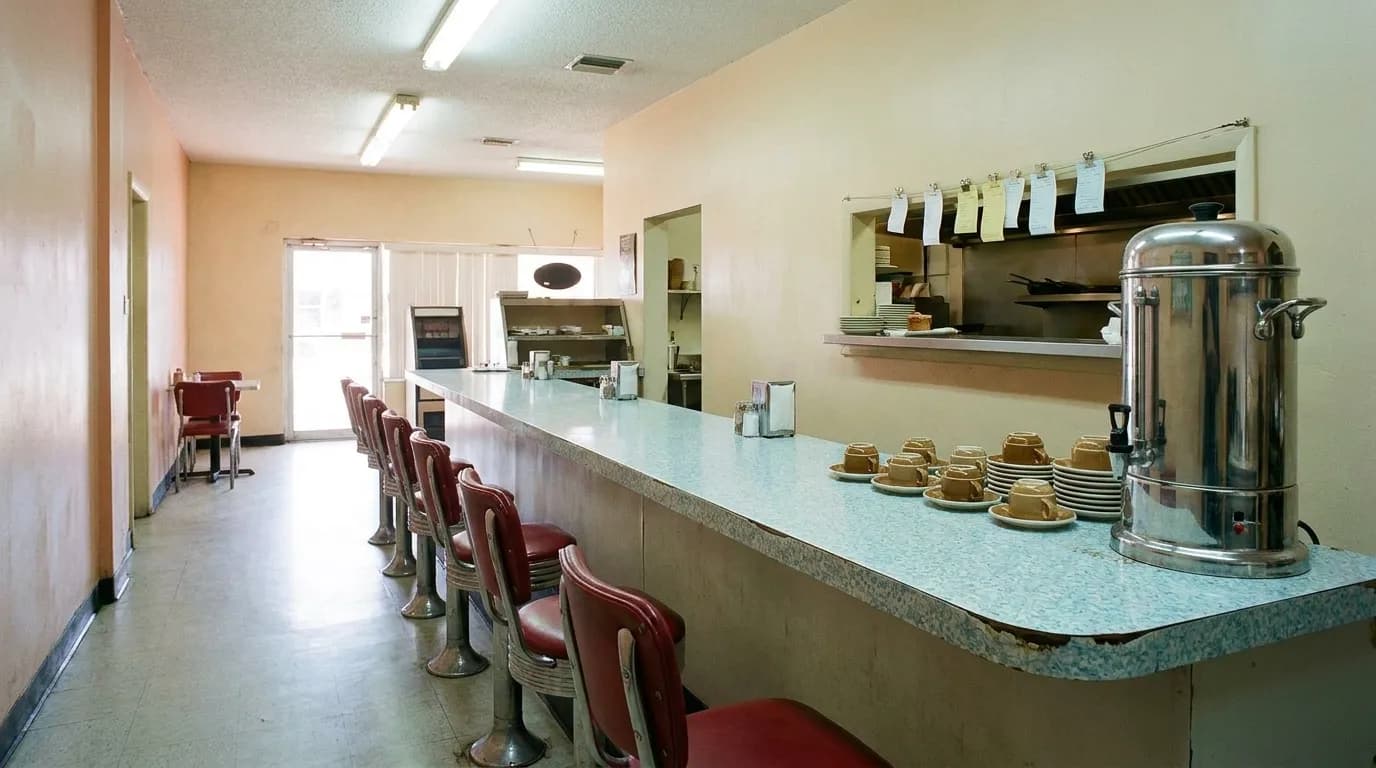
Hialeah and Sweetwater: the working city
Hialeah, north-west of the airport, is the densest Cuban population in the country and one of the least visited parts of Miami by anyone who does not live there. The eating is cafeterias, bakeries, fritas — the Cuban hamburger with shoestring potatoes on top — and prices that have not tracked the Beach. Palmetto Expressway access makes it about twenty minutes from downtown outside rush hour and about forty inside it, which is the whole reason it stays undiscovered.
Sweetwater, further west along Eighth Street past the Turnpike, is the centre of the Nicaraguan community, and the food there is different again: fritanga, the buffet-style counters serving gallo pinto, carne asada and maduros by weight, and steakhouses built around Nicaraguan cuts. Both neighbourhoods reward the same behaviour — go at lunch, when the counters are busiest and the turnover is highest.
The Beach, Wynwood and Brickell
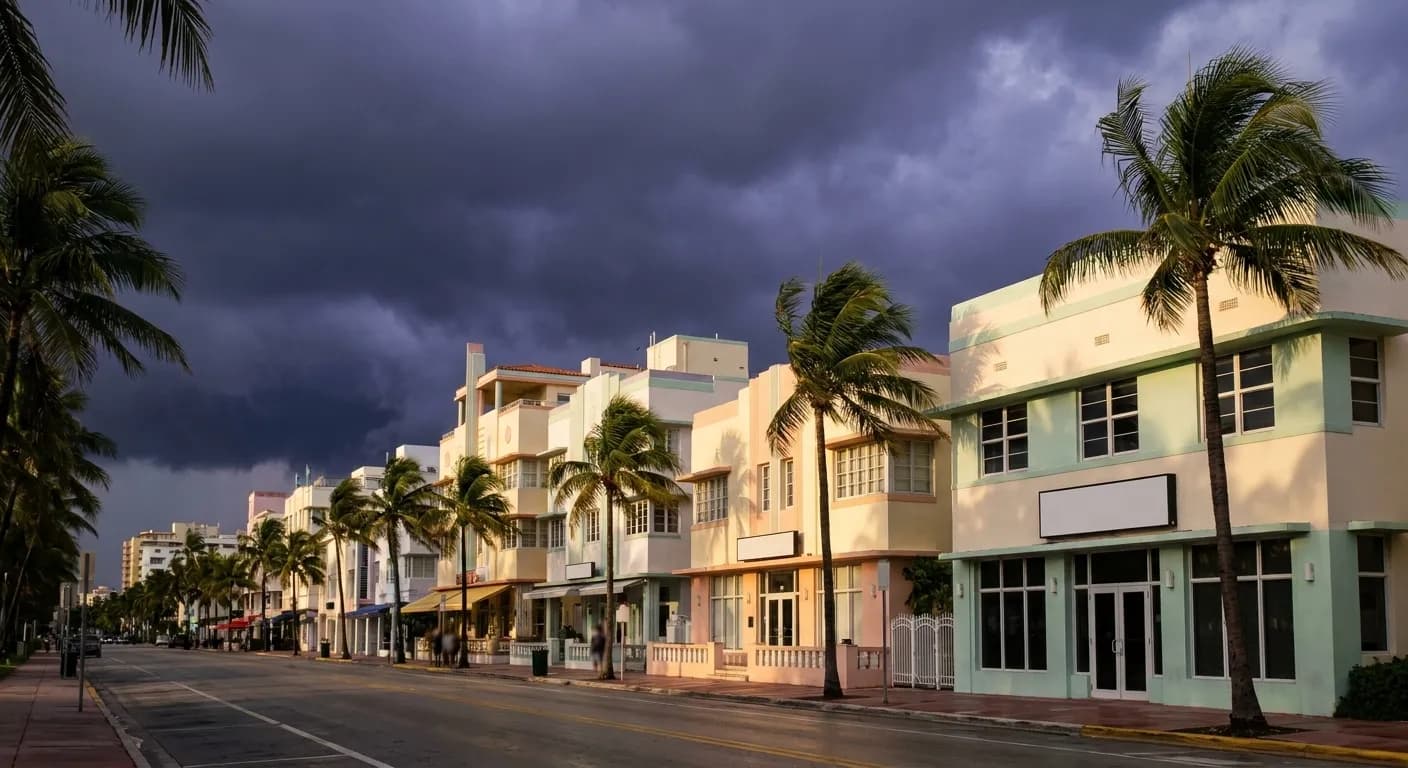
South Beach is the most expensive eating in the county and the quality distribution is the widest. Ocean Drive is a tourist trap in the literal sense and the resort fees and automatic gratuities on the strip have been the subject of enough local complaint to be worth checking your bill for. One street inland, along Collins and Washington and in the residential blocks north of Lincoln Road, the same money buys considerably more.
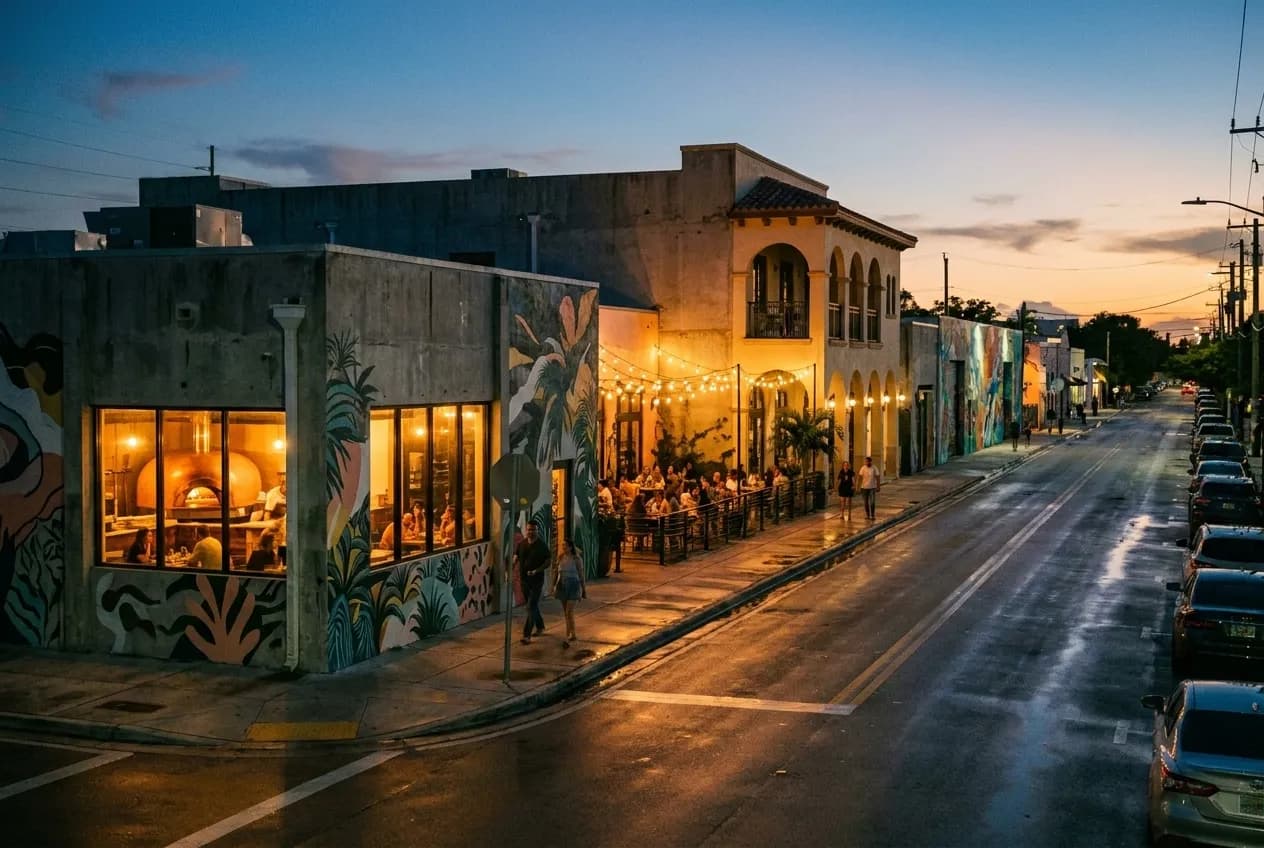
Wynwood is a nightlife neighbourhood with restaurants attached rather than the reverse; it is best for a drink and a shared plate before something else. Brickell is a business district that eats early and well, with a dense concentration of Peruvian, Argentine and Japanese rooms, and it is the most walkable eating in the city — the only neighbourhood here where you can reasonably choose a restaurant on foot.
The southern edge
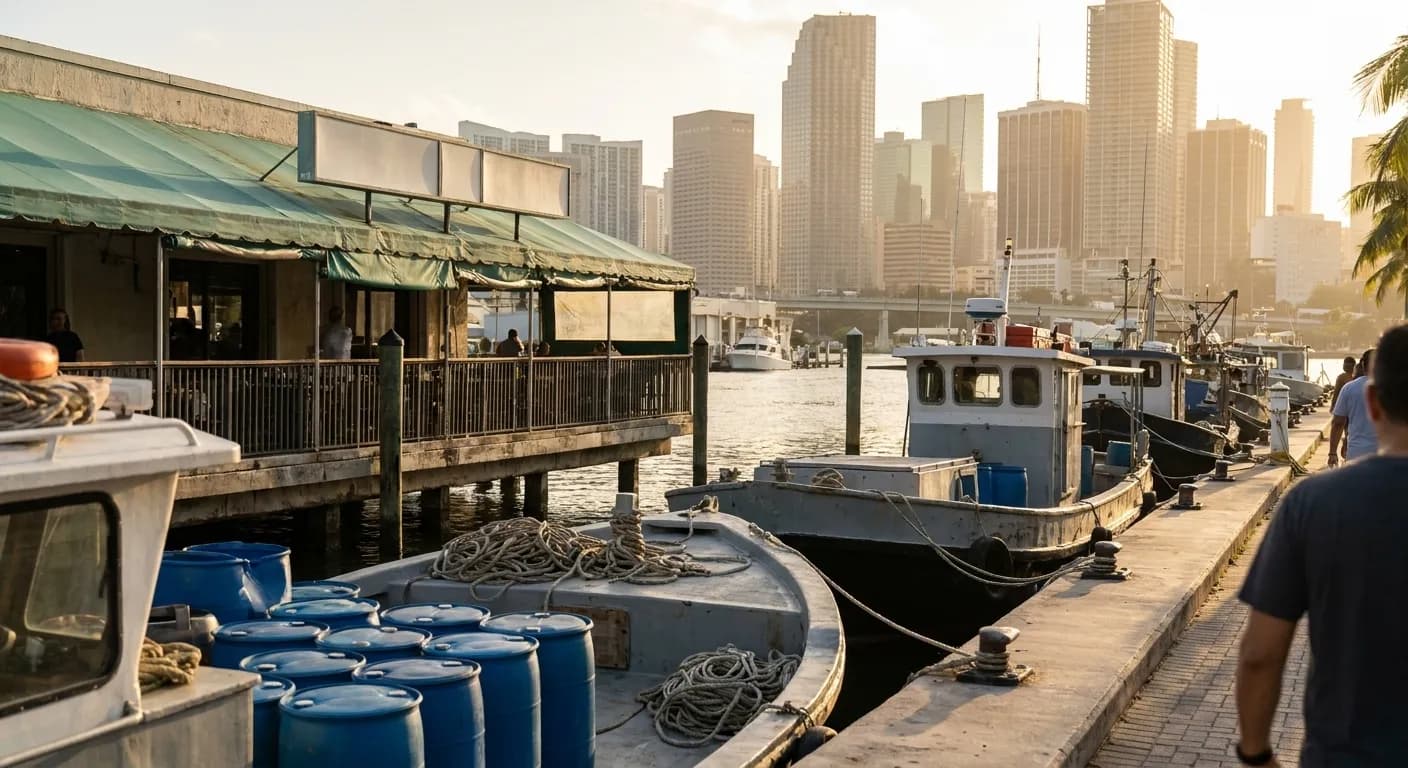
Coconut Grove and the stretch of South Miami around Sunset Drive are the quietest good eating in the county — leafy, low-rise, priced below the Beach and well above Hialeah, with a concentration of Spanish, Italian and Caribbean rooms that have been in the same place for decades. The Grove in particular is the closest Miami comes to a neighbourhood you would walk around before deciding where to eat, and its waterfront is public rather than resort-owned, which changes the feel of an evening there entirely.
Practical notes
Distances are the thing that catches people out. Little Havana to South Beach is about fifteen minutes at midnight and forty-five at six in the evening, and Hialeah to Brickell can double in rush hour. Plan around the causeways and the Palmetto rather than around mileage. Most of the neighbourhoods here have almost no metered street parking problem after eight in the evening except on the Beach, where a garage is the only reasonable plan. Sunday and Monday are the quiet nights across the board, and in the Cuban and Nicaraguan neighbourhoods lunch is the main event rather than dinner — a fritanga counter at one in the afternoon is a different, better restaurant than the same counter at eight.
Tags: #Miami #MiamiFood #NeighborhoodGuide #LittleHavana #LittleHaiti #Hialeah #Sweetwater #CoralWay #Wynwood #Brickell #SouthBeach #CubanFood #HaitianFood #FoodNearMe #MiamiEats
All trademarks are the property of their respective owners.
Ask Karpo first
Want to know which Miami neighbourhood matches what you feel like eating tonight, how long the drive actually is at this hour, and which counters are open when you get there? Ask Karpo for a neighbourhood-by-neighbourhood plan before you leave.