Little Haiti is one of the few neighbourhoods in Miami where a first-time visitor can stand in front of an excellent kitchen and still leave hungry, because the menu board is a list of words that mean nothing to them and the queue behind is moving. The food itself is not difficult - it is slow-cooked, generous, heavy on citrus and chilli, and it will be familiar to anyone who likes Caribbean cooking. The barrier is purely vocabulary. So this is a glossary first and a restaurant list second, in the order you will meet the words.
Half the counters here are lunch-into-early-evening operations and the bakeries run a different clock again. Tell Karpo the hour you can get to NE 2nd Avenue and what you want to try, and get the kitchens that will still be serving it.
Griot, and why the pikliz is not optional
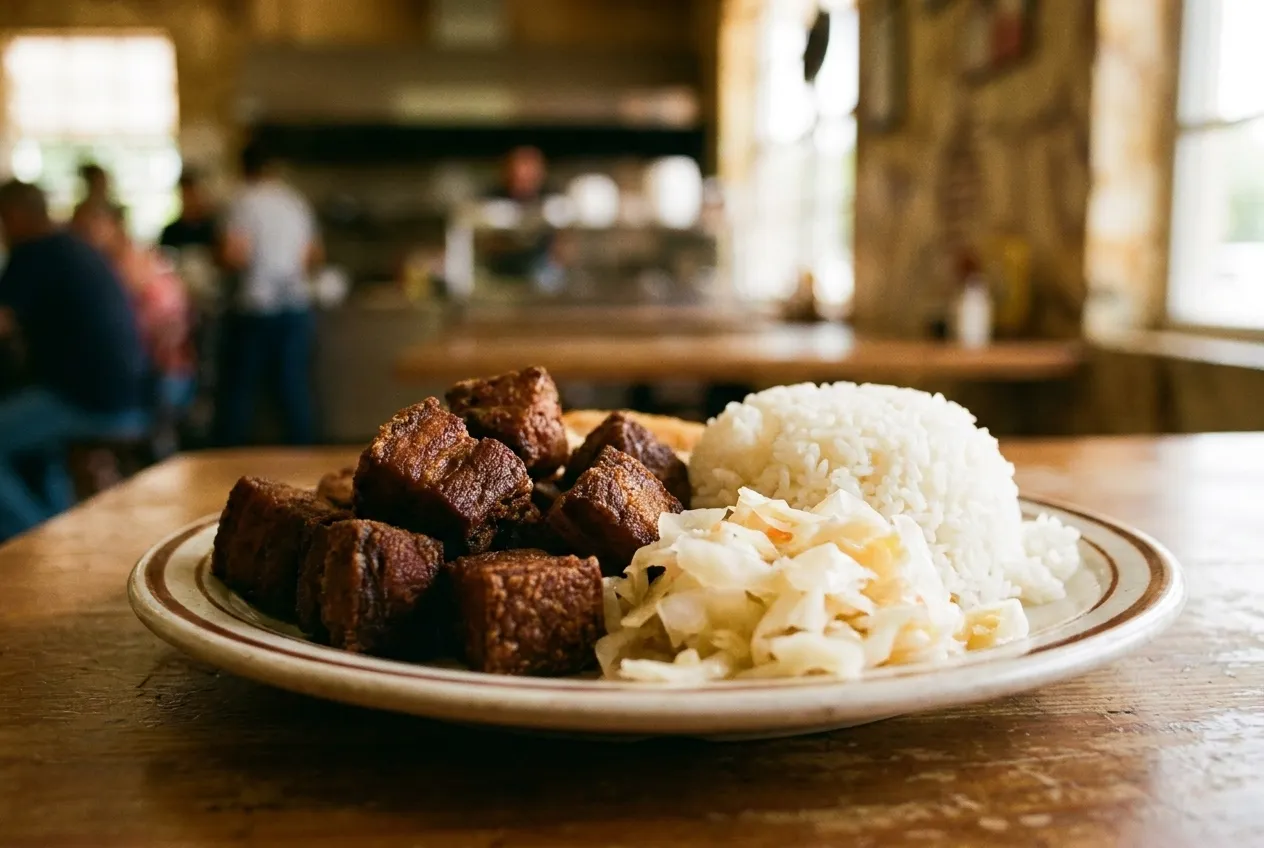
Griot is the dish to order first and the one everything else is measured against. Pork shoulder is cut into chunks, marinated in sour orange and epice - a green herb and garlic base that does most of the flavouring in Haitian cooking - then braised until tender and fried until the edges crackle. Done properly it is crisp outside and still juicy inside, which is a harder trick than it sounds and is the main thing separating a good kitchen from an average one here.
It arrives with pikliz, a violently acidic pickle of shredded cabbage, carrot, onion and scotch bonnet in vinegar. Newcomers push it to the side of the plate because it looks like coleslaw and tastes like a warning. Do not. The pork is rich and salty and the pikliz is the thing that makes a second and third mouthful possible. Take a little with each piece, not a forkful on its own.
The rest of the protein board
Tassot is the same idea applied to goat - marinated, fried, chewier, deeper, considerably more assertive than the pork. Order it second, on a return visit, once griot has calibrated you. Poul nan sos is chicken in a tomato-and-pepper sauce, the everyday comfort option and the safest thing on the board for a cautious eater or a child. Poisson gros sel is whole fish poached with lime, onion and plenty of salt, usually the most expensive line and worth it when the fish is fresh.
There is also a strong lambi tradition - conch, either stewed in creole sauce or grilled - which is chewy in the way conch always is and tastes like the Caribbean does. If a counter has lambi on the board and it is not always there, that is usually a sign the kitchen is buying properly rather than freezing.
Sides are where the neighbourhood actually shows off
Diri ak djon djon is the one to look for. Rice cooked in the soaking liquid of djon djon, a small black Haitian mushroom, which turns the grains a dark slate colour and gives them an earthy, almost smoky flavour that is unlike any other rice you will eat. It is more expensive than white rice and it is the correct upgrade every single time. If it is on the board, order it instead of thinking about it.
Legim is a long-cooked stew of aubergine, chayote, cabbage, carrot and spinach, broken down until it is almost a puree, often cooked with beef or crab. It reads as a vegetable side and eats like a main. Bannann peze are twice-fried green plantains, flat and starchy, and they exist to be dipped in pikliz juice. Diri kole ak pwa is the rice-and-beans default and is perfectly good, but it is the thing to order when djon djon has run out.
Snacks, bakeries and the morning layer
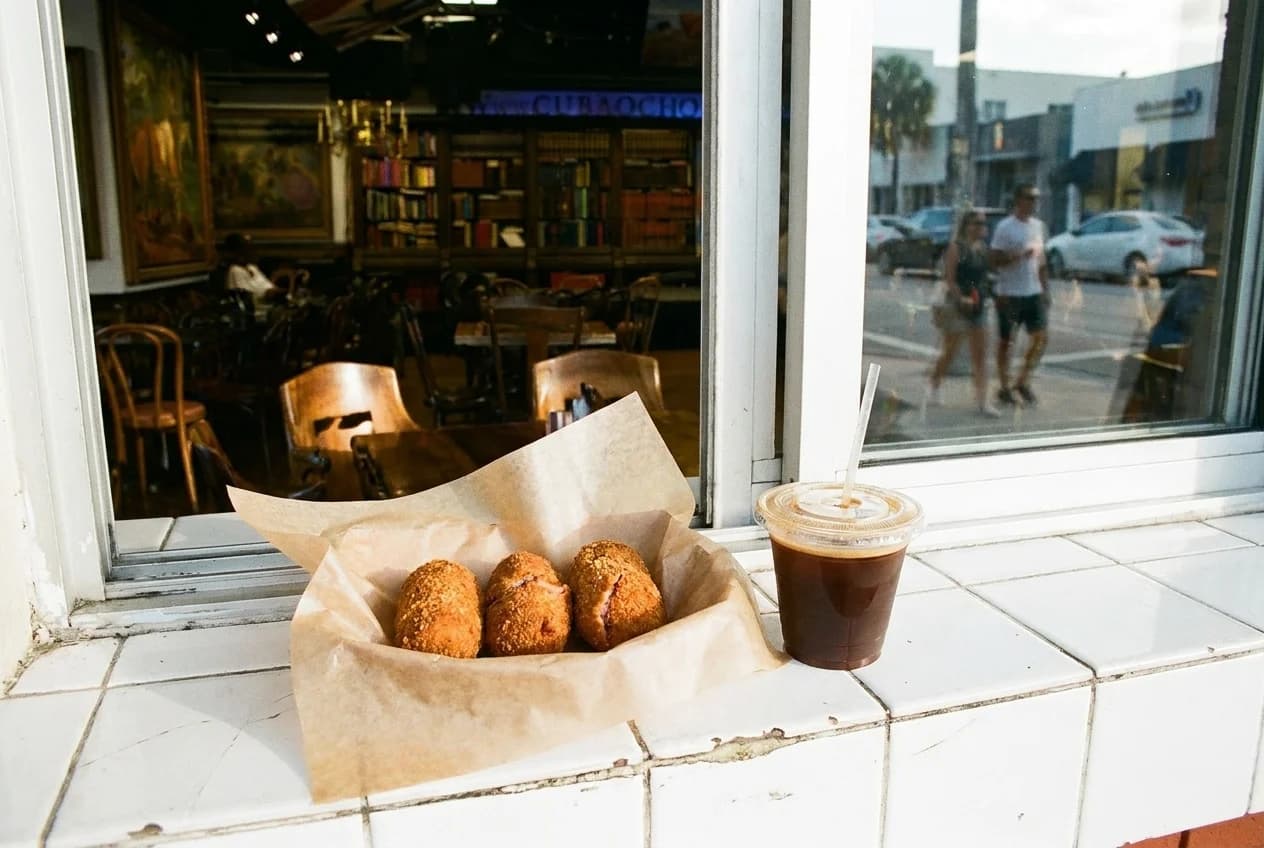
The neighbourhood's bakeries run on a different clock from its kitchens and are the best reason to come in the morning. Pate kode are flaky pastry turnovers filled with spiced beef, chicken, herring or cod - about the size of your hand, eaten walking, and the standard Haitian breakfast. Akra are fritters of grated malanga root, crisp-edged and peppery. Marinad are fluffy fried dough fritters, sometimes with cod.
Wash any of it down with a Haitian coffee, which is dark, sweet and often spiced with a little star anise or cinnamon, or with kremas if you are doing this at night - a thick, sweet rum-and-coconut cream drink that is entirely a dessert. Piman Bouk on NE 2nd Avenue is a good example of the bakery-plus-kitchen format, where the pastry case and the steam table are in the same room.
Where to go, and when
Chef Creole is the name most visitors arrive knowing, and its Little Haiti location on NW 54th Street is a seafood-forward version of the neighbourhood - conch, snapper, and a fried fish plate that is one of the better deals in the county. Naomi's Garden Restaurant & Lounge on NW 71st Street is the one to pick if you want to sit outside under trees rather than eat off a tray, and it hosts music on some nights. Clive's Cafe, on the Wynwood side of the border, is the small, cash-friendly, no-decor version and has been feeding the neighbourhood for decades.
The timing rule for the whole neighbourhood is simple and rarely written down: the food is cooked for lunch. Between about eleven and two, everything on the steam table is at its best and the whole board is available. By late afternoon the selection narrows. By nine most kitchens are closed, and the neighbourhood's evening life is music and bars rather than dinner. If you can only come at night, aim for one of the rooms that does both.
Practical notes
One useful annual date: soup joumou, a squash soup with beef and pasta, is eaten on 1 January to mark Haitian independence, and on that day it is everywhere in the neighbourhood and often given away. Spice level: pikliz is hot, most of the cooking underneath it is not - you control the heat. Budget: a full plate with meat, rice and plantain generally lands between twelve and eighteen dollars, and portions run large enough that two people can share three plates comfortably. Cash is still welcome at the smaller counters even where cards work. Parking on NE 2nd Avenue is straightforward outside event nights. And the Little Haiti Cultural Complex on NE 59th Terrace is worth checking before you come - when it has something on, the food stalls follow.
Tags: #FoodNearMe #LittleHaiti #Miami #HaitianFood #Griot #Pikliz #Tassot #DjonDjon #Legim #PateKode #Akra #SoupJoumou #MiamiEats #NeighborhoodGuide
All trademarks are the property of their respective owners.
Ask Karpo first
The difference between a great first meal in Little Haiti and a confusing one is knowing three words before you get to the counter and arriving while the steam table is still full. Ask Karpo which kitchens are serving at the hour you can be there, which of them has djon djon on today, and whether anything is on at the cultural complex that evening.