 Haaland Has Seven Goals and Norway Runs Entirely Through Him
⚽️2026 FIFA WORLD CUP
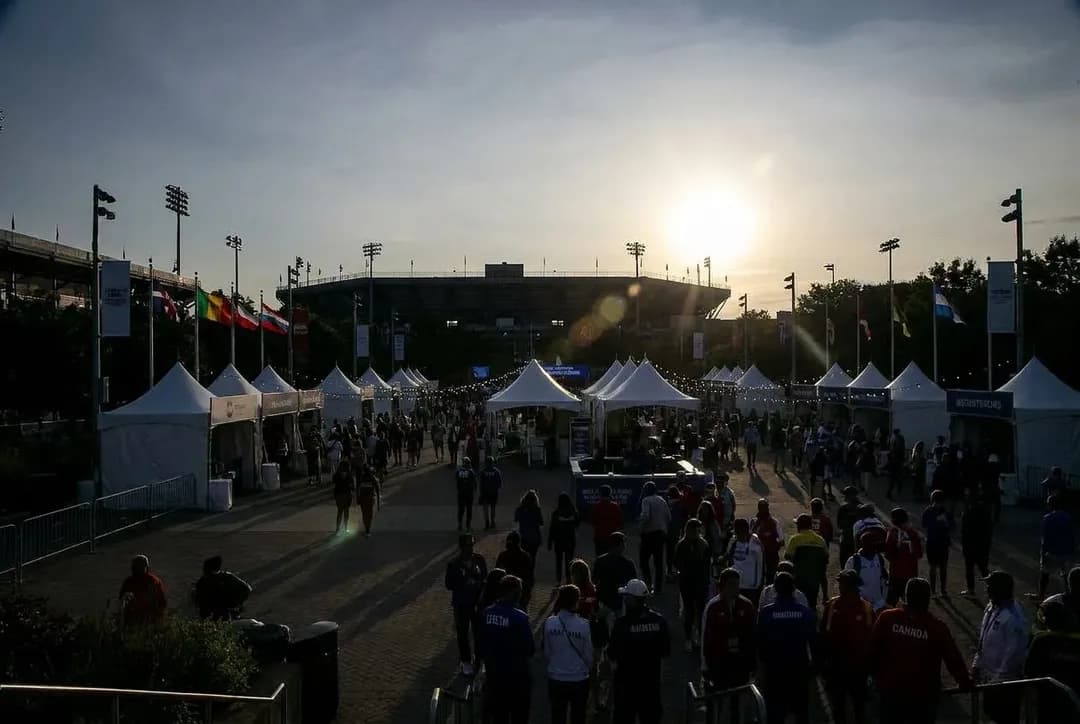
Flushing Meadows' USTA Billie Jean King Center if a World Cup 2026 fan festival takes over the tennis grounds
The USTA Billie Jean King National Tennis Center in Flushing Meadows could transform into a sprawling World Cup fan zone in 2026, leveraging stadium bowls, transit infrastructure, and open plazas for international soccer fever.
Stand at the corner of the USTA Billie Jean King National Tennis Center on a hypothetical June afternoon in 2026, and imagine the air thick with vuvuzelas instead of polite applause. Picture the long promenades between courts draped in the flags of thirty-two nations, temporary beer gardens spilling onto the plaza, and the giant screens inside Arthur Ashe Stadium glowing with a knockout-round penalty shootout. It's not official yet, but Flushing Meadows possesses the bones—stadium capacity, open circulation, transit access—to host one of the city's anchor World Cup 2026 fan festivals, transforming a tennis cathedral into a month-long soccer congregation.
Scheduling and infrastructure alignment
The USTA Billie Jean King Center hosts the US Open in late August and early September, which means a June-through-July World Cup 2026 window would sidestep scheduling conflicts entirely and allow organizers to leverage the same event infrastructure—security checkpoints, vendor plumbing, crowd-flow barriers—already proven at scale. The summer gap is a sweet spot: the grounds sit quiet, the lawns are green, and the operational muscle memory from the Open is still warm.
That infrastructure isn't trivial. The site already manages fifty thousand visitors on peak Open days, with modular concession pods, medical tents, and ADA-compliant pathways. Swap the Honey Deuce cocktails for pints of lager, the Ralph Lauren pop-ups for jersey kiosks, and you've got a plug-and-play festival skeleton. The question isn't whether the bones can handle it—it's whether FIFA and the city will pull the trigger.
Arthur Ashe and Louis Armstrong as viewing arenas
Arthur Ashe Stadium seats more than twenty-three thousand and has hosted concerts and large events over the years; its retractable roof could provide a crucial weather contingency for outdoor screenings when summer thunderstorms roll in from the Atlantic. Imagine the hush before a penalty kick, twenty thousand people holding their breath, the echo bouncing off concrete and steel. The sightlines are steep, the sound system is world-class, and the giant screen technology is already in place for replays and sponsor loops.
Louis Armstrong Stadium, the second bowl, offers a more intimate eleven thousand seats and could serve as the secondary viewing venue—perhaps dedicated to a single confederation or reserved for families seeking a quieter vibe. Between the two stadiums, the open South Plaza could become the festival's beating heart: food pavilions representing every World Cup host city, sponsor activations with penalty-kick cages, and a main stage for evening DJ sets or halftime analysis panels. The geometry of the site encourages circulation; you're never more than three minutes from a bathroom or a beer line.
Transit advantages and the 7 train connection
The 7 train serves Mets–Willets Point station near the tennis center, with pedestrian access via walkways from the station. On Open days, the MTA already runs extra service; scaling that up for a World Cup fan zone is a matter of adding cars, not reinventing the line. The LIRR's Port Washington Branch also stops nearby, offering an alternative for Long Island attendees who'd rather avoid the subway crush. It's a two-pronged transit strategy that few other potential festival sites in the city can match.
Parking is another asset. The adjacent Citi Field lots can absorb thousands of cars, and the site's proximity to the Grand Central Parkway and the Whitestone Expressway makes it accessible for drivers from Westchester, Connecticut, and New Jersey. Yes, parking is available for a fee, but the exact price can vary by event and demand.
Temporary soccer interventions on tennis courts
The outer courts—those silent Har-Tru rectangles that host qualifying rounds—could be reborn as mini soccer pitches for pickup games, youth clinics, or skills challenges. Picture inflatable goals, temporary turf rolls, and a DJ booth at Court 17 spinning Afrobeat and cumbia between matches. It's a low-stakes activation that gives restless kids something to do while parents queue for empanadas or wait for the evening's marquee screenings. The surface can handle it; after all, the Open already endures two weeks of high-intensity foot traffic.
Jersey vendors would line the walkways, racks of replica kits fluttering in the breeze—Argentina's sky-blue stripes, Brazil's canary yellow, the Netherlands' electric orange. Food trucks could anchor the perimeter: arepas, jollof rice, bánh mì, Polish pierogi, reflecting the diaspora neighborhoods that define Queens. The scent of grilled chorizo mixing with freshly cut grass, the clatter of foosball tables under a sponsor tent, the low roar of a crowd erupting two courts over—it's controlled chaos, the best kind.
Family-friendly daytime programming and evening crescendos
Daytime programming would skew family-friendly: face-painting stations, meet-and-greets with former U.S. national team players, and educational exhibits on the history of the World Cup. The USTA's existing Family Zone infrastructure—shaded pavilions, splash pads, quieter seating—could be repurposed for parents seeking refuge from the midday sun. By late afternoon, as the light softens and the temperature drops, the energy shifts. The plazas fill with twentysomethings in scarves and painted faces, the beer gardens hit capacity, and the stadium bowls prepare for prime-time kickoffs beamed in from host cities across North America.
Evening matches would draw the biggest crowds, especially knockout rounds when stakes are highest and emotions run raw. The roof on Arthur Ashe means rain never cancels the party; it just adds a low rumble of thunder to the soundtrack. Post-match, the plaza becomes a celebration or a commiseration, depending on results, with fans lingering until the last train departs and the security staff begins their sweep.
The case for Flushing Meadows as a host site
No official FIFA or USTA announcement has confirmed the tennis center as a World Cup 2026 host city fan festival site, but the logic is hard to argue with. The venue has the capacity, the transit, the food-and-beverage infrastructure, and—crucially—the operational experience to manage tens of thousands of people daily for weeks on end. It sits in the geographic center of the city's most diverse borough, a fifteen-minute train ride from Midtown, and adjacent to one of the city's great public parks. If New York wants to claim its place in the tournament's cultural footprint, Flushing Meadows is the obvious stage.
The wildcard is whether the USTA and FIFA can align on terms—security, insurance, revenue splits, branding control. But if they do, expect the grounds to hum with a different kind of energy in the summer of 2026: less country-club decorum, more street-level passion. The tennis will return in August. Until then, the courts belong to the world.
Practical notes
USTA Billie Jean King National Tennis Center, Flushing Meadows–Corona Park, Queens. Nearest subway: 7 train to Mets–Willets Point (direct walkway access); LIRR Port Washington Branch also stops nearby. Parking available in adjacent Citi Field lots (fees apply). No official World Cup 2026 fan festival hours or ticketing announced as of publication; verify directly with FIFA and USTA channels closer to the tournament. Site is fully ADA-accessible with elevators and ramps throughout. Bring sunscreen, a hat, and a portable phone charger; expect bag checks and clear-bag policies similar to US Open protocols.
Tags: #WorldCup2026 #FIFAWorldCup #FlushingMeadows #USTABillieJeanKing #WorldCupFanZone #NYCEvents #QueensNYC #ArthurAsheStadium #SoccerInNYC #FanFestival #7Train #MetsWilletsPoint #WorldCup2026HostCities #SummerInNYC #FIFA2026
Please drink responsibly. Must be of legal drinking age.
All trademarks are the property of their respective owners.
Ask Karpo for more information.
Keep reading
- Haaland Has Seven Goals and Norway Runs Entirely Through Him
 World Cup Trophy Ceremony Timing Medals and Postmatch Celebrations
 Olise and France's Attack: The Semifinal Tactical Question