Miami-Dade County's low elevation, high water table, and limited natural drainage create conditions where flash flooding can develop in minutes during heavy rain, turning routine errands into dangerous situations before most residents realize the severity. According to Miami-Dade's official weather preparedness guidance, major storms can occasionally overwhelm the landscape and cause water to collect in low-lying areas, with just six inches of moving water capable of knocking an adult off their feet and a foot of water able to stall most vehicles. This guide focuses on practical steps for changing plans during active rain events: recognizing which neighborhoods are most vulnerable, understanding when to shelter in place rather than attempt travel, using elevated transit options that remain operational when streets flood, and identifying indoor public destinations where families can wait out storms safely. No Miami neighborhood is flood-proof during severe weather, and this article does not promise safety guarantees. Instead, it explains the tradeoffs involved in different decisions, what to verify before leaving home, and how to use official alerts and transit information to make informed choices when afternoon thunderstorms turn into something more serious.
Ask Karpo for a rain-adjusted Miami route before you leave. Share your neighborhood, transport mode, and must-do stop to get a shorter indoor plan with a realistic backup if streets or transit conditions change.

Understanding Miami-Dade's Flood-Prone Geography Before the Rain Starts
Miami-Dade County's unique vulnerability to flooding stems from its physical characteristics: low elevation throughout the county, proximity to major water bodies on multiple sides, a high water table that leaves little room for water absorption, and limited natural drainage that depends heavily on engineered systems. The county's official floodplain management program notes that these factors combine to create situations where major storms can quickly overwhelm the landscape. Low-lying areas are particularly susceptible, but flooding can occur in any neighborhood when drainage systems reach capacity or when debris blocks the flow of water away from streets and properties. Residents should consult Miami-Dade's flood zone map to understand their specific property's designation, keeping in mind that flood zones indicate statistical risk over time rather than guaranteeing safety during any particular storm.
Before heavy rain arrives, the most important step is understanding your own neighborhood's drainage patterns and your home's position relative to street level. Miami-Dade's heavy rain guidance emphasizes clearing debris from gutters, downspouts, and street storm drains, noting that a single cluster of palm fronds or litter can turn a standard afternoon downpour into a localized flood. If your property has swales—the shallow drainage channels common in many Miami neighborhoods—ensure they are not obstructed by parked cars or landscaping, as these function as the primary drainage system. For residents in areas that have flooded previously, moving high-value items, electronics, and important documents to upper floors or high shelves should happen before the first drops fall. This preparation work determines whether you'll have the option to shelter at home safely or will need to relocate to higher ground or public buildings once rain intensifies.

When to Cancel Travel Plans and Shelter in Place
The decision to stay home rather than venture out during heavy rain depends on several factors: the severity of the forecast, your home's flood history, the elevation of your specific block, and whether you have vulnerable household members who would be at risk if conditions deteriorate. Miami-Dade's official guidance makes clear that residents should avoid the temptation to walk or drive through flooded streets, as the depth and current of floodwater are often impossible to judge accurately. If you're already home when heavy rain begins and your property is not actively flooding, staying put is usually the safest choice. Ensure you have a battery-powered radio or charged mobile device to monitor weather alerts, and prepare a kit with flashlights, water, and supplies in case water enters your living space or power fails.
For residents in low-lying areas with a history of street flooding, canceling plans becomes necessary when the National Weather Service issues flash flood warnings for Miami-Dade or when the county's 311 system begins receiving reports of flooded streets in your area. Physical barriers such as sandbags or flood shields can protect doorways and garage entries, but Miami-Dade's guidance notes these are only effective against shallow water and should not be relied upon during severe flooding. If you have a low-foundation home, verify that your sump pump has a battery backup, as heavy rain often coincides with power outages. Installing backflow valves on sewer lines can prevent rising street water from forcing sewage back into your drains, a common and costly hazard during Miami-Dade's peak rainy season. The key is making the decision to shelter in place early, before water on streets makes any movement dangerous.
Using Metromover and Elevated Transit When Streets Flood
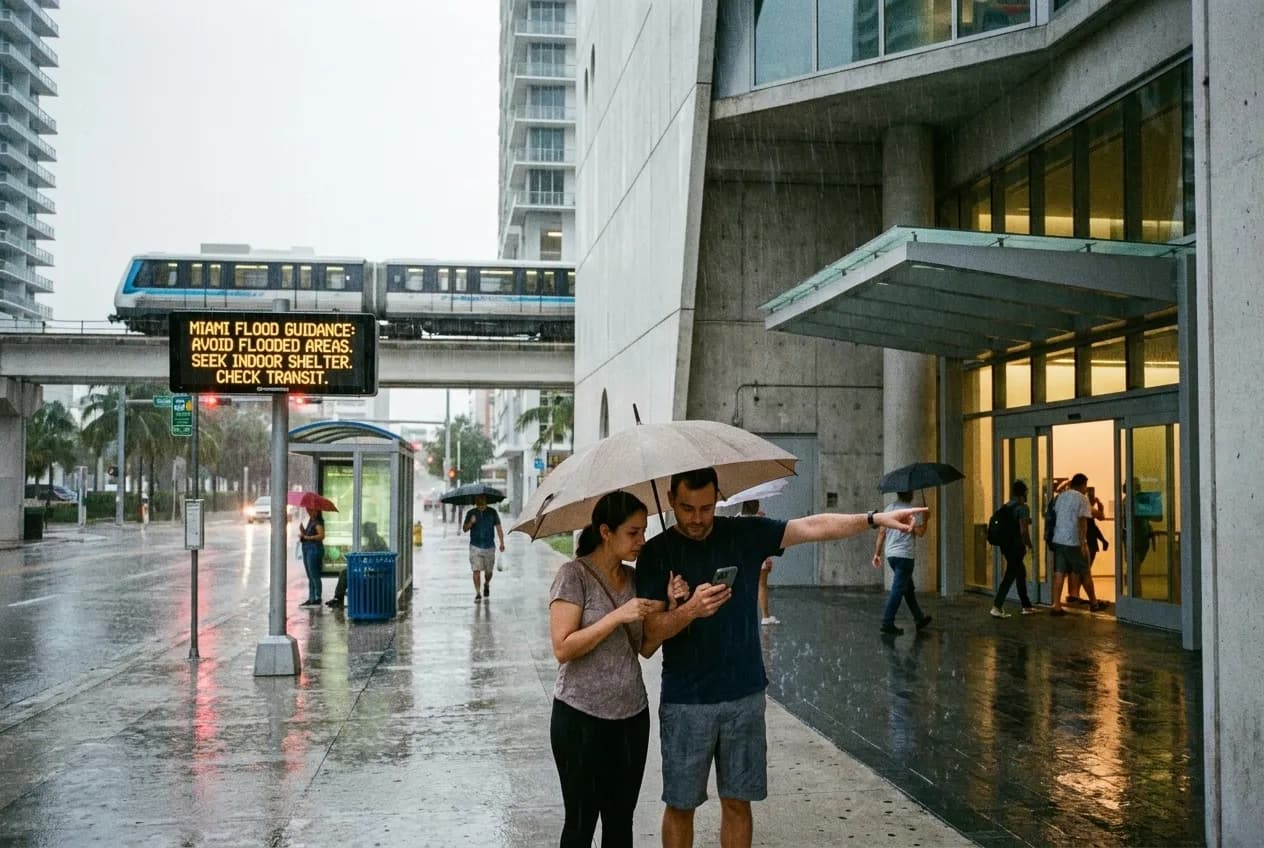
Miami-Dade's Metromover system offers a critical advantage during heavy rain: it operates on elevated guideways that remain functional when street-level flooding makes driving and walking hazardous. The free people mover system serves downtown Miami, Omni, and Brickell areas with 21 stations, connecting major destinations including Bayside Marketplace, Miami Dade College, and the county school board offices. During normal operations, Metromover runs from 5:30 a.m. to 10 p.m. seven days a week, with cars arriving every 90 seconds during rush hours and every three minutes during off-peak periods. However, riders should verify current service status before leaving, as the system occasionally operates on modified schedules during maintenance or weather events. As of August 2026, Metromover is undergoing system upgrades, and service modifications are possible.
The practical advantage of elevated transit during flooding is significant: you can reach your destination without driving through water of unknown depth or walking through potentially contaminated floodwater. Metromover stations are accessible via stairs, escalators, or elevators, and the system connects to other transit options at multiple points. If you're planning to use Metromover during heavy rain, check the elevator and escalator status page before leaving home to ensure accessible routes are operational at your origin and destination stations. If an elevator is inoperable, Miami-Dade Transit provides backup accessible service within 30 minutes upon request using the red call box at station entrances. The system's three loops—Omni, Inner, and Brickell—provide efficient connections, but riders should familiarize themselves with station locations and transfer points before traveling during weather events. Remember that while the Metromover itself may be operational, getting to and from stations safely requires that surrounding streets be passable.
Indoor Public Destinations for Waiting Out Afternoon Storms
When heavy rain catches you away from home or when sheltering at home is not advisable due to flooding risk, Miami-Dade offers several substantial indoor public destinations where families can wait safely for conditions to improve. The Phillip and Patricia Frost Museum of Science, located at 1101 Biscayne Boulevard in Maurice A. Ferré Park, is open daily from 10:00 a.m. to 6:00 p.m. and offers museum exhibitions, an aquarium, and planetarium shows. Adult tickets start at $29.95, youth ages 4-11 start at $24.95, and children three and under enter free, though ticket pricing varies depending on the day of visit. The museum is directly adjacent to the Metromover Museum Park station on the Omni Loop, making it accessible via elevated transit. First responders, active U.S. military, and veterans receive free admission with proper identification, and seniors 62 and older receive a five-dollar discount.
Frost Science represents the type of destination that fits families needing several hours of indoor shelter during extended rain events: it offers climate-controlled space, restrooms, food service at the Food@Science café, and engaging activities that make an unplanned weather delay less stressful for children. The museum's bag policy requires that bags or purses be smaller than 14 by 12 inches, with complimentary storage available for larger items, which may be a consideration if you're carrying emergency supplies. Before making Frost Science your rain shelter, verify current hours and any special closures by contacting the ticket center at 305-434-9600 or visiting the museum's website, as this guide cannot guarantee that hours remain unchanged. Other indoor options exist throughout Miami-Dade, but readers should verify operating hours, admission policies, and accessibility before traveling during active weather events. The key is identifying these destinations in advance and understanding how to reach them via elevated transit or from already-safe locations, rather than attempting to drive across the county through flooded streets.
What to Verify Before Leaving During Active Rain Events
Before leaving your current location during heavy rain, several pieces of information are essential for making a safe decision. First, check Miami-Dade County's official weather alerts and the National Weather Service for current warnings specific to your area—flash flood warnings indicate that flooding is imminent or already occurring and require immediate action. Second, verify the status of your intended route by checking Miami-Dade's 311 system for reports of flooded streets in the neighborhoods you would need to traverse. The county's guidance instructs residents to report flooded streets after storms, and this information can help you avoid impassable routes. Third, if you're planning to use public transit, verify current service status for Metromover, Metrobus, or other options, as weather events can cause service modifications or delays.
Fourth, confirm that your destination is actually open and accessible—museums, libraries, and other public buildings may close early or restrict access during severe weather. Fifth, ensure you have a charged mobile device with you for navigation, weather updates, and emergency communication. Sixth, if you must drive, understand that Miami-Dade's official guidance is unequivocal: never drive through floodwater, as just one foot of water can stall most vehicles and two feet of rushing water can carry away most vehicles including SUVs and pickups. If you encounter a flooded street, turn around and find an alternate route or return to your starting point. Finally, stay away from power lines and electrical boxes when outside, as standing water can easily become energized. The decision to travel during active rain should be made only when staying in your current location presents greater risk than moving, and only when you have verified that a safe route exists to a destination that offers meaningful improvement in safety.
After the Rain: Reporting Flooding and Protecting Your Property
Once heavy rain subsides and floodwaters begin to recede, Miami-Dade County relies on residents to report flooded streets and drainage problems to help prioritize response and identify areas needing infrastructure improvements. Residents can report flooded streets by visiting 311 online or calling 311 directly. For broken or leaking pipes specifically, the county's Water and Sewer Department can be reached at 305-274-9272. Flood and drainage complaints can be submitted through an online form or by calling the Flood Zone Hotline at 305-372-6688. This reporting serves both immediate and long-term purposes: it helps the county dispatch crews to address urgent drainage blockages and provides data for infrastructure planning.
When returning to your property after flooding, Miami-Dade's guidance includes several important safety measures. Keep manhole covers closed when streets are flooded—opening them introduces additional water to the sewer system and can cause overflows. Place any storm debris on the right-of-way away from fences, mailboxes, storm drains, manholes, and low-hanging wires, and do not place debris on vacant lots, farmland, or in front of commercial properties. If water entered your home, be aware of potential mold growth and contaminated water hazards; the county references Centers for Disease Control and Prevention guidance for post-flood safety. For properties in designated flood zones, reviewing flood insurance options is advisable, as flood insurance is required for any federally backed mortgage in a special flood hazard area. The county's floodplain management program and flood zone maps provide information for understanding your property's long-term risk. Remember that experiencing one flood event means your property is vulnerable to future events, and taking protective measures before the next heavy rain is essential for minimizing damage and maintaining safety.
Tags: #AskKarpo #BeforeYouGo #SafetyFirst #MiamiWeather #TransitGuide
Sources consulted: Source 1: miamidade.gov · Source 2: miamidade.gov · Source 3: miamidade.gov · Source 4: pamm.org · Source 5: frostscience.org
All trademarks are the property of their respective owners.
Ask Karpo first
Tell Karpo where you are in Miami, how you are traveling, and what can or cannot be canceled. Karpo can help replace an exposed route with current indoor options while you continue following official weather and emergency guidance.