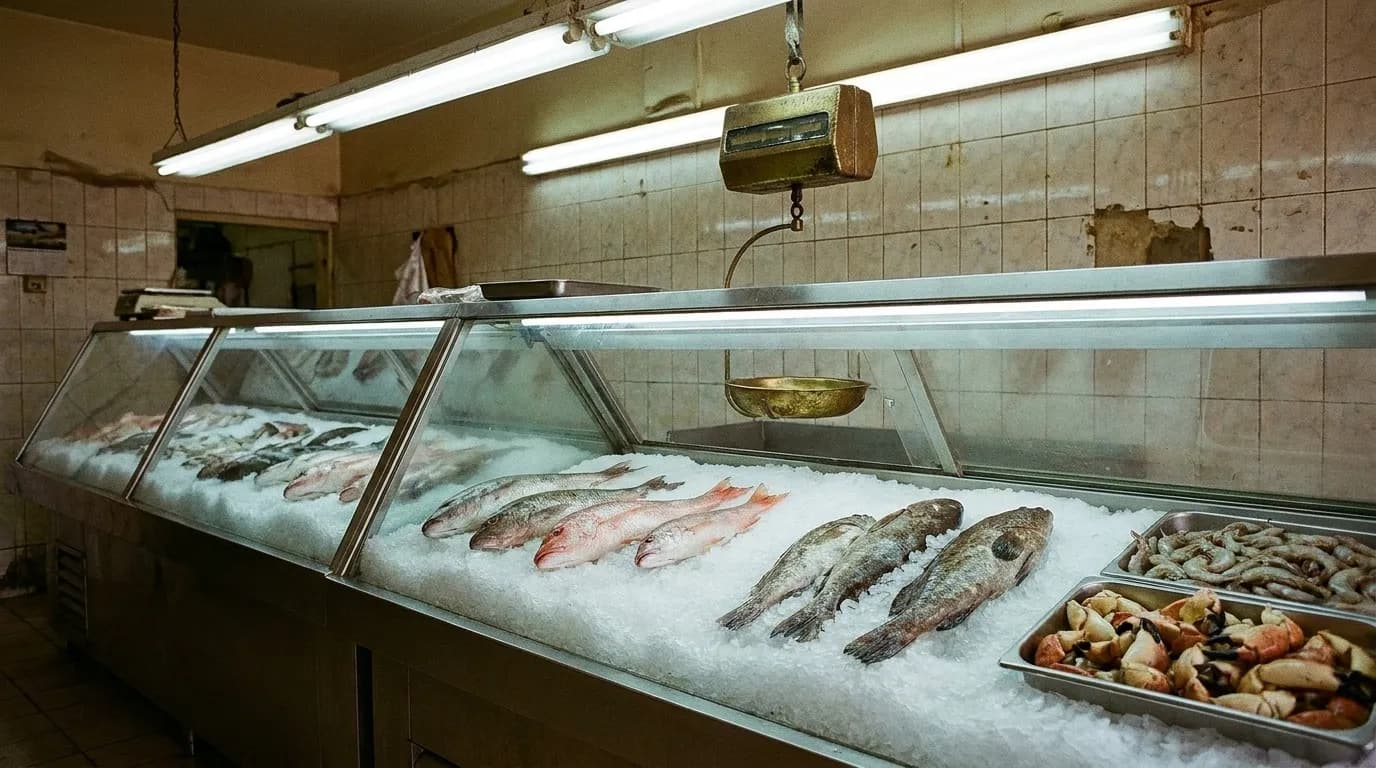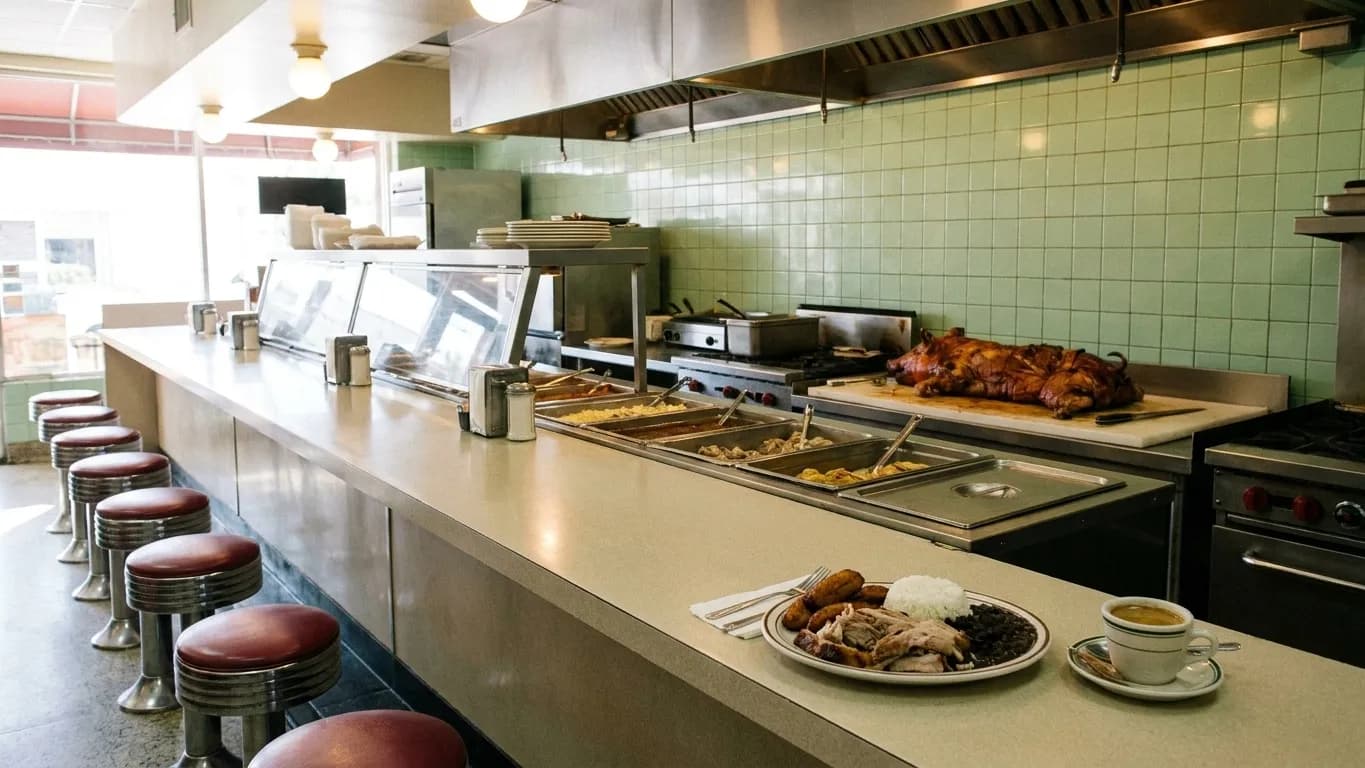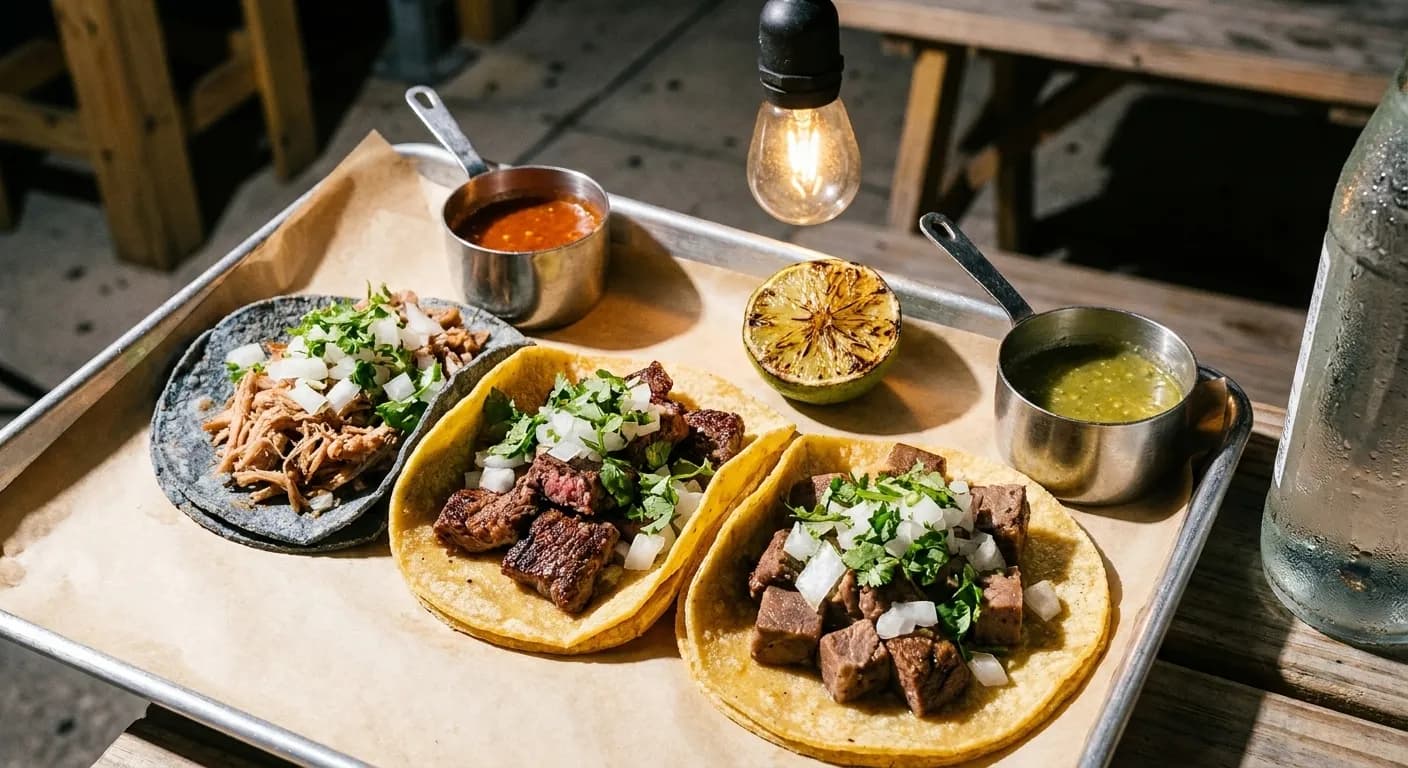
Fast food in Miami is two separate systems running in parallel. One is the national grid you already know, which functions here exactly as it does everywhere else. The other is a counter economy — bakery windows, fish counters, frita stands, cafeteria chains that never left Florida — that is faster than the drive-thru, cheaper than the combo, and considerably better food. Most visitors use the first system for a week without noticing the second one exists. This is a map of both, and of when each is the right call.
The good counters keep bakery hours rather than fast-food hours, and the best ones are unmarked strip-mall windows. Ask Karpo in iMessage what is open near you right now and which of it is worth the extra four minutes of driving.
The Ventanita System
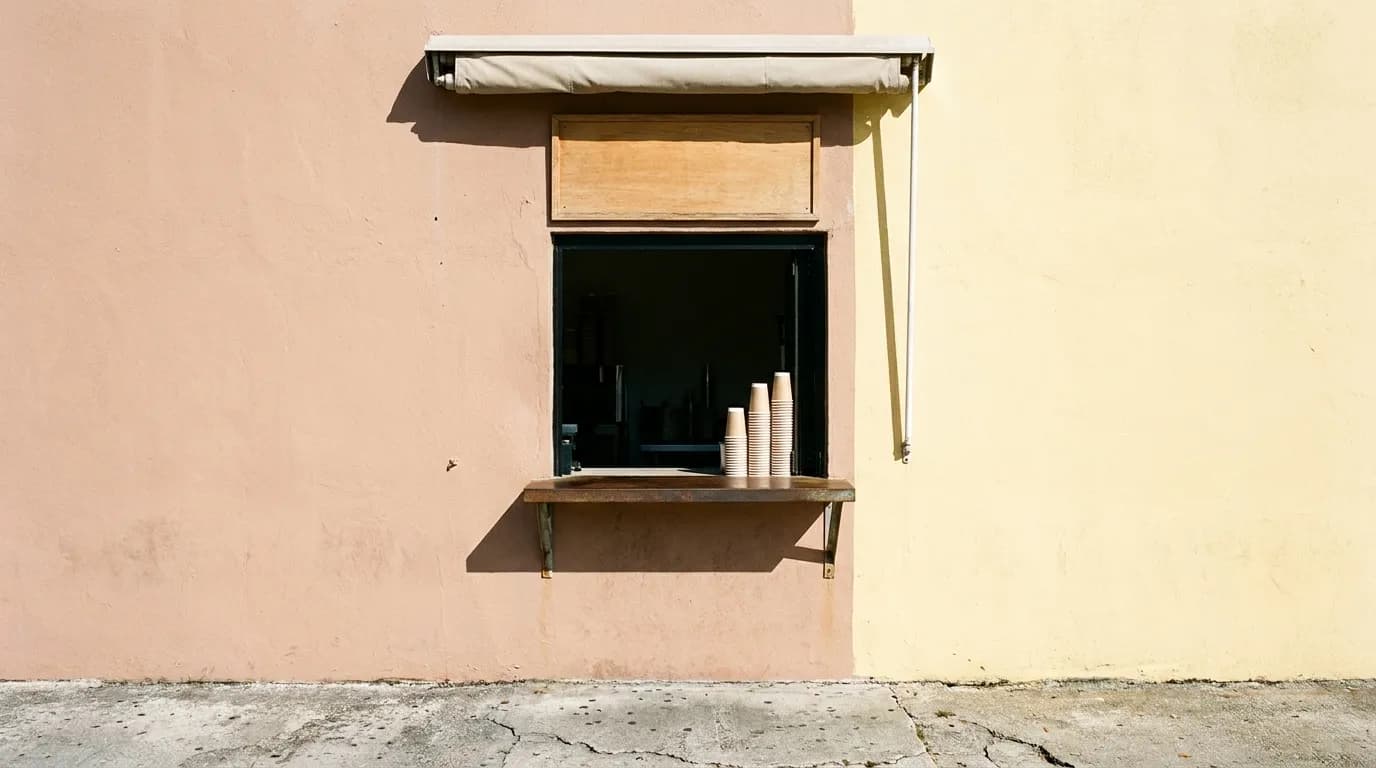
The ventanita — the walk-up window on the side of a Cuban bakery — is the fastest food in this city and nothing on the national grid competes with it on time. You walk up, order a colada or a cortadito and a pastelito or a croqueta, pay something in the low single digits, and you are gone in ninety seconds. Vicky Bakery and Pinecrest Bakery run the most recognisable versions across dozens of locations, and there are hundreds of independent ones. Two things to know as a first-timer: a colada is not a coffee for one person, it is a shared thermos of sweetened espresso with a stack of thimble cups, and handing it round is the entire point. And the croquetas are best in the morning, when they have just come out.
The Frita, Miami's Own Fast Burger
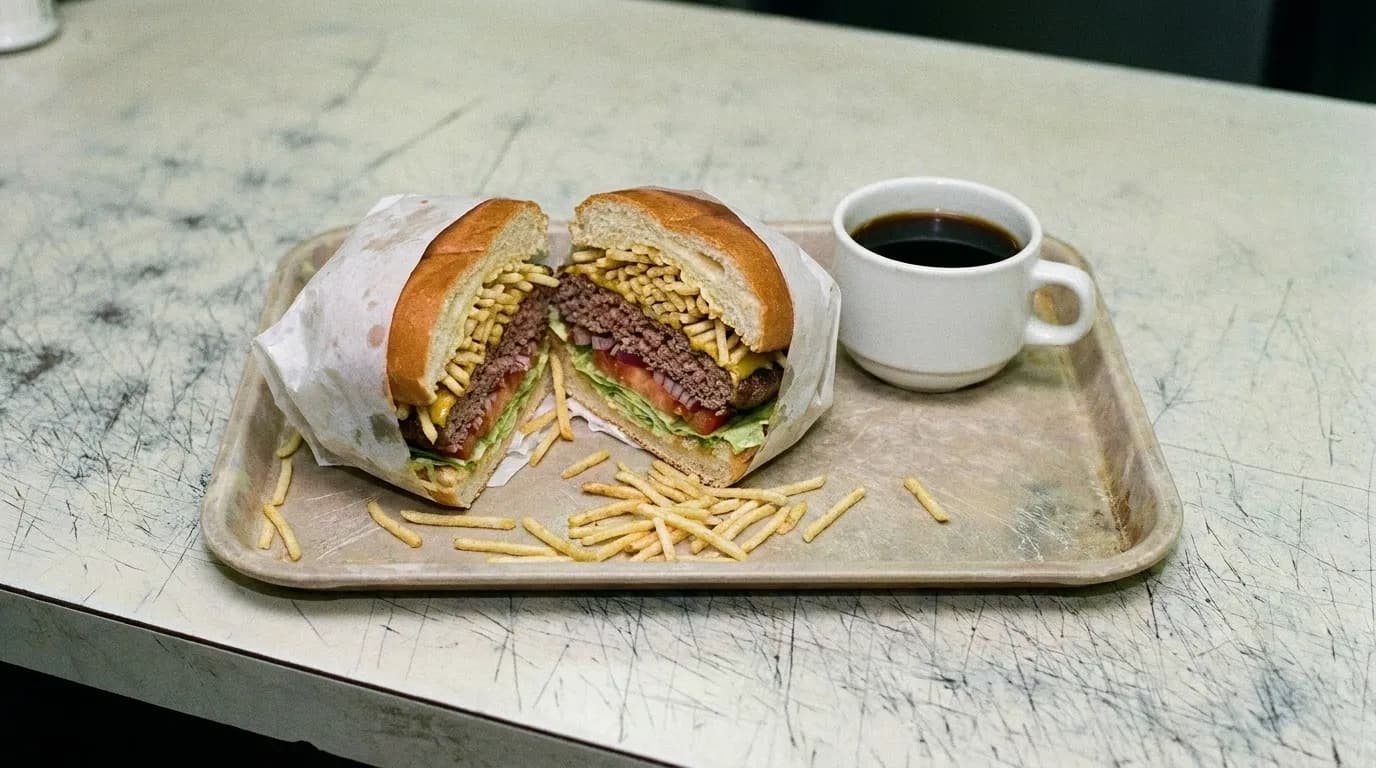
The frita cubana is a thin, seasoned beef patty in a soft roll, topped with a nest of shoestring potatoes and raw onion, and it is the single most Miami thing you can eat for under ten dollars. El Rey de las Fritas has been making them since the 1970s and remains the reference version across several locations. It is not a gourmet burger and it is not trying to be: it is a fast, salty, crunchy, faintly paprika-scented thing that costs less than a chain combo and takes about as long to make. Order it with a batido — a thick tropical milkshake, mamey or trigo if you want the local answer — and you have had a genuinely regional fast meal for the price of a value menu.
The Chains That Are Actually From Here
Pollo Tropical started in Miami in 1988 and is the rare regional chain that is genuinely better than its national equivalents: citrus-marinated grilled chicken, black beans, yellow rice, a wall of sauces you serve yourself, and a bowl or platter that lands under the cost of a comparable national combo with actual vegetables in it. Latin American Cafeteria has been doing enormous Cuban sandwiches at counter speed across Miami-Dade for decades, and the sandwich is large enough to be two meals. Sergio's covers the same territory with table service and a drive-thru. Between them these three do what the national chains do — consistency, speed, late hours — with food that could only be from this city.
The National Grid, Used Well
There are moments when the answer genuinely is a drive-thru: 2am on a highway, a car full of children, an airport run at six in the morning. Miami's version of the national grid has a couple of local quirks worth knowing. The chains here run late along the main corridors and near the highways, but suburban locations in Coral Gables and the Grove close earlier than you would expect. Drive-thru lines at peak are frequently slower than walking in, particularly in the Doral and Kendall corridors. And prices are noticeably higher on Miami Beach than three miles inland for the identical order, which is true of essentially everything on the barrier island.
How to Choose in Ten Seconds
The decision rule that works: if you are on foot and you want to be eating within two minutes, find a ventanita. If you have a car and twenty dollars for two people, go to a frita counter or a Cuban cafeteria. If you need to feed four people something everyone will accept without discussion, the regional chains do that better than the national ones here. And if it is the middle of the night on a highway, take the drive-thru and do not feel bad about it. The mistake is not eating fast food in Miami — it is eating the generic version when the local one is closer, cheaper and open.
What to Order at a Cuban Counter If You Have Never Done It
The menu boards at these counters are long, in Spanish, and rarely explained, which stops a lot of people from ordering anything interesting. A short list that always works. A pastelito de guayaba is a flaky pastry with guava, usually under two dollars and best in the morning. A croqueta de jamón is a small ham croquette, and the correct move is to order a preparada — a croqueta pressed into a roll — if the counter offers it. A cortadito is espresso cut with steamed milk and sugar; a colada is the shared one; a café con leche is the breakfast version with a piece of buttered toasted bread for dunking, which is the single most common Miami breakfast and costs about four dollars. Ask for the pan tostado if it is not automatic. Beyond that, medianoche is the sweeter, softer cousin of the Cuban sandwich, and empanadas at the front of the case are usually the morning's. Nothing on this list requires Spanish beyond the name of the item, and every counter is used to pointing.
Tags: #Miami #FastFood #CubanFood #Ventanita #Frita #PolloTropical #CheapEats #LittleHavana #Hialeah #MiamiEats #Florida #NeighborhoodGuide #DriveThru #Croqueta
Sources consulted: pollotropical.com · elreydelasfritas.com · miamiandbeaches.com · vickybakery.com
All trademarks are the property of their respective owners.
Ask Karpo first
Bakery windows and counter kitchens keep hours that no listing gets right, and the good ones close earlier than the chains. Ask Karpo in iMessage which counters near you are open now, what they are known for, and how far the nearest one actually is.