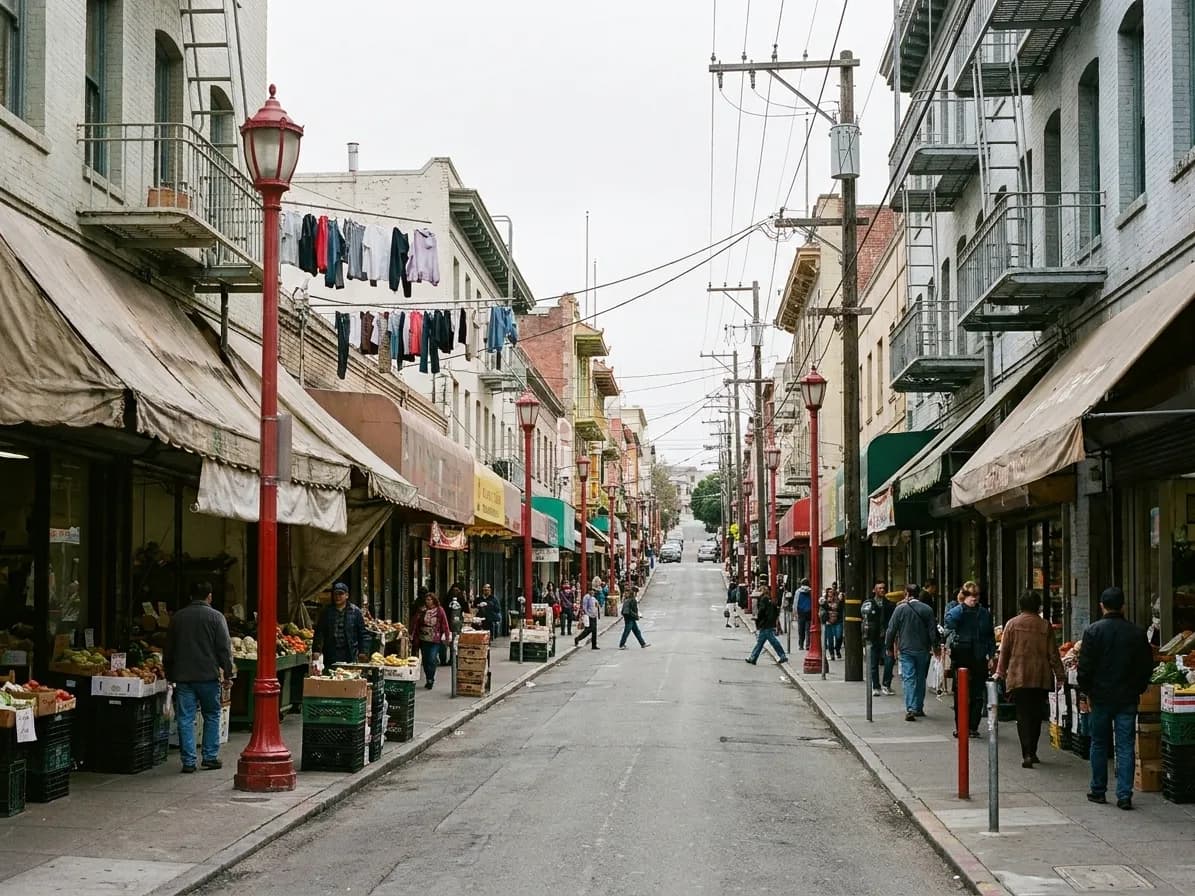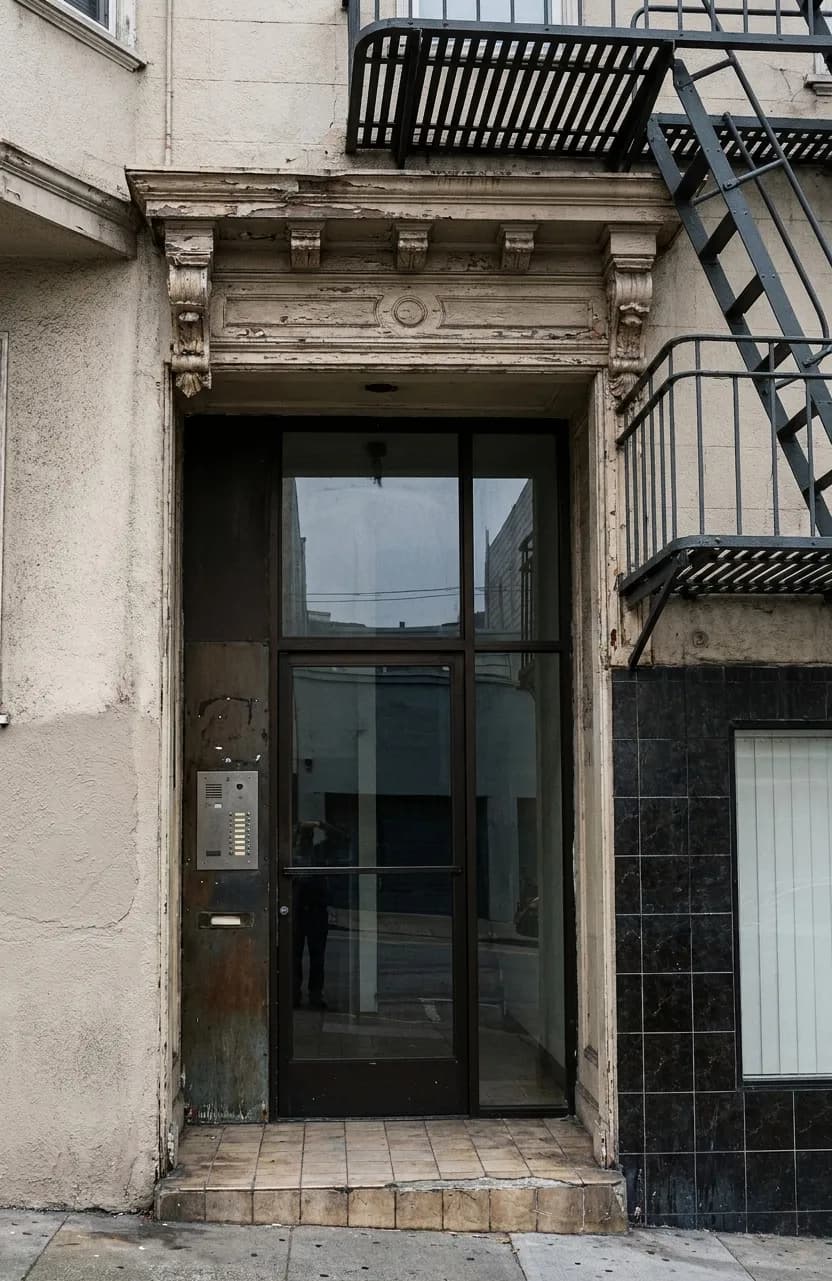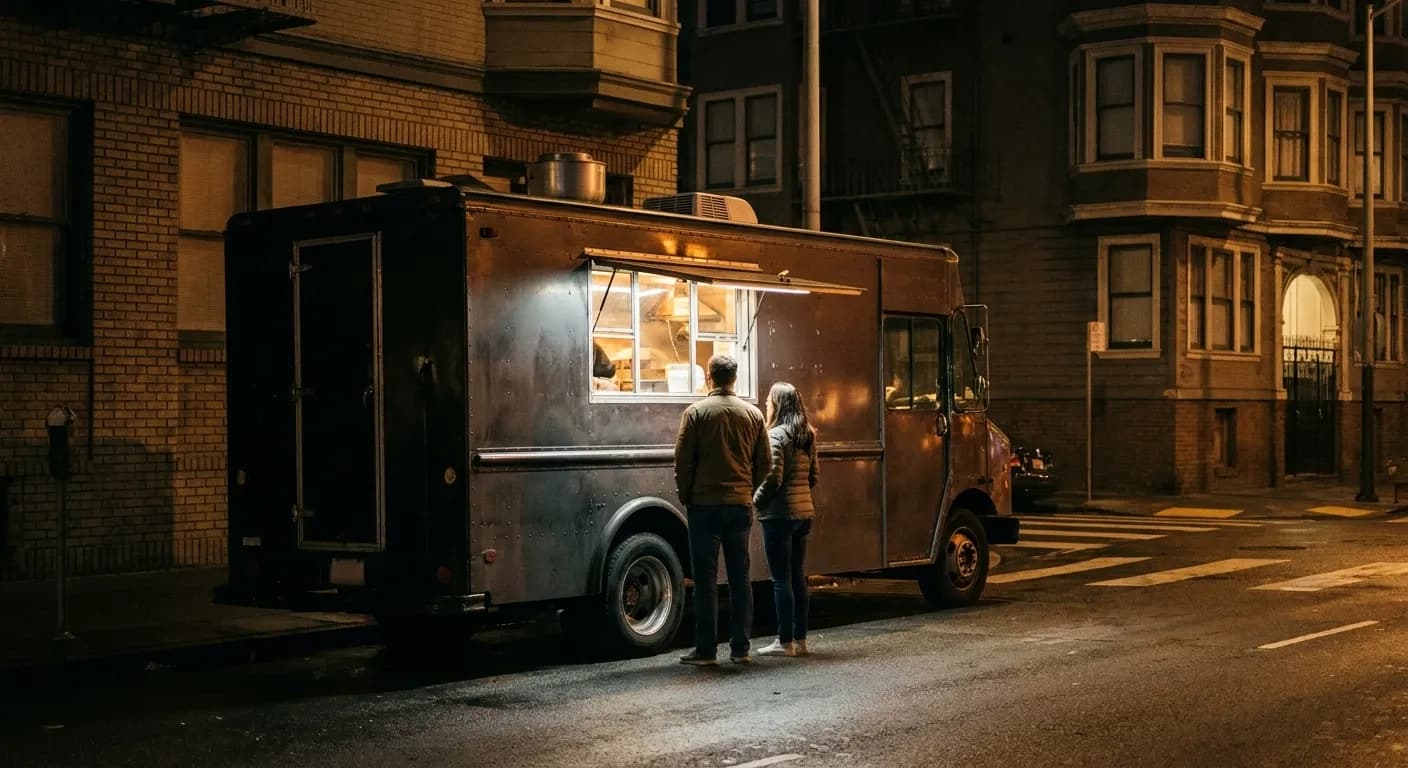
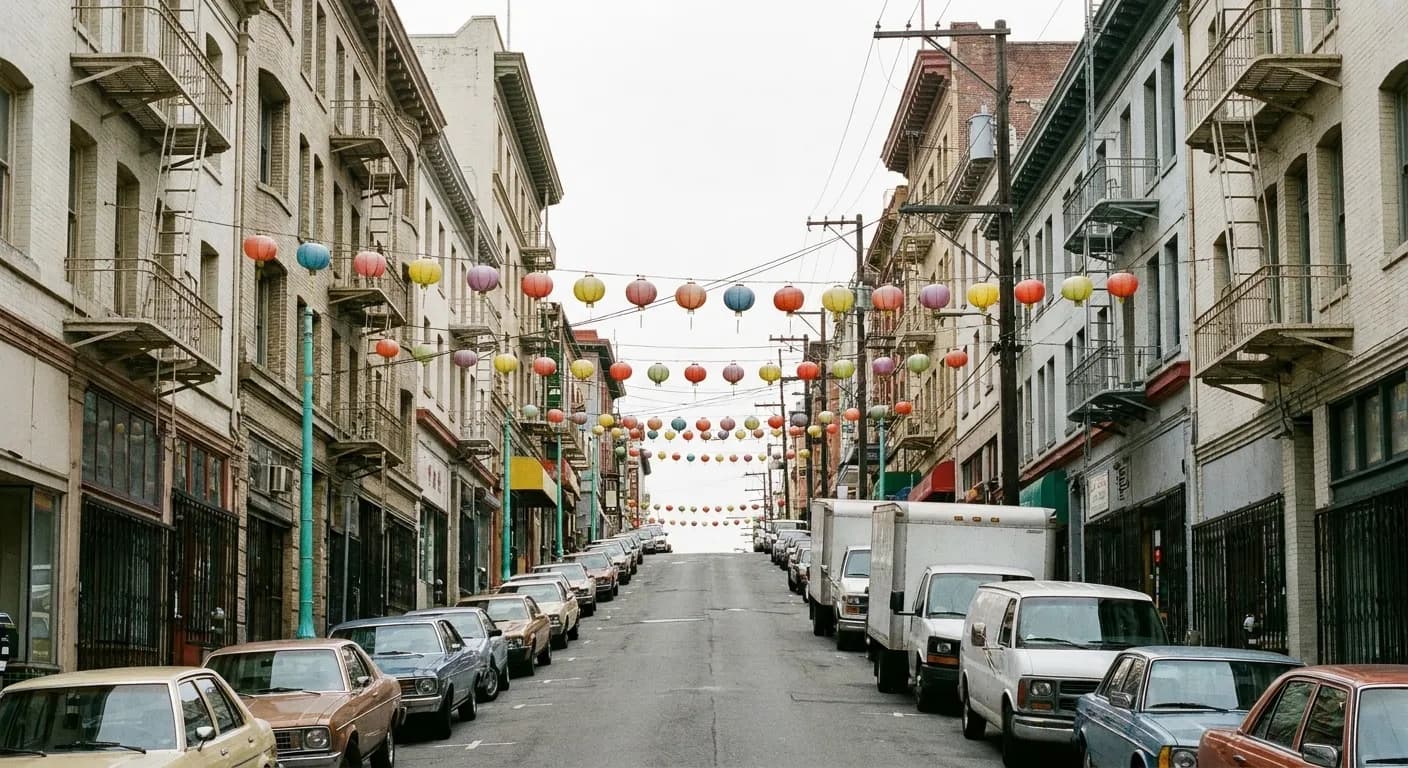
Searching for drive-thru and fast food near me in Chinatown, San Francisco produces almost nothing, and the reason is straightforward: the neighbourhood is one of the densest urban districts in the United States, built before cars and never rebuilt for them. There is nowhere to put a drive-thru lane. What Chinatown has instead is a grab-and-go culture that predates fast food by a century and beats it comfortably on speed, price and quality.
Chinatown's version of fast food is a counter, a bag and ninety seconds, and it beats any drive-thru in the city on both speed and price. Tell Karpo where you are and how long you have, and it will point you at the nearest counter worth the stop.
The bakery counter is the fast food
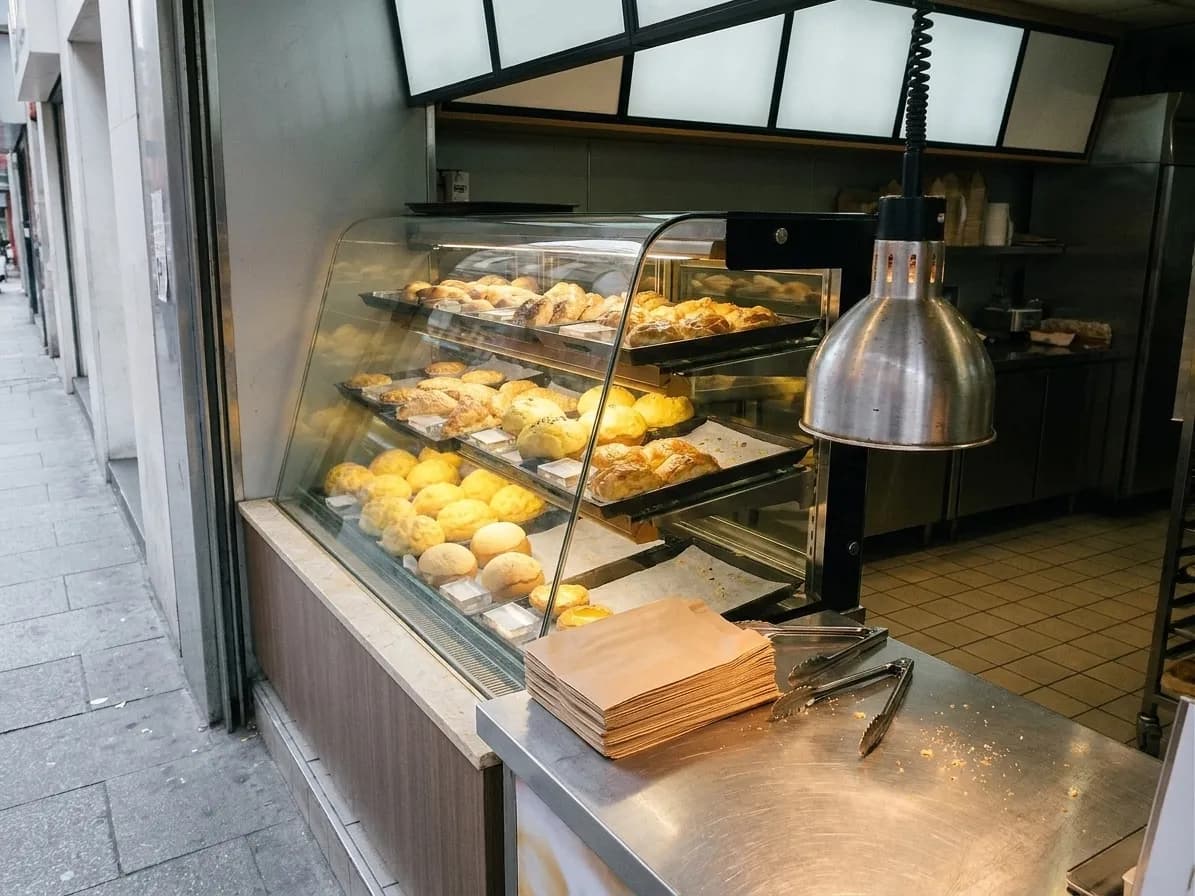
Chinatown's bakeries are the neighbourhood's answer to a drive-thru. Pork buns, custard tarts, sesame balls, coconut buns, sponge cakes — bought with tongs and a tray, bagged in seconds, and priced in single dollars. Several operate from early morning, and the transaction takes less time than pulling into a car park would.
The etiquette is simple and worth knowing: take a tray and tongs at the door, serve yourself, and pay at the counter. Cash moves faster than a card in most of them, and the queue at lunchtime moves considerably faster than it looks.
Roast meat over rice, in a box
The roast shops with duck and char siu hanging in the window will chop whatever you point at, put it over rice with greens in a takeaway box, and have you out of the door in a couple of minutes. It is a complete hot meal for less than the price of a combo elsewhere, and it travels well enough to eat on a bench or take back to an office.
If you are feeding several people, buy by weight rather than as plates. A pound of roast pork and a bag of rice from a shop on Stockton feeds a family for the price of two individual meals, which is how the neighbourhood itself buys it.
Dim sum by the piece
The takeaway dim sum counters are the fastest food in San Francisco. Steamer trays behind glass, order by the piece or the box, paid in cash, handed over in a paper bag. Har gow, siu mai, rice noodle rolls, sticky rice in lotus leaf. Breakfast for a few dollars, and the queues at eight in the morning are locals rather than visitors.
These counters generally sell out and close in the early afternoon rather than running all day, which is the main thing to plan around. What is on the tray at eleven is the freshest it gets; what is left at two is not.
Where the chains actually are
If you specifically need a conventional fast-food chain or a drive-thru, you will be leaving the neighbourhood. The nearest options sit toward the edges — around Van Ness, the Financial District's fringe, and out toward the northern waterfront — and getting to any of them in a car from central Chinatown will take longer than eating at a counter would. San Francisco as a whole has very few drive-thrus, a consequence of both its density and its planning rules.
The honest advice is that the trade is not worth it. The cost per calorie in Chinatown is lower, the wait is shorter, and there is no parking problem because you are not parking. If you are driving through and hungry, the efficient move is to park once in a garage on the edge and walk in.
Getting in and out quickly
Chinatown is served by several bus lines, sits between North Beach and Union Square on foot, and has the cable car lines running across the top of it. Almost everyone who eats here regularly arrives on foot or by bus, and the fastest version of this meal involves no vehicle at all.
If you must drive, use one of the garages rather than hunting for street parking — the hourly rate is less than a citation and vastly less than the time. Then walk Stockton rather than Grant, because Stockton is where the food is and Grant is where the souvenirs are.
What to buy for later
The other half of Chinatown's grab-and-go culture is food bought to eat somewhere else, hours later. Roast meat, buns, noodles in a bag and prepared vegetable sides all travel well and reheat properly, which makes an afternoon stop here the cheapest way to solve dinner in a city where dinner is expensive.
If you are heading somewhere — a park, a beach, a long drive — the bakeries are the single best provisioning stop in San Francisco. Two or three buns each, a bottle of something cold, and you have spent less than a coffee costs three blocks east, with food that holds up for hours without refrigeration.
Tags: #SanFrancisco #Chinatown #FastFood #GrabAndGo #CheapEatsSF #DimSum #StocktonStreet #SFEats #NeighborhoodGuide #TakeoutSF #BayArea #WhereToEatSF #BakeryRun #SFLocal
Sources consulted: sfmta.com · sftravel.com · sfdph.org
All trademarks are the property of their respective owners.
Ask Karpo first
Counters here sell out, close mid-afternoon and take cash only more often than not, and none of that is in a listing. Ask Karpo which counters near you are still serving, which take cards, and where the shortest queue is right now — it answers in iMessage while you are walking.