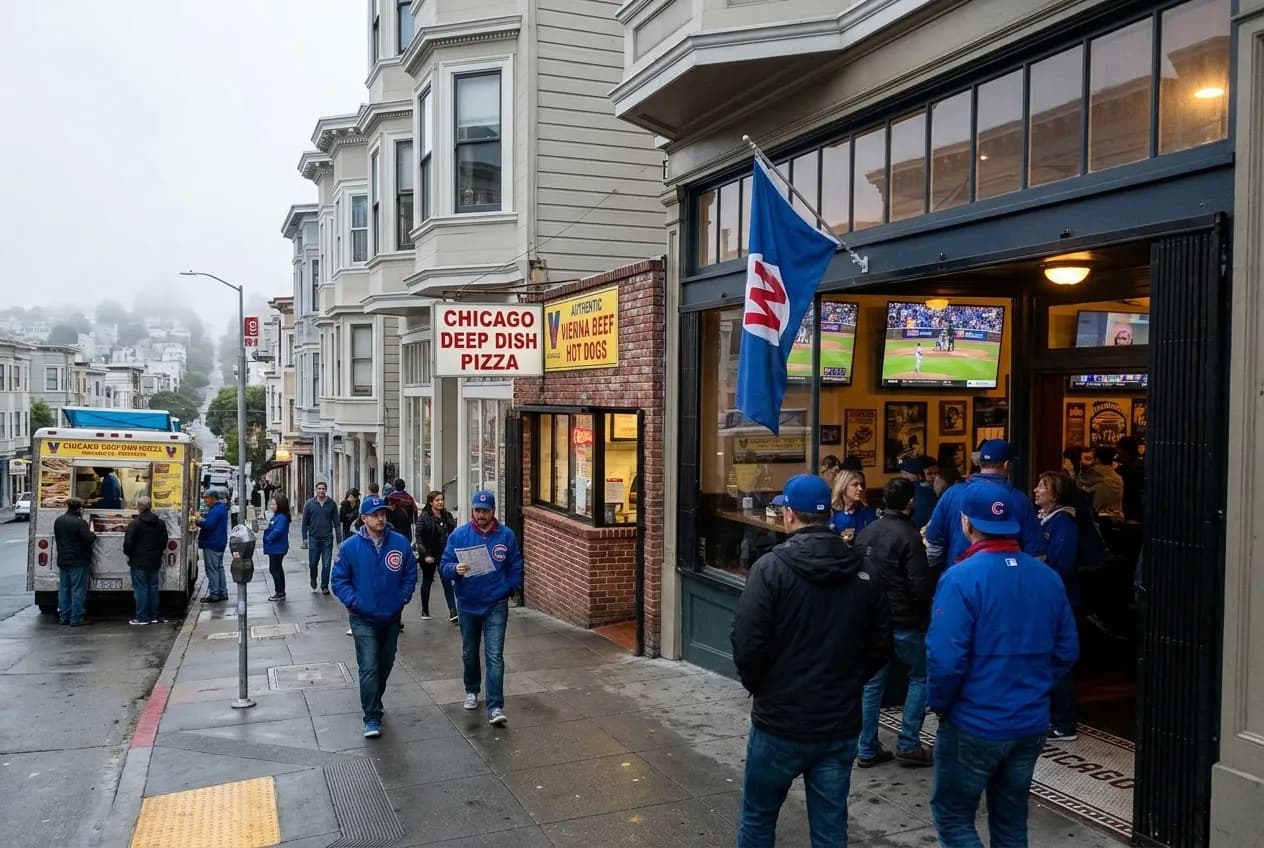
San Francisco's neighborhoods with Midwest transplant density create Friday evening opportunities for cubs fans arriving for weddings to reconnect with Chicago food and sports culture alongside out-of-town friends. Marina, Richmond, and Mission districts concentrate bars that historically attract Chicago expats, while scattered restaurants claim Chicago-style hot dogs and deep-dish pizza authenticity. The compact geography allows beginner-friendly walks between venues, though visitors face tradeoffs: bars may prioritize local sports over Cubs broadcasts, food authenticity claims require skeptical comparison, and Friday evening crowds complicate seating without advance planning. This guide maps decision points rather than guarantees, helping nostalgic visitors verify game-broadcast reliability, compare food sourcing claims, and understand bar seating policies before committing to a route.
Text Karpo your SF hotel neighborhood, group size, and whether you want deep-dish or just bars. We'll send a Cubs fan walk with two bars and one Chicago-food stop, plus a backup delivery list if you'd rather watch the game at your hotel.

Mapping Midwest Transplant Bar Clusters Across Three Neighborhoods
Marina District bars along Chestnut Street and Lombard Street historically attract post-collegiate Midwest transplants, creating Friday evening crowds that may include Chicago expats watching sports. Visitors should call ahead to confirm Cubs game broadcasts, since West Coast bars often prioritize Giants, Warriors, or national marquee games over out-of-market baseball. The density of sports bars within a four-block Marina radius allows quick pivots if one venue lacks the game, though this same density means Friday seating fills early. Groups larger than four face longer waits without reservations, and standing-room policies vary by establishment.
Richmond District venues near Geary Boulevard and Clement Street offer a different transplant demographic—older Midwest families and grad students—with quieter sports bars that may accommodate special broadcast requests. The tradeoff involves longer Muni travel from downtown hotels but less aggressive Friday crowds. Mission District bars between 16th Street and 24th Street BART stations blend younger transplant energy with local culture, creating unpredictable game-broadcast availability but walkable connections to Chicago-style food vendors. According to SFMTA transit information, Muni lines connect all three neighborhoods, allowing visitors to test multiple areas in one evening if initial choices disappoint.

Evaluating Chicago Hot Dog and Deep-Dish Pizza Authenticity Claims
San Francisco restaurants claiming Chicago-style hot dogs face ingredient sourcing challenges—Vienna Beef availability, sport peppers, neon relish, and poppy seed buns—that affect authenticity. Visitors should ask staff about supplier specifics rather than trust menu descriptions, since "Chicago-style" sometimes means generic toppings on standard buns. Food trucks and corner stands occasionally offer more authentic versions than sit-down restaurants, particularly near sports bars where Midwest transplant demand justifies specialty sourcing. The beginner walk strategy involves sampling smaller portions at multiple spots rather than committing to full meals, allowing real-time authenticity comparison.
Deep-dish pizza claims require even more skepticism, since the thick crust, layered construction, and long bake times challenge restaurant economics in a city dominated by Neapolitan pizza culture. Establishments advertising "Chicago-style" often serve thick pan pizza rather than true deep-dish architecture with inverted sauce-cheese layering. Visitors should verify whether restaurants par-bake crusts or build pizzas to order, and whether 35-45 minute waits are standard—genuine deep-dish indicators. Friday evening timing complicates this verification, since hungry wedding guests may lack patience for proper deep-dish waits, forcing a choice between speed and authenticity.
Understanding Bar Seating Policies and Game-Broadcast Hierarchies
San Francisco sports bars operate under competing broadcast priorities: Giants baseball dominates April through October, Warriors basketball commands premium screens, and national NFL or playoff games override out-of-market requests. Cubs fans arriving on Friday evenings should confirm not just that the game will air, but which screen size and audio feed they'll receive. Bars with 10+ screens may relegate Cubs games to corner monitors without sound, acceptable for casual viewing but frustrating for nostalgic fans seeking full immersion. Some establishments allow advance screen reservations for groups, while others operate first-come policies that disadvantage late arrivals.
Seating policies split between table service requiring food orders, bar-top standing room with drink minimums, and patio spaces with limited screen visibility. Friday wedding-weekend groups face pressure to accommodate varying alcohol preferences and budget constraints, making bars with flexible seating and no-minimum zones valuable. Visitors should ask whether large groups will be split across sections and whether screen sightlines remain adequate from overflow seating. The social dynamic shifts when half the group watches from a quality screen while others strain to see from distant tables, a common Friday evening outcome in crowded Marina bars.

Designing Compact Walking Routes That Accommodate Group Pace Variations
Beginner neighborhood walks for wedding guests must account for varying fitness levels, footwear choices, and alcohol tolerance as the evening progresses. Marina routes along flat Chestnut Street offer easiest navigation, with bars and Chicago food vendors clustered within eight blocks, allowing slower walkers to rest at each stop without losing the group. Richmond routes involve steeper side-street grades between Geary and Clement, challenging guests in wedding-appropriate shoes but offering quieter sidewalks and easier conversation. Mission routes between BART stations provide urban energy and late-night food options but require navigating panhandlers and uneven pavement that some out-of-town visitors find uncomfortable.
The compact walk strategy prioritizes public spaces for regrouping—parklets, plazas, and wide sidewalk sections—where faster walkers can wait without blocking foot traffic. According to SFMTA resources, San Francisco's walkable street grid supports spontaneous route adjustments, but visitors should identify backup Muni lines or rideshare pickup zones before alcohol consumption impairs navigation judgment. Friday evening timing means testing multiple venues remains feasible until 9 PM, after which kitchen closures and crowd saturation limit options. Groups should designate a navigator with charged phone and offline maps, since cell service degrades in crowded bars and decision-making suffers as nostalgia and drinks accumulate.
Balancing Nostalgia Goals Against San Francisco's Actual Food and Sports Culture
Cubs fans seeking authentic Chicago experiences in San Francisco face an inherent tension: the city's food and sports culture evolved independently, and transplant-focused venues serve diluted versions shaped by local ingredient availability and broader customer bases. Visitors must decide whether approximate nostalgia—a decent hot dog while watching the Cubs among fellow Midwesterners—satisfies their wedding-weekend goals, or whether comparison to Chicago originals will breed disappointment. The beginner-friendly approach treats the walk as social bonding with out-of-town friends rather than culinary pilgrimage, lowering stakes and increasing satisfaction.
Friday evening wedding arrivals often carry fatigue and travel stress that amplify both nostalgia and criticism. Groups should discuss expectations before the walk: are they seeking perfect Chicago replicas, or enjoying San Francisco's interpretation of Midwest culture? The latter frame allows appreciation for hybrid creations—deep-dish pizza with local ingredients, sports bars blending Cubs memorabilia with Giants pennants—that reflect San Francisco's actual transplant experience rather than idealized memory. Visitors who accept this cultural negotiation enjoy the evening more than purists who inventory every authenticity failure, a mindset choice that determines whether the walk succeeds as nostalgic social experience or disappoints as inadequate Chicago substitute.
Tags: #MarinaDistrict #RichmondDistrict #MissionDistrict #sportsbars #Chicagofood #Midwesttransplants #neighborhoodwalks #Cubsfans #deepdishpizza #Chicagohotdogs #weddingweekend #groupdining #SanFrancisconeighborhoods #baseballbroadcasts #walkingroutes
Sources consulted: Source 1: sf.gov · Source 2: sfmta.com · Source 3: sfpl.org · Source 4: sf.gov
All trademarks are the property of their respective owners.
Ask Karpo first
Ask Karpo to turn this San Francisco idea into a current plan for your date, budget, companion, transit preference, and energy level. Karpo can narrow the route and flag what to verify before you go.


