 Haaland Has Seven Goals and Norway Runs Entirely Through Him
⚽️2026 FIFA WORLD CUP
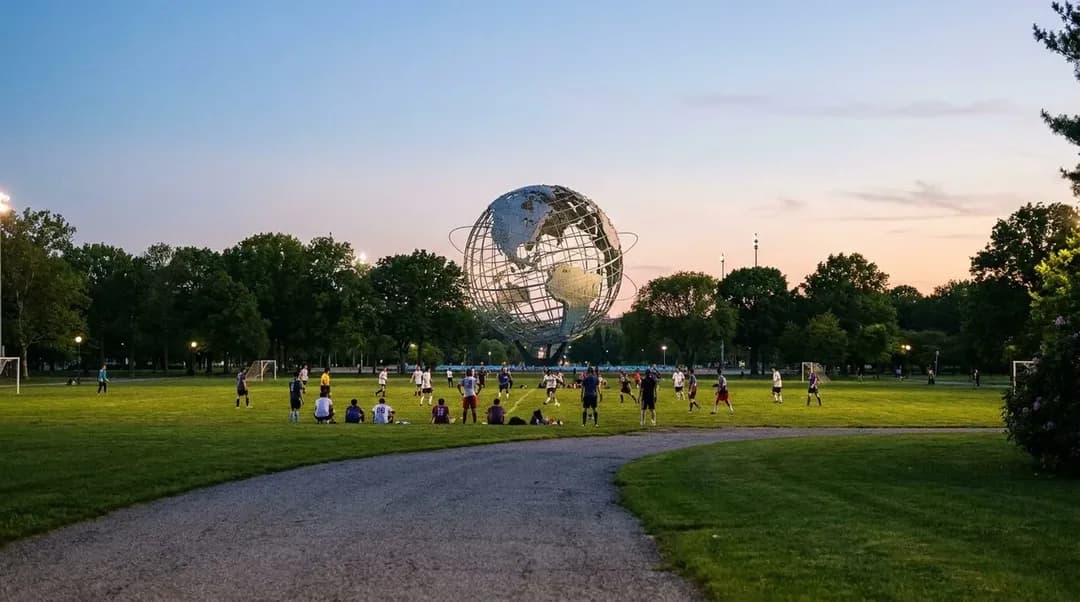
Corona Park's pick-up soccer fields when World Cup 2026 inspires every-weekend kickabouts
The informal soccer culture thriving on Flushing Meadows–Corona Park's open pitches during World Cup summer 2026, where jerseys from five continents collide and cooler-side rituals govern the beautiful game's purest form.
On a warm Saturday morning in late summer 2026, the Unisphere casts its long shadow across grass already scuffed bare by a thousand touch-lines. The World Cup schedule has wrapped, but the fever hasn't broken—it's migrated here, to the open fields of Flushing Meadows–Corona Park, where pick-up soccer operates under its own calendar. No tickets, no assigned seats, just the honor system and whoever arrives with a ball. The air smells of cut grass and distant grilling, punctuated by shouts in Spanish, Bengali, and Mandarin. This is New York's real World Cup, the one that plays every weekend, long after the trophy leaves town.
The morning shift claims its turf
The fields stretching south of the Unisphere see their heaviest weekend use between eight and eleven in the morning, when the sun is still forgiving and the hardcore regulars stake out territory before the casual crowds roll in. By half-past seven, you'll spot the early arrivals: a knot of men unloading duffel bags from a sedan, a trio jogging laps to warm cold hamstrings, someone testing a Bluetooth speaker's battery life. Evening sessions ramp up again after five o'clock as temperatures drop and the second-shift workers, the restaurant cooks and delivery drivers, arrive in their street clothes with cleats stuffed in backpacks.
The unwritten rules of engagement
Regulars claim a field by placing corner flags—cones if they're organized, balled-up shirts if they're not—and setting down a speaker that broadcasts everything from reggaeton to Afrobeats to Turkish pop. Joining a game requires reading the room: you approach the organizer, usually the one with the ball bag and the whistle on a lanyard, and ask if they need bodies. Sometimes you wait for a sub rotation, sometimes you're waved in immediately because someone pulled a hamstring ten minutes ago. Nobody's checking IDs or skill certificates. If you show up in cleats, you're assumed competent until proven otherwise.
The games run first-to-ten goals, though that's flexible if the next group is waiting or if someone's phone alarm goes off—work shift, family obligation, the tyranny of the rest of life. Fouls are called on the honor system, which means they're contested, loudly, in three languages, until someone's girlfriend shouts from the sideline to get on with it. There are no red cards, only reputations. Play dirty twice and you won't get invited back. The best compliment is silence—when a new player slots into the rotation and nobody questions it, you've passed.
A jersey mosaic across five continents
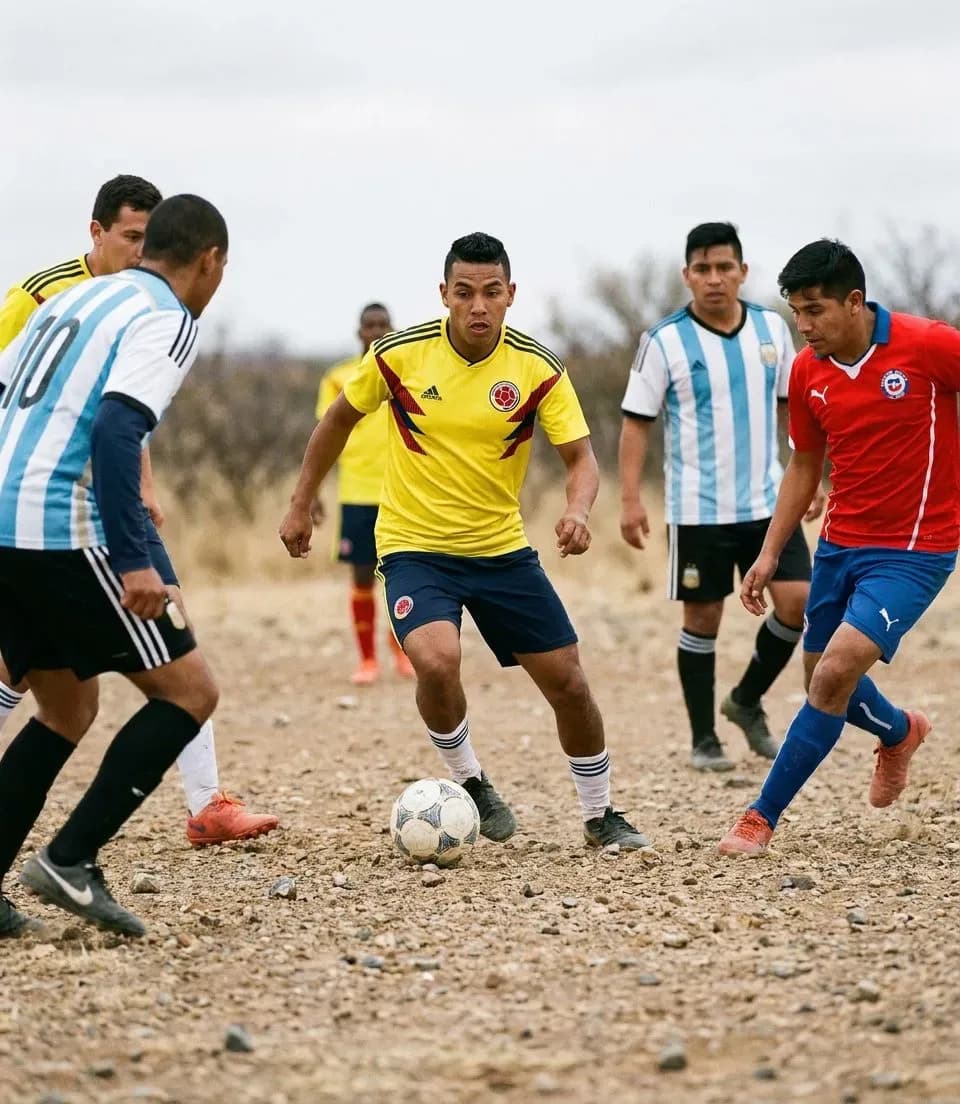
The real World Cup 2026 legacy isn't in the stadiums; it's in the laundry. On any given Sunday you'll count kits from Mexico, Ecuador, Colombia, Bangladesh, Poland, Ghana, South Korea. Last week's hero wears a faded Messi Argentina jersey two sizes too small. The goalkeeper sports a fluorescent green thing that might be official Liga MX or might be from a street vendor on Roosevelt Avenue—nobody asks. There's a sartorial honesty here: the guy in the pristine France home kit is usually terrible, while the best player on the pitch is wearing cargo shorts and a T-shirt from a 2019 5K charity run.
World Cup summer amplified what was already here. The tournament gave permission, a global excuse to take weekend plans seriously, to tell your partner that yes, you're spending Saturday morning on a dusty field in Queens. It validated the obsession. Now, months later, the energy hasn't dissipated—it's sunk roots. New players who caught the bug in June are still showing up in August, September, learning that the real tournament never ends, it just changes venues.
Cooler-side rituals and sonic territories
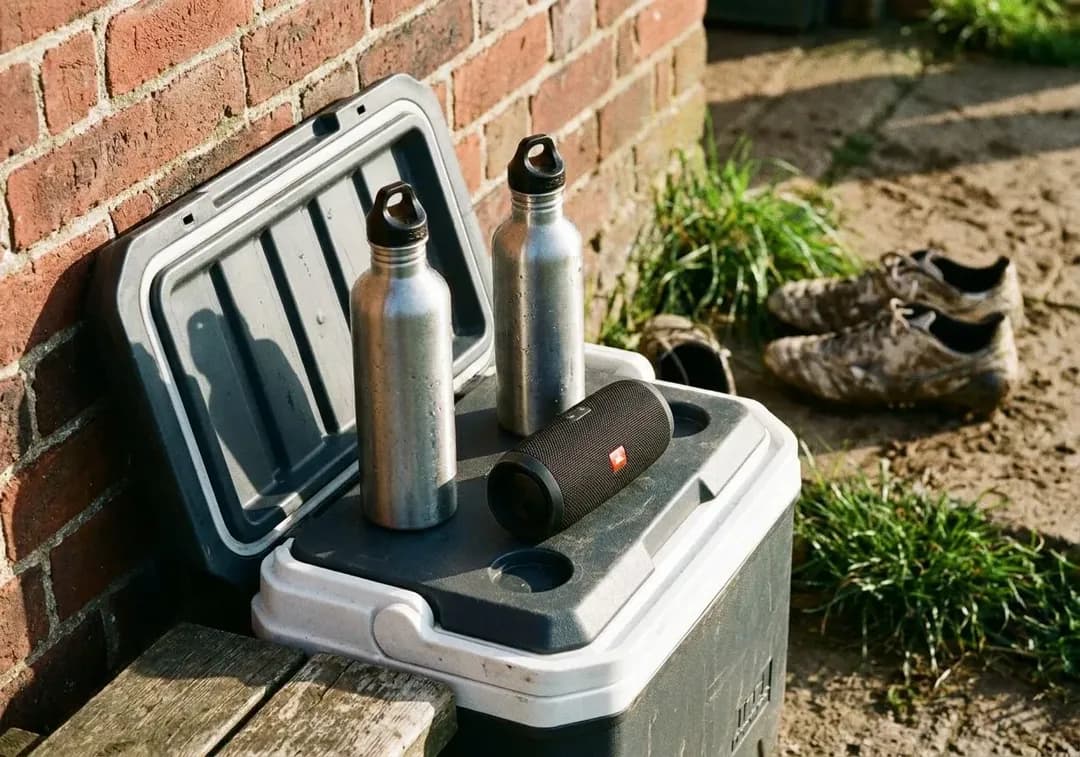
Each group marks its domain not with flags but with coolers. The red Igloo stocked with Gatorade and cerveza belongs to the Ecuadorian contingent that's held the northeast corner for three years. The wheeled cooler with the busted handle marks the Bangladeshi team's setup, usually accompanied by a folding table that appears mid-game, laden with samosas someone's aunt made that morning. The coolers are social infrastructure: they signal allegiance, anchor the spectators, and provide the excuse to call a water break when everyone's gassed but nobody wants to admit it.
The speakers, too, are territorial. Volume wars are rare but not unheard of—two games too close together, two playlists bleeding into each other, until someone concedes and turns it down. Music matters. It sets tempo, drowns out the expressway hum, transforms a scrubby field into something closer to a plaza, a commons. When a goal goes in and the scorer's teammate cranks the volume for thirty seconds of victory, even the opponents grin. It's theater, and everyone's in on the joke.
The Roosevelt Avenue cool-down
The game ends when someone's phone buzzes with the third reminder or when the next crew starts warming up on your half of the field, whichever comes first. The ritual is the same: cleats off, street shoes on, slow walk toward the subway. Roosevelt Avenue vendors—especially near the 103rd Street–Corona Plaza area—do brisk business in post-game tacos, aguas frescas, and elote on weekends, the kind of transaction that happens in nods and pointing when everyone's too tired to conjugate verbs. You eat standing up, leaning against a storefront, still sweating, replaying that one pass you should've made.
This is the cooldown, the third half. Somebody's cousin knows a guy with a van, so six people pile in for a ride to Jackson Heights. The rest take the 7 train, cleats tied to backpack straps, legs heavy, smelling like the field. Monday will come with its demands, but right now, on a Sunday afternoon in the long shadow of a World Cup summer that rewired the city's muscle memory, there's only this: the ache, the hunger, the knowledge that next weekend the field will be there, waiting, ready for another ten goals and whatever comes after.
Practical notes
The pick-up fields are located in Flushing Meadows–Corona Park, near the Unisphere and the park’s open playing fields. Nearest subway: 7 train to Mets–Willets Point or 111th Street stations; street parking available along park perimeter roads but fills quickly on weekends. Fields are open dawn to dusk, year-round, weather permitting; no reservations or fees. Bring water, sunscreen, and your own ball if you're organizing. The park is accessible, though field surfaces are uneven grass. Verify current field conditions via NYC Parks before heading out.
Tags: #CoronaPark #FlushingMeadowsCoronaPark #PickUpSoccer #NYCSoccer #WorldCup2026 #QueensNYC #Unisphere #WeekendPlans #FIFAWorldCup2026 #RooseveltAvenue #NYCParks #SoccerCulture #PickUpGame #NYCWeekends #QueensSoccer
Sources consulted: 2026 FIFA World Cup · NYC Parks – Corona Park · MTA Transit Information · New York Times Soccer
All trademarks are the property of their respective owners.
Ask Karpo for more information.
Keep reading
- Haaland Has Seven Goals and Norway Runs Entirely Through Him
 World Cup Trophy Ceremony Timing Medals and Postmatch Celebrations
 Olise and France's Attack: The Semifinal Tactical Question