Miami has two entirely separate coffee cultures and they barely overlap. The first is the ventanita — a walk-up window on the side of a Cuban cafeteria, serving cafecito to people standing on the pavement for a couple of dollars, in ninety seconds, with no seat and no intention of providing one. The second is the modern cafe with wifi, air conditioning and a long shared table. If you need to work, you need the second, and the city has more of them than it did five years ago.
Air conditioning, outlets and how long a room will let you stay vary enormously here. Ask Karpo which cafes near you are set up for a full day.
Why this is a Miami-specific problem
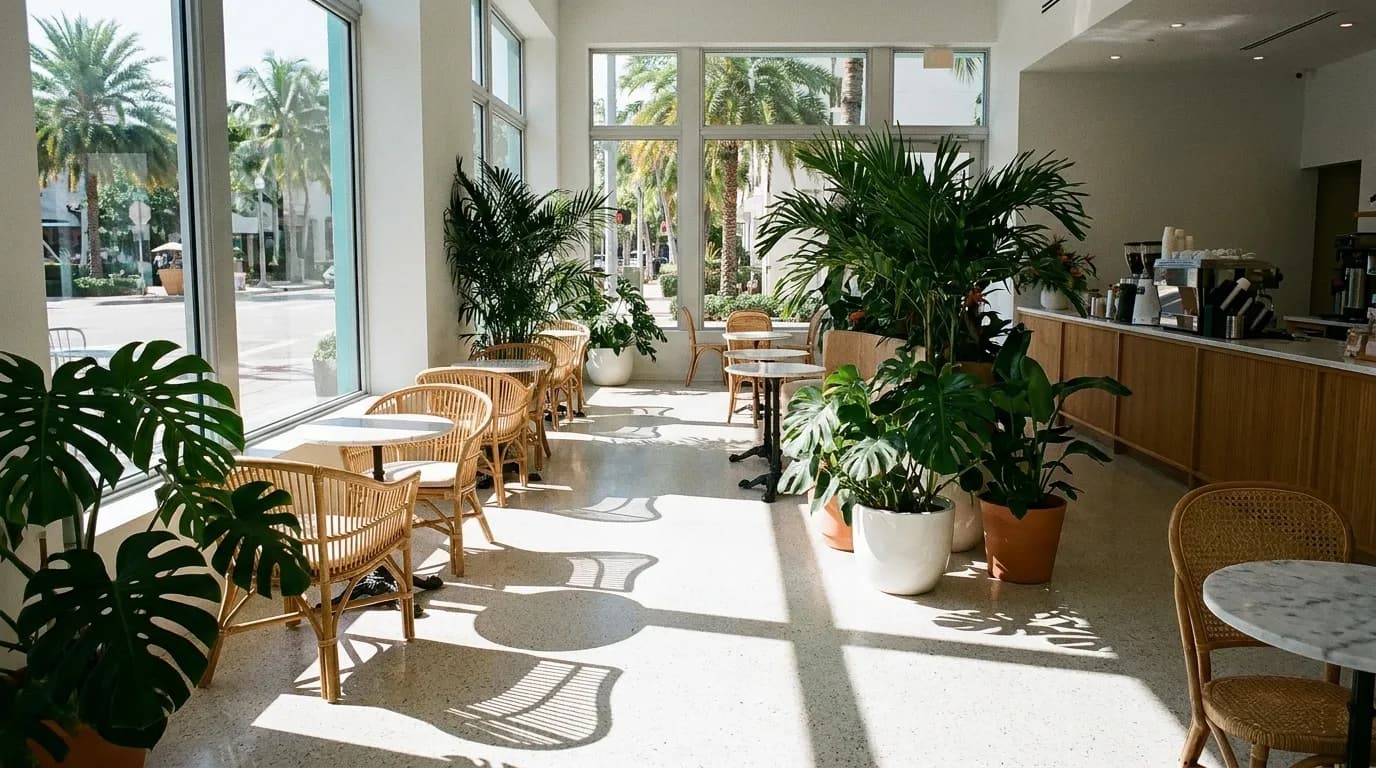
The climate is the whole story. For roughly half the year, sitting outside in Miami between eleven and four is genuinely unpleasant, which means a working session has to be indoors, which means air conditioning, which means a room designed for people to stay. That is a more demanding specification than in a temperate city, where a pavement table solves the problem for free.
The second factor is that Miami's traditional coffee format is explicitly not designed for sitting. A ventanita has no seats by design — it is a window onto a pavement. The rooms that do accommodate laptops are largely a newer, imported format, concentrated in the neighbourhoods that changed most in the last fifteen years.
Where the rooms are
Wynwood, the Design District and Buena Vista have the highest concentration of cafes built for sitting, and the highest density of people doing exactly that. Brickell and Downtown have rooms sized for the office population, which means they are busy at nine and one and quiet in between. Coconut Grove and Coral Gables have the leafiest and quietest options, several with shaded outdoor terraces that are usable most of the year.
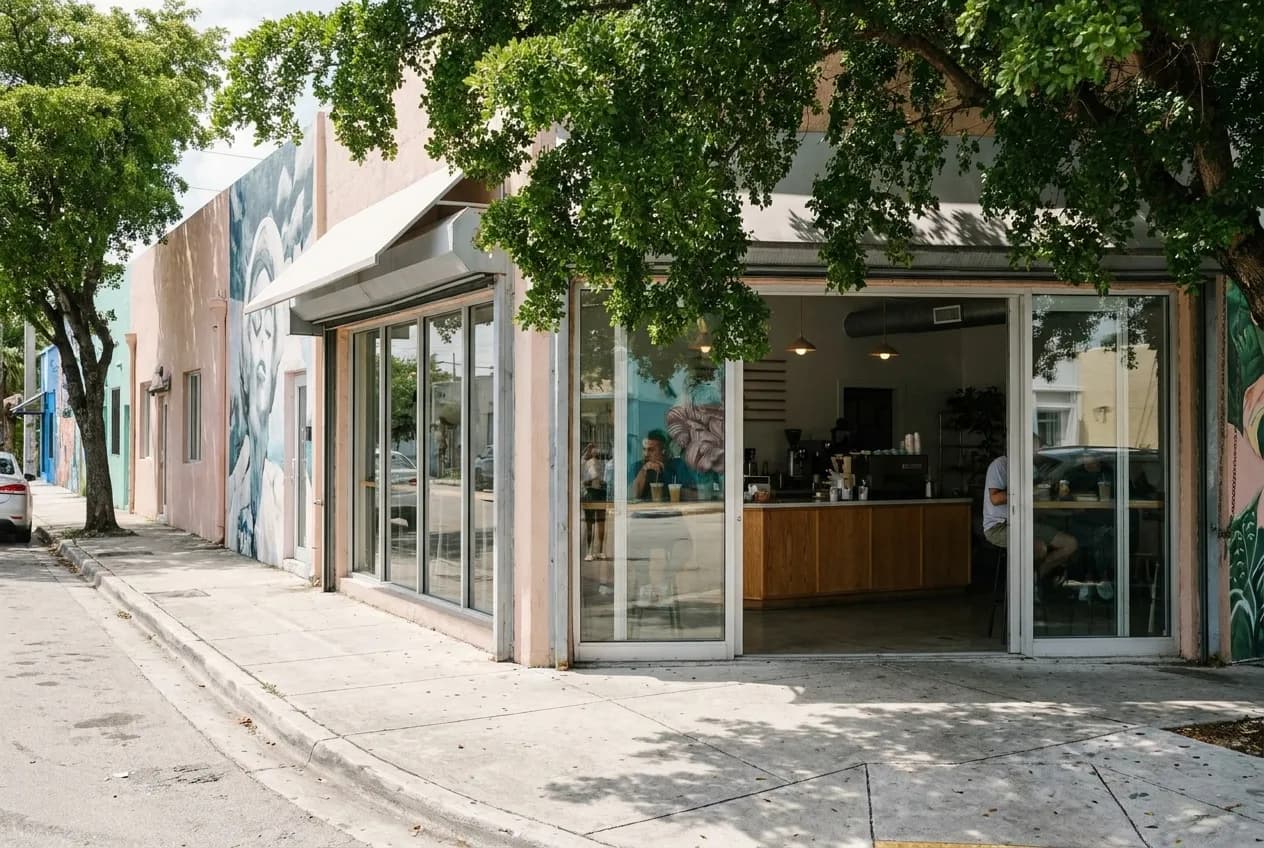
Little River, Allapattah and the northern edge of the Design District are where the newer, larger spaces have opened — converted warehouses with high ceilings, long tables and enough floor area that nobody is watching how long you have been there. Those are the closest Miami comes to a genuine all-day cafe.

What to check before settling in
Air conditioning first, and specifically whether the seating you want is inside it. A beautiful courtyard table is a poor choice in July. Outlets second — many of the converted-warehouse spaces have plenty and many of the smaller rooms have almost none. Wifi third, and it is worth being aware that older buildings and thick concrete are a real problem here; a phone hotspot is the reliable backup.
The fourth thing is noise. Miami cafes are frequently louder than their equivalents elsewhere, with music set at a level that assumes conversation rather than concentration. If you have calls, ask before you commit, and expect to take them outside.
The distance problem
There is one more Miami-specific factor: the drive. A cafe twenty minutes away is a genuine commitment here in a way it is not in a walkable city, and it means committing to that room for the whole session rather than moving when it gets busy. The practical answer is to know two rooms within a short drive of wherever you usually are, rather than one perfect one across the county, and to check before setting off whether the good one is hosting an event, which the larger Wynwood and Little River spaces frequently are on weekday evenings.
The etiquette
The same rule applies here as anywhere: roughly one purchase every ninety minutes, tip at the counter, do not take a large table alone when the room is filling, and take calls outside. Miami's cafes are on the whole more relaxed about long sessions than New York's, partly because the rooms are larger and partly because the culture is less rushed, but the economics are identical and the courtesy is appreciated.
One local specific: many Miami cafes do a substantial food trade at lunch, and the period between noon and two is when a laptop on a four-top is most in the way. Arriving before eleven or after two is the considerate version and also the more productive one.
The ventanita, in its proper place
None of this means skipping the ventanita, which is the better coffee and a genuine part of the city. The pattern most people who live here settle into is a colada or a cortadito at a window in the morning — standing up, two minutes, a couple of dollars — and then a longer sit somewhere with air conditioning when there is work to do. Treating them as competitors is the mistake; they are different products.
If you are new to it: a cafecito is a small sweetened espresso, a cortadito is the same with steamed milk, and a colada is a large one with a stack of thimble cups meant to be shared with whoever you are standing next to. Ordering a colada for yourself alone is the clearest possible sign you are new, and nobody will mind.
Practical notes
Bring a layer — indoor air conditioning in Miami is set aggressively cold and a room that felt pleasant on arrival will not after an hour. Charge before you leave, because outlets are scarce in the smaller rooms. Afternoon thunderstorms are near-daily from June through September and usually clear within an hour, which is worth planning around if your seat is outdoors. Parking is metered and enforced actively in Wynwood, the Design District and the Grove; the western neighbourhoods are free and easy. And check closing time, which in Miami is often earlier than the nightlife reputation suggests.
Tags: #Miami #MiamiFood #Coffee #CoffeeNearMe #RemoteWork #WorkFromCafe #Wynwood #DesignDistrict #Brickell #CoconutGrove #LittleRiver #Ventanita #Cafecito #MiamiEats
All trademarks are the property of their respective owners.
Ask Karpo first
Want to know which cafes near you have air conditioning, outlets and space right now, and which are about to close? Ask Karpo before you carry a laptop across town.