Miami has two coffee cultures and they have almost nothing to do with each other. One is Cuban, over a century old in this hemisphere, sold through a window in the side of a building for two to four dollars, drunk standing up in four minutes, and social by design. The other is the international third-wave movement - single origin, light roast, weighed doses, six dollars, a chair, a laptop, an hour. Both are good. They answer completely different questions, and the mistake is evaluating either by the other's standards.
The windows are at their best before nine in the morning and the cafes are at their best after ten, which means the right answer changes by the hour. Tell Karpo the time and where you are.
The ventanita, and what to order at one
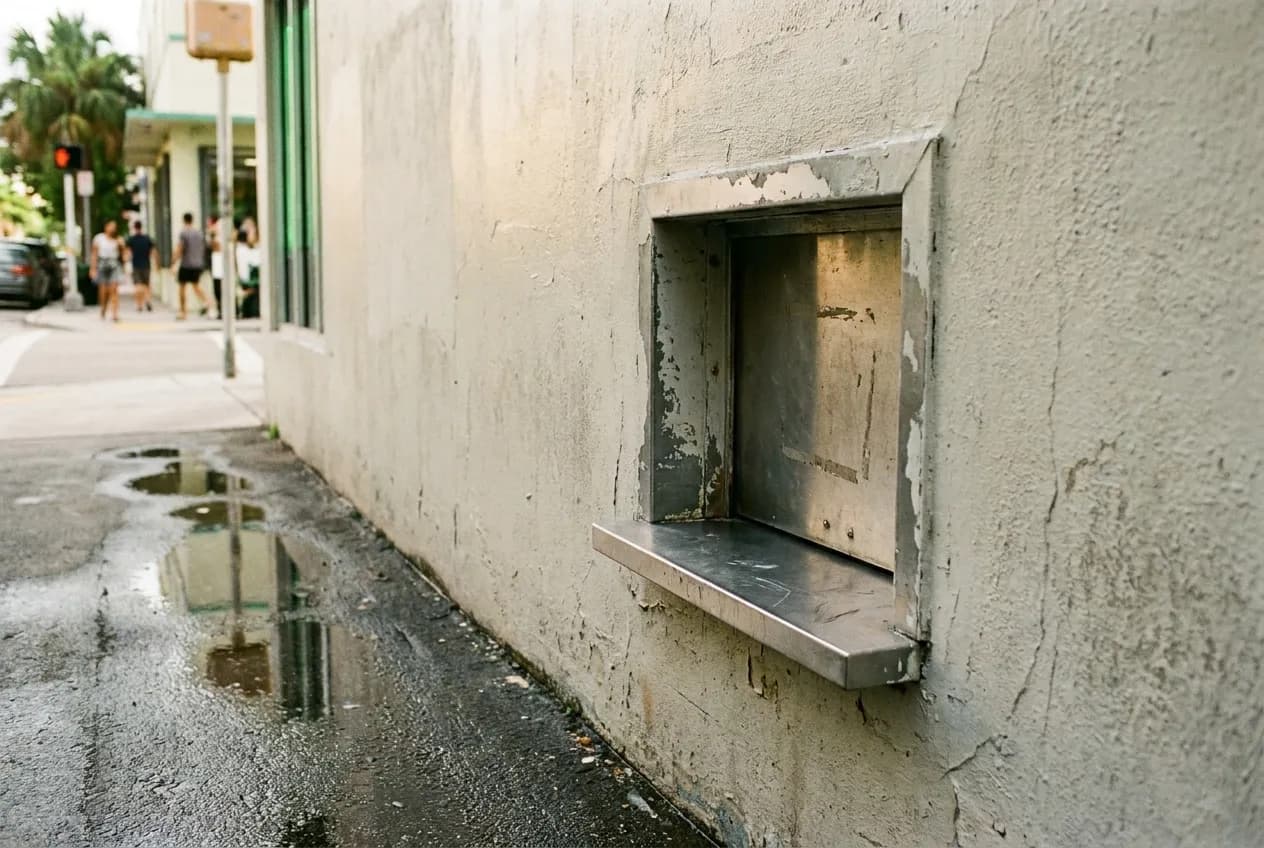
A ventanita is a service window, usually about waist height, opening directly onto the pavement, attached to a Cuban restaurant or bakery. There are no seats and no expectation that you will linger past the time it takes to drink what you ordered. The transaction takes ninety seconds and the coffee costs less than a bus fare.
The orders, in ascending size: a cafecito or colada de un solo, a single shot of espresso brewed with sugar whipped into the first drops to form a thick pale foam called espumita. A cortadito, the same coffee cut with steamed or evaporated milk, which is the default and the best introduction. A cafe con leche, a much larger milky coffee, effectively breakfast. And a colada, a full styrofoam cup of the sweet espresso served with a sleeve of thimble-sized cups, which is not for one person - it is for sharing with whoever you came with or whoever happens to be standing there.
Where and when
Ventanitas are everywhere in Miami-Dade but they are densest along SW 8th Street in Little Havana, where the one at Versailles has functioned as the neighbourhood's noticeboard for decades. La Carreta further west runs an identical window with a fraction of the crowd, which makes it the better one if you want coffee rather than the scene. Hialeah, Westchester and the western suburbs have them on nearly every commercial block.
The hour matters more than the address. Between six and nine in the morning a ventanita is doing its actual job - people on the way to work, arguments about politics and baseball, a rhythm entirely unrelated to tourism. By midday it is a transaction. If you want to understand why this institution matters, go early. And the second peak, around three in the afternoon, is when the neighbourhood comes back out for the afternoon cortadito, which is a real and observable thing.
The third-wave side
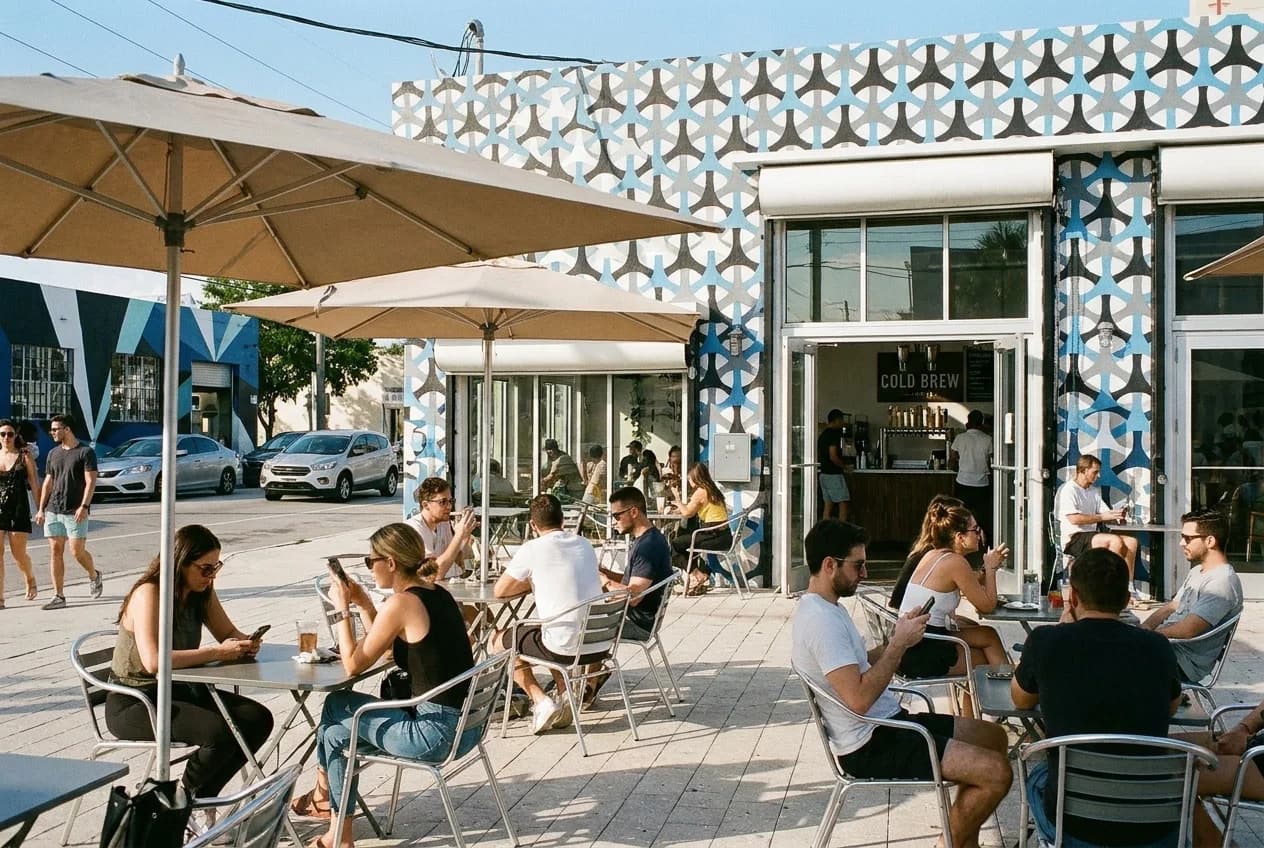
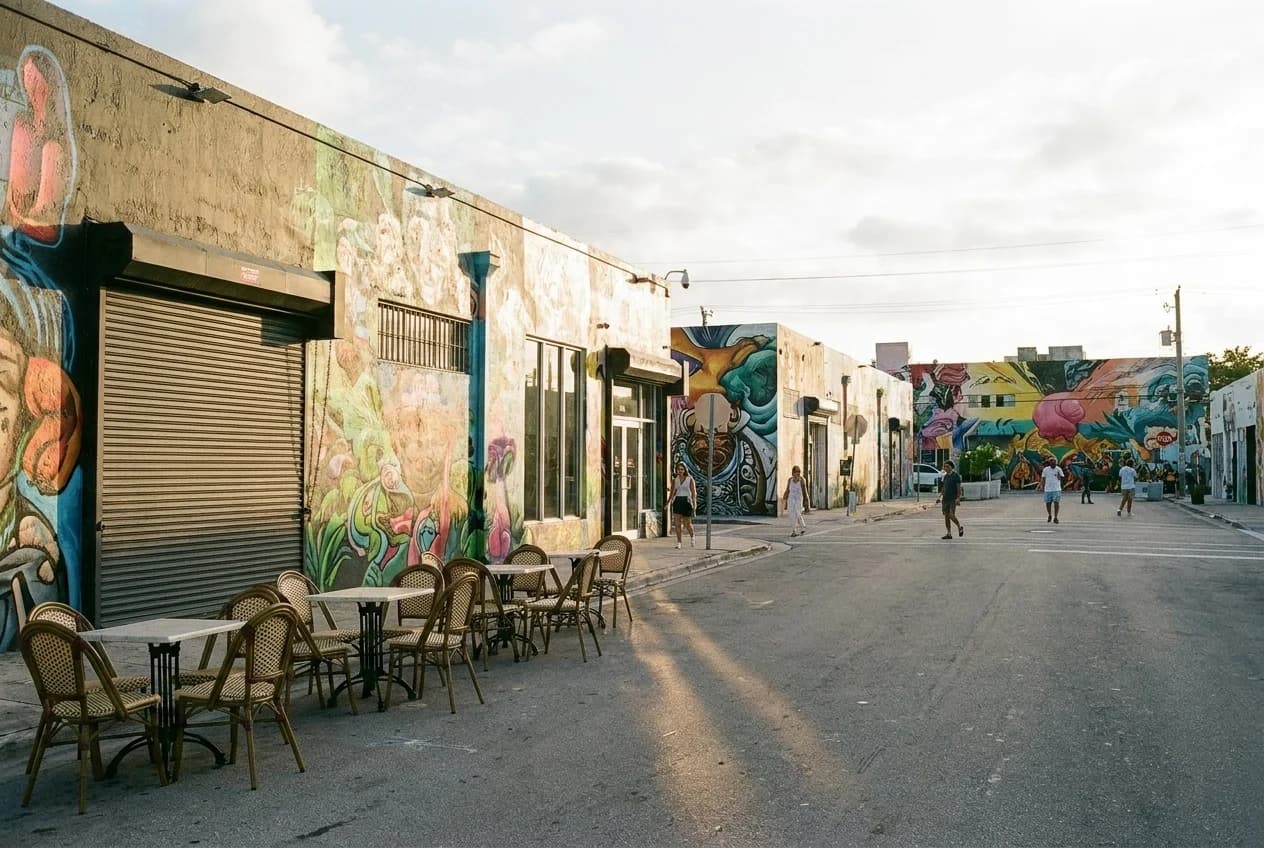
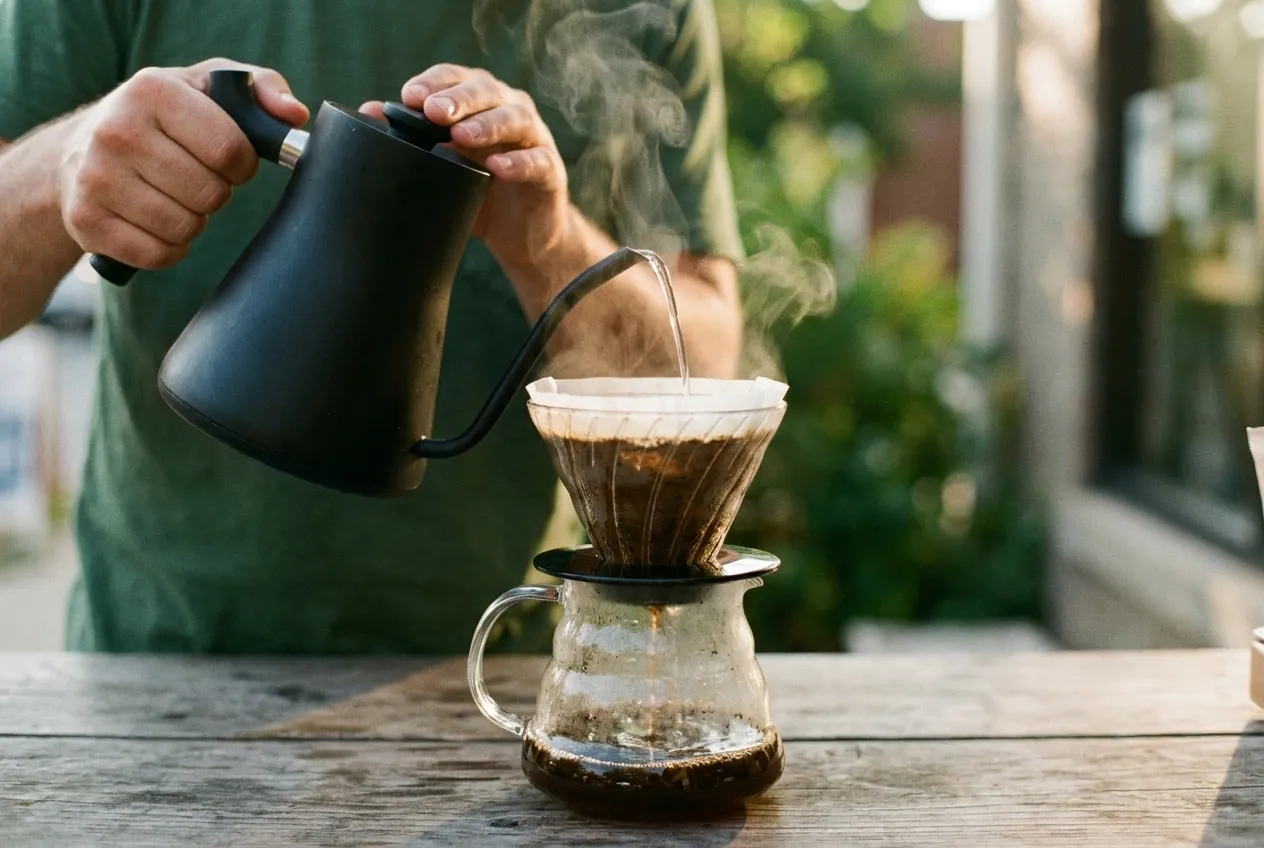
Miami's speciality coffee scene arrived later than Portland's or San Francisco's and is now genuinely good. It concentrates in Wynwood, the Design District, Edgewater, Coconut Grove and Coral Gables, and it looks and works the way third-wave cafes do everywhere: light roasts, single origins, pour-over as well as espresso, filtered water, scales, and a menu that names the farm.
What is distinctive here is the hybridisation. A number of Miami roasters and cafes have started putting Cuban-style preparations on a speciality menu - a cortadito made with a light-roast single origin, or a colada served properly but with beans that cost four times what a Cuban restaurant pays. Purists on both sides find this irritating and it is frequently delicious. If you see it, order it; it is the most Miami thing on any coffee menu in the city.
Choosing between them
The useful frame is what you want from the next hour. If you want caffeine, conversation and to be somewhere else in five minutes, the window is not just cheaper, it is better - the sugar and the intensity are calibrated for exactly that. If you want to sit, work, read, or taste the coffee itself as a thing with a flavour profile, the cafe is the right answer and the window will disappoint you, because a cortadito is not designed to be sipped and analysed.
For working specifically, the third-wave cafes are the only real option: ventanitas have no seats, and that is not an oversight. For a date, either works but they produce very different evenings - a window is a fifteen-minute stop on a walk, a cafe is a sit-down. And for a group that cannot agree, a colada shared four ways at a window is the single most efficient coffee decision available in this city.
Practical points that catch people out
Cuban coffee is sweetened during brewing, not afterwards. Asking for it without sugar is possible but you are asking for a different drink, and at a busy window it will slow everything down - if you genuinely want unsweetened espresso, that is what the third-wave cafes are for. The espumita, that pale foam on top, is the mark of it having been made properly; a flat black shot means the sugar was not whipped in.
Sizes are much smaller than American coffee conventions suggest. A cafecito is a single mouthful. A cortadito is perhaps 60ml. Nobody is being stingy; the drink is that strong. And a colada handed to one person is a social error rather than a serving - the little cups are there because you are expected to give some away.
Practical notes
Prices: cafecito or cortadito two to four dollars, cafe con leche three to five, a colada four to six and it serves four to six people. Third-wave: four to seven for espresso drinks, five to eight for pour-over. Timing: ventanitas from six in the morning, peaking before nine and again around three; speciality cafes generally open at seven or eight and most close by late afternoon or early evening. Cash still moves faster at the windows. Tipping at a window is not expected but change left is appreciated. And if you order a colada, hand the little cups around - that is the entire point of the format.
Tags: #CoffeeNearMe #Miami #Ventanita #Cortadito #Colada #Cafecito #CubanCoffee #ThirdWave #Wynwood #DesignDistrict #LittleHavana #CoralGables #MiamiCoffee #Espumita
All trademarks are the property of their respective owners.
Ask Karpo first
Two coffee cultures with opposite opening patterns is exactly the sort of thing worth asking about rather than guessing. Ask Karpo which windows near you are open at the hour you want a cortadito, which speciality cafes are still serving in the late afternoon, and whether anywhere nearby does the hybrid version.