Little Havana doesn't wait for sundown to start pouring. By three in the afternoon, the stand-up counters along Calle Ocho are already two-deep with regulars nursing thimbles of cafecito and cold-sweat glasses of mojito. The neighborhood's drinking culture operates on its own circadian logic: cortadito at noon, rum at four, a pressed sandwich somewhere in between, and a second round that turns weekend plans into open-ended evenings. There's no velvet rope, no reservation system—just a stool, a bartender who'll remember your face, and the understanding that if you're still here at seven, you're staying for the live music.
The Counter Ritual
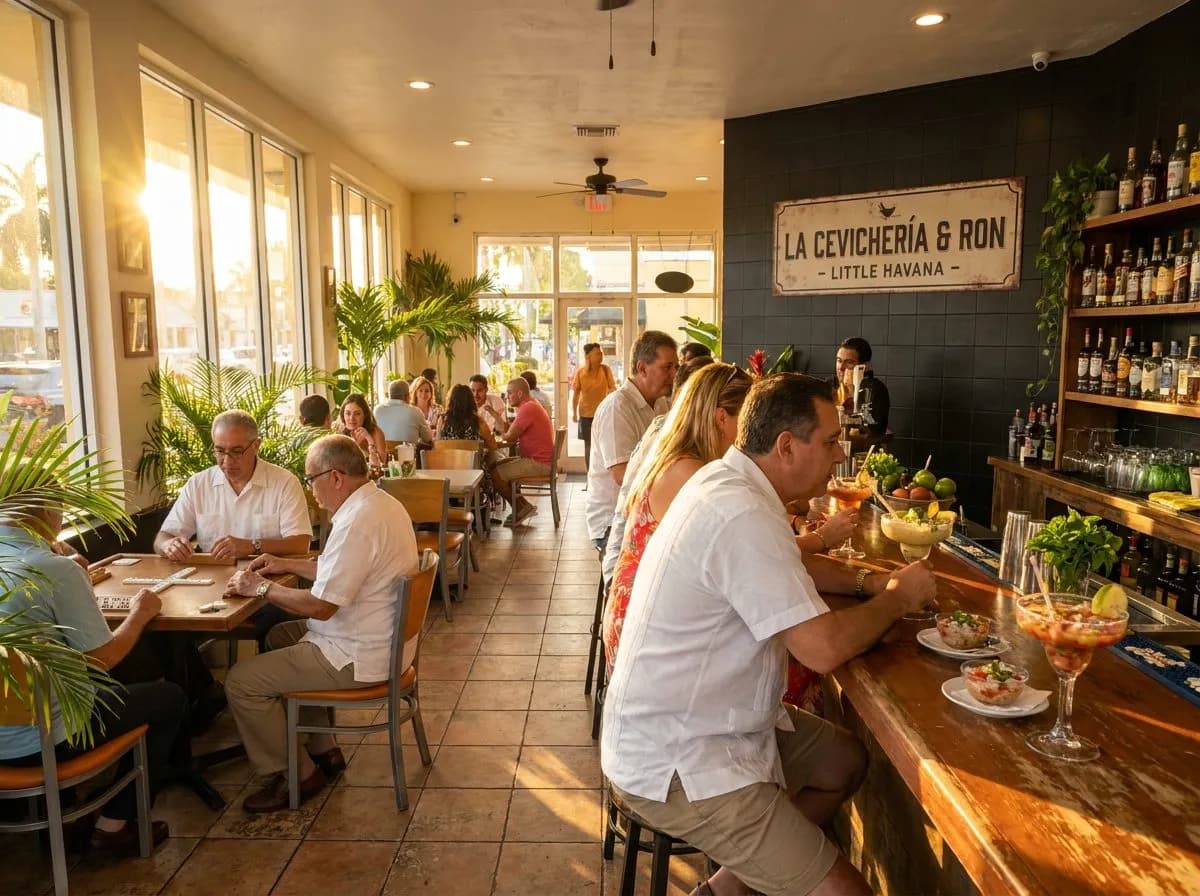
Stand-up counters are the architectural grammar of Little Havana's bar scene. These aren't lounges with Edison bulbs and upholstered banquettes; they're open-air or semi-enclosed slots where you prop an elbow, order in Spanish, and watch the block unfold. The appeal is less about craft and more about cadence—drinks come fast, tabs stay modest, and conversations happen across strangers without preamble. Most counters feature a narrow marble or Formica ledge barely wide enough for a glass and your forearms, forcing a posture that's half-lean, half-commitment to staying vertical.
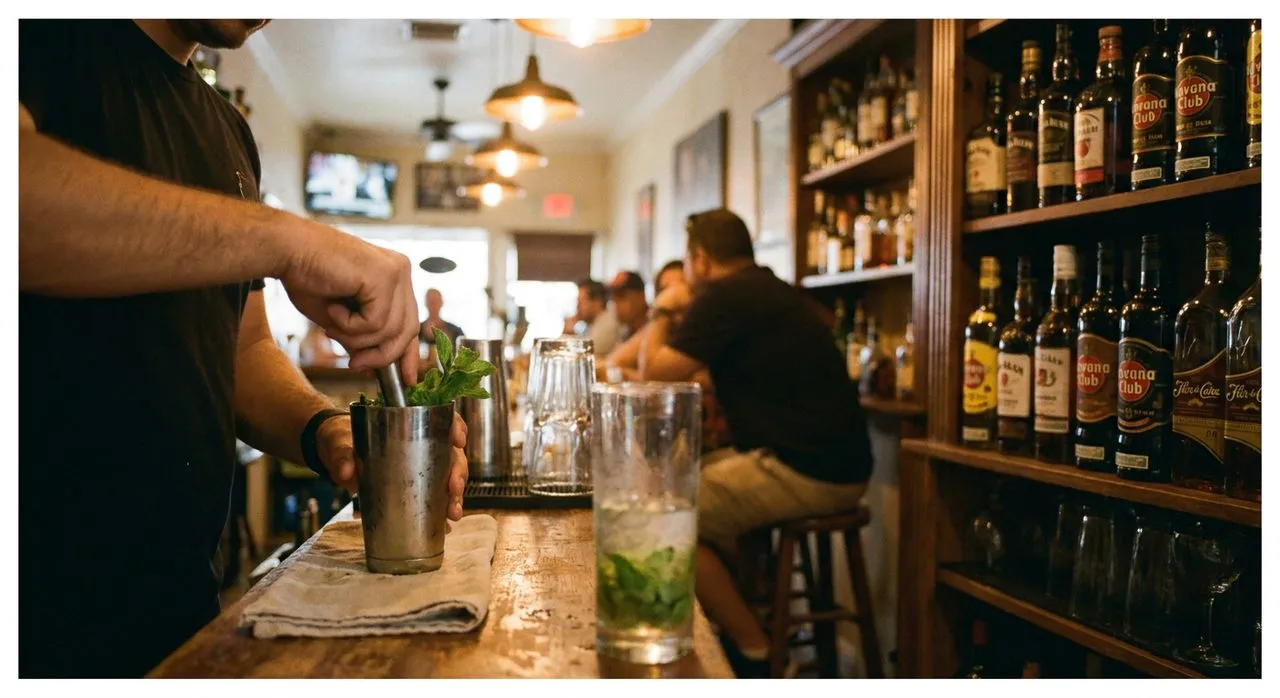
Mojitos here don't arrive in mason jars with artisanal mint sprigs. Expect a short tumbler, muddled cane sugar, and enough white rum to justify the afternoon pause. Rum flights are common, often featuring agricole and añejo pours that bartenders will talk you through if the counter isn't slammed. The best counters maintain a rotation of regulars who appear like clockwork, claim the same corner, and greet the bartender by first name before they've ordered. These habitués set the tone—their easy banter with staff signals to newcomers that this is a space where formality takes a back seat to ritual and familiarity.
Ceviche Timing and the Post-Work Surge
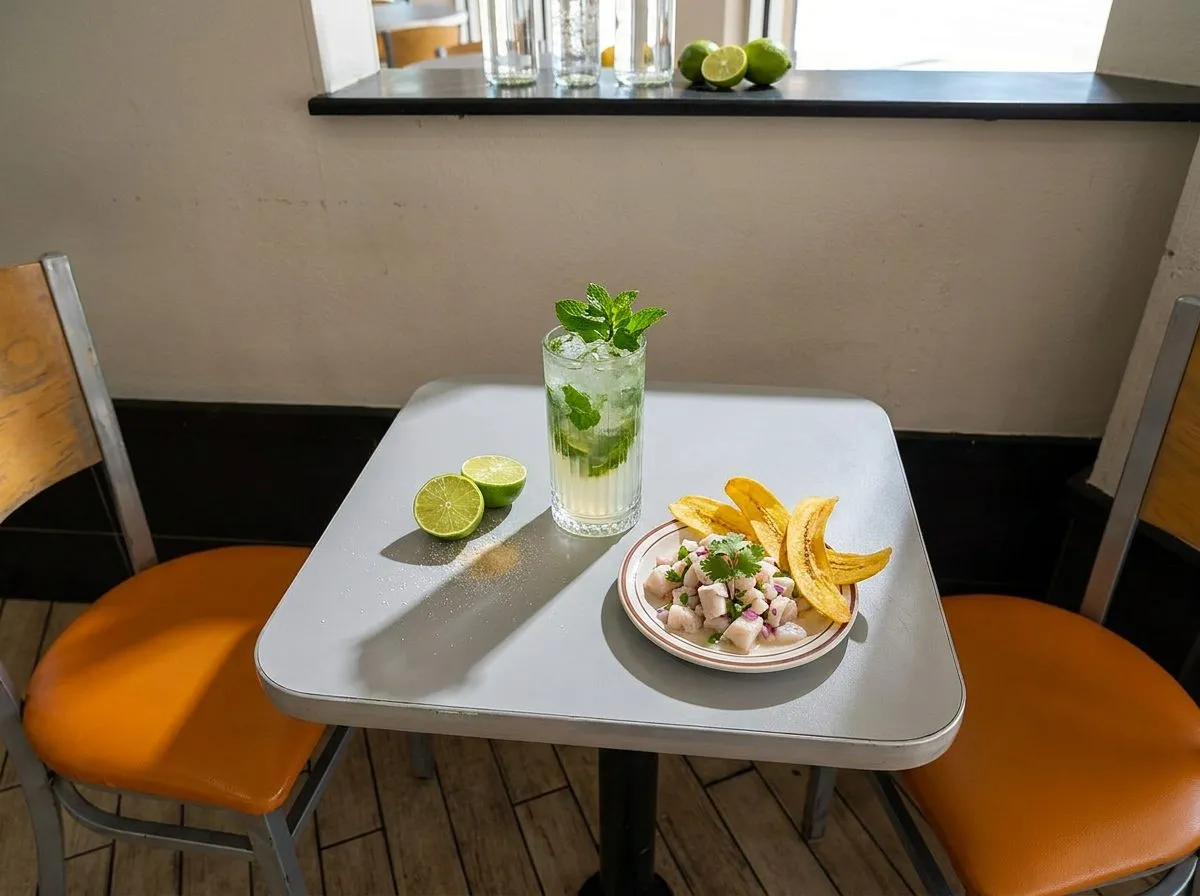
If you want the freshest catch, time matters. Most ceviche bars along SW 8th Street restock between 3 and 4 p.m., and the counters fill immediately after with the post-work crowd—office workers from Brickell, construction crews, and neighborhood regulars who know the rhythm. By four-thirty, the best spots are shoulder-to-shoulder, paper plates balanced on narrow ledges, lime juice and ají amarillo cutting through the humidity.
Order at the counter, pay in cash if you can, and don't expect white tablecloths. The format is simple: citrus-cured fish, red onion, cilantro, maybe a fistful of cancha corn on the side. Some spots offer pulpo or camarón; others stick to corvina and dorado. It's not ceremonious, but it's exact. The fish is clean, the acid is balanced, and the turnover ensures nothing sits longer than it should. Plastic forks are standard issue, as are napkin dispensers that see constant rotation. The best ceviche bars keep their mise en place visible—buckets of fresh lime halves, bunches of cilantro awaiting rough chops, and whole fish on ice waiting to be portioned.
Sidewalk Stools and the Art Walk Advantage
Fridays bring a different energy. Viernes Culturales—the monthly art walk that draws gallerists, street vendors, and sound systems to the sidewalks—turns the neighborhood into an open-air social experiment. Storefronts that double as cafés and ice cream counters suddenly become prime real estate. The red stools at Azucar, the ice cream shop on Calle Ocho, are first-come; regulars arrive before 5 p.m. on Fridays to claim the window seats and settle in for hours of people-watching as the art walk crescendos.
The ritual is part theater, part endurance test. You order a scoop—guava, mamey, or Abuela Maria—then nurse it slowly while the street fills with drummers, painters hawking canvases, and families pushing strollers through the chaos. It's less about the dessert and more about staking your claim to a front-row seat. By seven, the stools are impossible to find, and latecomers end up perched on planter edges or leaning against light posts.
The Soundscape of Calle Ocho After Dark
As daylight fades, Little Havana's auditory signature shifts from street-level salsa bleeding out of car windows to the orchestrated chaos of live music spilling from doorways. By eight o'clock, competing rhythms—son cubano from one venue, reggaeton from a corner bodega, the syncopated clatter of dominoes slapping tables at an outdoor café—create a layered soundtrack that defines the neighborhood after dark. The air thickens with cigar smoke and the sweet funk of overripe plantains frying in nearby kitchens, while string lights strung between awnings cast amber pools across crowded sidewalks.
This is when the counters transition from afternoon refuge to nighttime anchor. Bartenders switch out daytime rum bottles for premium reserves, and the pace, while still brisk, takes on a different quality—less transactional, more social. Conversations lengthen. Strangers become temporary companions. The neighborhood's nocturnal identity asserts itself not through any single venue but through the cumulative effect of dozens of small gathering points, each contributing its own frequency to the larger hum. Navigation becomes instinctual: follow the music you want, claim whatever sliver of counter space presents itself, and let the evening unfold according to its own unpredictable geometry.
Off-Menu Orders and Bartender Memory
Longevity breeds familiarity. The corner counter at Ball & Chain, the live-music venue that anchors the nightlife stretch of Eighth Street, serves an off-menu 'Hemingway float' with a rum floater if you ask for it by name after 7 p.m. It's not listed, not advertised, but regulars know. The bartenders—veteran pourers who've worked the counter long enough to track faces, not names—will nod, pull the Havana Club from the top shelf, and build the drink without asking twice.
This is the contract: show up more than once, order with intention, and the bar adjusts to you. By the second visit, your mojito arrives the way you like it—more mint, less sugar, a heavier pour. The currency isn't tips (though they help); it's presence. The counters reward consistency, and the bartenders, who rotate through a small constellation of venues, remember who drinks what and when.
The Pressed Sandwich Interlude
Drinking in Little Havana requires ballast, and the pressed sandwich is the neighborhood's edible intermission. Medianoche, Cuban mix, pan con lechón—these aren't appetizers; they're structural supports for an afternoon that started at three and shows no sign of ending before nine. The bread arrives hot from the plancha, flattened to half its original height, the pork and ham and Swiss fused into a single molten layer. The plancha itself becomes a kind of performance space, the sizzle and hiss of sandwiches under pressure providing a rhythmic counterpoint to the ambient noise of the counter.
Order at the counter, take your number, and wait. Five minutes later, a paper-wrapped bundle lands in front of you, still radiating heat. Eat it standing, or claim a corner of the bar. Either way, it buys you another hour, another round, another conversation with the person next to you who's doing the same math about whether to call it a night or see where summer travel instincts and a Friday evening in Little Havana might lead.
Practical notes
Most counters and ceviche bars cluster along SW 8th Street (Calle Ocho) between 12th and 17th Avenues. Street parking is competitive; arrive early or use the public lot near 15th Avenue. The Viernes Culturales art walk runs on the last Friday of most months, drawing crowds from late afternoon into evening. Many spots are cash-preferred and counter-service; accessibility varies but sidewalk seating is common. Verify hours directly, as some counters close early midweek. Bring small bills, sun protection if you're arriving before five, and a flexible timeline—these places don't reward rigid weekend plans.
Tags: #LittleHavana #CalleOcho #MiamiEats #CevicheBars #RumCocktails #PullUpAChair #SummerTravel #MiamiNeighborhoods #WeekendPlans #StandUpBars #ViernesCulturales #MiamiCocktails #LocalMiami #NeighborhoodBars #MiamiDrinking
Please drink responsibly. Must be of legal drinking age.
Sources consulted: Little Havana · Ceviche · Official Miami Tourism - Little Havana · Time Out Miami Restaurants · Miami Herald - Little Havana
All trademarks are the property of their respective owners.