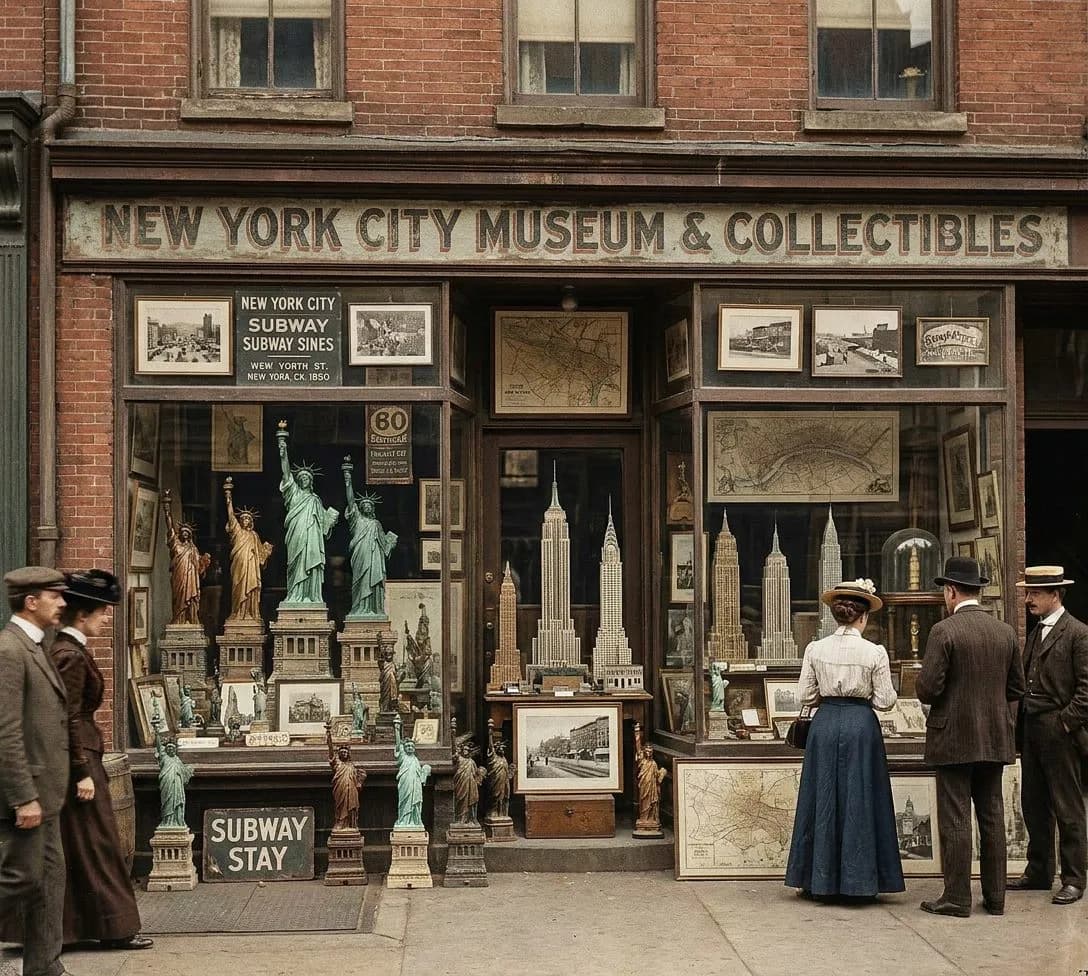
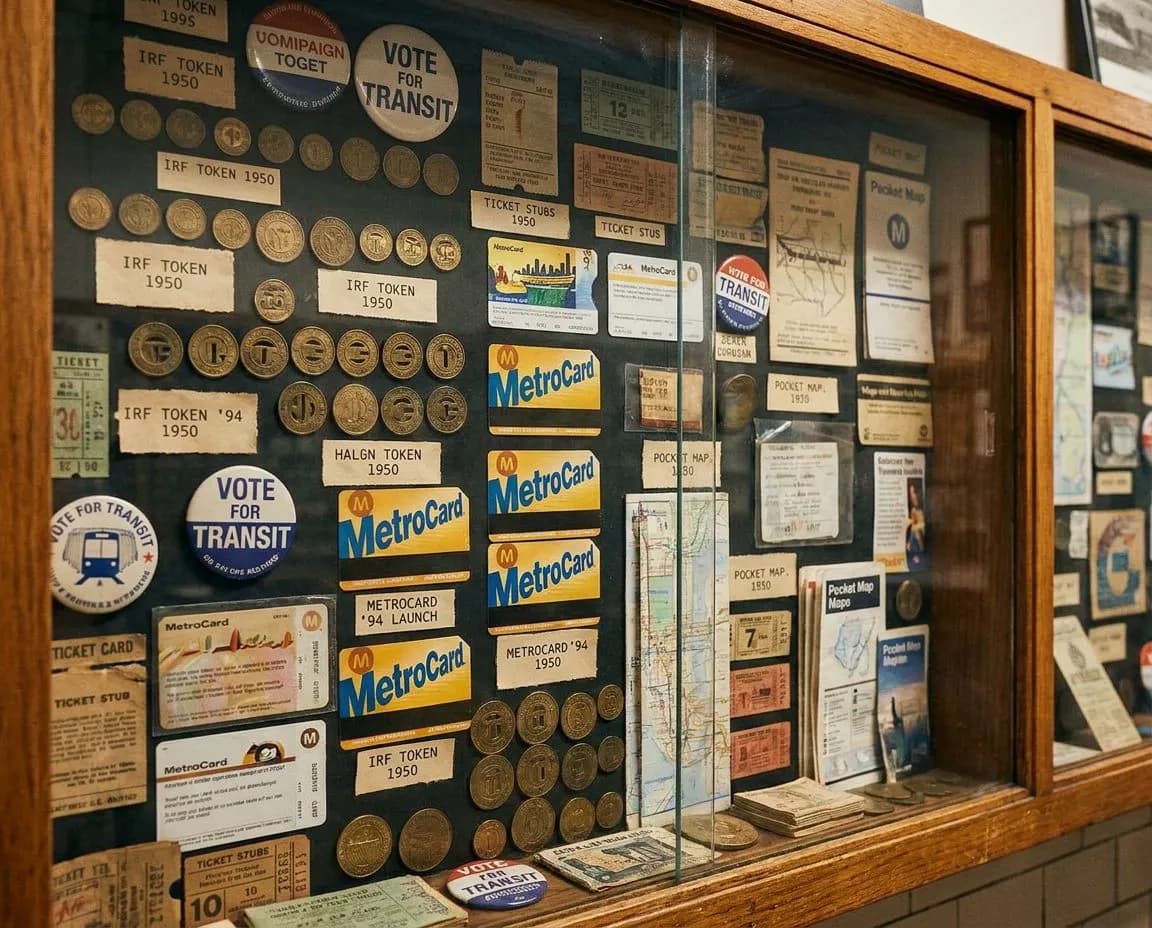
The City Reliquary sits in a former bodega space on Metropolitan Avenue, its single room packed with the material memory of New York City. Glass cases hold strata of urban life: retired MetroCards arranged by farecard generation, campaign buttons from mayoral races no one remembers winning, miniature Statue of Liberty figurines in configurations that track manufacturing eras and tourist-district aesthetics. The density is intentional. This is a museum that rewards scrutiny, where hand-typed labels guide you through artifact relationships invisible at first glance. You need time here, and you need space—which means you need to visit when the neighborhood is quiet and the tourists haven't yet mapped this address.
The curatorial logic of detritus
What separates this collection from nostalgic clutter is rigor. The artifact donation process is selective, with staff evaluating items for historical specificity and local connection before accepting them into the permanent holdings. A subway token isn't enough; it needs provenance, a story that roots it to a particular moment or route or policy shift. A building fragment requires documentation—which structure, which demolition, which era of architectural ambition or failure. The result is a collection that functions as annotated argument, each object supporting a thesis about how this city builds, rebuilds, and remembers itself.
The display cases run floor to ceiling, forcing you to crouch for the lower shelves and crane for the upper ones. There's no theatrical lighting, just daylight from the storefront windows and overhead fixtures that cast the same flat glow you'd find in a municipal archive. The aesthetic is anti-spectacle. These objects don't perform; they testify. Late 2026 finds the collection particularly focused on pre-digital infrastructure—the material culture of token booths, payphones, and analog subway maps—as those systems recede further into obsolescence and their physical traces become rare enough to merit preservation.
Weekday rhythms and the value of empty rooms
The museum’s hours vary; verify current hours directly before visiting with lighter foot traffic—a schedule that favors locals over destination visitors. Weekend crowds, though never overwhelming, still create bottlenecks around the more Instagram-legible displays: the Statue of Liberty shrine, the vintage NYPD and FDNY patches, the Panorama of New York knockoffs. On a Wednesday at two in the afternoon, you have the room to yourself or share it with one other browser, someone equally committed to reading every label and tracing every thematic connection the curators have embedded in the arrangements.
This is one of the few genuinely free things to do in a city that increasingly prices leisure by the experience. No suggested donation guilt, no timed-entry pressure. You can spend twenty minutes or two hours. The single-room scale becomes an advantage: there's no museum fatigue, no gallery overload, no question of whether you've missed a wing. You see everything, or you see it again, finding details that didn't register on the first pass. The compact footprint rewards repeat visits in ways that sprawling institutions cannot.
Community exhibitions and neighborhood specificity
Rotating community-curated exhibitions occupy the back wall, changing approximately every eight weeks with neighborhood-specific themes that drill down into hyper-local history. Recent shows have documented the evolution of particular intersections, the typography of vanished storefronts, the material culture of specific housing projects. These aren't professional-curator exercises; they're resident-generated archives, assembled by people who lived through the changes they're documenting or inherited the stories from family who did. The labels carry a different register—more personal, occasionally aggrieved, always specific about dates and addresses and names.
The back-wall shows make explicit what the permanent collection implies: this is a museum about who gets to decide what's worth preserving. The official civic archives collect mayors and monuments; the Reliquary collects the corner store that served as a community hub for three decades before a rent increase, the hand-painted signs that marked ethnic enclaves before algorithmic delivery apps homogenized storefront aesthetics. It's counter-archival work, deliberate in its attention to what institutions typically discard or overlook. The eight-week rotation keeps the focus tight and the arguments fresh, preventing the nostalgic drift that threatens any backward-looking project.
Reading the material record
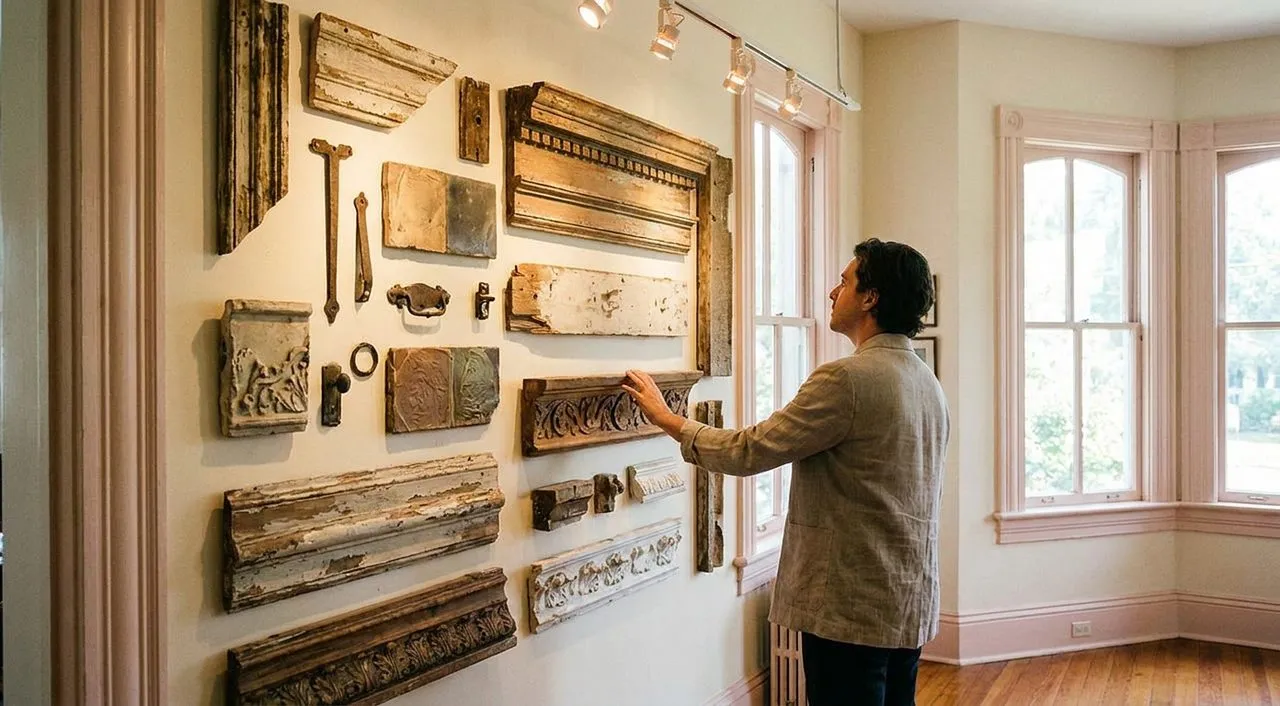
The collection is organized by type—transit artifacts in one case, building fragments in another, civic ephemera in a third—but themes bleed across categories. You start to notice patterns: the persistence of certain typefaces across decades of municipal signage, the way campaign materials shift from text-heavy to image-driven as media literacy evolves, the material degradation that marks authentic age versus reproduction. The museum doesn't condescend with multimedia interactives or simplified explainers. It assumes you're willing to do the interpretive work, to stand close and read small print and make connections.
The Statue of Liberty miniatures deserve particular attention. Arranged chronologically, they track not just manufacturing techniques but shifting ideas about what the statue symbolizes and who buys its image. Early souvenir versions emphasize neoclassical proportion; mid-century examples go cartoonish and kitschy; recent iterations reclaim the icon for various political arguments. It's immigrant history and kitsch studies and iconography critique compressed into a single display case, legible only if you're willing to look closely and think about what changed between one figurine and the next.
Williamsburg context and the gentrification archive
The Reliquary sits in a neighborhood that has become synonymous with urban transformation, which gives the collection an unavoidable subtext. Every preserved artifact from pre-2000s Williamsburg now carries the weight of displacement narrative, whether the curators intend it or not. The Polish-language signage fragments, the Northside Savings Bank ephemera, the documentation of demolished industrial structures—all of it reads as elegy in a neighborhood where luxury towers have replaced most of the built environment these objects reference. The museum doesn't editorialize overtly, but the act of preservation is itself a position.
This late-2026 moment finds the neighborhood in yet another phase, with the first wave of post-rezoning buildings now aging into their own history and the affordability crisis forcing another demographic shift. The Reliquary's work becomes more urgent as the pace of erasure accelerates. What gets saved determines what future residents will know about the city they inherit. The storefront's modest scale and volunteer energy model make it feel fragile, contingent, at risk of joining the catalog of lost neighborhood institutions it documents. That precarity is part of the experience—you're visiting a place that might not survive the forces it archives.
Practical notes
The City Reliquary is located at 370 Metropolitan Avenue in Williamsburg, Brooklyn. Take the G train to Metropolitan Avenue or the L train to Lorimer Street/Metropolitan Avenue; the museum is a short walk from either stop. Street parking is competitive but possible on weekdays. Hours shift seasonally and by volunteer availability; verify directly before visiting, but expect weekday afternoons and weekend openings starting at noon. The single-room space is small; verify current accessibility details directly before visiting. No bags or coats to check, no photography restrictions. Bring reading glasses if you need them—many labels are small. Allow forty-five to ninety minutes depending on your tolerance for density and detail.
Tags: #CityReliquary #Williamsburg #MicroMuseum #NYCHistory #TheOddEdit #BrooklynCulture #UrbanArchive #MetropolitanAvenue #LocalHistory #FreeNYC #CommunityMuseum #NYCEphemera #WilliamsburgBrooklyn #NeighborhoodHistory #OffTheBeatenPath
Sources consulted: City Reliquary - Wikipedia · Williamsburg, Brooklyn · City Reliquary Official Site · MTA - Metropolitan Transportation Authority · Museums - The New York Times
All trademarks are the property of their respective owners.