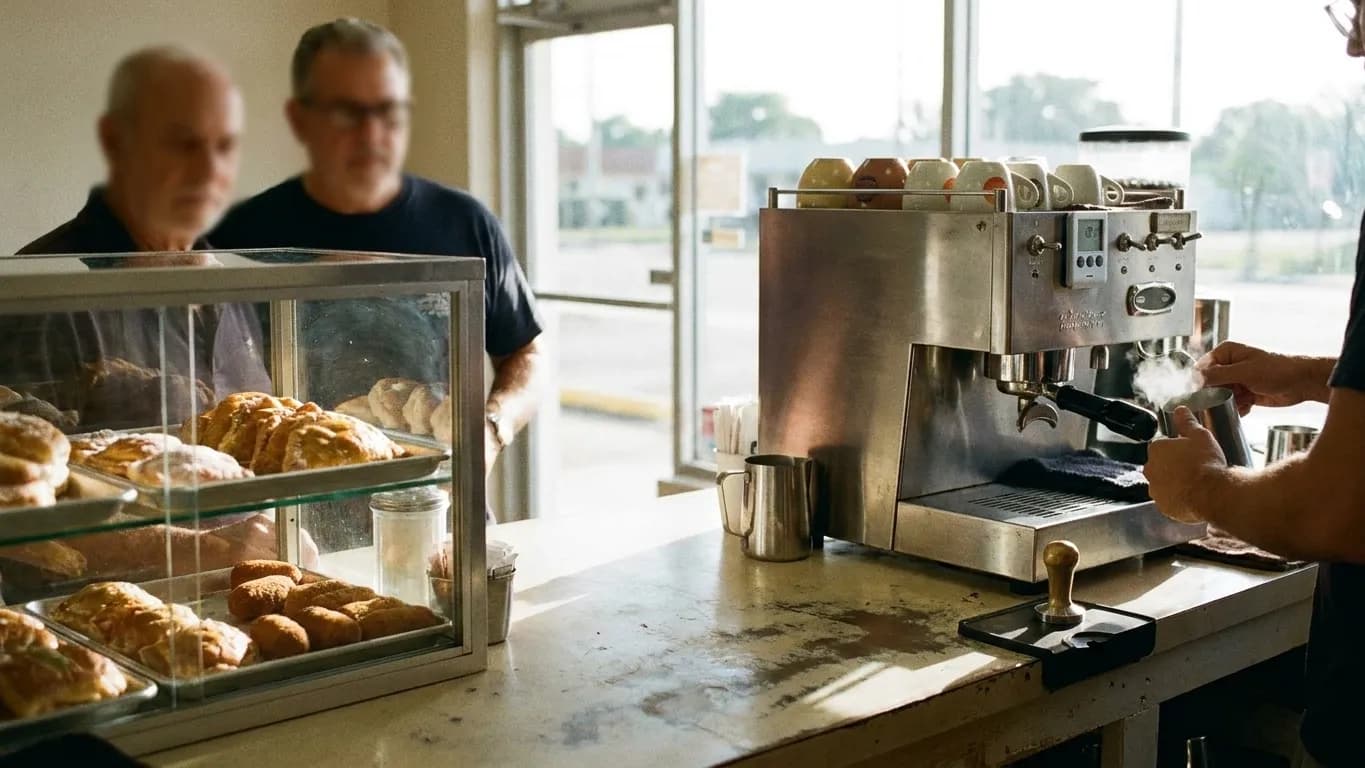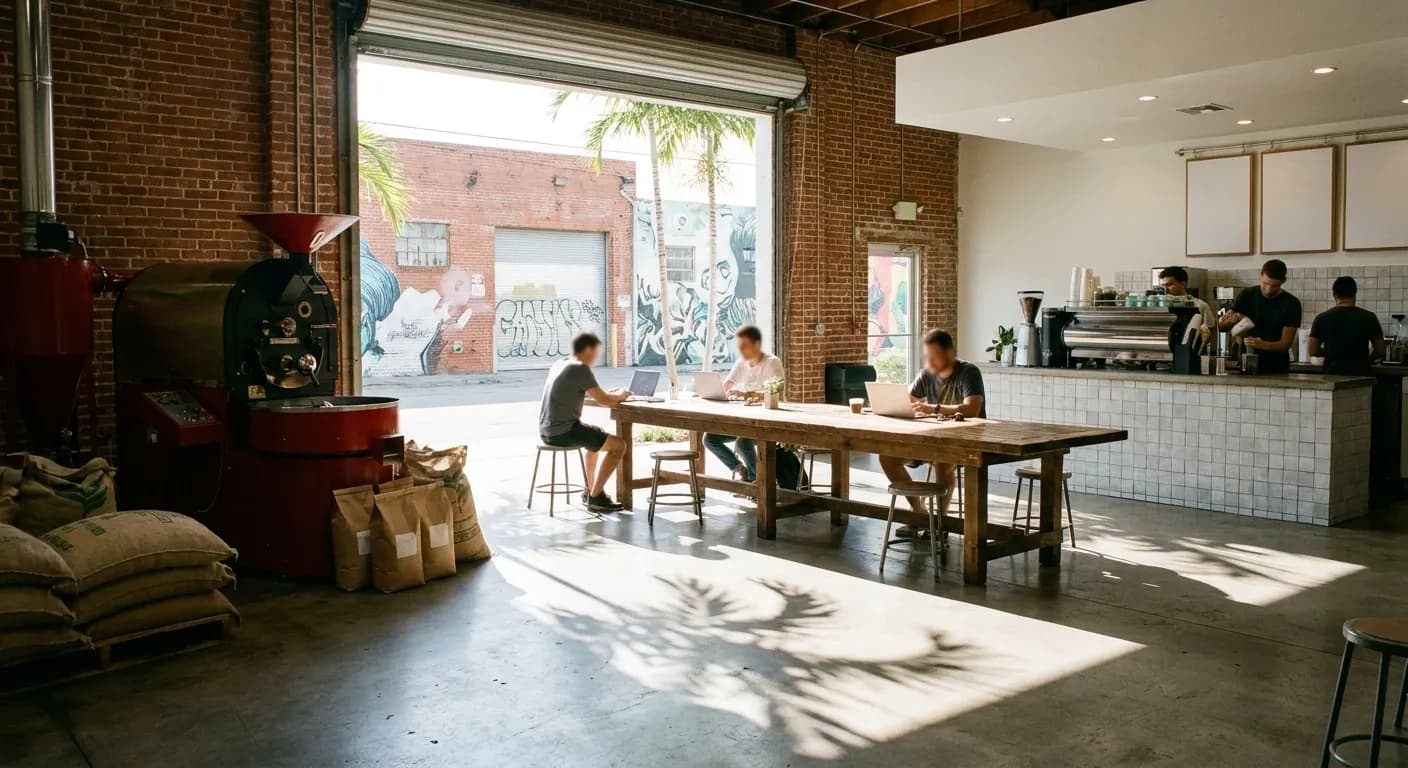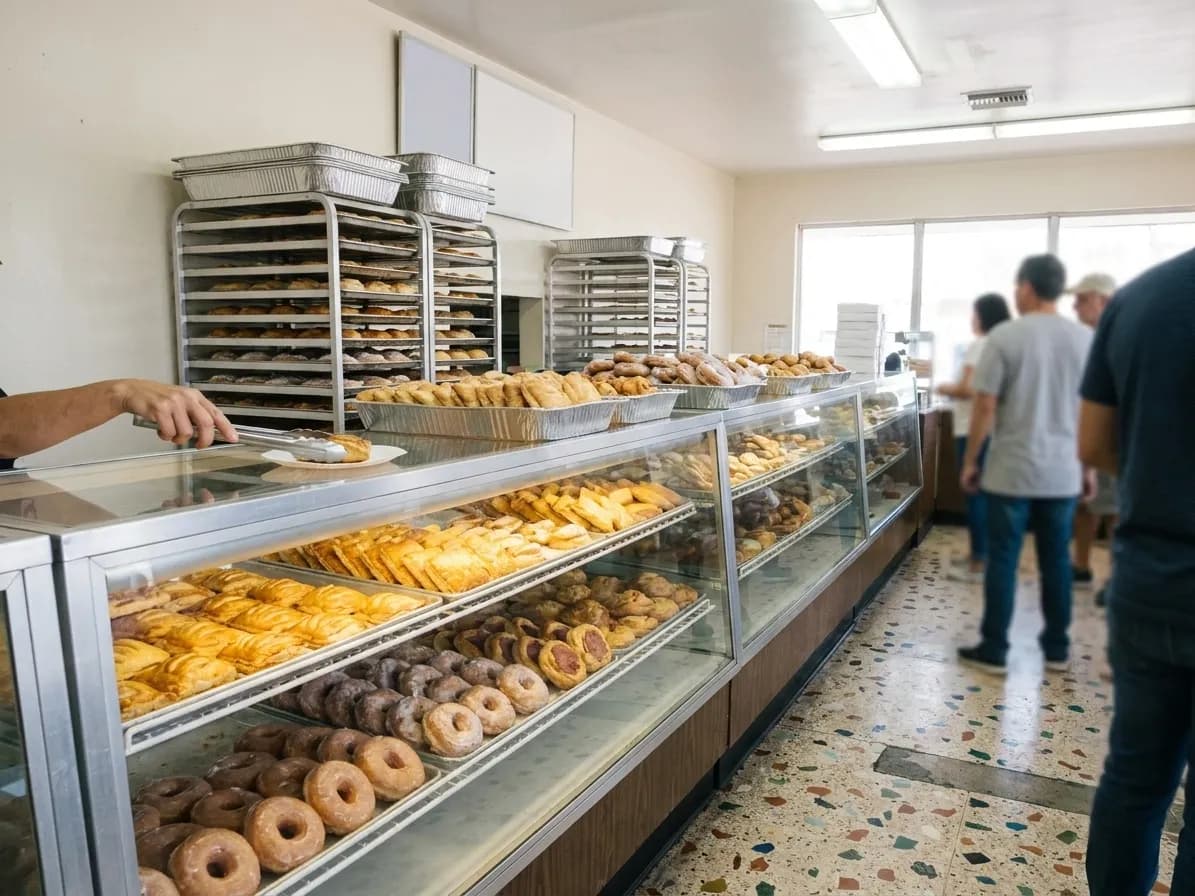
The thing that surprises people about sweet pastry in Miami is that it is not an evening activity. The pastelito economy runs on a morning clock: trays come out warm between six and eight, the good ones are gone by ten, and the entire transaction happens standing at a window with a coffee the size of a thimble. If your plan is to go looking for dessert at nine at night, you are searching in the wrong half of the day.
The best counters here run out by mid-morning and the good ones are in Hialeah rather than on the tourist stretch of Calle Ocho. Tell Karpo what time you are up and where you are starting, and get a route that hits the trays while they are still warm.
The ventanita is the format, not a quirk
Almost every Cuban bakery in this city has a walk-up window onto the street, and that window is the primary sales channel rather than an overflow for the café. You order in a few words, you get a colada — a shared cup of sweetened espresso with a stack of small plastic thimbles — and a pastelito, and you eat it standing up. The colada is designed to be poured out and shared, which is why ordering one for yourself alone marks you out immediately.
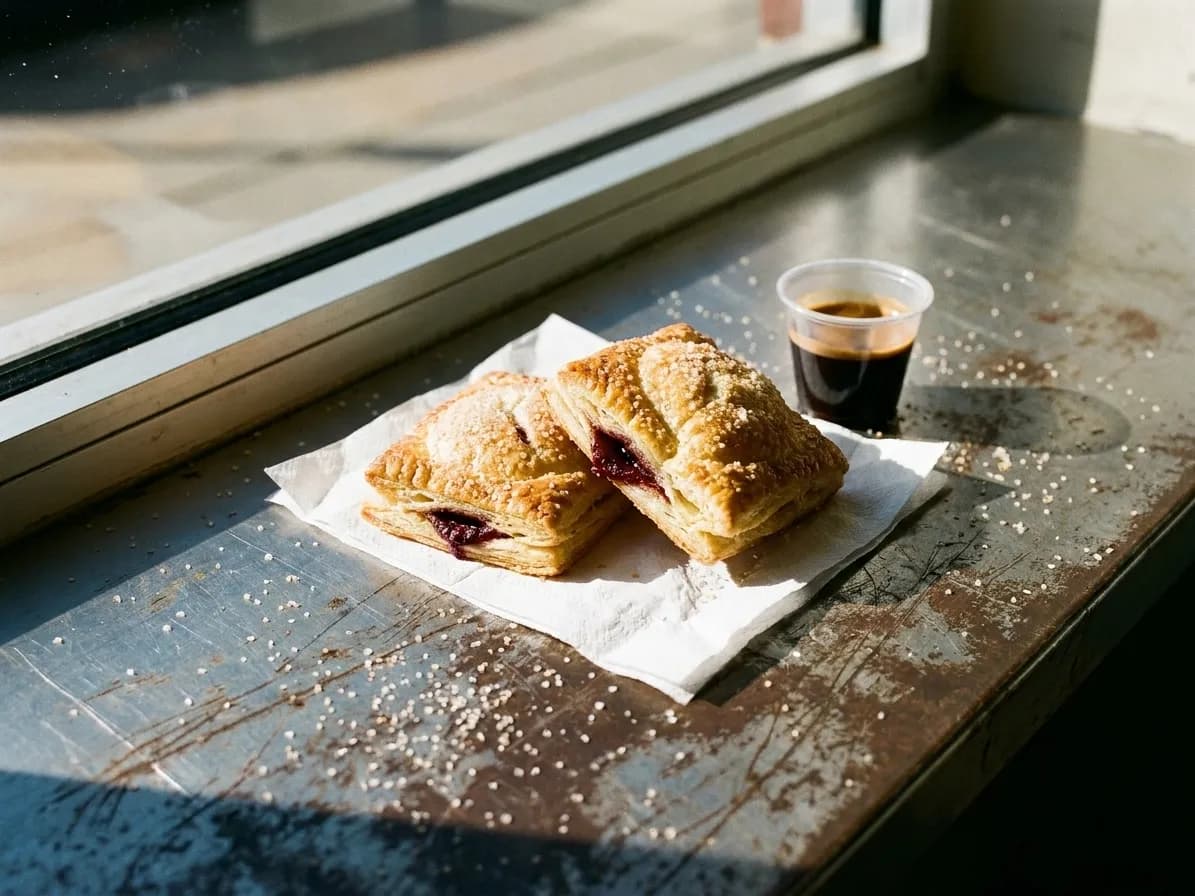
The default pastelito is guava, usually with cream cheese. Beyond that the range is wider than the tourist version suggests: meat, cheese, coconut, and croqueta-filled versions that sit somewhere between pastry and lunch. The savoury ones are frequently better than the sweet ones and almost never what visitors order.
Hialeah is where the serious bakeries are
Little Havana has the fame and Hialeah has the density. Breadman, open since 2014, has become one of the best bakeries in the county on the strength of things that do not exist elsewhere — a maduros y carne pastel, a pastel de croqueta, an unusually flaky Nutella pastelito. That is a modern bakery innovating inside a very traditional form, which is rarer than it sounds.
Casa Potin has been turning out the classics from a small plaza across from the Sedano's on Palm Avenue for decades, and represents the other end of the spectrum: no innovation, no concessions, the same product done the same way for long enough that the neighbourhood measures other bakeries against it. Between those two you have the whole argument about what a Cuban bakery is for.
Little Havana, and how to use it properly
Pastelmanía on the Calle Ocho stretch is the locals' counter rather than the photographed one, with a full range of pastelitos, sandwiches and empanadas. La Colada Gourmet, Arahi's and the Versailles bakery counter cover the rest of the neighbourhood, and Versailles in particular is worth separating in your head: the restaurant is a landmark and the bakery window beside it is a different, faster, cheaper proposition.
Churros are a slightly different lineage — Spanish rather than Cuban — and in Miami they are mostly a chain and cart product, with Churromania the most visible operator in and around Little Havana. Freshness is everything with a churro and nothing else is, so the correct move is to buy from whoever is frying at that moment rather than from whoever has the best reputation.
Building the morning
Start in Hialeah early, ideally before eight, when the trays are warm and the counters are working at full speed. Come south into Little Havana for a second stop and a colada. Do not attempt more than three bakeries — a pastelito is more substantial than it looks and four of them is a full meal with an hour of regret attached.
And go on a weekday if you can. Saturday morning at a good Hialeah bakery is a queue out the door, which is charming once and tedious if you were hoping to be somewhere else by ten.
Practical notes
Trays come out warm between six and eight and the best of them are gone by ten — this is a morning activity. Order at the ventanita, take a colada to share, and try a savoury pastelito rather than defaulting to guava. Breadman and Casa Potin anchor Hialeah; Pastelmanía, La Colada Gourmet, Arahi's and the Versailles bakery window cover Little Havana. Buy churros from whoever is frying right then. Three bakeries is the maximum, and a weekday beats a Saturday.
Ordering coffee without getting it wrong
The vocabulary matters more than people expect and it is short. A colada is the large shared cup with thimbles. A cortadito is espresso cut with steamed milk, sweetened. A café con leche is the breakfast format, closer to a latte, usually taken with buttered toasted bread. A cafecito is the single sweetened shot on its own.
The sugar is not optional in the way it is elsewhere — it is whipped into the first drops of espresso to make the foam on top, so asking for it unsweetened produces a different drink rather than the same drink minus sugar. If you do not want the sweetness, order an americano, and nobody will mind. Ordering a colada for one person is the only thing that will actually raise an eyebrow.
Tags: #Pastelitos #Churros #Miami #LittleHavana #Hialeah #CubanFood #Ventanita #CoffeeAndDessert #MiamiFood #CalleOcho #BakeryGuide #MiamiMornings #MiamiGuide
All trademarks are the property of their respective owners.
Ask Karpo first
Want to know which counters still have warm trays right now, which ones open before seven, and what to order that is not guava? Ask Karpo for live bakery hours across Hialeah and Little Havana, a two-stop route that fits your morning, and the savoury pastelito each place is actually known for.