Driving a Chevrolet Silverado EV through Miami's diverse neighborhoods requires different planning than conventional pickup ownership. Electric truck drivers face a unique equation: matching charging station locations with truck-friendly parking, verifying payment compatibility across networks, and timing stops around fast-charging availability versus longer Level 2 sessions. Unlike compact EVs that slip into tight urban spots, the Silverado's full-size footprint demands attention to clearance heights in parking structures, turn radius in older neighborhood streets, and whether charging stalls offer pull-through access or require backing maneuvers. This guide explores practical route-building strategies for weekday errands, comparing how different charging networks fit into neighborhood loops, and identifying the tradeoffs solo drivers and families encounter when planning stops around Miami's evolving infrastructure.
Text Karpo your home neighborhood, typical errand destinations, and whether you need fast-charging or can wait 30-60 minutes. We'll send a ranked Miami EV charging route with station availability, parking notes, and a backup list of dealerships with courtesy charging if public stations are full.

Charging Network Payment Systems and Membership Tradeoffs
Miami's EV charging landscape includes multiple networks—Electrify America, EVgo, ChargePoint, and Tesla's expanding Supercharger access—each with distinct payment structures and app requirements. Chevrolet Silverado EV owners should verify which networks their vehicle's built-in navigation prioritizes and whether those align with stations along planned routes. Some networks offer subscription tiers that reduce per-kilowatt-hour costs but require monthly fees; others use pay-as-you-go models with higher rates but no commitment. Drivers running frequent weekday errands may benefit from comparing total monthly charging costs under each model, factoring in whether routes consistently pass the same network's stations or require multi-network flexibility.
Payment method compatibility varies: certain stations accept credit cards at the charger, while others mandate app-based activation, and a few still require RFID cards ordered in advance. For families sharing the Silverado EV, consider whether all drivers can access the same account or if separate profiles create billing confusion. Solo drivers might prioritize networks with seamless Apple Pay or Google Pay integration for quick stops. Before committing to a membership, test each network's app during a low-stakes errand to confirm the interface works reliably, the station locator updates in real time, and customer support channels are accessible if a charger malfunctions mid-session.
Fast-Charging Versus Level 2: Timing Stops Around Errand Duration
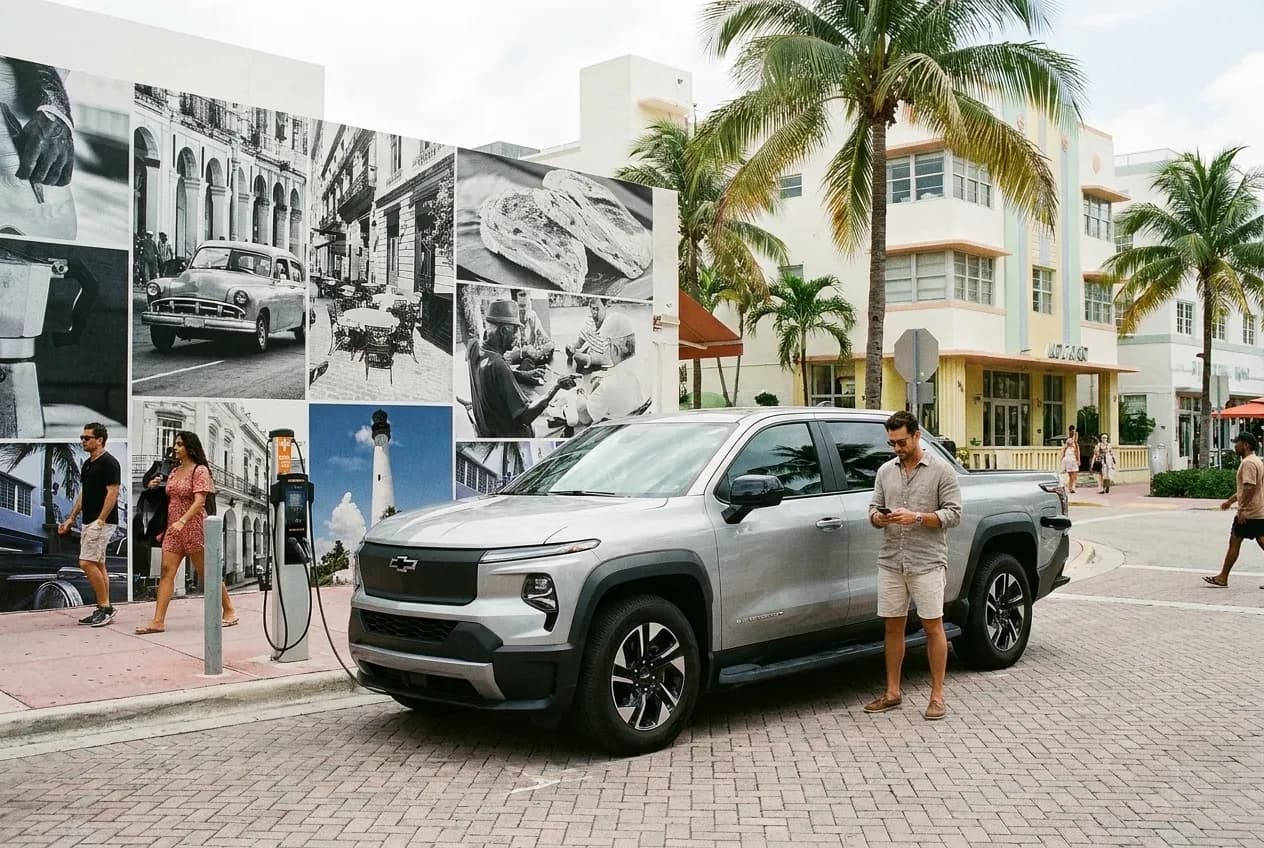
Fast-charging stations—typically 150 kW or higher—can add significant range to the Silverado EV in 20 to 40 minutes, making them suitable for grocery runs or quick stops where you'll remain nearby. However, these stations often occupy high-traffic commercial corridors with limited truck parking, requiring drivers to assess whether the charging stall itself accommodates the Silverado's length and whether adjacent spaces allow door clearance for loading cargo. Level 2 chargers, common in municipal lots and some retail centers, deliver slower speeds but may align better with longer errands like visiting parks or attending community events; Miami-Dade Parks facilities, for instance, offer extended visit opportunities where a two-hour charge session feels productive rather than idle.
Route planning should match charging speed to errand type: a 30-minute fast-charge works for a pharmacy pickup, while a 90-minute Level 2 session pairs with a library visit or a leisurely walk through a neighborhood park. Families managing multiple stops might cluster errands near a single fast-charger, then move to a Level 2 station for a final, longer activity, avoiding the inefficiency of multiple fast-charge sessions that taper as the battery nears full. Solo drivers can exploit this flexibility by scheduling charging during activities they'd pursue anyway—such as a farmers market visit on Lincoln Road, where nearby stations allow the truck to charge while you browse—turning necessary energy replenishment into a seamless part of the day rather than a separate chore.
Truck-Friendly Parking and Charging Stall Accessibility
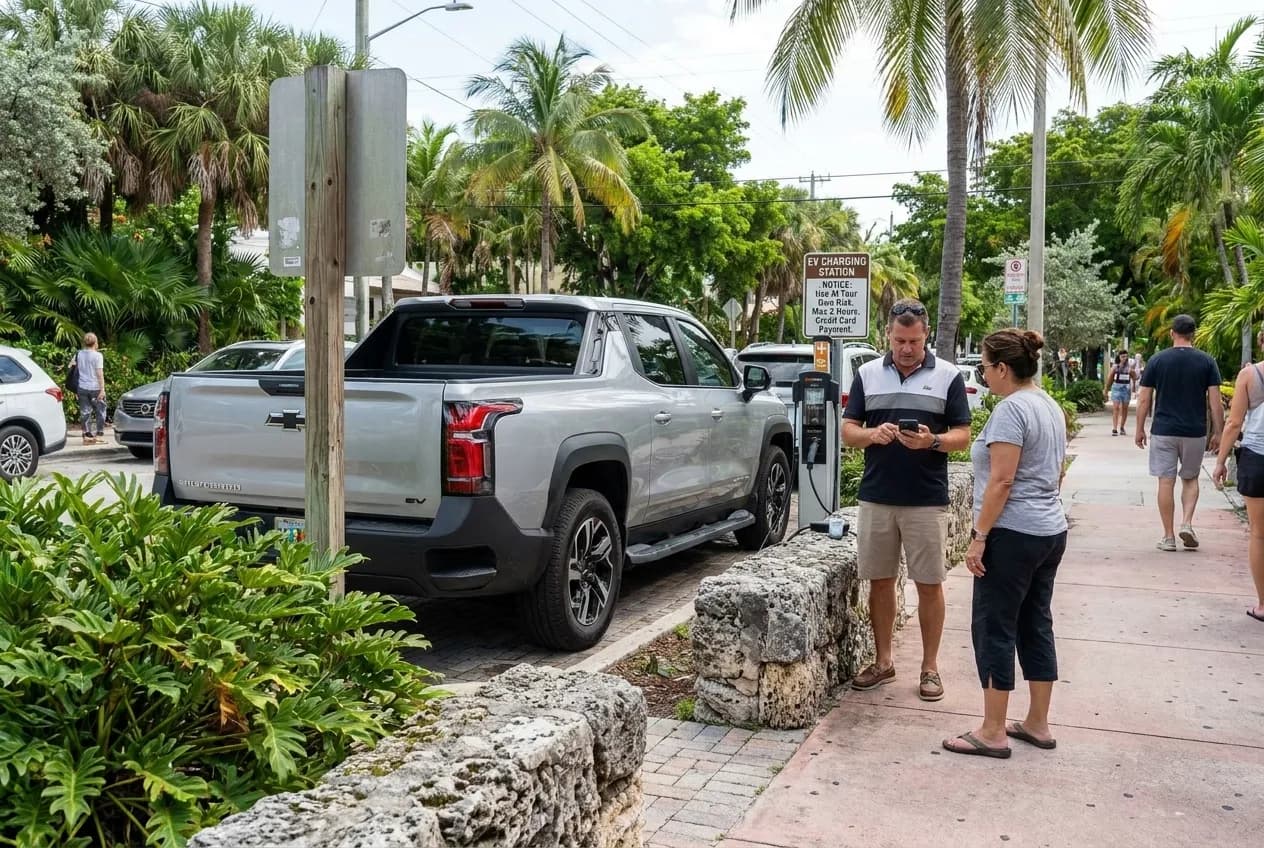
The Chevrolet Silverado EV's dimensions—over 18 feet long in crew cab configurations—demand attention to parking geometry that compact EV drivers rarely consider. Many urban charging stations occupy standard parking spaces with tight approaches, requiring drivers to verify whether stalls offer pull-through access or if backing in risks scraping curbs or blocking adjacent vehicles. Elevated parking structures near downtown Miami or Brickell often post height restrictions; confirm clearance before entering, as some garages cap entry at 6 feet 8 inches, below the Silverado EV's roof height. Street-level lots in neighborhoods like Coconut Grove or Coral Gables may provide easier access but fewer charging options, forcing a choice between convenient parking and optimal charging location.
When scouting charging stations via apps, look for user photos or reviews mentioning truck compatibility—other full-size EV drivers often note whether stalls accommodate longer wheelbases or if cable length reaches the Silverado's charge port without awkward positioning. Some stations place chargers at the front of spaces, favoring vehicles with front-mounted ports; the Silverado EV's port location may require backing in, which complicates quick exits if the lot fills during your errand. For family trips involving child seats or cargo loading, prioritize stations with extra space on the driver's side, ensuring you can open doors fully without encroaching on neighboring vehicles or pedestrian walkways.
Building Neighborhood Loops That Minimize Backtracking
Efficient route planning clusters errands geographically, reducing total miles and maximizing the value of each charging stop. Start by mapping essential weekly stops—grocery stores, pharmacies, post offices—then identify charging stations within a half-mile radius of each. Miami's free Metromover system, operating from 5:30 a.m. to 10 p.m. in downtown, Omni, and Brickell areas, offers an alternative for drivers who prefer charging the Silverado EV in a central lot while completing errands on foot or via transit, though this approach suits solo drivers more than families managing strollers or bulk purchases. For truck-dependent routes, prioritize loops that flow logically—north to south along Biscayne Boulevard, for example—rather than zigzagging across neighborhoods, which burns range and time.
Consider whether your route passes high-traffic periods that congest charging stations: weekday lunch hours (11:30 a.m. to 1 p.m.) and evening commutes (5 to 7 p.m.) often see queues at popular fast-chargers near commercial districts. Shifting errands to mid-morning or early afternoon can reduce wait times and allow more predictable scheduling. Families might batch weekend errands differently than weekday solo trips, using Saturday mornings for longer charging sessions at parks or recreation areas where children can play while the truck charges, versus quick Wednesday stops optimized for speed. Test your planned loop once without time pressure, noting actual charging speeds, parking challenges, and whether station availability matches app predictions, then refine the route based on real-world friction points before relying on it for time-sensitive errands.
Verifying Station Functionality and Backup Planning
Charging infrastructure reliability varies: even well-maintained networks experience occasional outages from software glitches, payment system failures, or physical damage. Before depending on a specific station for a critical errand, check the network's app for real-time status updates and recent user reviews flagging persistent issues. Some apps display historical uptime data; stations with frequent "out of service" reports warrant skepticism, especially if they're your only option in a neighborhood. Develop a mental or digital list of backup stations along your route—ideally on different networks—so a malfunctioning charger doesn't derail your entire plan. Solo drivers might tolerate rerouting more easily than families on tight schedules, but both benefit from redundancy.
If a station fails mid-session, document the issue through the network's app to trigger maintenance and potential billing credits, but don't assume immediate resolution. Carry a portable Level 1 charging cable as an emergency fallback; while slow, it can add enough range overnight to reach a working station the next day if you're stranded near home. For longer trips that push the Silverado EV's range limits, verify that your route includes multiple charging options rather than a single must-hit station, and monitor weather forecasts—Miami's summer heat can reduce charging speeds as battery thermal management systems work harder, extending stop times beyond app estimates. Intermediate-level route planning means anticipating these variables and building flexibility into your schedule, treating charging as a dynamic element rather than a fixed constant.
Tags: #ChevroletSilveradoEV #MiamiEVcharging #electrictruckroutes #neighborhoodchargingstations #EVrouteplanning #Miamiparking #chargingnetworks #fastchargingMiami #Level2charging #truckfriendlyparking #Miamierrands #EVinfrastructure #electricpickuptrucks
Sources consulted: Source 1: miamidade.gov · Source 2: miamidade.gov · Source 3: mdpls.org · Source 4: miamibeachfl.gov
All trademarks are the property of their respective owners.
Ask Karpo first
Ask Karpo to turn this Miami idea into a current plan for your date, budget, companion, transit preference, and energy level. Karpo can narrow the route and flag what to verify before you go.