The Charles River Esplanade rewards a particular kind of urban restlessness—the urge to move without destination, to think through something while your legs carry you past sycamores and scullers and the occasional heron fishing near the sailboat docks. The loop is a commute to nowhere, which is precisely the point. Three pedestrian bridges link the Cambridge and Boston sides, creating a circuit that locals have quietly claimed for lunch-break problem-solving, evening phone marathons, and the sort of ambient people-watching that requires no admission fee.
The Geography of the Loop
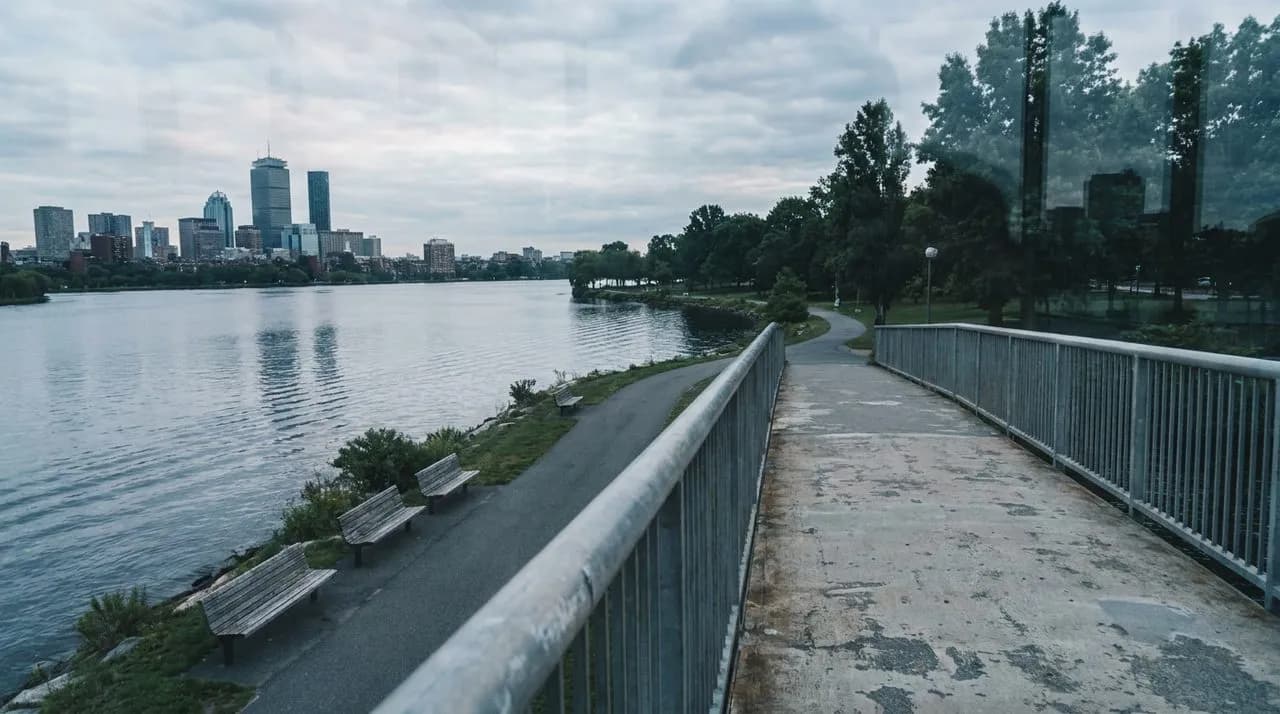
Start at the Massachusetts Avenue Bridge—the one with the Smoot markings, if you're keeping track of Boston trivia—and you can walk the full loop in either direction. Heading west toward Harvard Bridge and back east along the opposite bank covers approximately 3.2 miles, a distance that takes most walkers 50 to 60 minutes at a conversational pace. The path is paved, wide enough to share with runners and cyclists without feeling crowded, and blessedly flat. No heroic hill training here, just steady forward motion with the river always on one side.
The bridges themselves—Mass Ave, Longfellow, and Harvard—act as pivot points, opportunities to cross over and reverse your perspective. The skyline that was behind you now fills your field of vision. The Cambridge side tends toward fewer tourists and more MIT students deep in headphone-induced thought. The Boston side skews toward families, dog walkers, and the occasional outdoor yoga class claiming a patch of grass near the lagoon.
The Longfellow Advantage
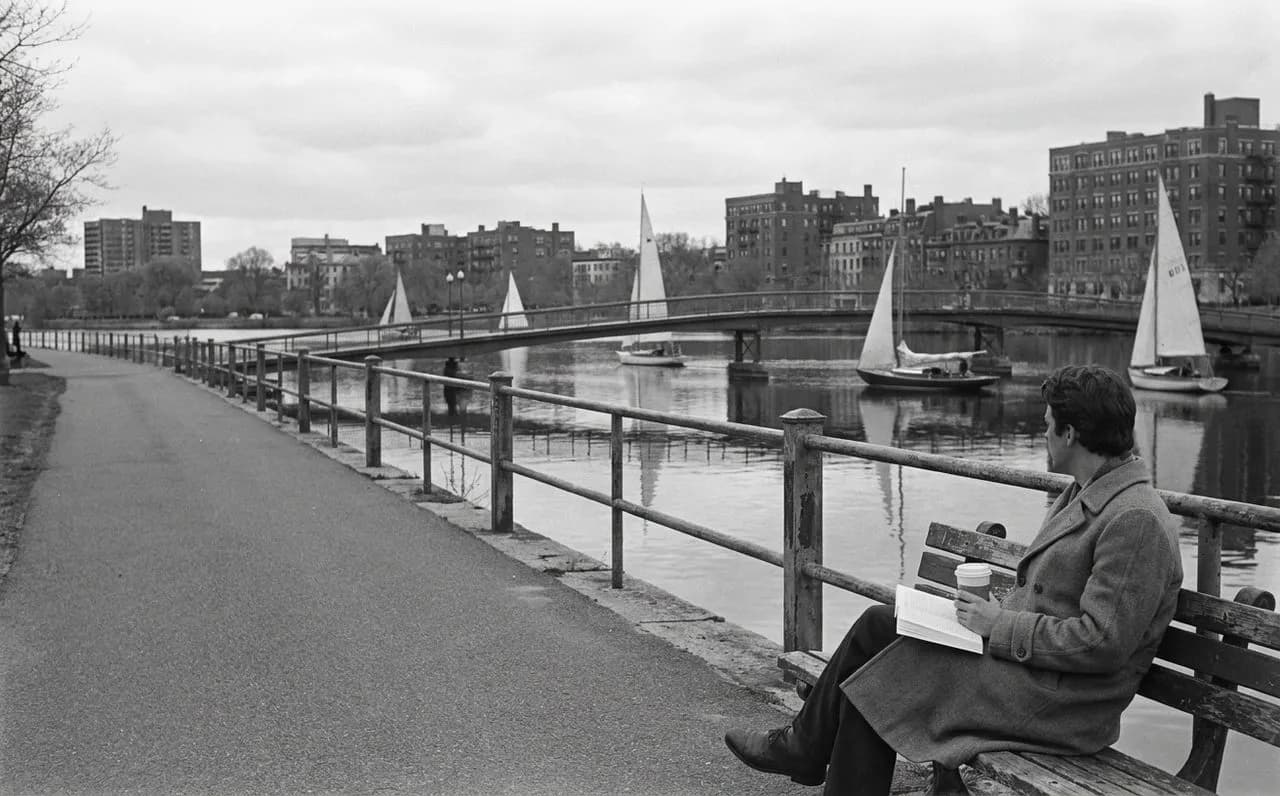
Not all bridge crossings are created equal. The Longfellow Bridge pedestrian path offers the widest river views and the least crowded crossing, especially on weekday mornings before 9 AM. While the Red Line rumbles overhead, the walkway itself feels surprisingly serene, with unobstructed sightlines up and down the Charles. Early risers get the added benefit of soft light on the water and the city still waking up—delivery trucks instead of tour buses, joggers instead of selfie clusters.
The bridge's salt-and-pepper towers were restored during the Longfellow Bridge rehabilitation completed in the 2010s, their steel and granite gleaming after years of rehabilitation work. It's a crossing that rewards a slower pace, a moment to lean against the railing and watch a single scull slice upstream, oars feathering in perfect rhythm. From here, the whole loop stretches out in either direction, a visual promise of uninterrupted pavement and riverside solitude.
Bench Strategy and Sunset Geometry
The Esplanade's real luxury isn't the path itself but the benches—hundreds of them, bolted to concrete pads and angled to face the water. Near the Hatch Shell, a particular cluster is positioned to face west, catching sunset light on the water and Back Bay rooflines from May through September. These benches fill up on warm evenings with readers, knitters, remote workers stealing an extra hour outdoors, and couples sharing takeout from the nearby neighborhoods.
The light here does something specific between six and eight in the evening during the longer days: it turns the river surface into hammered copper and throws the brick facades of Beacon Hill into sharp relief. It's one of the city's free things to do that feels less like settling for budget-friendly and more like insider knowledge. Bring a book you won't read and a phone charger you probably will need.
Seasonal Textures
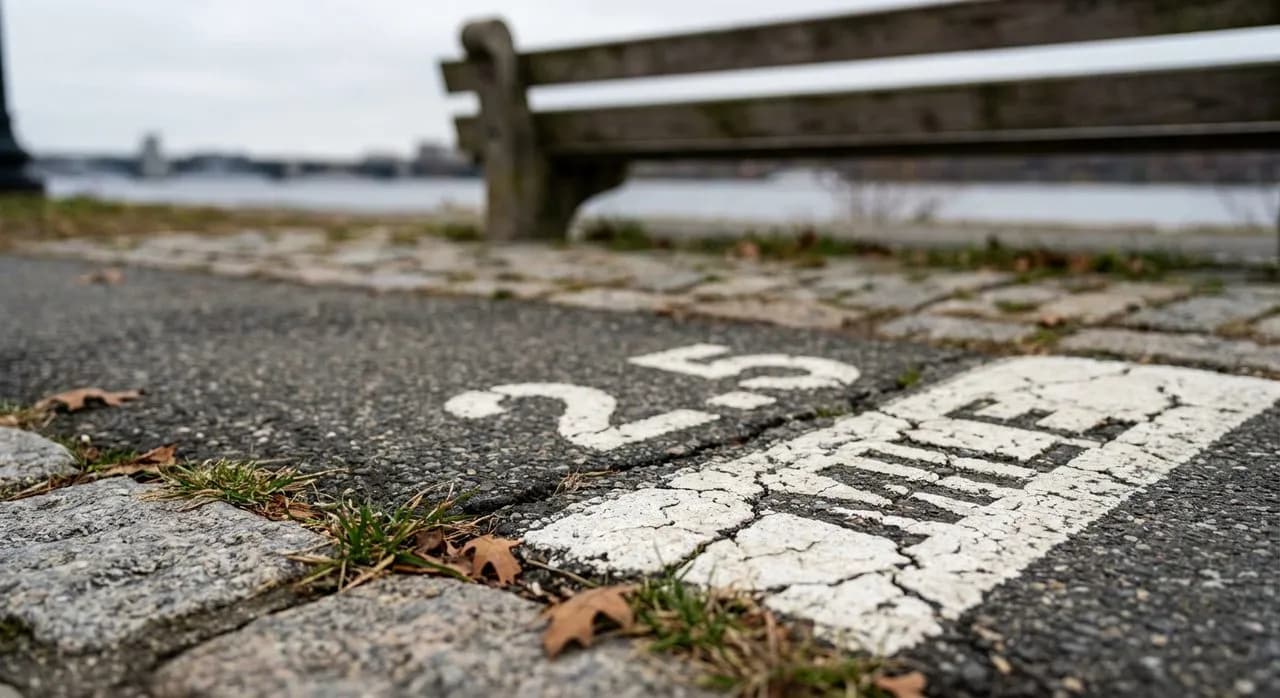
By late fall and spring, the Esplanade cycles through sycamore leaf drop and spring bud break. Summer brings the densest canopy, green tunnels over the path that keep the pavement a few degrees cooler than the open stretches near the lagoon. Fall delivers the crunch of leaves underfoot and the snap of colder air off the water. Even winter walkers claim the loop, bundled against the wind that funnels down the river corridor but rewarded with empty benches and crystalline views.
The river itself changes character with the seasons—glassy and still on humid July mornings, choppy and steel-gray when autumn storms roll through. Geese honk and waddle across the path in spring, utterly unintimidated by pedestrian traffic. Sailboats crowd the Community Boating docks in summer, their halyards clinking a metallic chorus audible from fifty feet away.
Who You'll See
The Esplanade attracts a rotating cast: the breakfast-sandwich commuter cutting through from Kendall to Back Bay, the retiree with binoculars tracking migratory birds, the junior analyst pacing through a difficult call with earbuds in and hands gesturing to no one. Lunchtime brings clusters of office workers sitting on the grass with salads, and evenings draw the runner crowd—some in marathon-training packs, others solo and grimly tracking split times.
There's an unspoken etiquette. Cyclists call out when passing. Dogs on long leashes get reeled in when the path narrows. Nobody bothers anybody, but there's a ambient sense of shared public space, a collective agreement that the river and the view belong to everyone willing to walk for them.
Why the Loop Works
The circuit design is what makes the Esplanade more than a park—it's a route, a structure for wandering that always brings you back. You can bail out at any bridge if you're short on time or energy, or you can add another lap if the walk is solving a problem or simply clearing your head. The loop doesn't demand anything. It doesn't crescendo toward a vista or require you to summit anything. It just unspools along the water, offering benches and bridges and the occasional food cart, and lets you decide how long you need.
Practical notes
The Esplanade runs along both sides of the Charles River between the Museum of Science and Harvard Bridge. Access points at Massachusetts Avenue, Longfellow Bridge, and Harvard Bridge; nearest T stops are Charles/MGH (Red Line) and Kendall/MIT or Back Bay/Copley depending on the starting point. Parking is metered along Storrow Drive access roads. The path is open year-round, dawn to dusk. Fully paved and wheelchair accessible. Bring water, sunscreen in summer, and a charged phone for navigation or long conversations. Public restrooms near the Hatch Shell, seasonal.
Tags: #CharlesRiverEsplanade #BostonWalking #TheLongWayHome #EsplanadeLoop #BostonRiverWalk #BackBayViews #CambridgeSide #HatchShell #LongfellowBridge #BostonOutdoors #UrbanWalking #FreeBoston #BostonSummer2026 #CityWalks #RiversidePath
Sources consulted: Charles River Esplanade · MA State Parks - Esplanade · Boston Parks & Recreation · Charles River · Time Out Boston
All trademarks are the property of their respective owners.