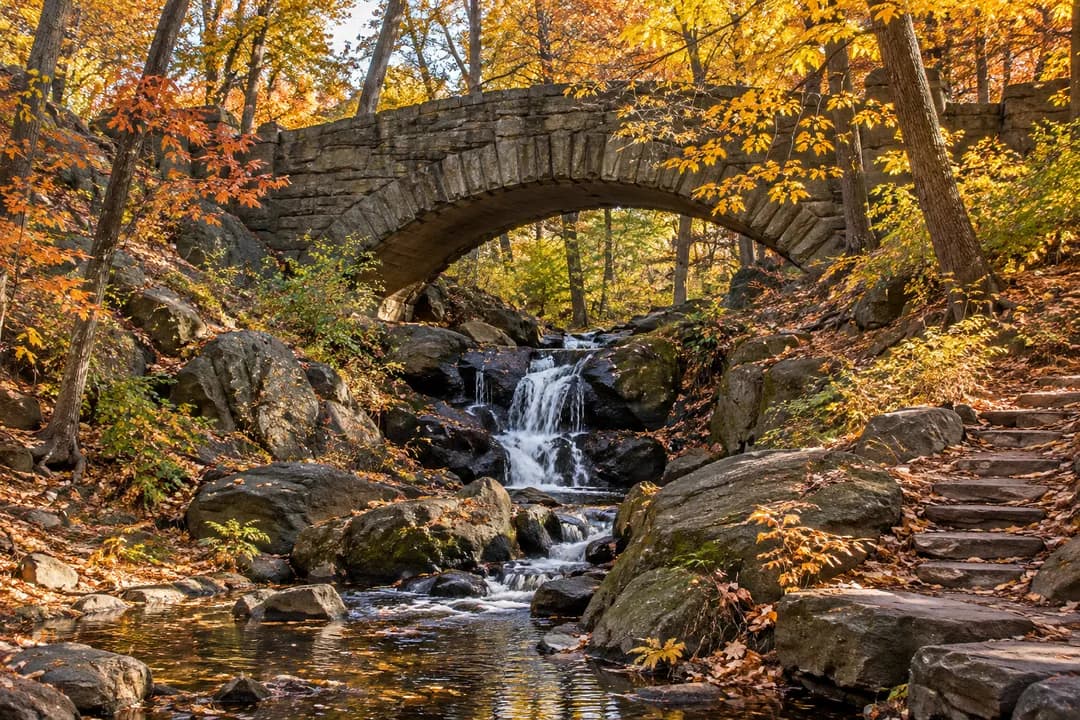
 Scenic Walking Trail Near Me: Central Park North Woods Ravine and Loch Walk
Free Things to Do
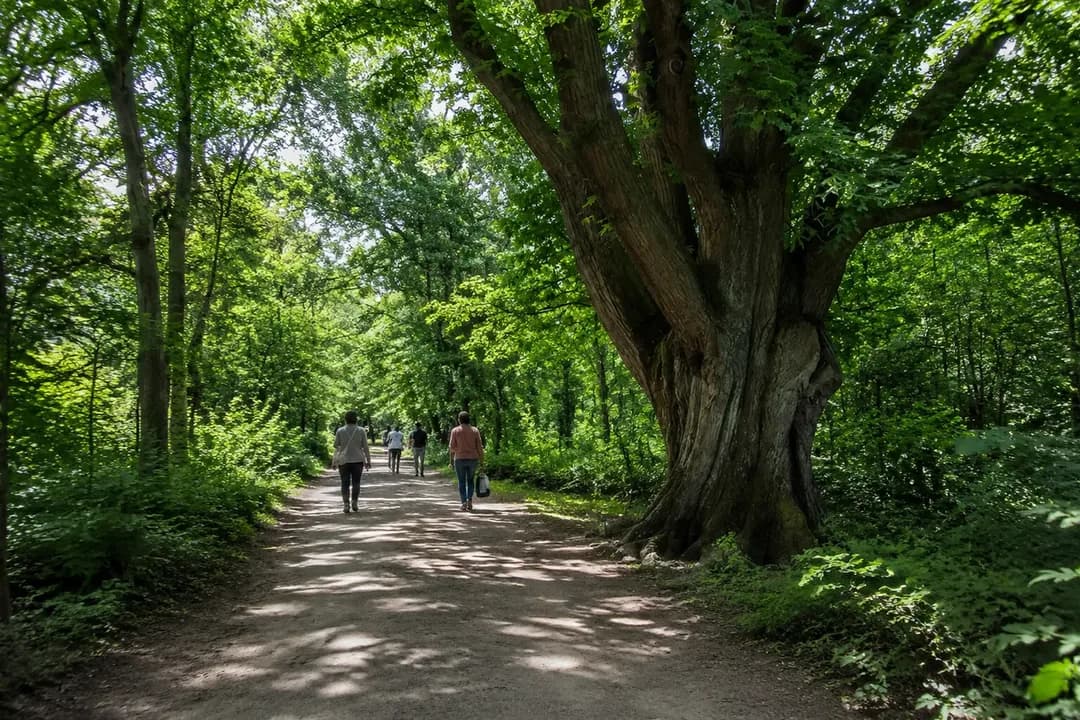
Central Park and Beyond: A Perfect NYC Summer Day
A no-cost route through Manhattan that starts with Central Park's cooler zones and ends near water, timed to miss the worst crowds.
You look up Central Park in June because every other green space in Manhattan feels like a heat trap by noon. The search volume is real—96,000 monthly queries—because visitors and locals alike need the same thing: a day outside that doesn't cost money and doesn't require standing in line. The park delivers on paper, but the ground truth is more specific. The Sheep Meadow and Bethesda Terrace are beautiful and completely overrun by 11 a.m. on any weekend between Memorial Day and Labor Day. If you arrive without a plan for which entrance to use and where to walk first, you'll waste time looking for a patch of shade that isn't already claimed.
Karpo checks which lawns are actually open today, texts you the fastest subway home from your last stop, and holds a backup plan if the park hits capacity or weather turns.
Why ninety-six thousand people search this every month
Central Park is 843 acres, but only about a third of that space stays comfortable when it's hot. The effective strategy is to start at the north end or the west side before 9 a.m., move through the park as the sun climbs, and leave by early afternoon for a second location that has water or air conditioning. This is not a single-destination day. It's a transit day with three or four stops, and the best version costs nothing if you time the transfers correctly and know which neighborhoods to land in next.
Chinatown and the south seaport anchor the afternoon
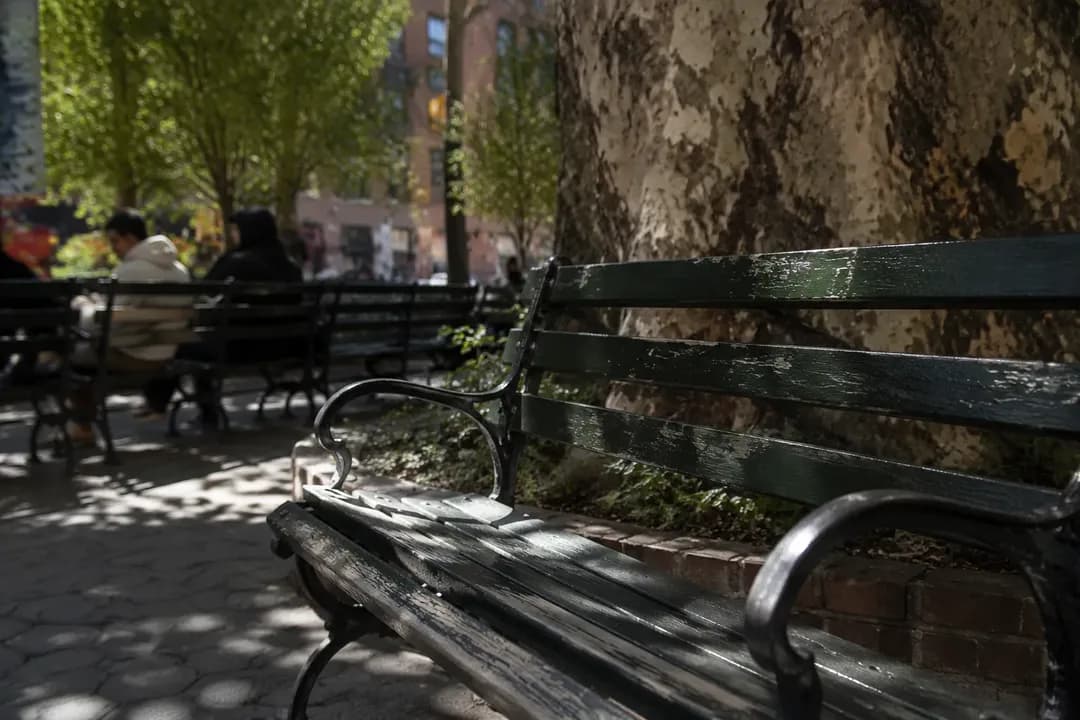
After you leave Central Park—ideally from the southeast corner near Grand Army Plaza—the subway puts you in Chinatown in under twenty minutes if you take the N or R from Fifth Avenue/59th Street to Canal Street. The transfer at Times Square can add ten minutes if you hit it wrong, so the direct downtown train is worth waiting for. Chinatown in summer is loud and crowded, but the side streets south of Canal stay cooler than midtown because the buildings are shorter and the produce markets hose down the sidewalks. Columbus Park, on Mulberry Street just south of Bayard, is a small square with benches under old trees. It's not a destination park, but it's a place to sit for twenty minutes without spending money, and the foot traffic is mostly local.
The other advantage of Chinatown is that it sits between Central Park and the waterfront. If you walk southeast from Columbus Park down Worth Street and then Pearl Street, you hit the South Street Seaport in about fifteen minutes. The Seaport itself is half tourist mall now, but Pier 15 and Pier 16 are public and free. The benches face the East River and the Brooklyn Bridge, and there's usually a breeze by mid-afternoon. On weekends the piers fill up, but the northern end of Pier 15 stays quieter because it's farthest from the food vendors. Check before you go—the piers occasionally close for private events, and there's no signage until you're already there.
Start early or accept that you're sharing the lawn
Central Park's north end—anything above 85th Street—sees a fraction of the crowd that collects around Bethesda Fountain and the Mall. The North Woods and the Harlem Meer are actual woods and a small lake, not lawn, so they stay cooler and they don't have the same density problem. If you enter at 110th Street and Lenox Avenue and walk south along the east side paths, you'll pass the Conservatory Garden, which is free and gated and almost never full. The garden has three sections and a lot of benches. It's the best place in the park to sit in the morning without hearing someone's speaker.
By 10:30 a.m. the temperature inside the park starts to climb, and the southern half is already crowded. If you're coming from the north, walk down to the Jacqueline Kennedy Onassis Reservoir and take the gravel path that circles it. The path is 1.58 miles and it's mostly exposed, but it moves, so you're not sitting in one hot spot. After the loop, the smart exit is at 90th Street and Fifth Avenue, where you can catch the 4, 5, or 6 train downtown. The alternative is to keep walking south to 72nd Street, but that stretch of the park is where the tour groups and the horse carriages concentrate, and by midday it's not pleasant.
If you're starting your day closer to midtown, enter Central Park at 72nd Street on the west side and walk north instead. The path along the lake toward Bow Bridge is shaded until about 11 a.m., and Bow Bridge itself is worth the stop if you get there before the wedding photo crews arrive. From there, walk west toward the Ramble, which is the densest woodland section of the park. The Ramble has narrow dirt paths and almost no open sky, so it stays cooler than the meadows. It's also easy to get turned around in there—the signage is minimal and the paths loop—so keep your phone handy or just accept that you'll wander for twenty minutes before you find an exit.
Brooklyn Bridge Park is the quieter all-day alternative
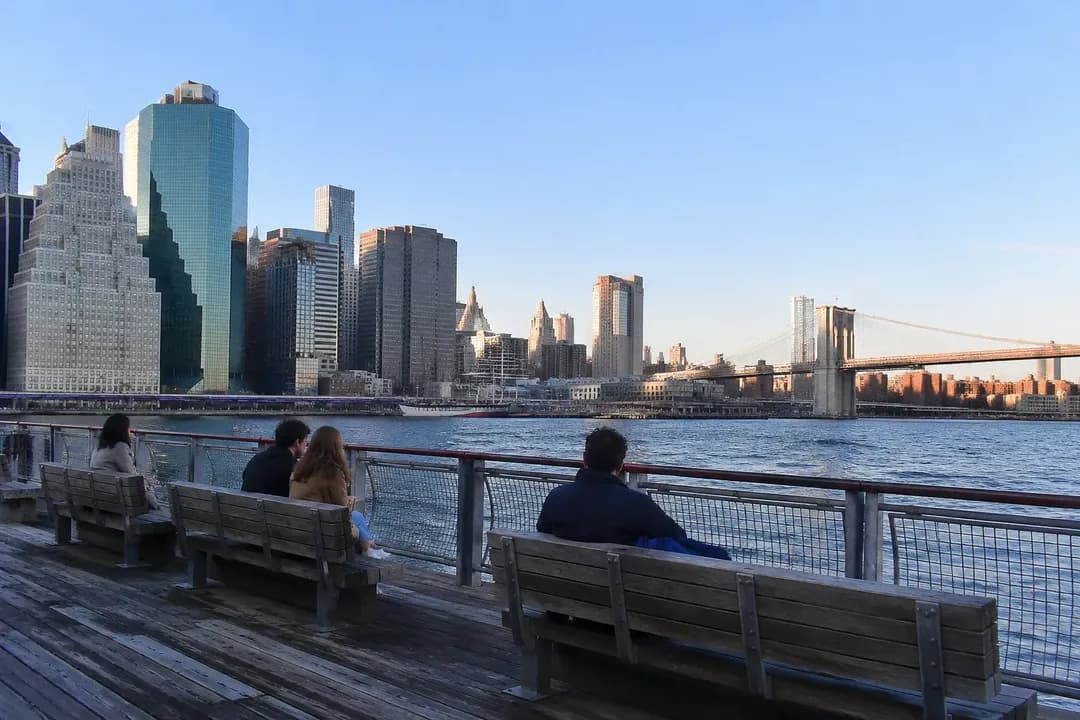
If Central Park is too full or you want to skip Manhattan entirely, Brooklyn Bridge Park offers the same no-cost day with better water access and fewer people. The park runs along the East River from Jay Street in DUMBO down to Atlantic Avenue in Brooklyn Heights. Pier 1 faces the Manhattan skyline, so it gets busy, but Pier 5 and Pier 6 farther south have playgrounds, sports courts, and open grass that doesn't fill up the same way. The park is fully exposed to sun, so bring a hat or plan to move between the piers and the shaded sections under the Brooklyn Queens Expressway, which sounds worse than it is—the space underneath has been turned into basketball courts and picnic areas, and it's noticeably cooler.
The transit is straightforward from Central Park: take the 6 train downtown to Brooklyn Bridge/City Hall, then walk across the Brooklyn Bridge or take the A or C train one more stop to High Street in Brooklyn. Walking the bridge takes about twenty-five minutes and it's free, but it's also fully exposed and it gets very crowded between noon and 4 p.m. If it's hot, take the subway. From High Street you're a five-minute walk to the north end of Brooklyn Bridge Park. The return trip is the same route in reverse, or you can take the 2 or 3 train from Clark Street back to Manhattan. Late-night service on the 2 and 3 can be unpredictable on weekends—check the MTA alerts before you assume the train is running local.
Check park capacity, water fountain status, and train changes
Central Park does not formally close or hit capacity the way some beaches do, but certain areas get functionally full on summer weekends. The Sheep Meadow and the Great Lawn are the two largest open spaces, and both can become standing-room-only by late morning. If you're planning to sit on grass, confirm the weather forecast the night before—if it rained in the previous 24 hours, the Sheep Meadow is often closed for turf maintenance and the signs are only posted at the entrances. The Central Park Conservancy website lists closures, but it's not always updated in real time.
Water fountains in the park are seasonal and some are broken more often than they're fixed. Bring your own water or plan to refill at the visitor centers—there's one at Belvedere Castle and another at the Dairy near 65th Street. Both have bathrooms and air conditioning. The Seaport piers have water fountains near the bathrooms, but they're often out of order in summer. If you're walking between neighborhoods, budget for a bodega stop.
Subway changes are the biggest wildcard. Weekend service on the N, R, 4, 5, and 6 trains all gets rerouted or suspended without much warning, especially in summer when track work ramps up. The MTA website and the Karpo assistant both pull live status, but if you're deep in Central Park or along the waterfront, you won't see the service alerts until you're back underground. The fallback is the M15 bus on First Avenue or Second Avenue, which runs frequently and connects the Upper East Side to the Seaport and Chinatown without requiring a transfer. It's slower than the train but it's reliable, and it's the same fare.
Practical notes
- Enter Central Park before 9 a.m. or after 4 p.m. to avoid peak crowding; north entrances above 85th Street stay quieter all day.
- Subway from Central Park to Chinatown: N or R train from 59th Street to Canal, about 18 minutes; check for weekend reroutes.
- Brooklyn Bridge Park is fully sun-exposed; piers occasionally close for private events, check NYC Parks site day-of.
- Water fountains in Central Park are seasonal and frequently broken; carry water or refill at visitor centers.
- Late-night 2/3 train service from Brooklyn can be unpredictable; confirm MTA alerts or plan for the M15 bus as backup.
- No cost for parks, piers, or subway with unlimited MetroCard; bring cash for bodega water stops.
Tags: #karpo #newyorkcity #nyc #centralpark #freethingstodo #manhattanparks #brooklynbridgepark #chinatownnyc #southstreetseaport #nycsubway #summerinnyc #outdoornyc #nycbudget #nocoastday #nyclocal
Sources consulted: Central Park Conservancy · NYC Parks Department · MTA Service Status · Brooklyn Bridge Park
All trademarks are the property of their respective owners.
Ask Karpo first
Text Karpo before you leave to confirm which Central Park lawns are open today, whether the South Street Seaport piers have any posted closures, and what the current subway status looks like for your route home. It'll send you a live transfer plan and a backup if your train isn't running.
Ask Karpo for more information.
Keep reading
- Scenic Walking Trail Near Me: Central Park North Woods Ravine and Loch Walk
 Scenic Viewpoint Near Me: Brooklyn Heights Promenade at Sunset
 Scenic Viewpoint Near Me: Riverside Park Hudson River Walk