You're wedging clay at a wheel while Alcaraz serves an ace on the overhead monitor, and somehow the thwack of the ball landing matches the wet slap of your palms centering the mound. This is Echo Park Clay House, a pottery studio tucked into a converted garage space near Sunset Boulevard where tennis broadcasts run silently on a wheeled TV cart, the closed captions scrolling beneath slow-motion replays of backhands while you're elbow-deep in stoneware. The owner started streaming Roland-Garros matches years ago during the spring tournament, and the habit stuck—now any clay-court event becomes ambient theater for the throwing room.
The Garage That Smells Like Rain and Chalk Dust
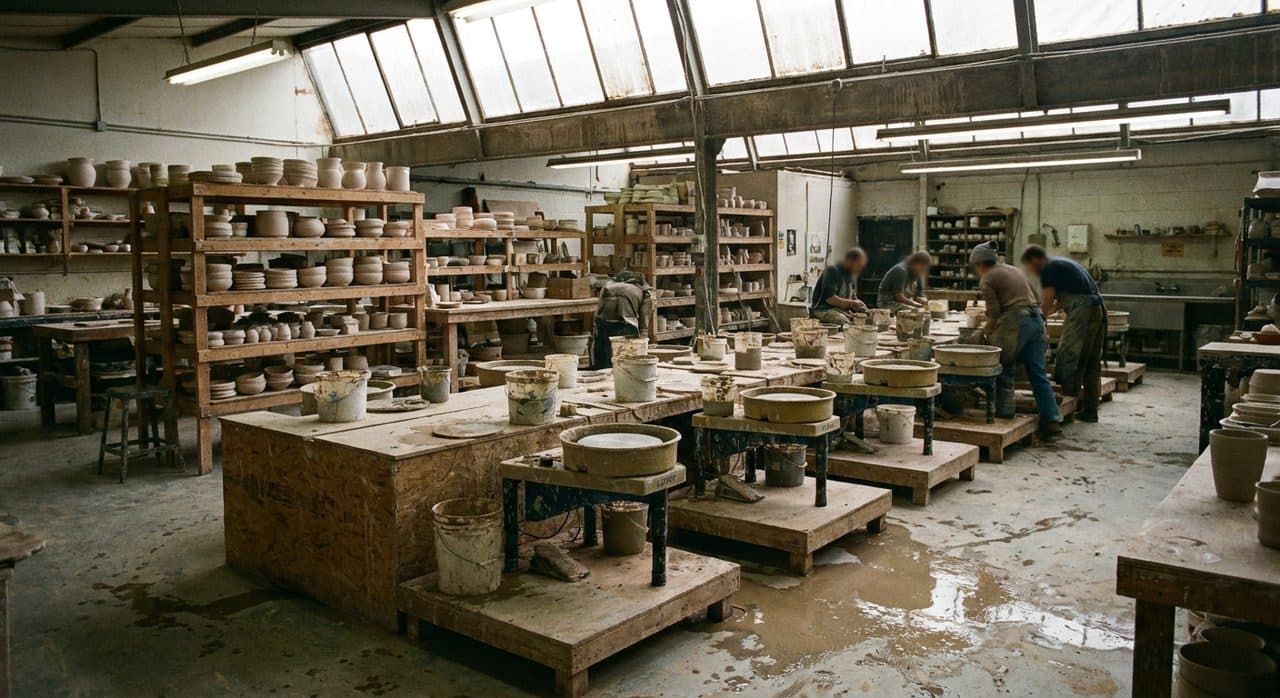
Walk through the side gate and you're hit with that specific mineral smell of wet clay mixed with the faint eucalyptus drifting from the neighbor's tree. The studio occupies what used to be a two-car garage, still with the original concrete floor now stained terra-cotta from years of slip spills. The wheels—eight of them—line the perimeter on plywood platforms, each station equipped with a plastic bucket, a wire tool set, and a view of the center monitor. During French Open weeks, the screen stays locked on whatever court is live, volume off, just the visual rhythm of players sliding on red clay while your hands mirror that same back-and-forth motion on the wheel. The light through the roll-up door changes as the afternoon stretches, casting long shadows across your workspace by the time the Paris matches hit their third sets.
When the Rally Tempo Becomes Your Throwing Tempo
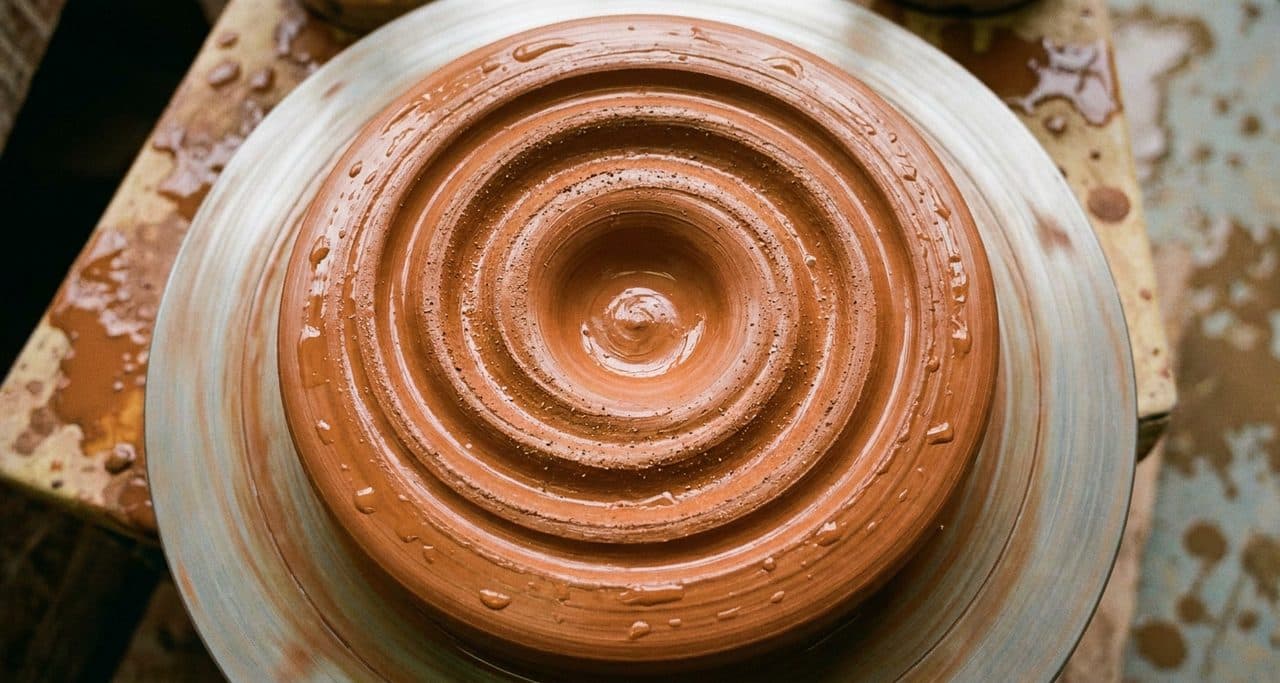
There's an unintentional synchronicity that happens when you're centering clay while watching a baseline exchange. Your hands push and pull in response to the wheel's spin, and without realizing it, you start matching the pace of the rally on screen—quick adjustments during fast volleys, slower steady pressure during long defensive points. A regular who throws every Thursday afternoon swears she can feel when a tiebreak is happening even without sound, just from the tension in the room and the way everyone's shoulders tighten. The monitor sits on a rolling cart so it can be angled toward whichever side of the studio has the most active wheels that day, and someone usually nudges it between games, the casters squeaking across the concrete.
The Clay-on-Clay Joke Nobody Gets Tired Of
Every session, without fail, someone makes the observation about working with clay while watching clay-court tennis. It's the studio's most reliable bit of small talk, usually delivered by first-timers who seem genuinely delighted by the coincidence. The instructor—a woman in her fifties who's been throwing for three decades—just nods and keeps trimming her demonstration bowl. She'll occasionally glance up during a particularly long rally, her hands never stopping their work, and mutter something about footwork that applies equally to Nadal's movement and your need to stay planted at the wheel. The joke lands differently depending on the crowd: during weekend open studios, it gets full laughs; during weekday evening sessions with the regulars, just tired smiles.
The Soundless Broadcast and the Wheel's Hum
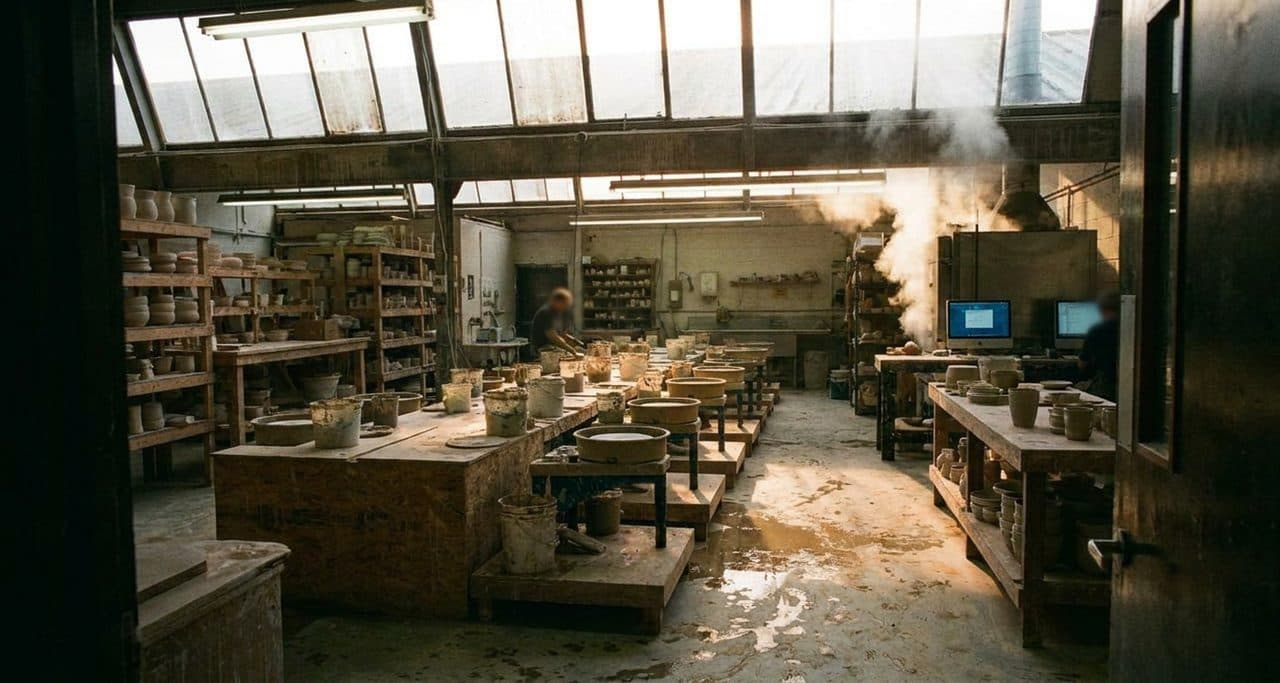
Without commentary or crowd noise, the tennis becomes pure visual pattern—the bright clay, the white lines, the players' shadows stretching across the court. What you hear instead is the collective hum of eight pottery wheels running at different speeds, the wet friction of hands on spinning clay, the occasional scrape of a trimming tool. Someone's wheel squeaks when it hits a certain RPM. Another person's makes a rhythmic thunk because the bat isn't quite centered. These sounds layer over each other in a way that's almost musical, and the tennis on screen provides a silent metronome. When a point ends, you'll see players walk to the baseline, towel off, and you realize you've been holding your breath while pulling up the wall of a cylinder.
The Afternoon Light and the Collapse of Your First Bowl
Late afternoon sessions have the best light—golden and horizontal, streaming through the open garage door and catching the spray of water droplets when someone's wheel spins too fast. This is also when pieces tend to collapse, because the clay's been worked too long or because you got cocky and tried to pull the walls too thin. There's a specific sound when a bowl gives up: a soft slump, like a sigh, and then your hands are just holding wet clay pancake. On screen, a player might be challenging a line call, the slow-motion replay showing the ball kissing the white stripe, and you're scraping your failed attempt back into the reclaim bucket. A guy who works in Silver Lake comes every Tuesday and has never successfully finished a piece—just throws for two hours, collapses everything, and leaves looking completely satisfied.
What You Actually Take Home Besides Clay Under Your Nails
Finished pieces go onto the drying shelf with your initials scratched into the bottom, then into the bisque kiln, then back for glazing if you return for that step. Most people don't. The studio's shelves are crowded with orphaned bowls and mugs, their makers having gotten what they needed from the throwing itself. You'll leave with clay dust in your shoe treads, under your fingernails for days no matter how much you scrub, and a specific soreness in your forearms that feels earned. The tennis will still be playing when you rinse your hands in the utility sink, some match from a tournament in Madrid or Rome, the players' faces concentrated and distant on the small screen.
Practical Notes: When to Go and What to Bring
The studio runs open sessions throughout the week, with the most reliable tennis broadcasts happening during spring clay-court season. Drop-in throwing time is available, and they provide all materials and tools—you just show up. Wear clothes you don't mind ruining; clay stains never fully wash out. The space can get chilly in the morning when the garage door's open, warmer by mid-afternoon. Street parking in the surrounding blocks is usually available. No reservation system for open studio time, just first-come seating at available wheels. They'll fire your pieces if you commit to the full process, but there's no pressure to take anything home.
Tags: #TheOddEdit #EchoParkLA #LosAngelesHiddenGems #PotteryStudio #ClayCourtTennis #FrenchOpen2026 #CeramicArts #UnconventionalLA #EchoParkLife #TennisAndClay #LACreativeSpaces #ThrowingWheel #HiddenLosAngeles #OffbeatLA #KarposFinds
Sources consulted: atlasobscura.com · timeout.com · nytimes.com
All trademarks are the property of their respective owners.