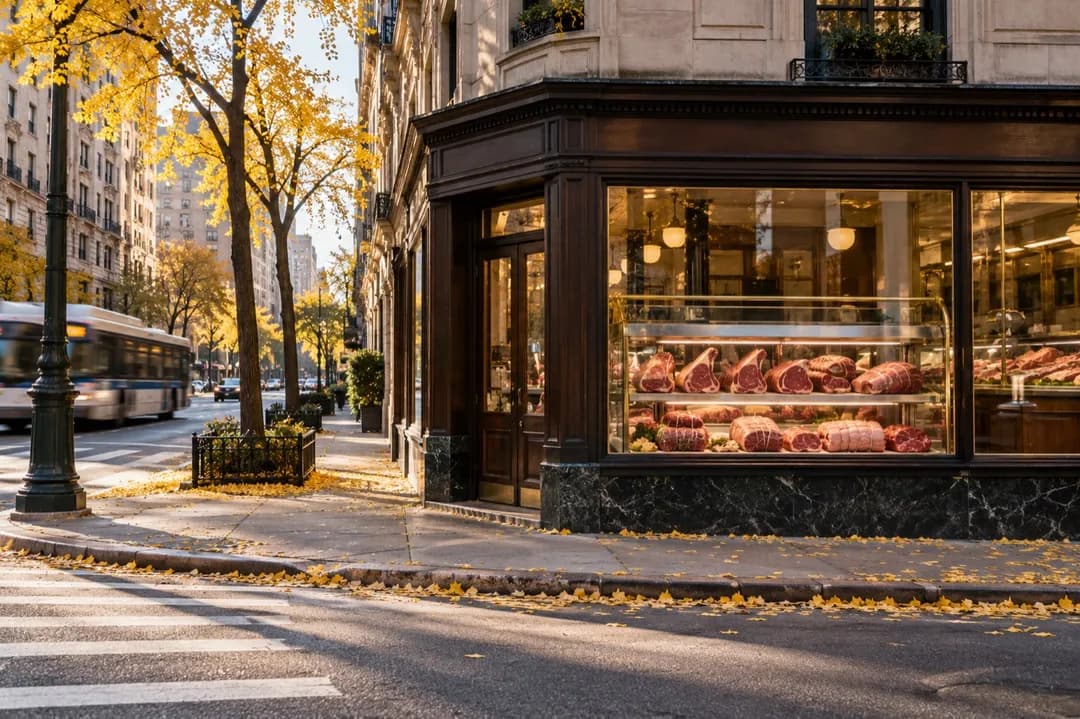
 Butcher Shop Near Me on Madison Avenue: Inside Lobel's Prime Meats
Hidden Gems & Odd Finds
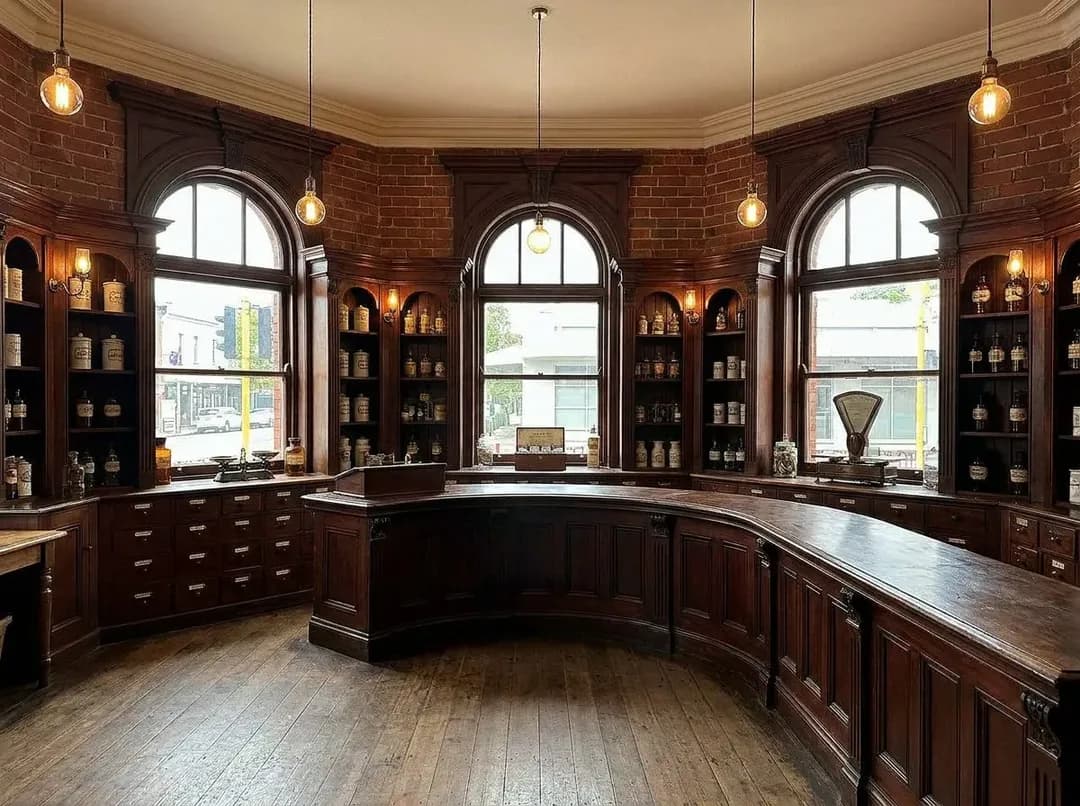
C.O. Bigelow Apothecary Prescription Counter Compounding Demonstration
Behind the 1838 mahogany counter at America's oldest apothecary, pharmacists still compound custom formulas by hand—mortar, pestle, and Victorian-era precision intact in Greenwich Village.
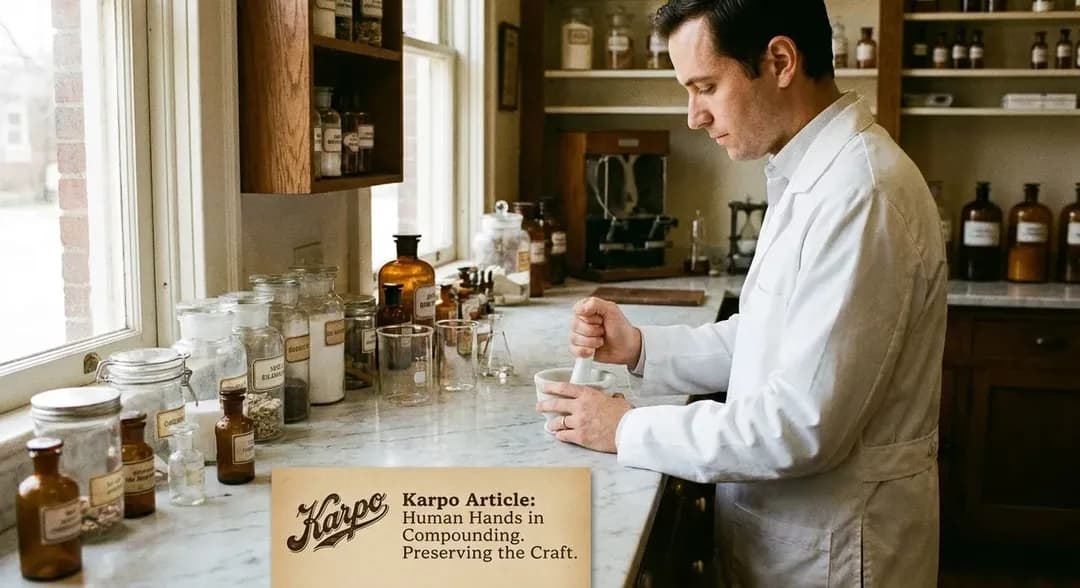
The first clue that C.O. Bigelow Apothecary operates on a different temporal plane arrives when you spot the gas lamp fixtures above the prescription counter. They've been electric since 1923, but the brass fittings and frosted glass globes remain untouched, casting a warm amber glow over mahogany that has dispensed remedies since Andrew Jackson was president. The second clue? The rhythmic grinding of stone on stone as a pharmacist in a white coat leans into a marble mortar, preparing a topical formula the way it was done a century before penicillin. This is not theater. This is Tuesday afternoon in Manhattan.
The counter that refuses to retire
The prescription counter dates to 1838, installed when the apothecary first opened its doors on Sixth Avenue in Greenwich Village. The mahogany has darkened to the color of strong tea, its surface worn smooth by generations of elbows and prescription pads. Original gas lamp fixtures, converted to electric in 1923, still flank the work area—a detail most customers miss until the late-afternoon light catches the etched glass just so. Stand close enough and you can see the seams where burner hardware was replaced with Edison sockets, the kind of retrofit that preserves rather than erases.
Behind the counter, floor-to-ceiling shelves hold apothecary jars arranged in a grid unchanged since 1902. Cobalt blue, amber, and clear glass, each labeled in serif lettering that predates sans-serif minimalism by several design movements. Some contain powders still used in compounding; others are decorative relics, their contents long replaced by modern equivalents stored in climate-controlled back rooms. The visual effect is less museum diorama, more working archive—history that still clocks in.
When to watch the mortars come out
Timing matters if you want to witness the compounding process rather than simply hear about it secondhand. Compounding demonstrations are most visible Tuesday through Thursday between 2 and 4 p.m., when afternoon prescription volume allows pharmacists the luxury of slower, more deliberate preparation. Weekday mornings tilt toward refills and insurance calls; evenings compress into a rush of commuters. But mid-afternoon? That's when a pharmacist might spend twelve minutes grinding zinc oxide and calendula extract into a custom diaper-rash cream, the pestle circling the mortar in a motion that looks almost meditative.
The counter offers a clear sightline if you position yourself near the vintage cash register—another antique that still rings up sales with satisfying mechanical authority. You'll hear the scrape of stone, the soft tap as excess powder is knocked from the pestle, the murmur of a consultation as the pharmacist explains application frequency. It's a small, unhurried performance, the kind that makes you reconsider what efficiency actually costs.
The custom formulation path
If you're considering a bespoke topical formula—perhaps a vitamin C serum in a base that won't irritate your specific brand of sensitive skin, or a muscle rub tailored to your preferred ratio of menthol to arnica—know that custom compounding requests require 48 hours' advance notice and start at seventy-five dollars for basic topical formulations. The pharmacist will ask detailed questions: existing allergies, concurrent medications, texture preferences, scent tolerance. This is not a five-minute transaction. Budget twenty minutes for the initial consultation, another two days for preparation, then a follow-up pickup to review application and storage.
The process has guardrails. Bigelow's pharmacists work within FDA guidelines for compounding, which means they can customize concentrations and combine ingredients in novel ways, but they can't replicate patented drugs or venture into experimental territory without a prescriber's involvement. Most requests fall into dermatological or topical pain-relief categories—the sweet spot where personalization makes a measurable difference and regulation permits creativity.

The broader neighborhood pull
C.O. Bigelow sits on Sixth Avenue between Eighth and Ninth Streets, a stretch of the Village that has managed to retain more texture than the stretches closer to Washington Square. The apothecary shares the block with a wine shop that has occupied its corner since the 1970s, a gelato counter that draws lines in summer, and a rotation of boutiques that come and go while Bigelow stays. It's the kind of block that still feels edited by residents rather than algorithmically optimized for foot traffic.
After watching mortars and pestles do their old-world work, the neighborhood offers plenty of opportunities to continue in analog mode. Washington Square Park is a five-minute walk south, ideal for people-watching that requires no screen. The independent bookshops and record stores scattered through the surrounding streets reward the sort of aimless browsing that a city guide might classify as inefficient but that feels, especially in late 2026, like a minor act of resistance.
What the regulars know
Longtime customers treat C.O. Bigelow less as a pharmacy and more as a general store for personal maintenance. The front room stocks European skincare lines difficult to find elsewhere in the city—French thermal waters, Italian snail serums, German chamomile concentrates—alongside house-brand lotions and balms produced in small batches. The layout encourages wandering: a cabinet of English shaving brushes here, a shelf of Japanese sheet masks there, everything organized with just enough logic that discovery feels earned rather than algorithmic.
The staff skews toward tenure. It's not unusual to encounter a clerk who has worked the floor for fifteen years and remembers that you prefer unscented hand cream or that your partner has a citrus allergy. That institutional memory creates a shopping experience that feels less transactional, more collegial—a rare texture in a retail landscape increasingly optimized for speed and self-checkout.
Why it persists
The obvious question: how does a Victorian apothecary survive in an era of same-day delivery and telehealth prescriptions? Part of the answer is product mix—Bigelow has diversified into beauty and wellness without abandoning its pharmaceutical core. Part is location—the Village still harbors enough residents who value neighborhood institutions over convenience apps. But the deeper answer might be sensory. There's something steadying about a space that smells faintly of lavender and camphor, where the lighting is warm rather than fluorescent, where a transaction might include a two-minute conversation about whether you've tried the new hand salve yet.
The compounding counter is the distilled version of that value proposition: proof that some processes resist automation not because they're inefficient, but because the inefficiency is the point. Watching a pharmacist grind a custom formula by hand won't cure what ails the modern city, but it does offer a brief, tangible reminder that speed isn't the only metric worth optimizing for. Sometimes the mortar and pestle win.
Practical notes
C.O. Bigelow Apothecary is located at 414 Sixth Avenue in Greenwich Village, near West 10th Street. Nearest subway: A/C/E/B/D/F/M to West Fourth Street–Washington Square, about a short walk. Street parking is scarce; the building is ground-level accessible. Pharmacy hours should be verified directly before visiting. though it's wise to verify directly before planning a visit around compounding demonstrations. Bring your prescription if requesting custom formulations; otherwise, browsing requires only patience and a willingness to ask questions.
Tags: #COBigelow #GreenwichVillage #NYCApothecary #CompoundingPharmacy #VictorianCounter #SixthAvenue #TheOddEdit #NYCCityGuide #MortarAndPestle #VintageNYC #CustomFormulas #PharmacyHistory #VillageLife #AnalogExperience #Summer2026
Please drink responsibly. Must be of legal drinking age.
Sources consulted: C.O. Bigelow Apothecaries · Pharmaceutical Compounding · C.O. Bigelow Official Site · Greenwich Village · New York Times NY Region
All trademarks are the property of their respective owners.
Ask Karpo for more information.
Keep reading
- Butcher Shop Near Me on Madison Avenue: Inside Lobel's Prime Meats
 Butcher Shop Near Me in the West Village: Florence Prime Meat Market
 Butcher Shop Near Me in Cobble Hill: Paisanos on Smith Street