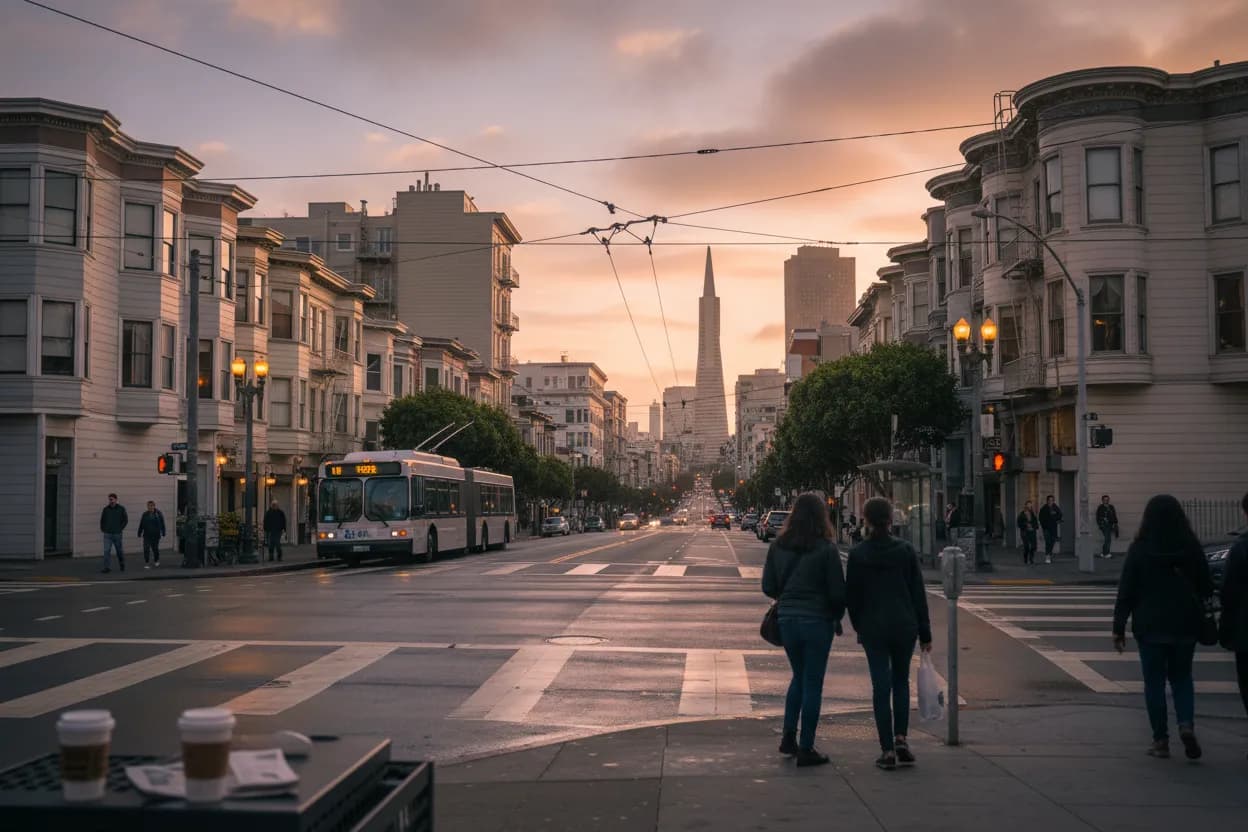
bug fire: A Practical San Francisco Neighborhood Guide starts with a simple rule: do not let a strange headline decide where you spend your afternoon. If the phrase bug fire is why you are searching today, treat it as a prompt to plan, not proof that something is happening in San Francisco. The useful local question is narrower: which neighborhood can you reach, navigate, enjoy, and leave without relying on rumor? San Francisco rewards people who verify first. Muni conditions can change, public spaces may have updates, and a good plan needs both an indoor pause and an outdoor option. This guide uses official city-facing sources as the floor, not hype as the ceiling.
Want a quick sanity check before you cross town? Text Karpo with your starting point, destination, timing, and mobility needs, and ask for a verified neighborhood plan.

Translate the headline into a neighborhood question
A viral phrase is not an itinerary. In San Francisco, the first move is to translate online attention into a concrete task: are you trying to meet someone, walk around, find a public restroom, reach a park, avoid a crowded corridor, or get home before a transfer becomes annoying? That framing keeps you from treating a search spike as if it were a local alert.
For a neighborhood guide, the practical question is not “Where is the buzz?” It is “Which area works for my time window and my exit plan?” If the answer depends on a transit line, stop, park access, street closure, or public-space condition, check the official page before committing. SFMTA provides trip planning, Muni routes and stops, travel and transit updates, alerts, and neighborhood transportation information; those are better planning anchors than a recycled post.
The same skepticism applies to public outdoor space. If your plan includes a recreation site, park, field, or facility, verify changing details with San Francisco Recreation and Park before you go. Do not assume availability, access, hours, or conditions from an old article, a screenshot, or a friend’s memory.
Choose the area by the actual task
San Francisco neighborhood planning works best when the area is chosen by the job it needs to perform. If you need a short visit, prioritize a neighborhood with a direct Muni path and a simple return. If you need to wait out weather, crowds, or a delayed connection, choose somewhere with an indoor stop you can confirm in advance. If you are meeting a mixed group, pick the area that is easiest for the least flexible person, not the one with the loudest online attention.
A useful neighborhood plan has three parts: arrival, dwell time, and exit. Arrival is the route you will actually take, not the one that looks prettiest on a map. Dwell time is what you can do if your first choice is unavailable. Exit is how you leave if the area gets too crowded, if Muni conditions change, or if someone in the group needs a faster way out. SFMTA’s trip planner and route information are the public tools to consult before you make that choice.
Avoid building the day around a single unverified attraction or rumor. The safer plan is to choose an area that can still work if your main stop is closed, busy, delayed, or simply not what the internet implied. That is especially important when a phrase like bug fire is functioning as a search hook rather than a confirmed local occurrence.

Use transit exits as planning anchors
In San Francisco, a neighborhood is only as convenient as your way out. Before leaving, open SFMTA’s trip planning, Muni routes and stops, and current alerts. Look for both the inbound and outbound logic of the trip. If you are relying on rail, bus, historic streetcar, or cable car service, verify the relevant route and stop before you commit to a narrow arrival window.
Build your plan around exits, not just entrances. Pick a primary stop, then identify a secondary stop or route that still gets you home or to your next destination. This matters on busy weekends, after public meetings, near event corridors, and during service changes. SFMTA posts travel and transit updates, and the official site is the place to check whether something has changed since you first planned.
Timing should be realistic. Add a buffer for walking between stops, finding the correct platform or curb, and adjusting if an alert appears. If you are traveling with children, visitors, luggage, or anyone with mobility considerations, use the accessibility information and customer service channels listed by SFMTA rather than guessing from a map.
Add one indoor and one outdoor backup
A neighborhood guide becomes useful when it survives the first inconvenience. Choose one indoor backup and one outdoor backup before you go. The indoor backup can be any public-facing place you have independently verified as open and appropriate for your group. The outdoor backup can be a park, plaza, waterfront walk, or recreation setting only after you confirm current access and conditions through official or venue-specific sources.
For outdoor plans, check San Francisco Recreation and Park for changing details where relevant. The official extract available for this guide requires verification on sfrecpark.org because details can change; that means you should not rely on secondhand assumptions about access, facilities, field use, or maintenance. Treat the official page as the checkpoint, not as a formality.
Your backup should be close enough that it does not create a second trip-planning problem. If the indoor option requires a long ride and the outdoor option requires a different hill, you have not built a backup; you have built a new itinerary. Keep the alternatives within the same practical travel zone or along the same Muni exit path.
Avoid treating online attention as a local promise
Search attention does not prove a San Francisco appearance, city incident, public event, celebrity stop, special access, or official endorsement. That distinction matters. A phrase can be popular nationally while having no confirmed connection to your block, your park, your transit line, or your weekend plan. Good local planning separates curiosity from evidence.
If someone tells you a neighborhood will be packed because of a trend, ask what official source supports that claim. SFMTA travel and transit updates can help you identify transportation issues that are actually posted. City agency pages and venue pages can help confirm public access or service changes. Without that kind of verification, assume the claim is noise.
Crowd risk should still be part of the plan, but it should be handled practically. Decide in advance where you will step aside, where you will meet if separated, and which route you will use if the first corridor feels too busy. The goal is not to predict the whole city. The goal is to avoid being trapped by a plan that had only one entrance and no graceful exit.
Verify conditions before crossing the city
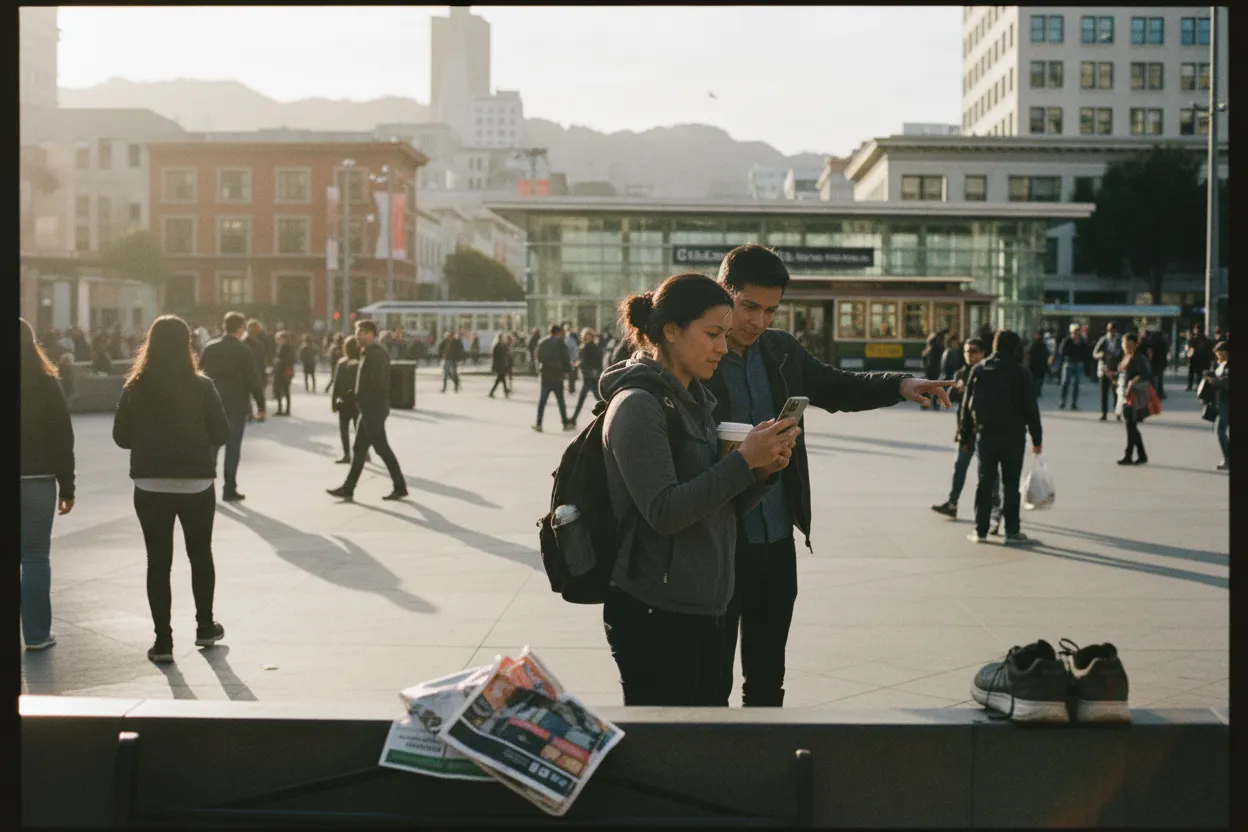
Before you cross San Francisco, run a final five-minute check. Look at SFMTA for the trip plan, route, stop, and any relevant alert or travel update. If your plan involves a public outdoor facility, verify the current details with San Francisco Recreation and Park. If a visitor-facing page is unavailable because of security verification or loading issues, do not treat that as confirmation; use another official page or wait until you can verify.
Then send yourself the essentials: starting point, destination, primary Muni route or stop, backup route, indoor backup, outdoor backup, and the time you will decide whether to leave. This turns a vague neighborhood idea into an executable city plan. It also helps the group move together when phones are low, sidewalks are crowded, or the first option does not work.
The best San Francisco neighborhood day is not the one with the trendiest hook. It is the one where you arrive with current information, make a local choice that fits your real task, and leave with fewer surprises than you would have had by trusting the loudest post.
Tags: #AskKarpo #BeforeYouGo #SanFrancisco #SFNeighborhoods #Muni #SFMTA #TransitPlanning #CityGuide #LocalPlanning #PublicAccess #CrowdCheck #BackupPlan #NeighborhoodGuides #BugFire
Sources consulted: sftravel.com · sfmta.com · sfrecpark.org
All trademarks are the property of their respective owners.
Ask Karpo first
Ask Karpo first when the headline is loud but the local facts are thin. Share where you are starting, when you want to go, who is with you, and what must be accessible. Karpo can help turn that into a verified San Francisco neighborhood plan before you commit.


