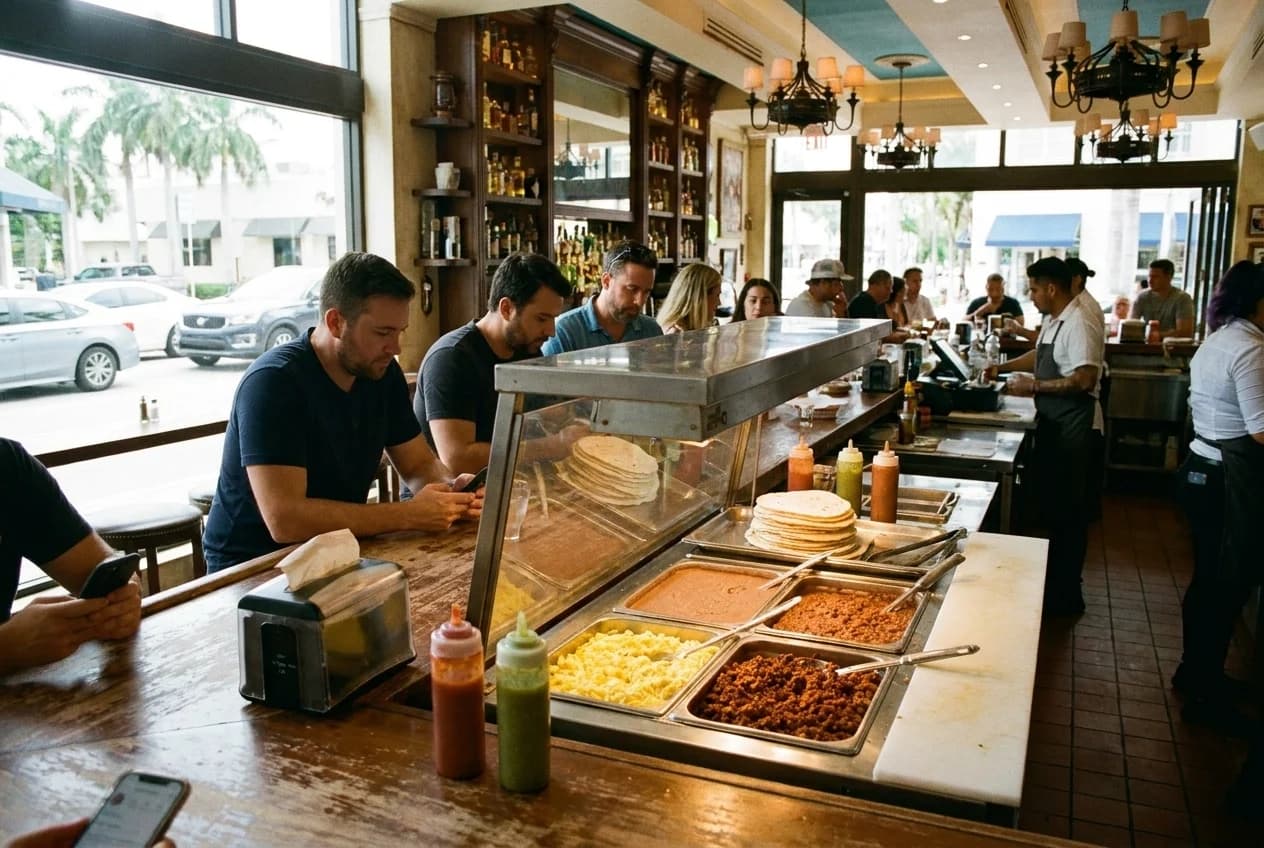
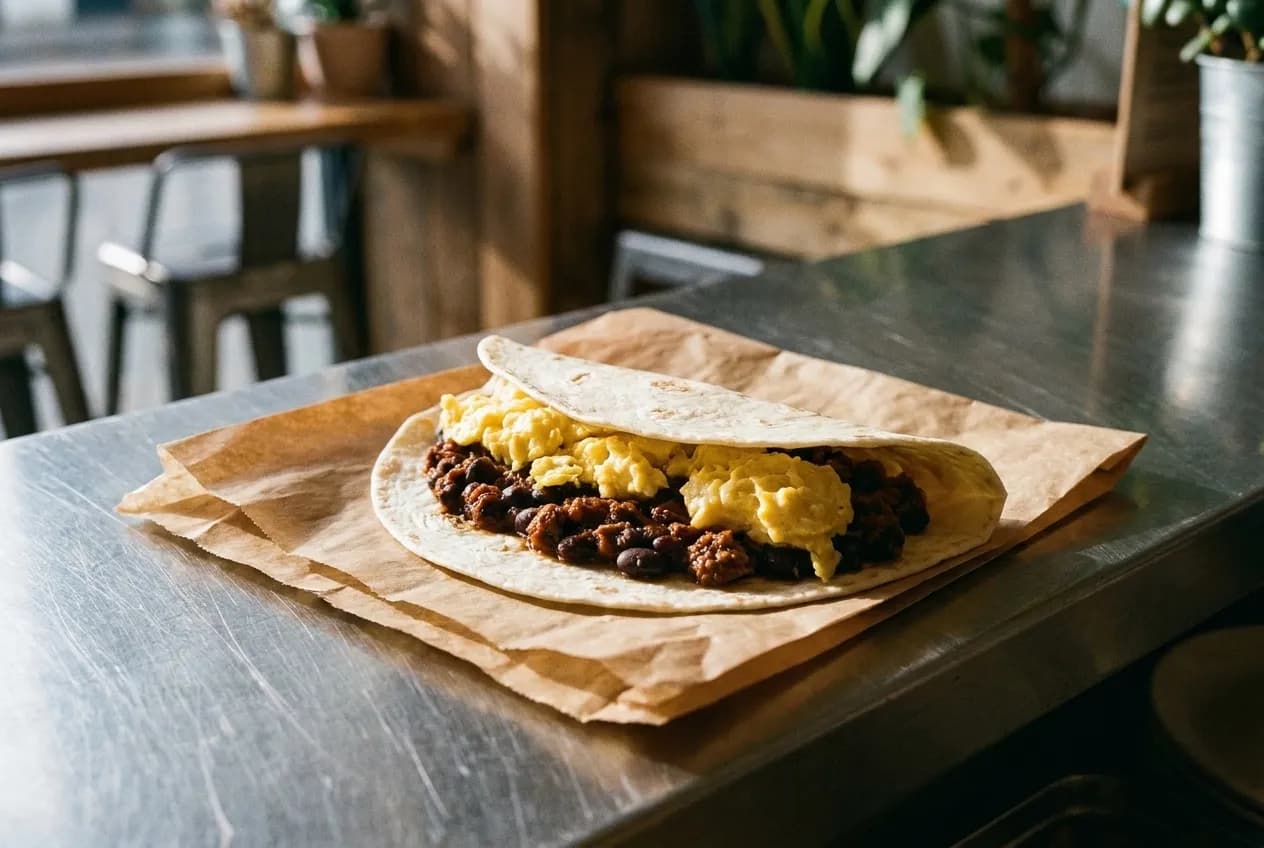
The breakfast taco is a specific regional form with a specific origin: central and south Texas, where a soft flour tortilla wrapped around eggs and one or two fillings became the standard morning meal. It travelled to Austin, then to the rest of the country as a food-media phenomenon, and Miami got some of it. But Miami is not a breakfast taco city and it never was, because it already had three better answers to the same question when the taco arrived. Knowing that is more useful than a padded list.
Miami's morning food runs on windows and bakery trays that come out at fixed times and sell out. Tell Karpo when you will be up and where, and get what is fresh.
Where the breakfast tacos actually are
They exist, mostly in two places. First, in the Mexican and Central American counters in Allapattah, Hialeah and the western arterials, where a breakfast taco is not a menu concept but simply what you get if you order eggs on a tortilla in the morning - huevos con chorizo, con papa, con nopal, in a soft tortilla, for a few dollars. This is the genuine article arrived by a different route, and it is the best version in the county.
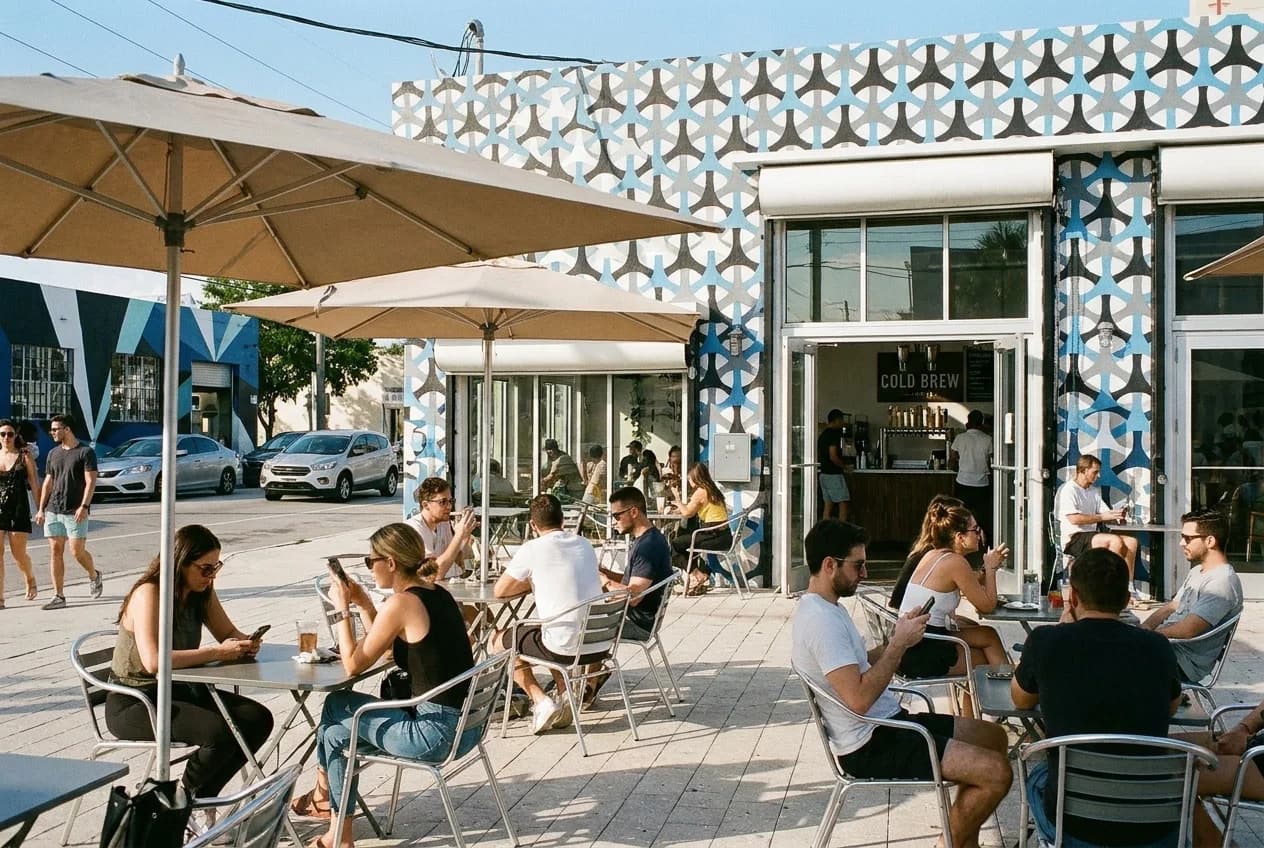
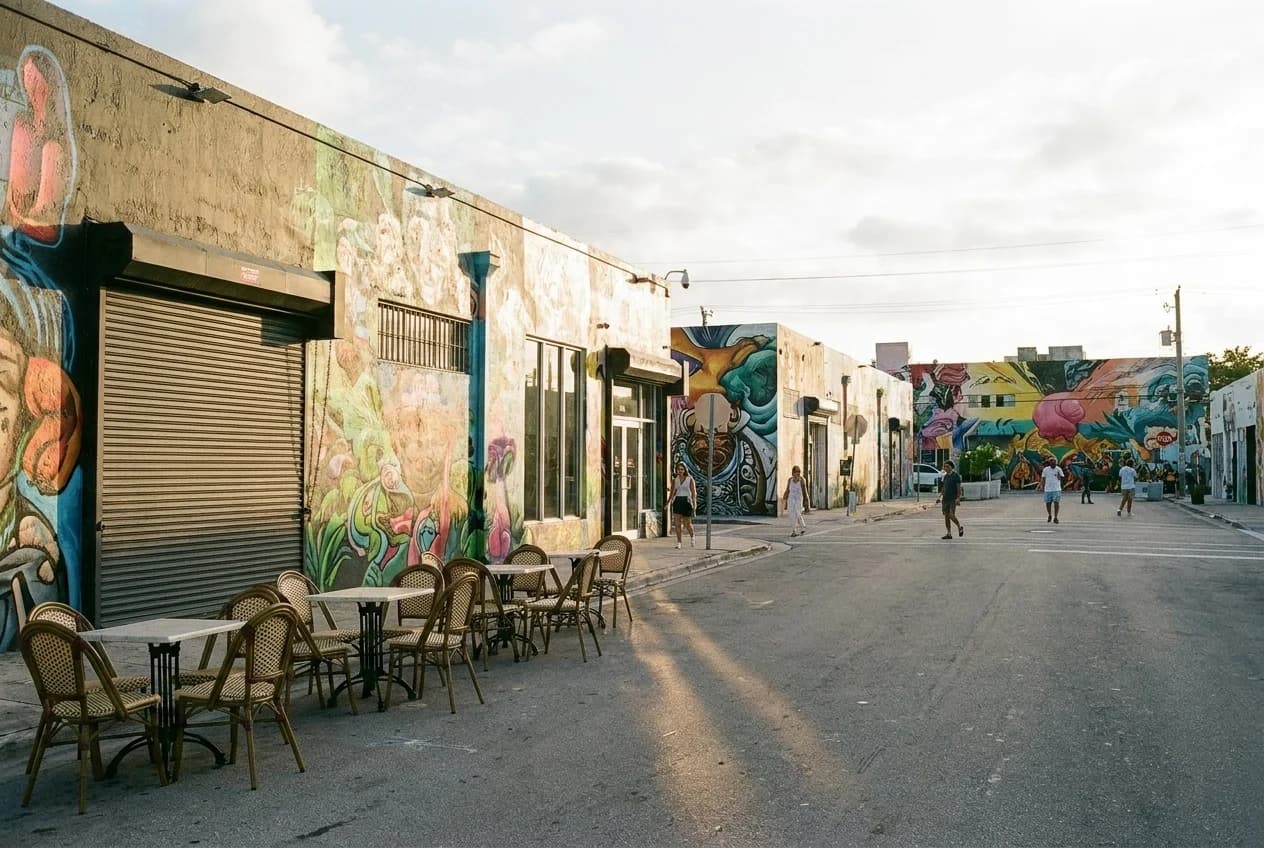
Second, in the newer taquerias in Wynwood, Edgewater and the Design District that have added a brunch or breakfast service, generally with the Austin-style framing and Austin-style pricing. Those are perfectly good and cost three or four times the first category. If breakfast tacos are specifically what you want, drive west; if you want them with a flat white and a table, stay east and pay for it.
The first alternative: the pastelito and the cortadito
The standard Miami breakfast is a pastelito and a coffee taken standing at a window, and it costs about four dollars. A pastelito is a flaky, glazed pastry filled with guava, guava and cheese, or spiced meat, and the trays come out through the morning at every Cuban bakery in the county. They are at their best within an hour of baking, when the pastry still shatters instead of bending.
Alongside it, a cortadito - a small sweet espresso cut with steamed milk - from a ventanita, the service window cut into the side of the building. There are no seats and nobody expects you to stay. The whole transaction takes four minutes. If you want the larger version, ask for a cafe con leche and a tostada: Cuban bread, split, buttered, pressed flat on a griddle, and dunked into the coffee. That is breakfast for most of this city.
The second alternative: the arepa
Venezuela's contribution is the arepa - a corn cake, griddled until it forms a crust, split and filled. At breakfast the fillings are eggs, cheese, black beans, shredded beef or avocado, and the reina pepiada, with chicken and avocado, is the standard order at any hour. It is the closest thing on this list to the breakfast taco in function: handheld, corn-based, egg-friendly, cheap, fast.
Arepa counters exist in essentially every neighbourhood in Miami-Dade, with the densest concentration in Doral and the western suburbs. Two arepas is a full breakfast for around ten dollars. The Colombian version is thinner, less stuffed and often eaten with cheese on top rather than inside, and both are worth trying so you can pick a side.
The third: the bakery run
Colombian and Venezuelan bakeries are the cheapest breakfast in the county and the most overlooked. Pandebono and almojábana - small warm cheese breads made with cassava starch - buñuelos, and empanadas run one to three dollars each, and three items is a substantial breakfast. They are best in the morning when the trays are fresh, and they are almost never busy before eight.
Haitian bakeries in Little Haiti run the same rhythm with pate kode, flaky pastry turnovers filled with spiced beef, chicken, herring or cod, about the size of your hand and eaten walking. With a Haitian coffee - dark, sweet, often spiced with star anise - it is one of the better breakfasts in Miami and almost no visitor ever has it.
Timing, which is the thing that catches people
All of this is a morning economy and it runs earlier than visitors expect. Bakery trays come out between roughly six and nine and the best of it is gone by ten. Ventanitas are at their most characteristic between six-thirty and nine, when the neighbourhood is actually using them rather than photographing them. The Mexican counters out west do their breakfast trade before the lunch prep starts, generally winding down by eleven.
By contrast the brunch service in Wynwood and the Design District starts at ten or eleven and runs to three, which is a different meal for a different customer at a different price. Both are legitimate. But if you set an alarm for seven and go to a bakery, you will eat better and spend about a fifth as much.
Practical notes
Prices: pastelito one to two dollars, cortadito two to four, arepa four to seven, empanada two to three, breakfast taco three to five at a western counter and considerably more at a brunch room. Timing: bakery trays six to nine and best within an hour of baking; ventanitas peak six-thirty to nine; western counters wind down around eleven; brunch service starts at ten. Cash is faster at windows and small counters. For genuine breakfast tacos, drive west to Allapattah, Hialeah or the western arterials rather than searching near the beach. And order a colada only if you have people to share it with - the small cups are the point.
Tags: #BreakfastTacosNearMe #Miami #Pastelitos #Cortadito #Arepas #Empanadas #PateKode #Ventanita #Allapattah #Hialeah #LittleHaiti #Doral #MiamiBreakfast #CheapEatsMiami
All trademarks are the property of their respective owners.
Ask Karpo first
Miami's morning food is a fixed-hours business and the good trays are gone by ten. Ask Karpo which bakeries and counters near you have just baked, where the nearest genuine breakfast taco is, and whether it is worth driving west for it or eating what the neighbourhood does better.