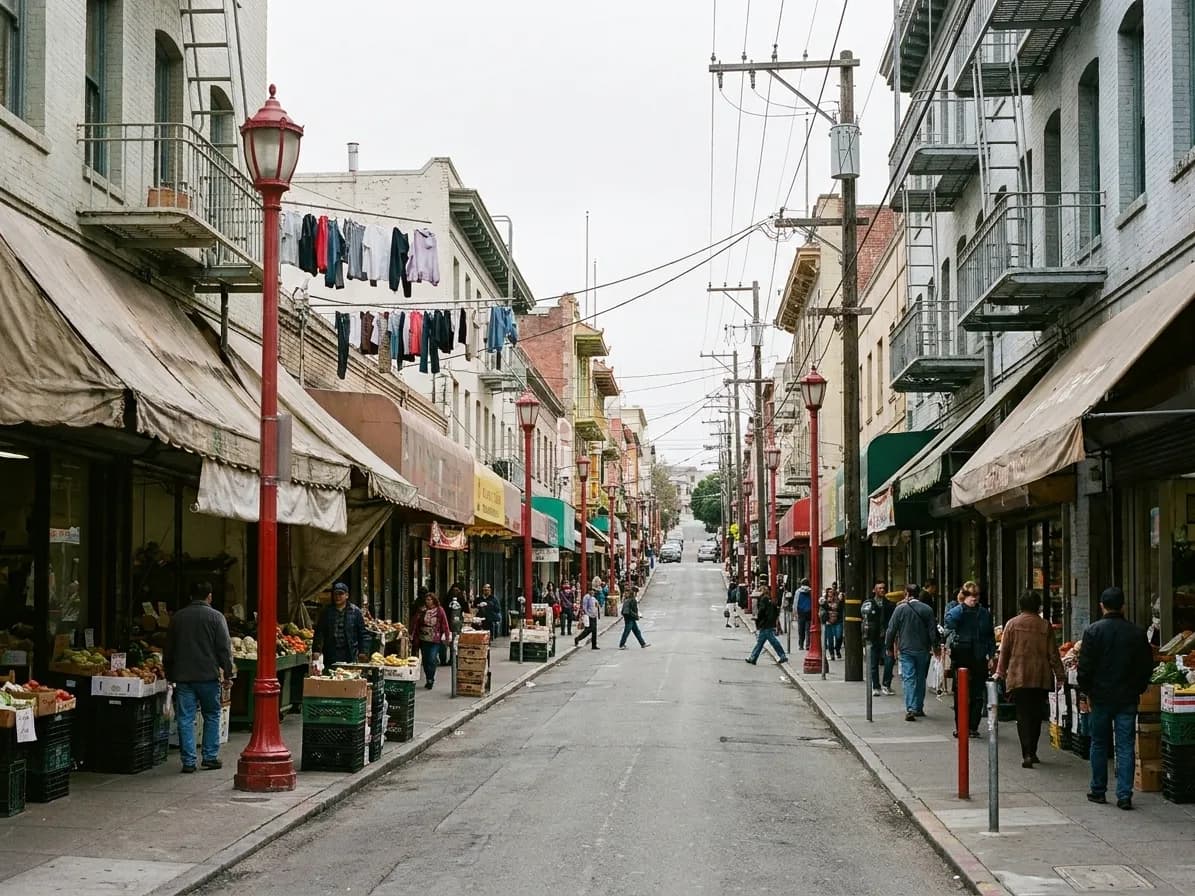
Ask about the best tacos in San Francisco and you will be told about the Mission, and specifically about three or four places that have been on every list for fifteen years. Those places are good and busy and mostly deserve it. But the Mission is also the most expensive and most gentrified Latino neighbourhood in the city, and the taco economy has been quietly relocating south and west for over a decade while the lists stayed put.
The best counters here close by nine and sell out of the good meat first. Ask Karpo who is still serving near you.
What the Mission still does best
Two things. The first is the burrito, which is a genuine local invention — the oversized, foil-wrapped, rice-and-beans-included Mission burrito is not how burritos are made in Mexico and is a San Francisco format that spread from here across the country. The taquerias on Mission Street between Sixteenth and Twenty-Fourth do it better than anyone, and it is worth eating one on principle.
The second is the late-night trade. The Mission's taquerias stay open when almost nothing else in this city does, and at one in the morning they are the best food available by a considerable distance. That reliability is worth as much as the quality.
Where the tacos themselves are better
Tacos and burritos are not the same skill. A great burrito shop is engineered for assembly and volume; a great taco requires a griddle cook paying attention to one thing. The best of that in San Francisco is increasingly in the Excelsior along Mission Street south of Cesar Chavez, in the Outer Mission, and out toward Daly City — neighbourhoods with large Central American and Mexican populations, lower rents and no food writers.
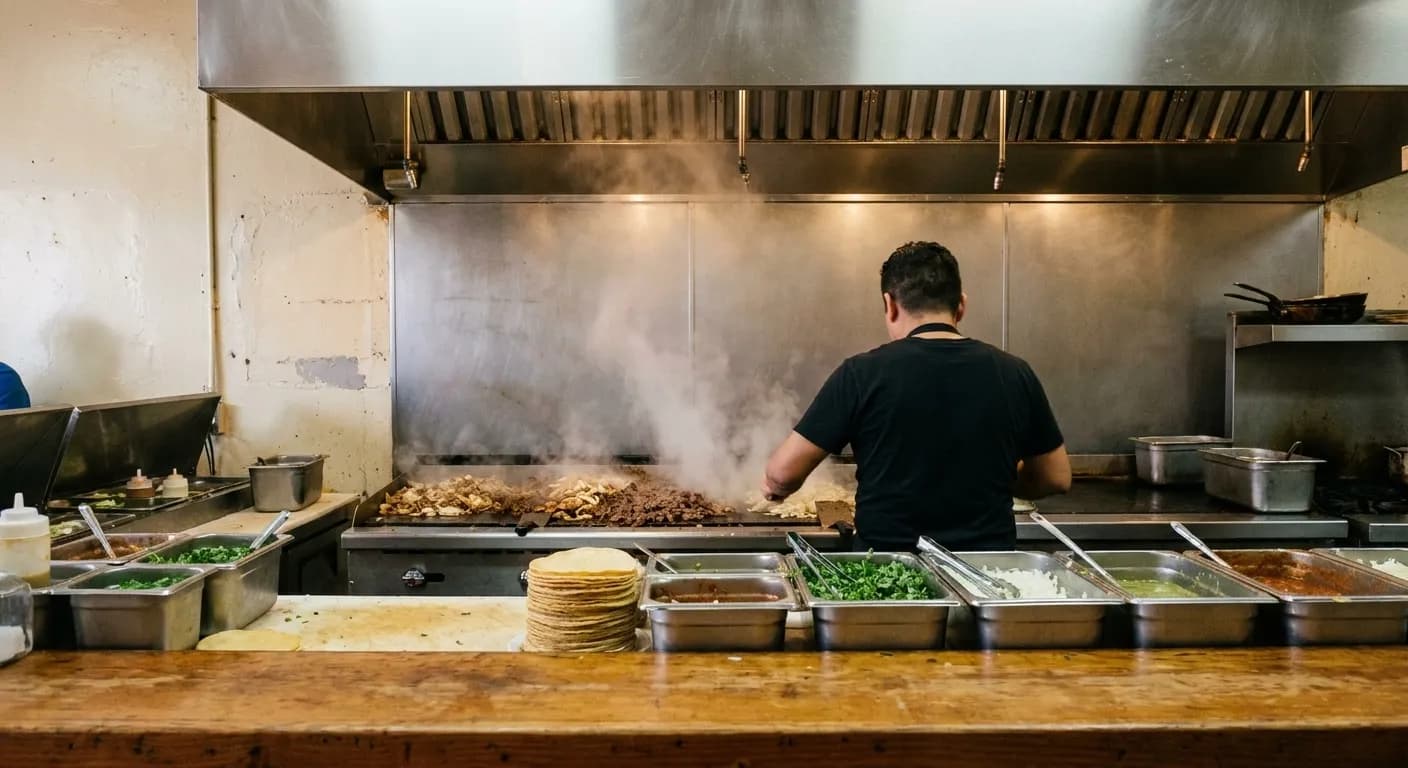
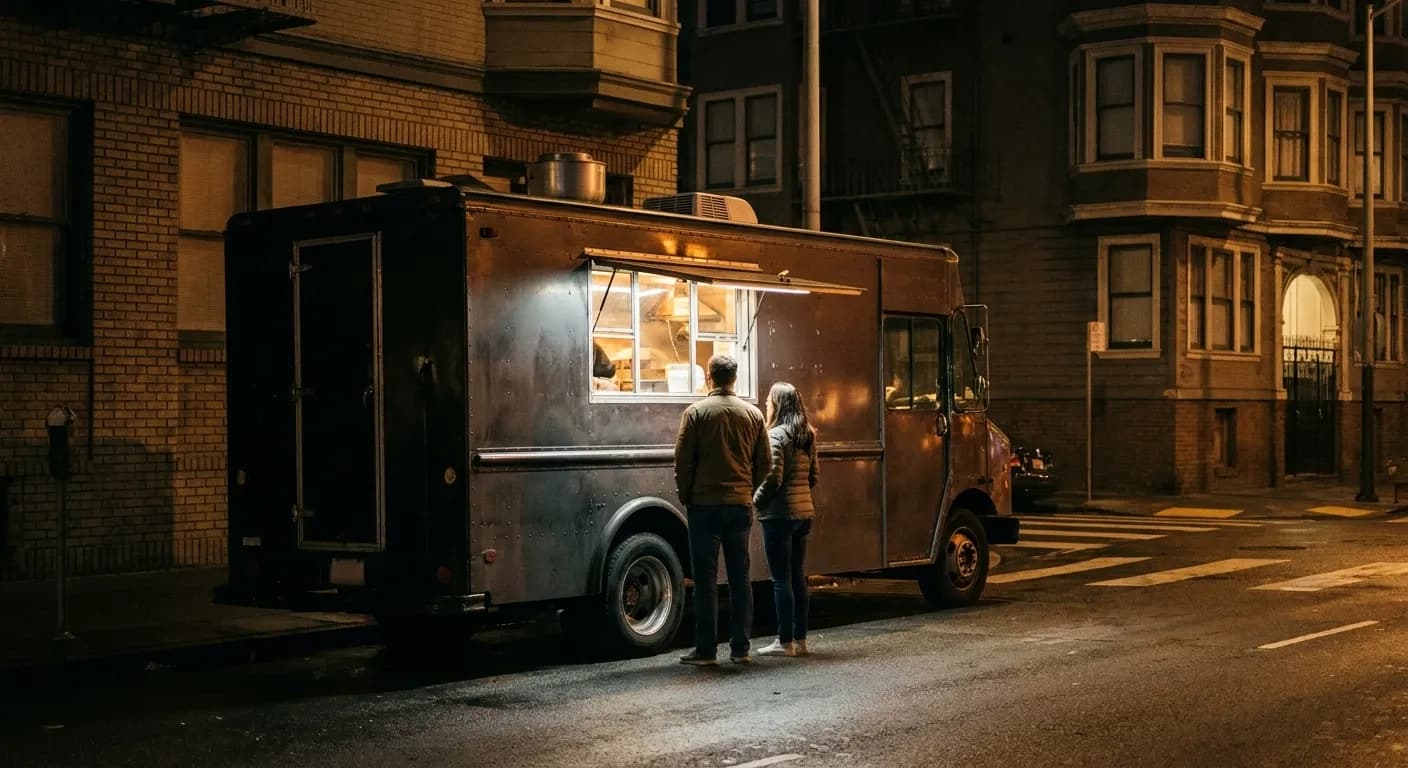
The trucks are the other answer, and they are the most overlooked part of the whole picture. Several operate on fixed corners in the Bayview, the Excelsior and along the industrial stretches south of the city, mostly serving people at the end of a shift. These are the cheapest and frequently the best tacos in San Francisco, and they are almost entirely undocumented.
Reading a taqueria in ten seconds
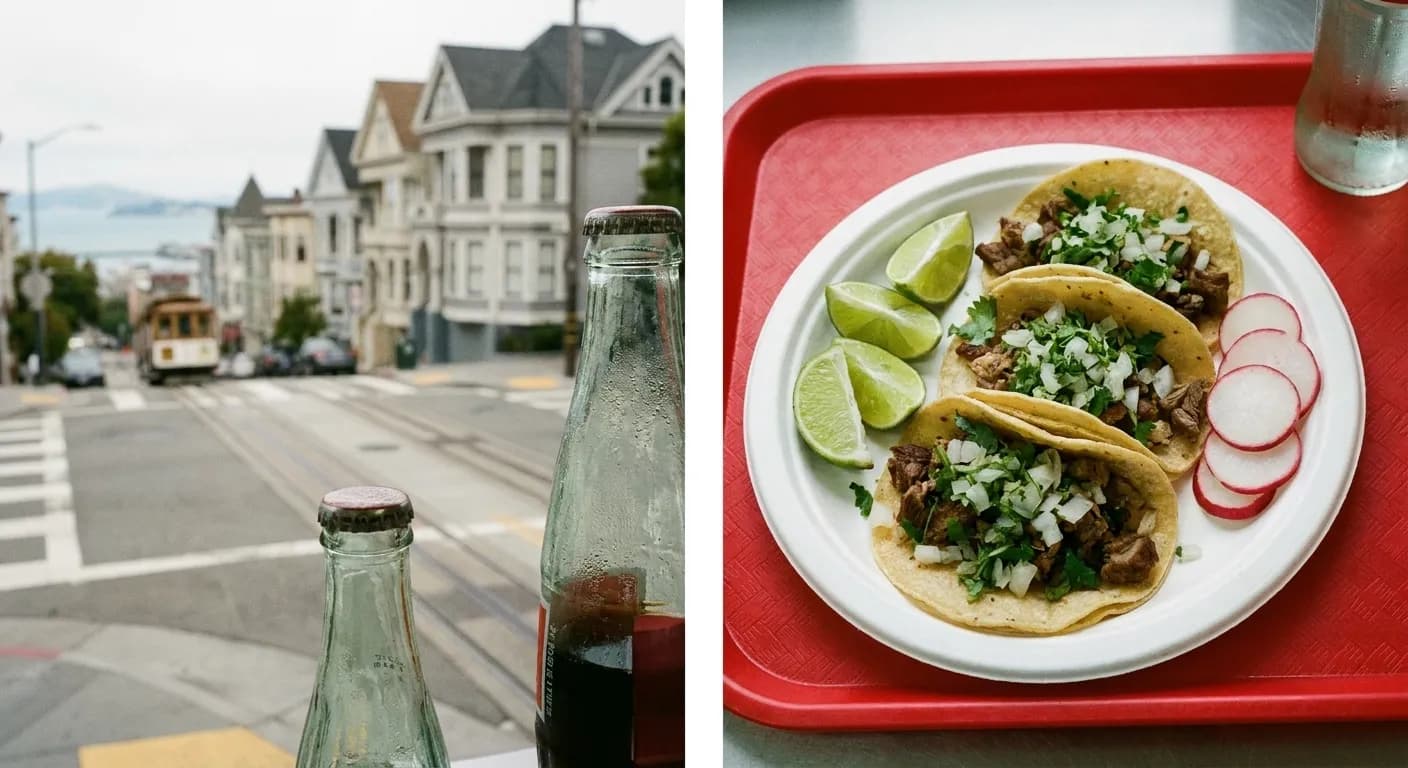
A few signals that work reliably. A vertical trompo of al pastor turning by the window means a kitchen committed to doing one thing properly all day. Two tortillas per taco rather than one. A salsa bar with more than three options, ideally including something charred. Radish, lime and grilled onion given rather than asked for. And handwritten signs for anything not on the printed menu — that is where the cook's own preferences show up.
The negative signals are just as useful. Flour tortillas as the default for tacos. Yellow shredded cheese. Photographs of every dish on a laminated board. None of these are disqualifying on their own, but together they describe a place optimising for people who are not going to know the difference.
The regional distinction that matters most
San Francisco's Latino population is not primarily Mexican — the Mission was built substantially by Central Americans, particularly Salvadorans and Nicaraguans, and that shows up on menus everywhere. Pupusas, curtido, plátanos and Salvadoran-style tamales sit alongside tacos in a lot of these places, and they are frequently what the kitchen is actually best at.
Ordering a couple of pupusas alongside your tacos at a Salvadoran-run place is close to always the right decision. They are cheap, they are made to order on the same griddle, and the curtido that comes with them, a fermented cabbage slaw with vinegar and oregano, will improve everything else on the table.
The regional Mexican styles now showing up
The last several years have brought a wave of more regionally specific Mexican cooking to the city, and it has quietly raised the ceiling. Oaxacan restaurants doing tlayudas and proper moles, Yucatecan cochinita pibil, Baja-style fish tacos with battered fish and crema rather than grilled fish and salsa, and birria in its current form as a stewed beef taco served with consommé for dipping.
Birria in particular went from unknown to ubiquitous here in a very short time, and the quality range is now enormous. The version worth eating comes from a place that has been making it for years rather than one that added it to the menu when it became popular, and the tell is whether the consommé tastes of long-cooked beef and chilli or of stock powder thinned with water.
Cost, and what it should be
A street taco in this city runs roughly three to five dollars depending on the meat, which is more than Los Angeles and much more than Texas, and reflects San Francisco's costs rather than anything about the food. Four tacos is a meal. If a place is charging over six dollars a taco, it is selling you a restaurant experience, which may be excellent but is a different product.
The value ceiling is at the trucks and the neighbourhood counters south of the city centre, and the gap is large enough to be worth a bus ride. Anywhere serving mostly people who live within four blocks is going to be priced for them, and that is the whole strategy in one sentence. The corollary is that a taqueria on a block with three others is competing on price and quality simultaneously, which is exactly the situation you want to be eating in.
Tags: #SanFrancisco #Tacos #Taqueria #MissionDistrict #Excelsior #AlPastor #Pupusas #SalvadoranFood #CheapEatsSF #SFEats #LateNightSF #BayArea #FoodGuide
All trademarks are the property of their respective owners.
Ask Karpo first
Ask Karpo which taquerias near you in San Francisco are open now, whether they have a trompo running, and what a plate of three tacos costs there.