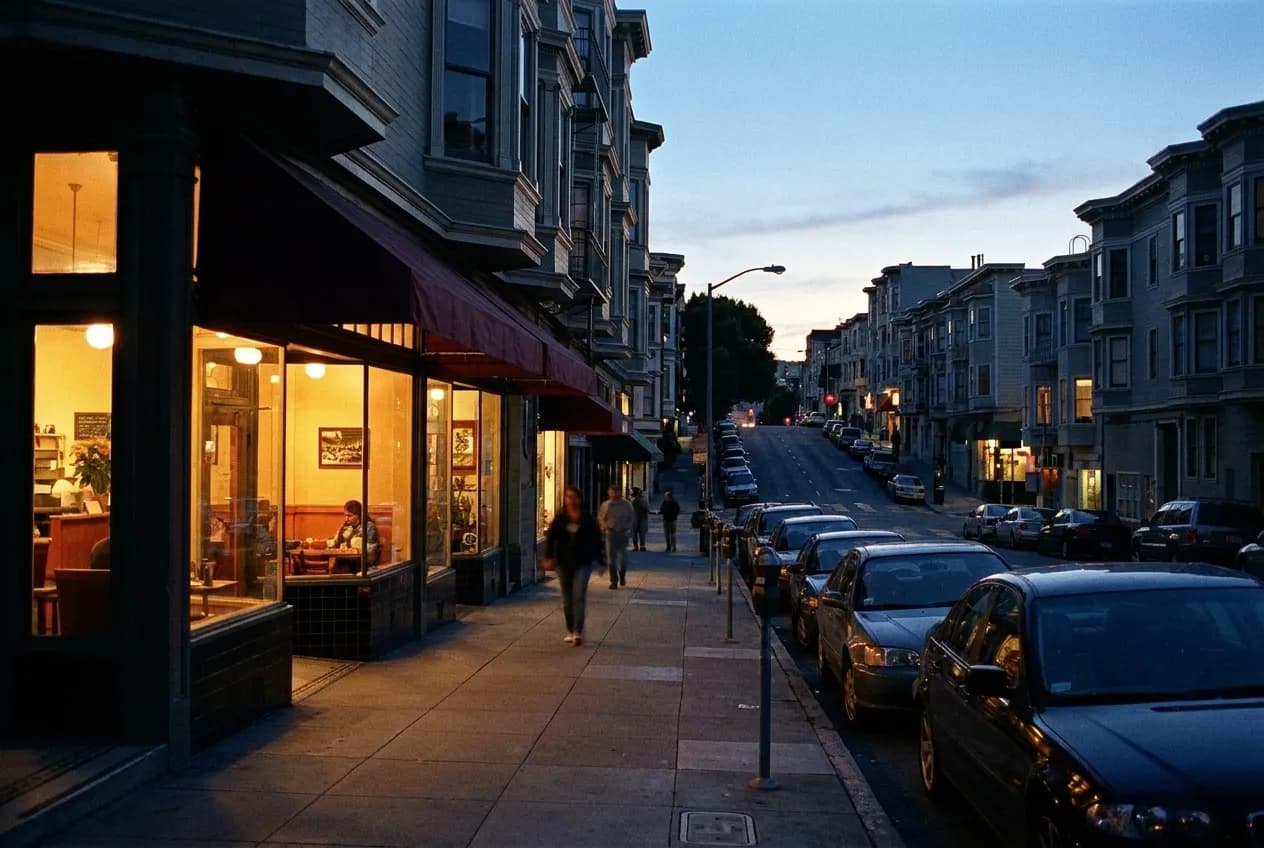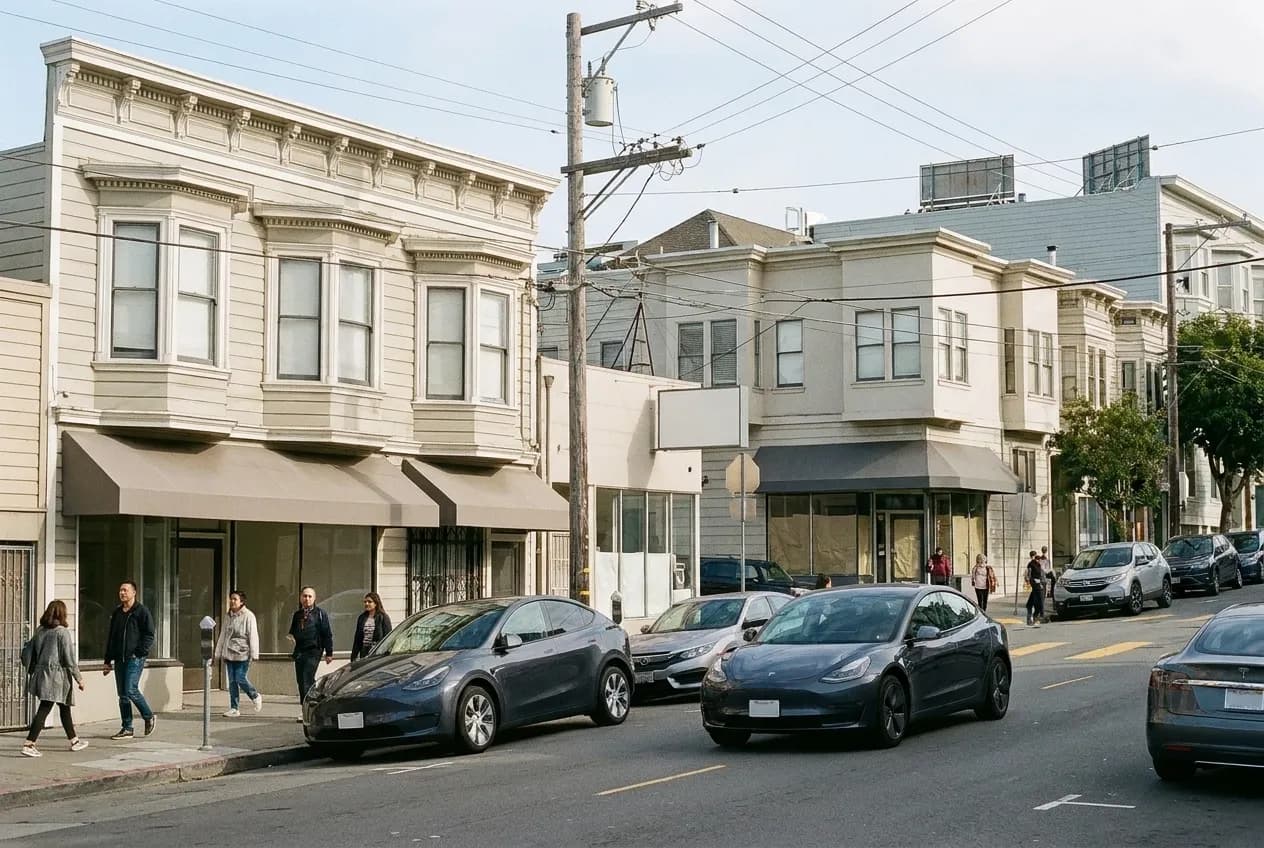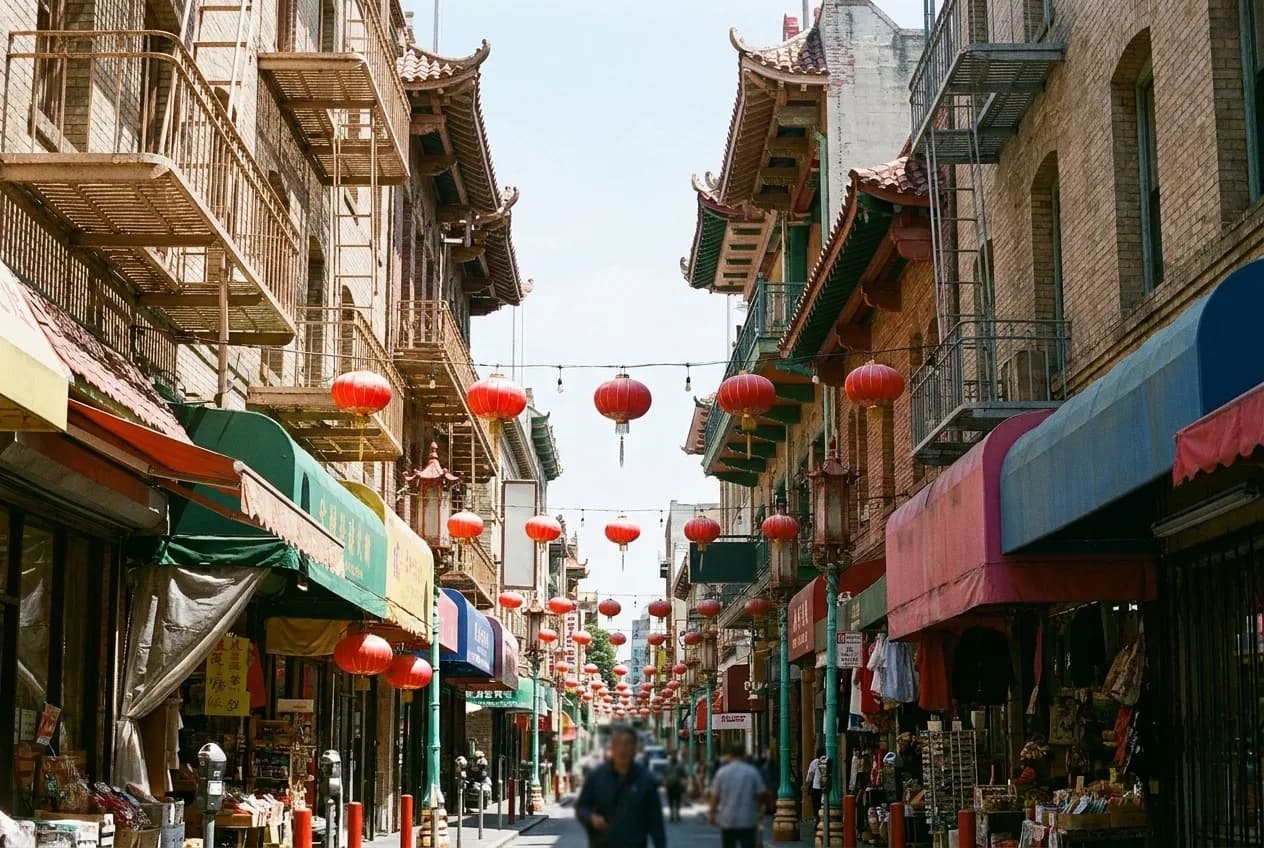
North Beach is an Italian neighbourhood and it has no dumplings, which sounds like the end of the article and is actually the beginning. The border with Chinatown runs along Broadway, and from the top of Grant Avenue you are in one of the densest Chinese food districts in the western hemisphere in about four minutes on foot. Almost nobody crosses that line in either direction. Visitors do North Beach or they do Chinatown; residents of each do their own. Crossing it deliberately, with dumplings as the excuse, is the single best short walk in San Francisco.
The Chinatown counters wind down by mid-afternoon while North Beach's rooms run into the evening, so the crossing works in one direction more than the other. Tell Karpo when you are starting.
The border, precisely
Broadway is the line. North of it, Columbus and Grant run through the Italian quarter - espresso bars, focaccia, red-sauce rooms, Washington Square. South of it, Grant becomes Chinatown's tourist spine and Stockton, one block west, becomes its working one. The distance from Washington Square to the middle of Chinatown is about eight minutes; from the top of Grant at Broadway, about four.
Jack Kerouac Alley, running beside City Lights from Columbus through to Grant, is the most literal version of the crossing - a fifty-metre painted lane that connects the two neighbourhoods directly, with quotations set into the paving. Walking it is a small thing and it makes the point better than any amount of explanation: two entirely different cities, separated by the width of a bookshop.
The counters, which are the point
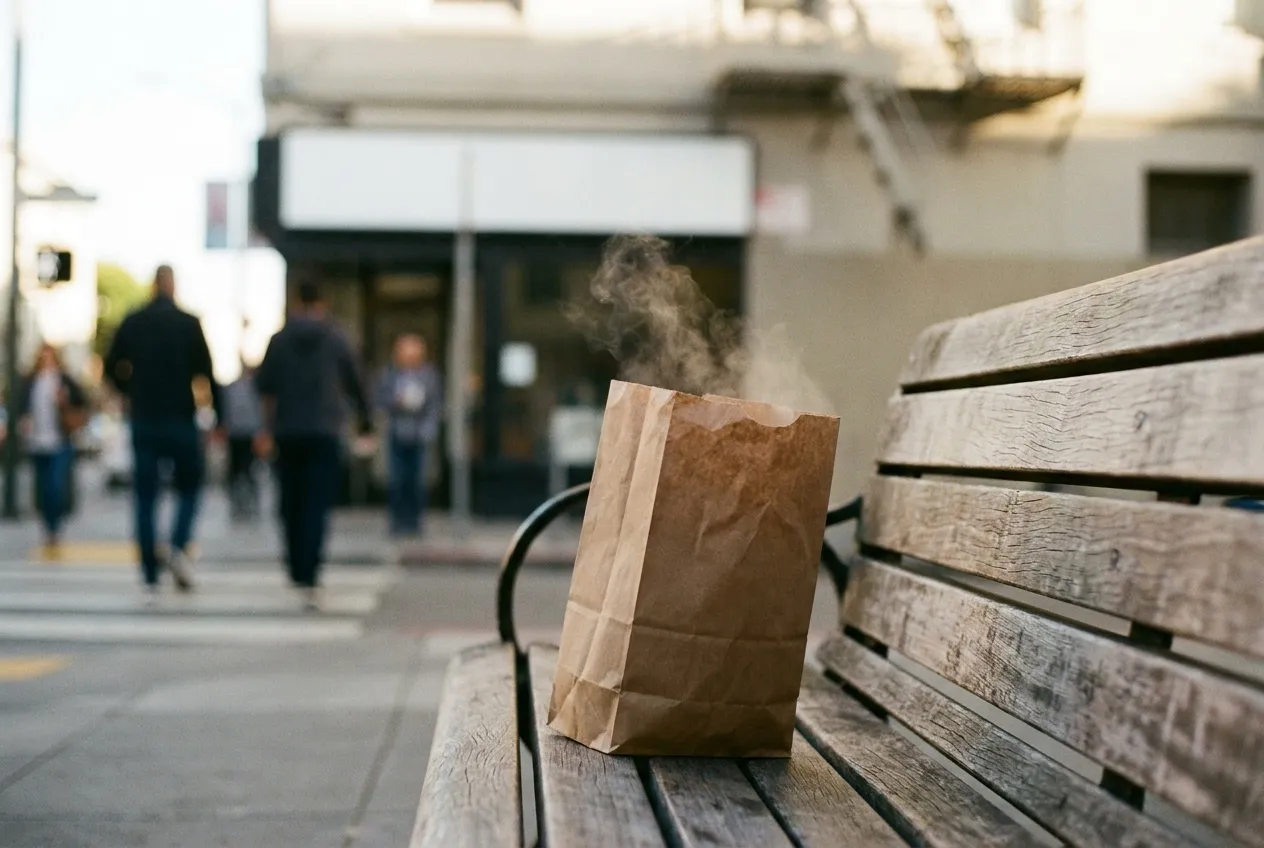
Chinatown's dumpling model is the takeaway counter rather than the restaurant. Good Mong Kok on Stockton Street is the archetype: a narrow shop, a permanent queue, cash, and dim sum handed over in a paper bag within about thirty seconds of ordering. Har gow, siu mai, char siu bao and sticky rice in lotus leaf, at a couple of dollars a piece. Six or seven pieces will cost under ten dollars.
The queue looks worse than it is. This is a counter queue, not a table queue, so twenty people is a ten-minute wait - count the people, not the metres. The rule for these counters generally is to go before one in the afternoon, when the full range is available; by mid-afternoon the popular items have gone and what is left is what nobody wanted.
Where to eat it
Portsmouth Square is Chinatown's main open space and its living room - a raised plaza above a car park where the neighbourhood plays cards, does tai chi in the morning and generally occupies itself all day. It is two minutes from the Stockton counters and it is where a paper bag of dim sum is meant to be eaten. There are benches and it is free.
The alternative, and the better one if the weather is good, is to carry the bag back north to Washington Square in North Beach - eight minutes uphill and then down - and eat it on the grass with the church at one end and Coit Tower on the hill above. That is a deliberately absurd thing to do and it is one of the more pleasant twenty minutes available in this city.
The crawl in the other direction
The reverse trip is just as good and almost nobody does it. From Chinatown, walk north up Grant, cross Broadway, and North Beach's own counter culture takes over. Liguria Bakery at Stockton and Filbert has been selling focaccia by the sheet since 1911, opens early and closes when it sells out - usually by mid-morning. Golden Boy on Green Street sells square Sicilian pizza slices through a window, cash, no seats, and runs late.
Between them sit the old caffès, where an espresso at the bar costs a couple of dollars and sitting for an hour with it is normal. Caffè Trieste on Vallejo has been the neighbourhood's living room since 1956. The natural shape of the whole thing is dim sum in Chinatown in the morning, focaccia in North Beach at midday, espresso in the afternoon, and a square slice on Green Street at night.
Why the crossing is worth making
Beyond the food, the two neighbourhoods explain each other. Both are immigrant districts that arrived in the nineteenth century, both survived the 1906 earthquake and fire and rebuilt in place, both have shrunk as their populations moved to the avenues, and both now run a working local economy underneath a visible visitor one. The difference in how they have handled that is visible in twenty minutes of walking.
It is also, practically, the densest concentration of genuinely cheap good food in central San Francisco. Between the dim sum counters, the focaccia, the pizza window and the espresso bars, two people can eat and drink well across an entire day for under forty dollars, on foot, without transit, in a part of the city where a sit-down dinner would cost that each.
Practical notes
Distances: Broadway to Washington Square about four minutes; Washington Square to the Stockton counters about eight. The route is essentially flat if you stay off Telegraph Hill. Chinatown counters are cash-friendly and best before one in the afternoon; Liguria sells out by mid-morning; Golden Boy runs late. Prices: dim sum a couple of dollars a piece, focaccia a few dollars a slab, pizza four to seven a square, espresso two to four. Portsmouth Square and Washington Square are both free and both have benches. Parking is hopeless in both neighbourhoods - the Portsmouth Square garage is the practical answer, or arrive on foot or by Muni along Columbus or Stockton. And go early: Chinatown between seven and ten in the morning is doing its own shopping and is a completely different place from the afternoon version.
Tags: #BestDumplings #NorthBeach #Chinatown #SanFrancisco #DimSum #GoodMongKok #PortsmouthSquare #WashingtonSquare #LiguriaBakery #GoldenBoyPizza #GrantAvenue #StocktonStreet #NeighborhoodGuide #SFEats
All trademarks are the property of their respective owners.
Ask Karpo first
The crossing only works if both halves are open, and they keep opposite hours. Ask Karpo which Chinatown counters still have a full range at the hour you are going, whether the focaccia has sold out yet, and how to order the walk so you are not doubling back up the hill.