The English word dumpling is doing an enormous amount of unpaid work. It covers a thin-skinned parcel eaten in soup, a thick-skinned one boiled and dipped in vinegar, a pleated one steamed with soup sealed inside, and a flat-bottomed one fried until it welds itself to the pan. These are not variations on a theme; they come from different regions, different meals and different times of day, and a place that is excellent at one is frequently mediocre at the rest. New York has all four done properly, rarely under the same roof.
The practical problem is that the four styles cluster in different neighbourhoods and keep different hours, so the right answer depends heavily on where you are standing. Tell Karpo which of them you actually want and where you are, and it will send you to a specialist rather than a place that does all four adequately.
Xiao long bao: the one with the rules
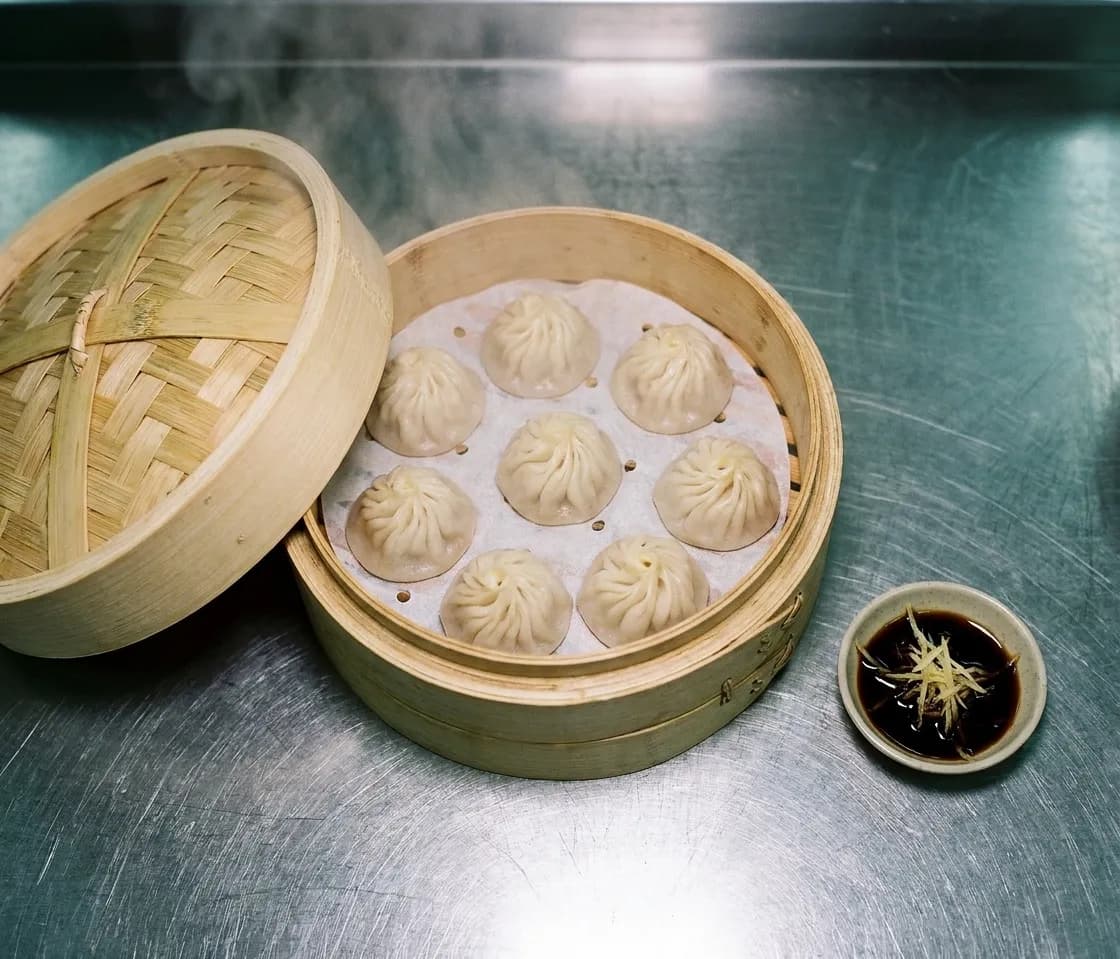
Soup dumplings are pleated, steamed and contain a set aspic that melts into broth in the basket. The skin has to be thin enough to be translucent and strong enough to survive being lifted, which is a narrow target, and it is the reason the good ones are made by someone who does nothing else all day. Count the pleats if you like - eighteen is the famous benchmark - but the more useful check is whether the base of the dumpling is sagging into the paper, which means the skin has gone.
Eating them is a genuine technique and worth getting right: lift by the topknot into a spoon, bite a small hole in the side, drink the broth, then eat the rest with ginger and black vinegar. Biting straight in scalds your mouth and loses the entire point. They do not travel, they do not survive a fifteen-minute wait at the table, and ordering them for delivery is throwing money away.
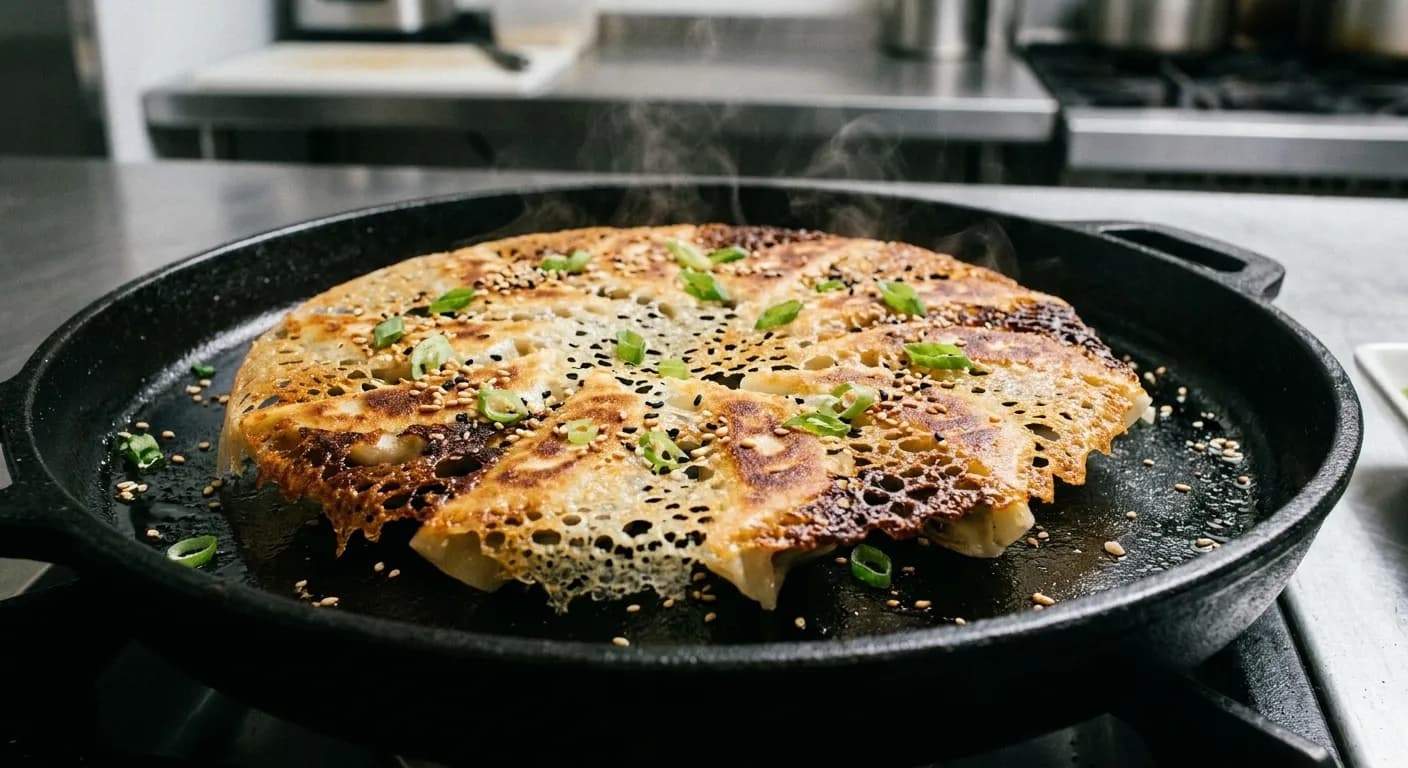
Potstickers: the crust is the dish
Guotie are pan-fried on the flat side, then steamed under a lid, then fried again dry so the bottom goes hard and golden. The good versions come out joined together by a thin lacy sheet of starch that has crisped in the pan - sometimes called the skirt or the wing - and that sheet is the whole reason to order them rather than the boiled version of the same filling.
This means they must be eaten immediately, at the counter, off the pan. A potsticker that has been in a takeaway container for ten minutes has steamed itself soft from underneath and is now a worse boiled dumpling. If a place plates them crust-down in a pile, the crust is gone before it reaches you.
Jiaozi: the everyday one, sold by weight
Northern-style boiled or steamed jiaozi have thicker skins, are usually pork and chive or lamb and are sold in units of a dozen for a price that has stayed improbably low. This is the dumpling as a staple rather than an occasion - the thing people actually eat, in quantity, with a dish of black vinegar and chilli oil mixed to taste at the table.
The frozen bags sold at the front of these shops are not a lesser product. Most of the counters that make them fresh sell fifty at a time to take home, and they are made the same morning by the same hands. Anyone who cooks is better off buying the bag than eating in.
Wontons: judged on the broth, not the parcel
Cantonese wontons are a different proposition. The skin is very thin, the filling is small and often includes whole shrimp, and the parcel is loose and trailing rather than tightly sealed. Crucially the dish is the soup: a proper wonton noodle soup lives or dies on a broth built from dried flounder and pork bone, and the dumplings are almost a garnish.
The diagnostic is the noodles. They should be thin, alkaline and springy to the point of being slightly resistant, and they should be sitting under the wontons rather than swimming in the broth. If the noodles are soft the kitchen is not paying attention, and the wontons will not save it.
Where each one lives
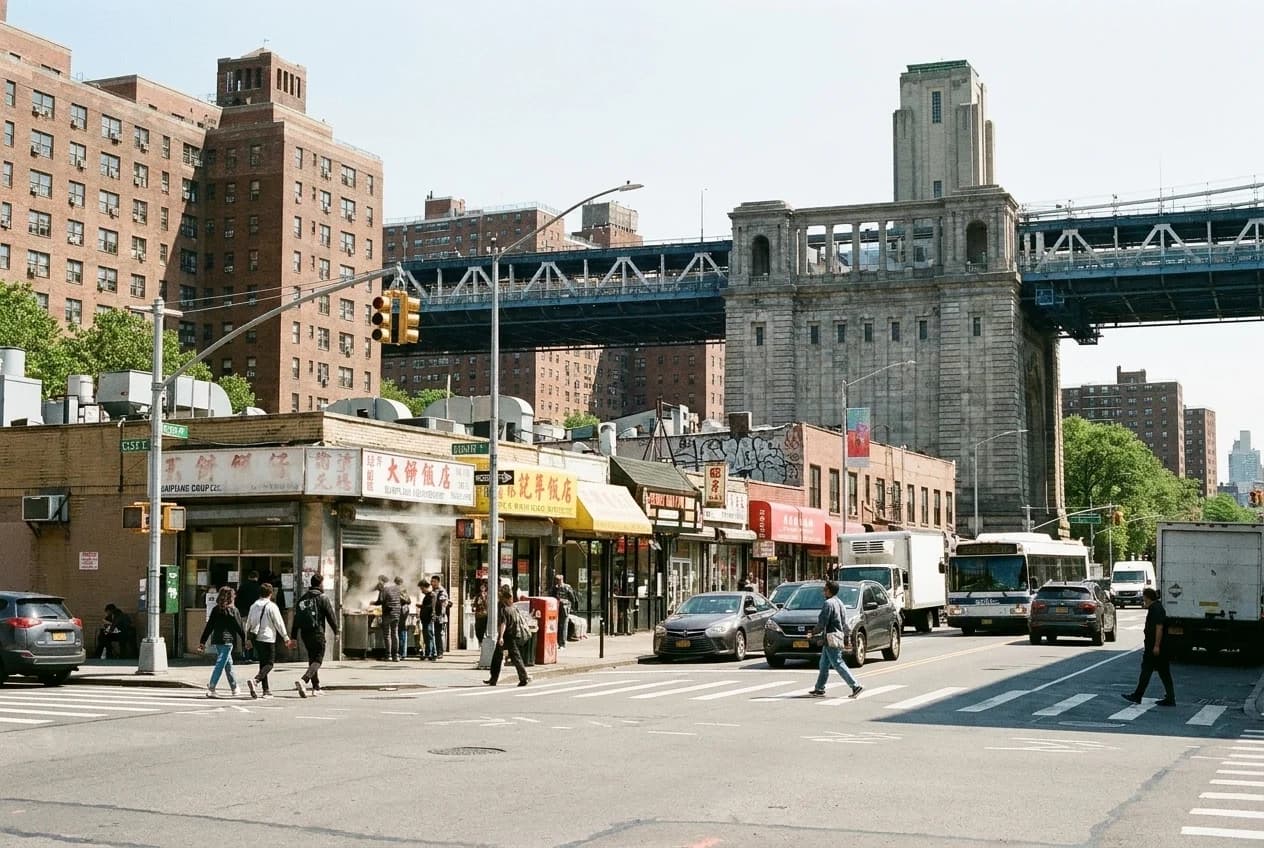
Flushing has the deepest coverage of all four and is where the northern and Sichuan specialists are, concentrated in the basements and food courts around Main Street rather than at street level. Manhattan's Chinatown is strongest on Cantonese wontons and the old-line jiaozi counters on the smaller streets east of Bowery. Sunset Park in Brooklyn is the least visited by outsiders and arguably the best value of the three.
Midtown has the polished soup-dumpling operations with waits, which are genuinely good and priced accordingly. The rule of thumb is that the further you go from Manhattan the cheaper it gets and the more likely it is that the kitchen only makes one style, which is usually the point.
How to order without ending up with four of the same thing
For two people, one basket of soup dumplings, one order of pan-fried, one green vegetable with garlic. That is the balanced version and it costs very little. Do not order two steamed items - you will notice halfway through that everything on the table is soft and beige.
Mix your own dipping sauce rather than using what arrives. Black vinegar as the base, a small amount of soy, chilli oil to taste, and shredded ginger if it is on the table. The pre-mixed soy-heavy dish that some places bring out will flatten the filling, and the vinegar is doing the actual work of cutting the fat.
Tags: #BestDumplingsInNewYorkCity #SoupDumplings #XiaoLongBao #Potstickers #NYCFood #Flushing #ChinatownNYC #DumplingGuide #NewYorkCity #SunsetPark
All trademarks are the property of their respective owners.
Ask Karpo first
Dumplings reward specialisation, and the city is full of counters that do exactly one style extremely well. Ask Karpo which style you are actually after and where you are, and skip the places that do all four at once.