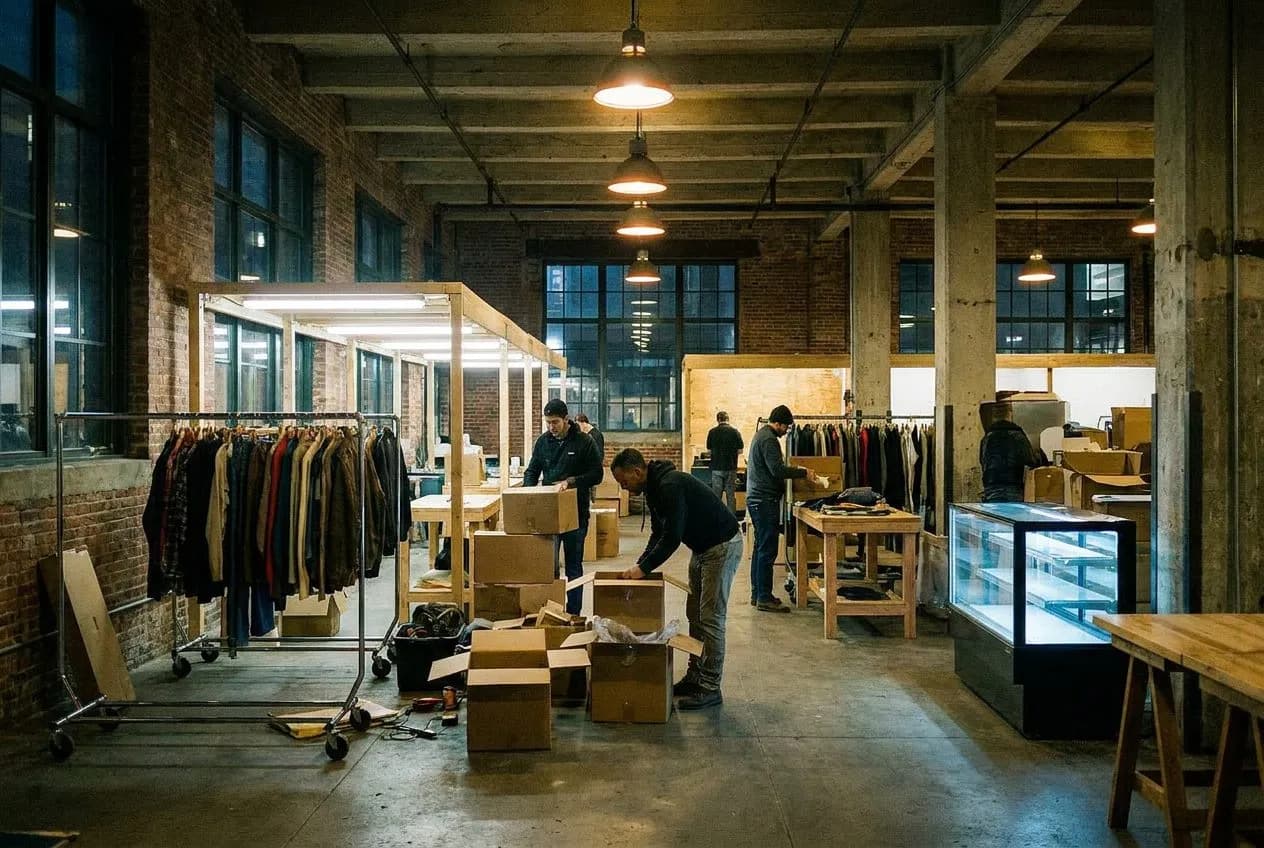
Most weekend plans in NYC begin at a civilized hour, after coffee and contemplation. But the best shopping at Artists & Fleas inside Chelsea Market rewards those willing to witness the unglamorous prelude: cardboard boxes spilling Victorian mourning brooches onto folding tables, vendors wrestling garment racks into place, the muffled clatter of unpacking echoing under industrial brick arches. Saturday mornings between nine and ten, the market's indoor flea transforms from empty stalls into a subcultural cabinet of curiosities, and the hour before official opening has become an informal early-access window for shoppers who understand the unwritten rules of setup browsing.
Updated August 2026: hours, prices, reservations, event dates, transit details, and venue policies can change. Use the linked official venue, city, or operator sources in the Sources section as the final reference before you go.
The 9–10am setup window
Saturday setup begins before opening, with vendor setup and early browsing varying by day; verify the exact setup time before publishing. and wheel their inventory carts toward assigned stalls. The official opening is 10am, but arriving between 9:15 and 9:45am allows browsing of partially assembled stalls before the crowd arrives and before the displays achieve their final curated form. This is not quite backstage access—vendors are working, arranging inventory with the focus of window dressers under deadline—but it's the closest thing to a soft opening the market offers.
The atmosphere during setup is workmanlike and oddly intimate. Natural light from Chelsea Market's skylights cuts through the flea's interior, illuminating dust motes above half-unpacked trunks of estate jewelry and military surplus. Vendors move between their vans and stalls, arms loaded with hanging garments still in dry-cleaning bags, banker's boxes labeled in Sharpie shorthand. The air smells faintly of vintage wool, cardboard, and the coffee roasting somewhere deeper in the market complex.
The etiquette of early browsing
Early-access browsing during setup is tolerated by most vendors but not official policy. The implicit bargain: you may look, but vendors appreciate patient shoppers who don't interrupt unpacking or expect full service while they're still hauling crates. A nod of acknowledgment, eye contact when appropriate, and the ability to step aside when a vendor needs to maneuver a clothing rack are the basic courtesies. Some stallholders will pause mid-setup to answer questions or ring up a purchase; others prefer to finish arranging their displays before engaging. Reading the room is essential.
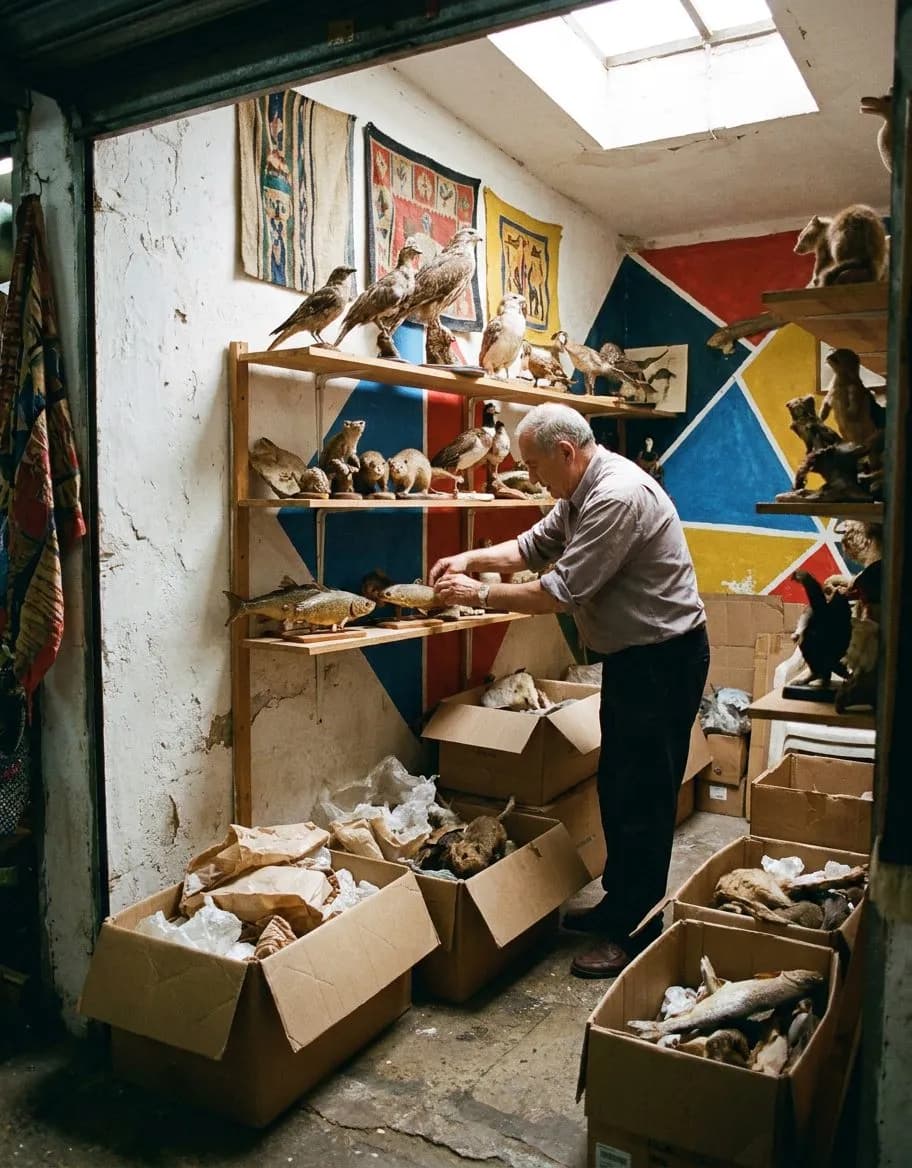
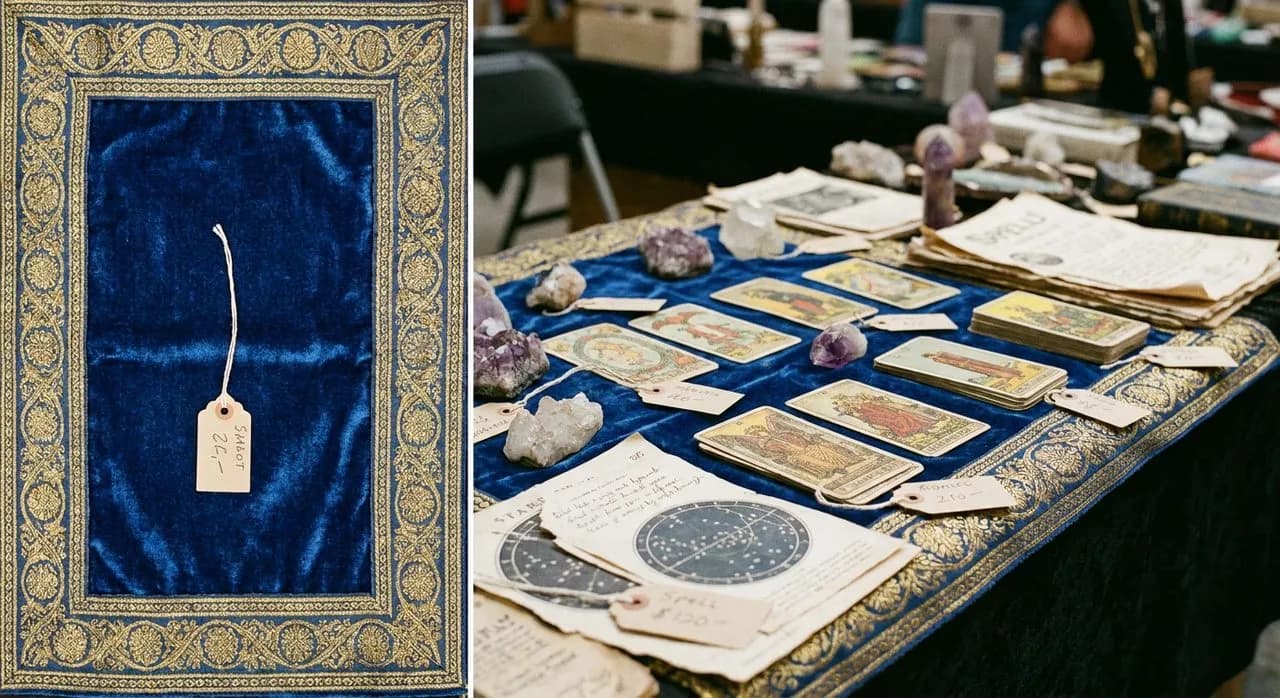
The reward for patience is access to inventory before it's been fully styled or strategically positioned. A taxidermied crow might still be wrapped in tissue paper. A bin of occult ephemera—tarot decks, astrology charts, hand-lettered grimoire pages—sits unsorted on a folding chair. Vintage band tees hang on a portable rack in no particular order. For shoppers who know what they're hunting, this pre-curated chaos offers a democratized first look, unburdened by the visual hierarchy vendors impose once everything is in place.
The rotating cast of dealers
Artists & Fleas operates on a rotating vendor model, with a lineup of more than twenty independent dealers cycling through weekend slots. The vendor lineup rotates weekly, and Thursday Instagram posts preview the weekend stallholders and their specialty inventory—1990s deadstock streetwear one week, mid-century ceramics and Brutalist jewelry the next. This rotation keeps the flea from ossifying into a static showroom and ensures that regular visitors encounter new dealers and subcultural niches on each visit.
The dealers themselves represent a cross-section of New York's vintage and oddity economies: estate sale scavengers, former costume designers liquidating personal archives, occult booksellers, taxidermy artists working within legal wildlife trade channels, collectors who've aged out of their obsessions. Some operate full-time online stores and use the flea as a brick-and-mortar pop-up; others treat it as a weekend side hustle funded by storage-unit auctions and Craigslist free piles. The inventory reflects this diversity—pressed-tin ceiling tiles and apothecary jars share space with vintage Levi's and hand-painted leather jackets.
What you'll find in the stalls
The merchandise skews toward subcultural signifiers and aesthetic oddities: clothing and objects that telegraph identity rather than simply fill a closet or shelf. Vintage band tees—Bauhaus, Sonic Youth, obscure hardcore punk tours—are folded into milk crates or hung salon-style on pegboard. Jewelry runs to chunky silver rings, Victorian mourning brooches, and enamel pins celebrating niche fandoms. Taxidermy and natural history specimens appear regularly, within the bounds of legal trade: ethically sourced bones, butterflies under glass, the occasional preserved fetal pig in a jar of formaldehyde.
Occult ephemera forms its own subcategory: tarot decks both vintage and contemporary, astrology charts printed on newsprint, hand-bound grimoires with marbled endpapers, apothecary labels for poisons that never existed. Some vendors specialize in paper goods—concert posters, mid-century advertisements, pornographic playing cards from the 1970s. Others deal in home décor with a gothic or maximalist bent: velvet paintings, carved wooden mirrors, Victorian oil lamps converted to electric. The aesthetic is less Brooklyn farmhouse than Brooklyn witchhouse.
The ritual and its regulars
By mid-morning, the flea reaches a comfortable density—browsers outnumber gawkers, and vendors have settled into their selling rhythms. The crowd skews younger and more stylistically adventurous than Chelsea Market's daytime tourist traffic: art students hunting inspiration, costume designers sourcing period details, collectors pursuing specific eras or objects. Conversations between vendors and customers often drift into longer exchanges about provenance, subculture history, or the mechanics of estate-sale bidding.
Regulars develop rapport with specific vendors, inquiring about items held back from public display or requesting alerts when particular inventory arrives. A dealer specializing in 1980s punk ephemera might text a regular when a cache of original show flyers surfaces. Another vendor known for Victorian mourning jewelry keeps a mental list of customers hunting specific motifs—skulls, serpents, clasped hands. These informal relationships mirror the historical function of flea markets as social spaces, not just transactional ones.
Practical notes
Artists & Fleas operates inside Chelsea Market in Manhattan, New York City; verify the current street address before publishing. The nearest subway stations are 14th Street–Eighth Avenue (A, C, E, L) and 23rd Street (C, E); both require a short walk. Street parking is scarce; nearby garages charge premium weekend rates. Official hours are Saturday and Sunday; verify the current opening and closing times before publishing. The market is wheelchair accessible via Chelsea Market's main entrances. Bring cash for smaller vendors, though most accept digital payment. Verify current hours and vendor lineups via the market's social channels before visiting.
Tags: #ArtistsFleas #ChelseaMarket #NYCVintage #FleaMarketFinds #SubcultureStyle #VintageNYC #WeekendPlans #OccultEphemera #TaxidermyArt #IndependentVendors #ManhattanShopping #TheOddEdit #VintageHunting #RotatingVendors #SetupBrowsing
Sources consulted: Chelsea Market · Artists & Fleas official site · Flea market · Time Out New York Shopping
All trademarks are the property of their respective owners.