 WORD Bookstore in Greenpoint Remains a Community-Focused Indie Bookstore Near Me
Hidden Gems & Odd Finds
An Umbrella Repair Shop in Midtown That's Been Open Since 1935
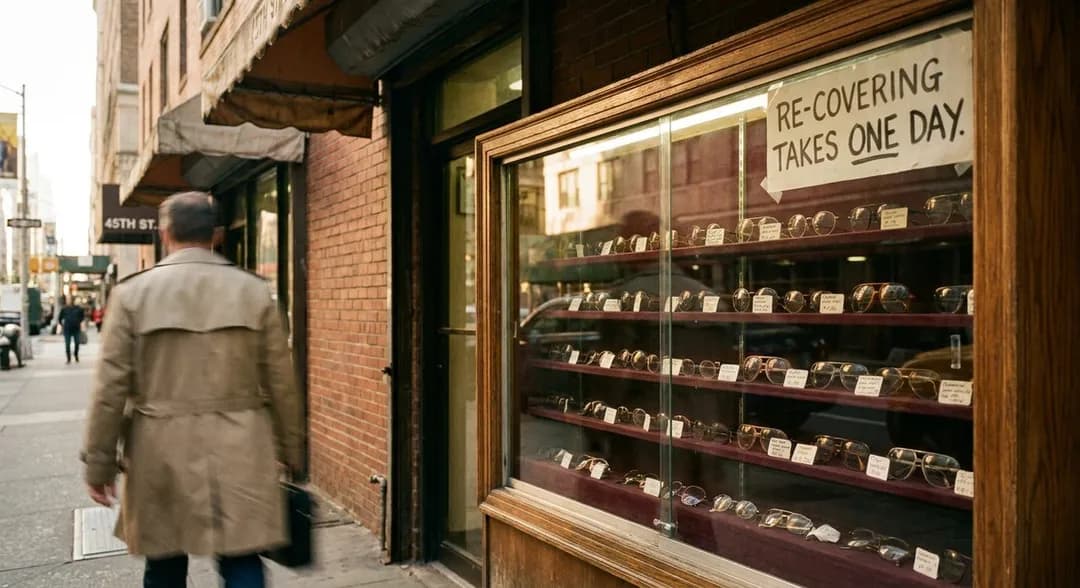
A glass case on 45th holds frames from every decade; re-covering takes one day
You walk past it every day without noticing. Between the halal cart and the office tower lobby on West 45th, there's a narrow storefront with a hand-painted sign that says "Uncle Sam's Umbrella Shop" in letters that haven't been retouched since Carter was president. Inside, a glass display case runs the length of one wall, holding umbrella frames from 1940s steel to modern carbon fiber, arranged chronologically like a museum exhibit nobody curated on purpose. The shop has been re-covering umbrellas in the same 200-square-foot space since 1935, back when this block still had residential hotels and men wore fedoras in August.
The Glass Case Nobody Photographs
The display case is original to the shop, installed when the current owner's grandfather opened during the Depression. You'll find umbrella skeletons in there that predate nylon—silk panels long rotted away, leaving just the ribs and stretchers. There's a 1950s automatic-open mechanism that looks like something from a Bond gadget drawer, all springs and levers where modern umbrellas have a single button. The owner, whose name is actually Sam (third generation, the "Uncle" stuck from his grandfather), keeps a magnifying glass on the counter so you can examine the hand-forged rivets on a 1940s frame. He'll tell you those rivets are stronger than anything made today, which sounds like old-man nostalgia until you hold a modern umbrella next to it and feel the weight difference. The case isn't locked. You can open it and handle anything inside, which feels transgressive in a city where everything valuable lives behind plexiglass.
One Day Turnaround, Tuesday Through Thursday
Drop off your broken umbrella Tuesday morning before 10 AM and you'll have it back Wednesday at 5 PM. That's the rhythm here—one-day service, but only mid-week. Sam doesn't take repairs Monday or Friday because the fabric suppliers he uses are in New Jersey and their delivery schedule doesn't align with weekend buffer days. The re-covering process happens in a back room you can't see from the counter, but if you come during lunch hour (12:30 to 1:30, when Sam eats a sandwich at the front desk), you'll hear the industrial sewing machine running. It sounds like a motorcycle revving in short bursts. The shop offers maybe forty fabric options, all solid colors, no patterns. Sam keeps swatches in a binder that's held together with duct tape and has coffee rings on every third page. Black is most popular, obviously, but he'll tell you dark green holds up better in sun exposure. The re-covering costs forty-five dollars flat rate, regardless of umbrella size, which seems arbitrary until you realize it's been forty-five dollars since 2008.
The Frames He Won't Touch
Sam refuses to repair cheap promotional umbrellas—the ones banks give away with new accounts, the ones street vendors sell for eight dollars when surprise rain hits. He'll examine the frame, hand it back, tell you it's not worth the fabric cost. This isn't snobbery, it's structural assessment. Those frames use aluminum so thin it bends if you look at it wrong, with plastic joints that crack in cold weather. He keeps a cardboard box under the counter filled with rejected umbrellas people abandoned after his diagnosis, and once a month he hauls it to the curb. But bring in anything made before 1990, anything with wooden handle and steel ribs, and he'll perk up like you've brought a patient he can actually save. He's particularly fond of Totes brand from the 1970s, which he says used better engineering than most luxury umbrellas today. There's a repair he won't do even on good frames—replacing the runner, the sliding piece that pushes the ribs up. He'll explain the metallurgy involved, why modern replacements don't fit vintage tolerances, why you're better off buying new. It's the only time he'll recommend buying new.
The Midtown Timing Strategy
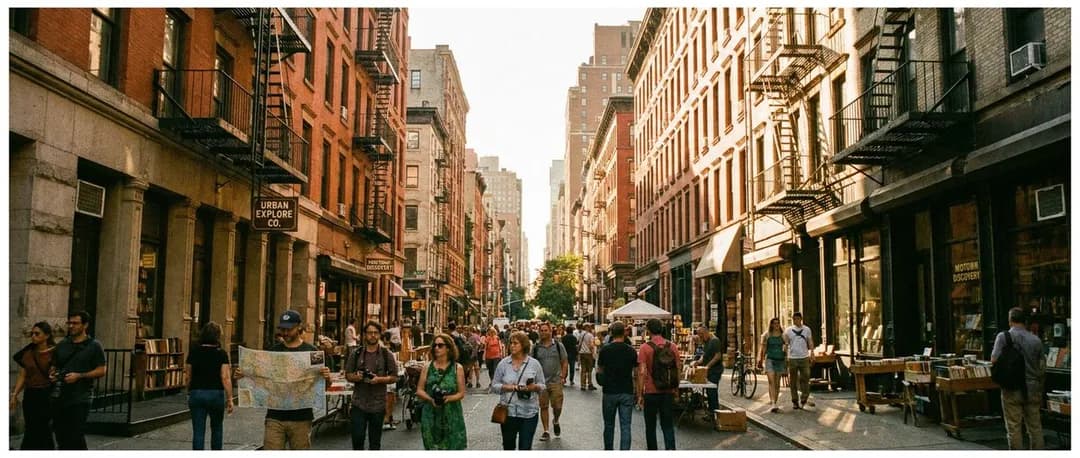
The shop opens at 9 AM, but the real window is 9:15 to 9:45, after the first commuter rush but before the office workers remember they need to run errands. That's when Sam has time to actually talk, to show you the difference between a straight handle and a crook handle's weight distribution, to explain why automatic-open umbrellas fail twice as often as manual. By 10 AM the foot traffic picks up—this block connects Times Square to Grand Central, so you get every kind of human—and he's back to transactional mode. Lunch hour is chaos. The shop is maybe twelve feet wide and when four people are inside, you're touching shoulders. Late afternoon, after 4 PM, is second-best for conversation. The shop closes at 6 PM sharp, not 6:05, not "just one more." Sam locks the door, flips the sign, leaves through the back entrance that opens onto a service alley you didn't know existed. That alley connects to 44th Street and still has the original cobblestones under a century of asphalt patches.
What the Regulars Know
There's a wooden stool by the window that's understood to be the waiting spot. If someone's sitting there, you stand. The radiator under that window clangs like a prisoner tapping morse code all winter, loud enough that Sam has to raise his voice. Regulars know to bring their umbrella in a tote bag, not dripping, because the floor is original wood and water damage is cumulative. They also know Sam keeps a bowl of Werther's Originals on the counter that he refills every Monday, and taking one without asking is fine, taking three is pushing it. The bathroom is technically for employees only but if you ask nicely and there's no line, he'll hand you a key attached to a wooden paddle the size of a cafeteria tray. It's the old anti-theft system from when this was a shared restroom for multiple storefronts. The bathroom itself is a time capsule—hexagonal floor tiles, pull-chain toilet, a window that looks into an air shaft that hasn't seen direct sunlight since the adjacent building went up in 1962.
The Umbrella He Keeps Behind the Register
Sam has a personal umbrella he's been using since 1987, re-covered maybe fifteen times, always in navy blue. The frame is German, manufacturer defunct, with a handle made from a single piece of chestnut wood that's darkened to almost black from decades of hand oils. He brings it out to demonstrate proper opening technique—the wrist rotation, the smooth extension, how you should never snap it open like you're casting a fishing rod. The fabric on it right now is from a bolt he bought in 2019, before his supplier switched to a lighter-weight material he doesn't trust yet. He's mentioned he'll probably be buried with this umbrella, which sounds like a joke until you watch how he handles it, the way you'd handle a musical instrument. It lives in a corner behind the register, always within reach, never used as a prop or loaned out. On rainy days when customers ask if he's heading out soon, he'll glance at it and say he walks home regardless of weather. The umbrella is for principle, not protection.
Practical Notes
Uncle Sam's Umbrella Shop is at 25 West 45th Street, between Fifth and Sixth Avenues. Open Tuesday through Saturday, 9 AM to 6 PM. Closed Sunday and Monday. Nearest subway is 42nd Street-Bryant Park (B, D, F, M trains) or 47-50 Streets-Rockefeller Center (B, D, F, M trains), both about a four-minute walk. No website, no Instagram, no online booking. Cash or check only—the credit card reader broke in 2016 and Sam never replaced it. There's an ATM in the building lobby next door. Re-covering takes one business day if you drop off Tuesday through Thursday morning. Friday drop-offs get returned the following Tuesday. Repair assessment is free and takes about ninety seconds. The shop doesn't sell new umbrellas, only repairs existing ones. Bring your umbrella in whatever condition—Sam has seen worse than whatever you think is beyond saving.
Tags: #UmbrellaMaker #MidtownManhattan #NewYorkCityFinds #TheOddEdit #HiddenNewYork #OldSchoolCraft #SinceTheThirties #ManualLabor #BuyItForLife #ForgottenTrades #WalkPastItDaily #45thStreet #RepairDontReplace #AntiqueTools #MidtownSecrets
Sources consulted: atlasobscura.com · timeout.com · nytimes.com
All trademarks are the property of their respective owners.
Ask Karpo for more information.
Keep reading
- WORD Bookstore in Greenpoint Remains a Community-Focused Indie Bookstore Near Me
 The Corner Bookstore on Madison Avenue Is Carnegie Hill's Indie Bookstore Near Me
 192 Books in Chelsea Brings Art and Fiction to Indie Bookstore Near Me