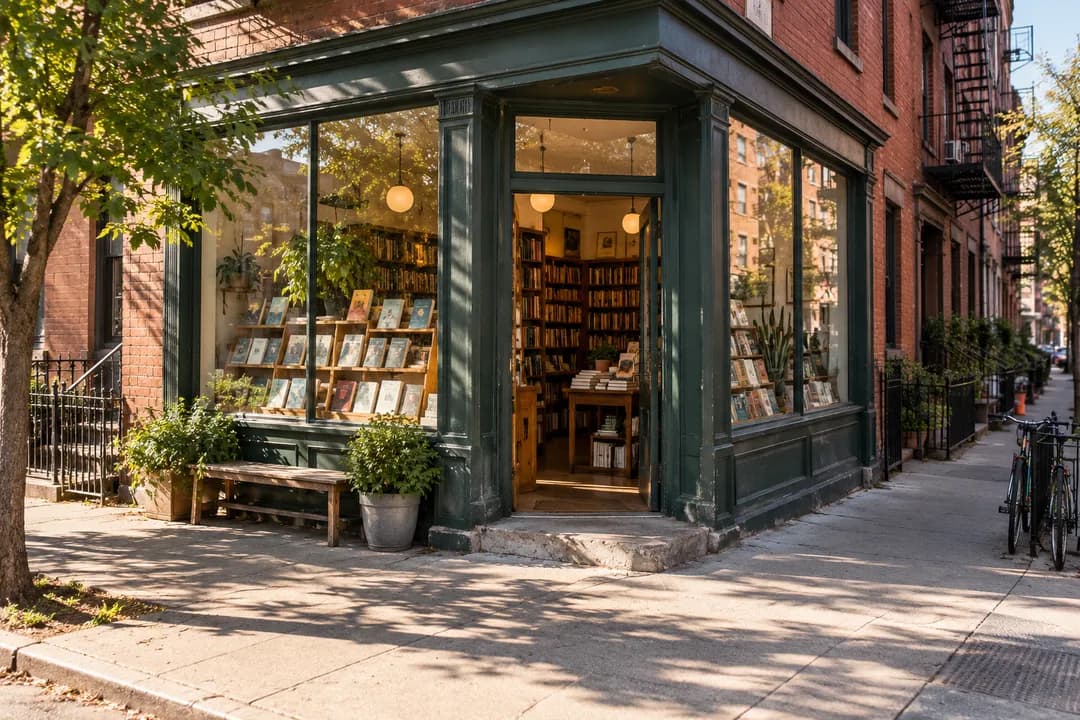
 WORD Bookstore in Greenpoint Remains a Community-Focused Indie Bookstore Near Me
Hidden Gems & Odd Finds
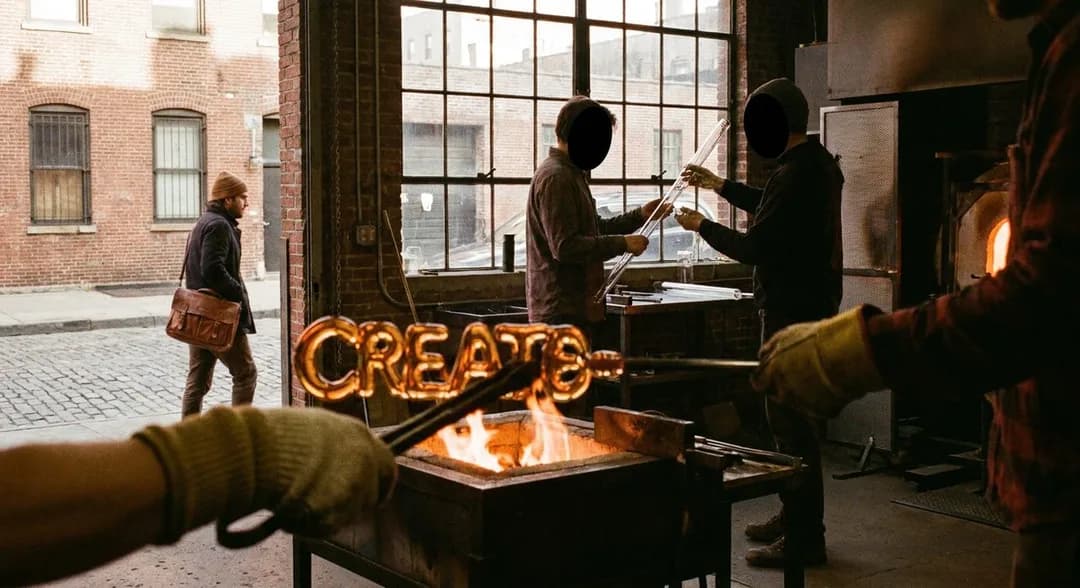
A Neon Sign Studio in Gowanus That Teaches Bending on Saturdays
The glass tubes arrive clear; you leave with a glowing word and burnt fingers
You walk into Let There Be Neon on a Saturday morning and the air already smells like burnt sugar and ozone. The studio sits on 9th Street between 2nd and 3rd Avenues, tucked into a building that used to manufacture something industrial before Gowanus decided it wanted artisanal everything. By 10:15am, you're holding a hollow glass tube the length of your forearm, and by 2pm you're carrying out a glowing sculpture that says something you'll either treasure forever or regret by Tuesday.
The Ribbon Burner Doesn't Care About Your Plans
The instructor—ask for Marie on Saturdays, she's been bending glass since 1987—hands you safety glasses that fog up immediately. The ribbon burner runs at 1800 degrees Fahrenheit, a flat blue flame that looks deceptively gentle until you bring the borosilicate tube close enough to watch it slump. You rotate the glass constantly, both hands moving in opposite directions, because physics demands symmetry even when your brain doesn't. The first bend always collapses. Marie doesn't stop you. She lets you watch your perfect 90-degree angle turn into a saggy elbow before she demonstrates again, her hands moving with the muscle memory of someone who's made ten thousand letters. The studio keeps the thermostat at 62 degrees year-round because you'll be sweating anyway, and the temperature differential helps you feel when the glass is actually hot versus when you just think it is.
Four Hours Disappears Into One Word
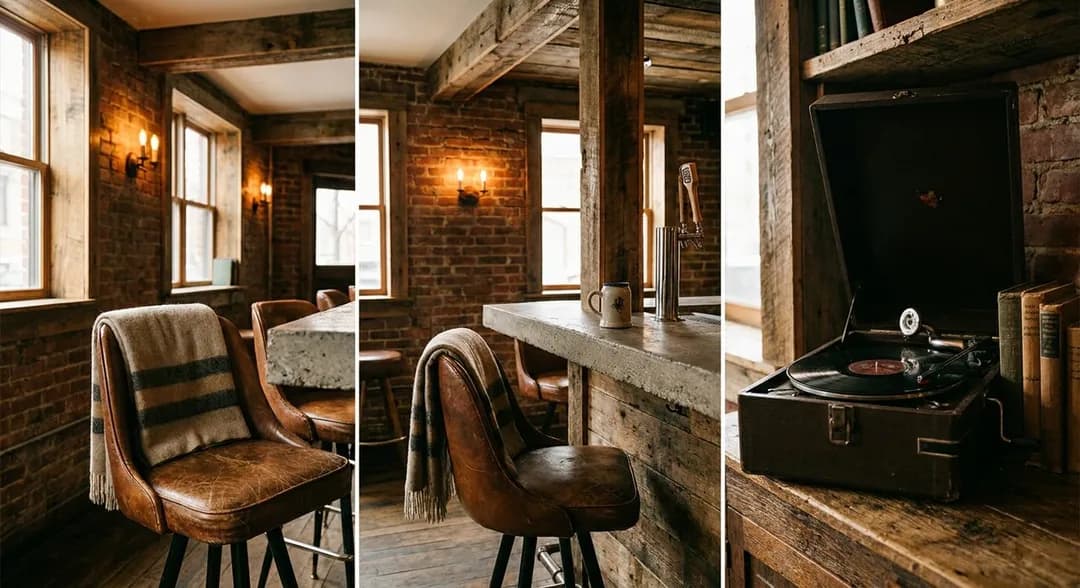
The Saturday workshop runs 10am to 2pm sharp, but nobody leaves at 2pm. You pay $285 upfront, which includes your glass, gas time, and the electrodes that'll eventually make your piece glow. Most people choose words between four and seven letters—anything longer and you're racing the clock, anything shorter feels like you didn't get your money's worth. The studio has a wall of past projects: "OPEN" in classic red, "VOID" in purple that shifts to blue at the edges, "TACOS" in green because someone has priorities. You sketch your word on graph paper first, planning each letter's height and spacing, then Marie translates your chicken scratch into actual measurements. The bend at 10:30am feels impossible. By noon you've made three letters and your right thumb has a blister forming. By 1pm you understand why neon signs cost what they cost.
The Bombarder Sounds Like a Sci-Fi Weapon
After bending comes the part they don't show in the romanticized videos: pumping and filling. Your sealed glass sculpture connects to a vacuum pump that sounds like a diesel engine trying to quit smoking. You're evacuating all the air, creating a space so empty that even molecules get lonely. Then comes the bombarder, a transformer that sends 15,000 volts through your piece, heating the glass from the inside out. It glows white-hot, and you watch for any weak spots—pinholes, cracks, places where your bending got sloppy. The studio's bombarder is a 1960s unit that Marie refuses to replace because "new ones don't have the same voltage curve." After bombarding, you fill the tube with neon gas if you want red-orange, argon with mercury if you want blue, or one of the proprietary mixes for colors like pink or green. The fill pressure matters: too much and the glow looks muddy, too little and it won't light at all. Marie eyeballs it. The gauge is there for students.
The Scrap Bin Tells Better Stories Than Instagram
In the back corner, past the rack of raw glass tubes imported from Germany, there's a milk crate filled with failed attempts. A "LOVE" where the V collapsed into itself. An ampersand that cracked during bombarding. Someone's attempt at cursive that looks like an EKG readout. Marie keeps them as teaching tools, but really they're the studio's most honest portfolio. The glass itself comes in 4-foot lengths and costs $18 per tube—you'll use two or three depending on your word's complexity. Between letters, while your glass cools, you watch Marie work on a commission piece: a 6-foot flamingo for a bar in Bushwick that's paying $3,400. She bends the neck in one continuous motion that takes 40 seconds and looks like calligraphy written in fire. The difference between Saturday students and professional neon benders isn't talent, it's the 10,000 hours between those two states.
Your Transformer Comes in a Plastic Project Box
The final piece needs power, so you leave with a transformer that looks homemade because it basically is. It's housed in a gray plastic electrical box with a power cord on one side and high-voltage wires on the other. The studio wires it for you, heat-shrinking the connections, adding a switch that clicks with satisfying mechanical authority. The transformer weighs maybe two pounds but it's technically hazardous waste when it eventually dies, which Marie mentions casually while wrapping it in bubble wrap. Your neon piece needs to hang at least 6 inches from any wall because heat, and you shouldn't touch the glass while it's lit because 15,000 volts finds creative paths to ground. The glow is immediate when you plug it in—no warm-up, no flicker, just pure saturated color that looks analog in a way LED strips never manage. You take seventeen photos. Sixteen look terrible because phone cameras hate point light sources.
The Neighborhood Watches You Leave Glowing
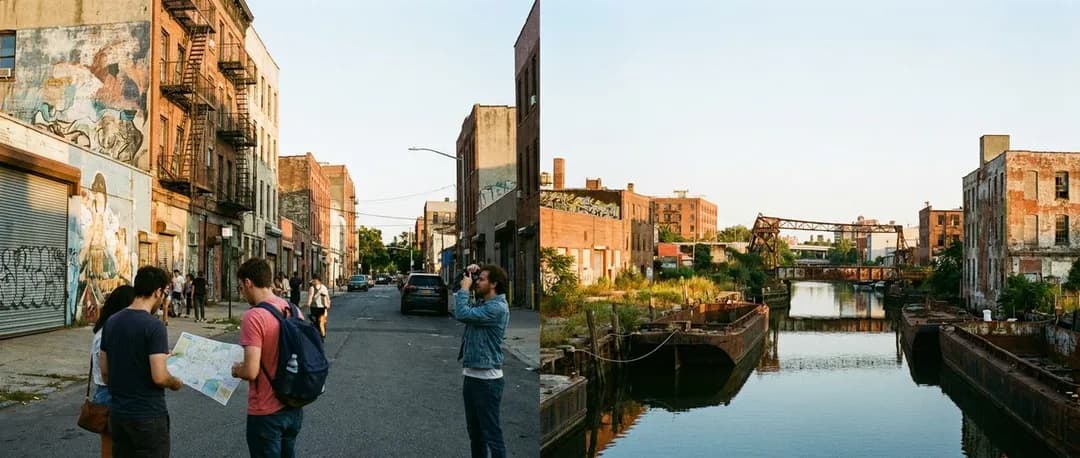
You walk out onto 9th Street carrying a sculpture that's technically fragile but feels precious in a different way than fragile usually means. Gowanus in the afternoon is all contractors and dog walkers and people who've just finished their own weird niche workshops. The Whole Foods crowd walking toward 3rd Avenue gives your neon piece the same look they give the guy who makes leather whips in the studio next door—curious, slightly envious, wondering if they should've done something interesting with their Saturday instead of buying organic arugula. The R train at Union Street is six blocks west. You wrap your piece in the beach towel you brought because Marie told you to bring a beach towel. On the platform, a kid asks if you made that. You say yes, and for once the answer feels completely true.
Practical Notes
Let There Be Neon runs Saturday workshops twice monthly, 10am-2pm. Book at least three weeks ahead—they cap classes at six people and slots fill up by the first of each month. The studio is at 38 White Street (they have a Gowanus workshop space for classes, main gallery is in Tribeca—confirm location when booking). Bring a towel for transport, wear cotton clothing, tie back long hair. No open-toed shoes. The $285 fee is non-refundable but transferable. Street parking on 9th Street is metered until 7pm. The R train from Union Street is your closest subway, eight-minute walk. Your finished piece is ready to hang immediately—no curing time, no additional assembly. The studio sells replacement transformers for $45 if yours eventually dies. They ship internationally but recommend hand-carrying your piece home if possible.
Tags: #NeonArt #GlassBending #GowanusNYC #NYCWorkshops #NeonSigns #HandmadeNeon #BrooklynMakers #ArtisanCrafts #TheOddEdit #NYCInsider #LearnANewSkill #GowanusCreative #NeonWorkshop #BrooklynArt #MakerCulture
Sources consulted: atlasobscura.com · timeout.com · nytimes.com
All trademarks are the property of their respective owners.
Ask Karpo for more information.
Keep reading
- WORD Bookstore in Greenpoint Remains a Community-Focused Indie Bookstore Near Me
 The Corner Bookstore on Madison Avenue Is Carnegie Hill's Indie Bookstore Near Me
 192 Books in Chelsea Brings Art and Fiction to Indie Bookstore Near Me