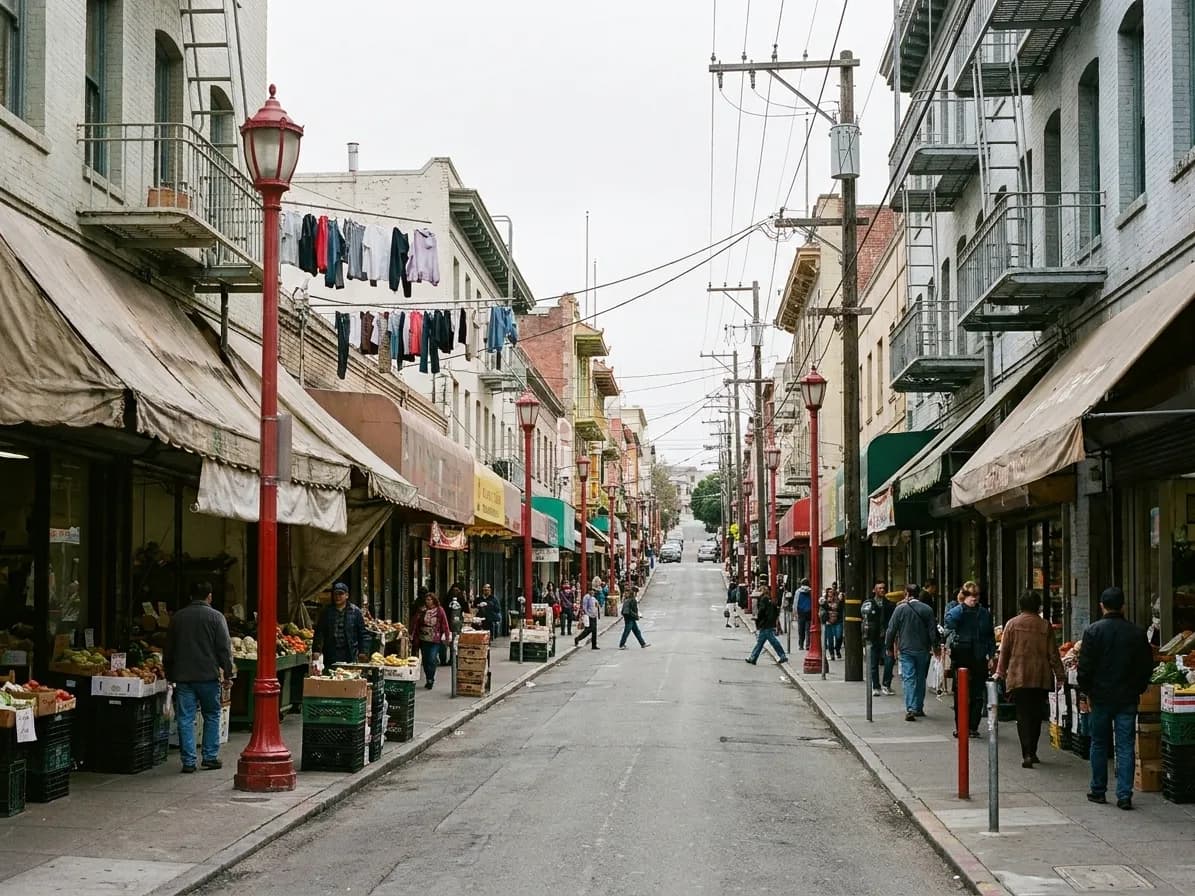
From the main commercial street, San Francisco's Chinatown reads as one continuous thing: lanterns, souvenir shops, restaurants with similar frontages. Walk two streets in any direction and it separates into distinct zones that serve completely different purposes and keep different hours. Eating well here is almost entirely a matter of being on the right block at the right time, and the blocks are close enough together that getting it right costs you a three-minute walk.
The difference between a great meal here and a forgettable one is usually two streets, not two hundred dollars. Tell Karpo what you want to eat and it will put you on the right block.
The main spine: convenience, not destination
The most-walked street through the neighbourhood is optimised for people passing through. Menus are longer, English is more prominent, prices are higher, and the food is calibrated for someone who will eat here once. None of that makes it bad — there are long-standing rooms on this street doing serious cooking — but it does mean the ratio of good to indifferent is lower than a block away.
Use this street for orientation and for the bakeries, which are genuinely good and cheap along its whole length. For a sit-down meal, treat it as the thing you walk along on the way to somewhere else.
The parallel commercial street: where the neighbourhood shops
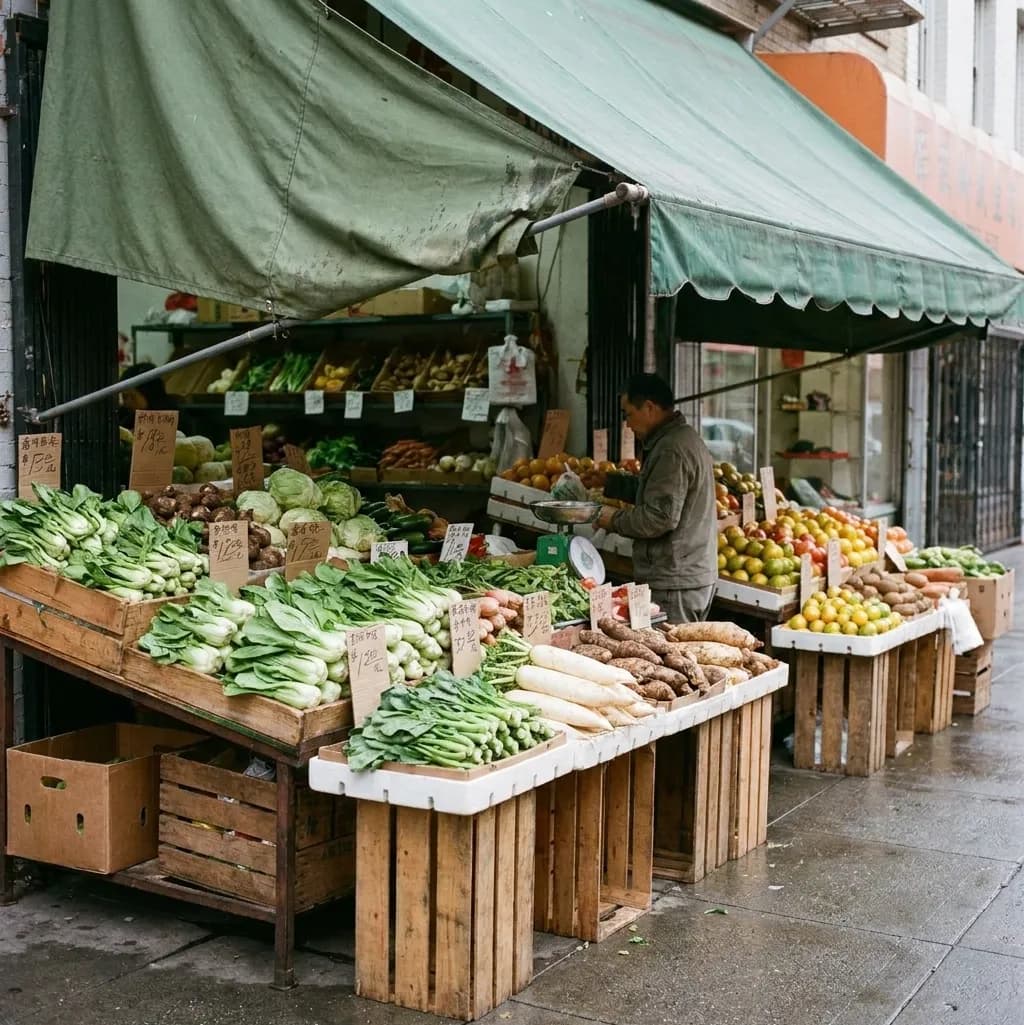
One street over is where the produce markets, butchers, fishmongers and grocery shops are, and where the neighbourhood does its own buying. This is the most interesting block in the district before about eleven in the morning: crates on the pavement, live seafood, whole roast meats hanging in windows, a genuine working market rhythm.
The restaurants here follow the same logic — they buy from the shops around them and they cook for people who know the difference. Barbecue and roast meat counters, noodle rooms and small dining rooms on this street are consistently the best value in the neighbourhood. Go before one in the afternoon, when everything is at its freshest and the queues are locals rather than visitors.
The alleys: the smallest and most specific rooms
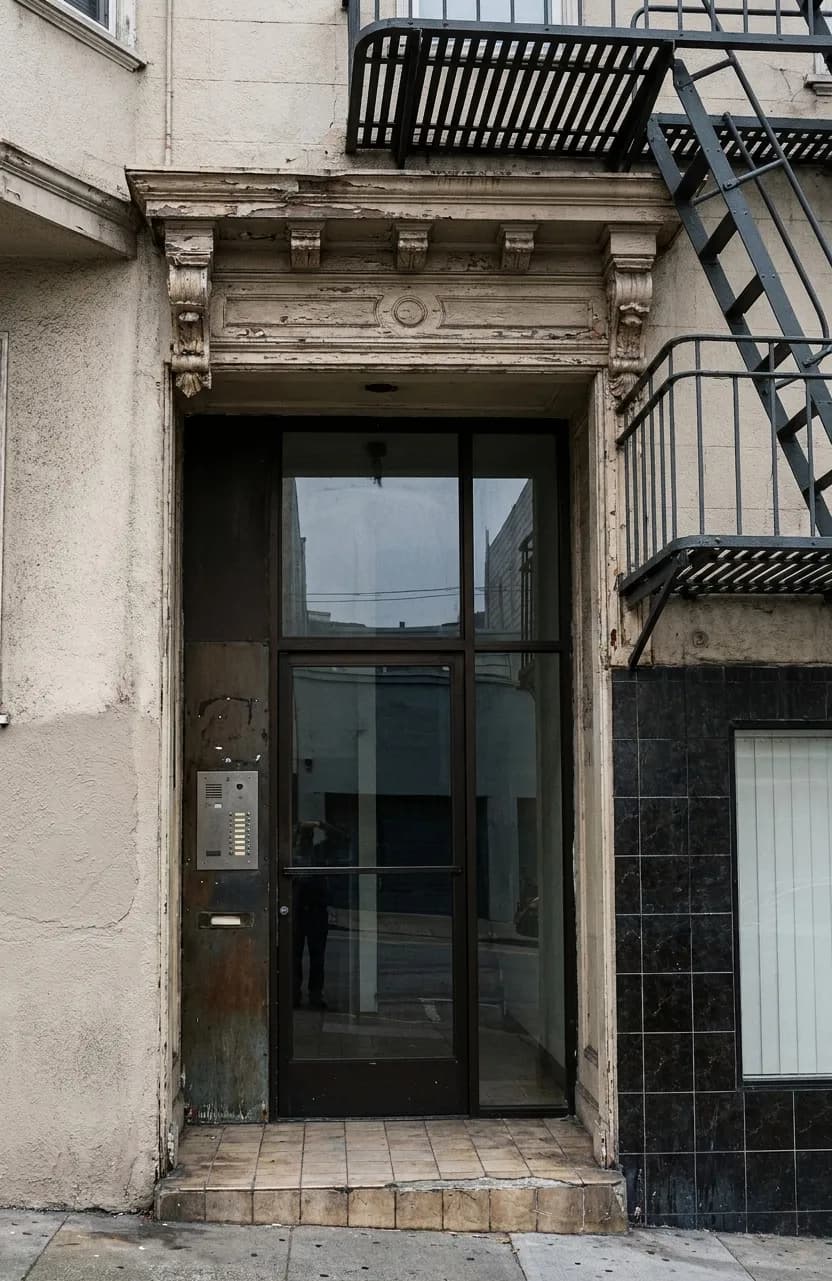
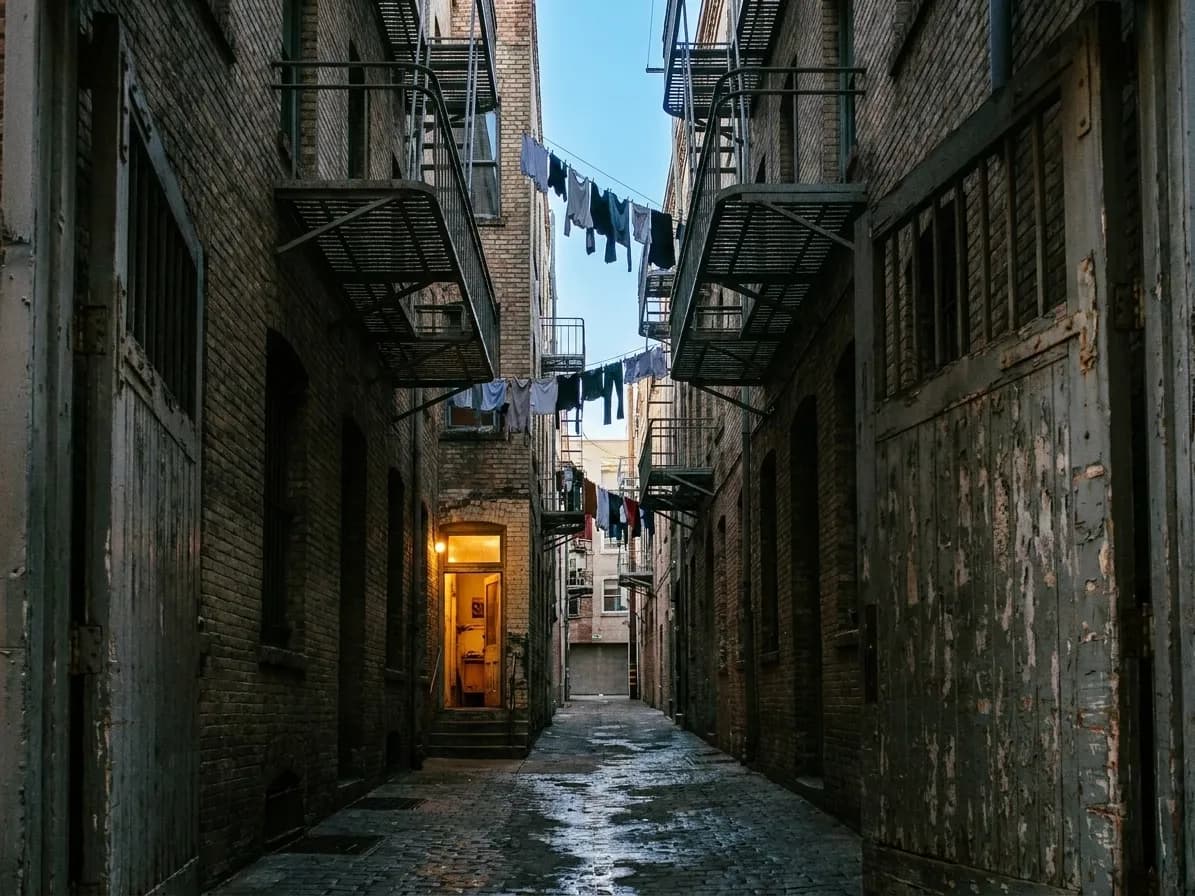
The lanes running between the main streets hold the neighbourhood's smallest operations — a dumpling counter with four seats, a tea room upstairs, a bar behind an unmarked door, a bakery selling one thing. These are easy to miss entirely because you would not walk down them without a reason, and they are where the neighbourhood is most itself.
Alley rooms keep the least predictable hours of anywhere in the district, and several close when they sell out. Treat them as opportunistic rather than as a plan: if you pass one that is open and busy, go in.
The uphill edge: where it becomes North Beach
The upper streets, where Chinatown shades into North Beach, are the quietest and the most residential, and the food changes character accordingly. Fewer restaurants, more everyday ones, less foot traffic, and the beginnings of the Italian-American food tradition that dominates the next neighbourhood. This is the right area for an evening meal rather than a daytime one.
It is also the natural end of a walk through the district, because it puts you within a couple of blocks of a completely different dinner. A morning in the market streets and an evening in the upper blocks is a very good way to spend a day on foot.
Timing the neighbourhood
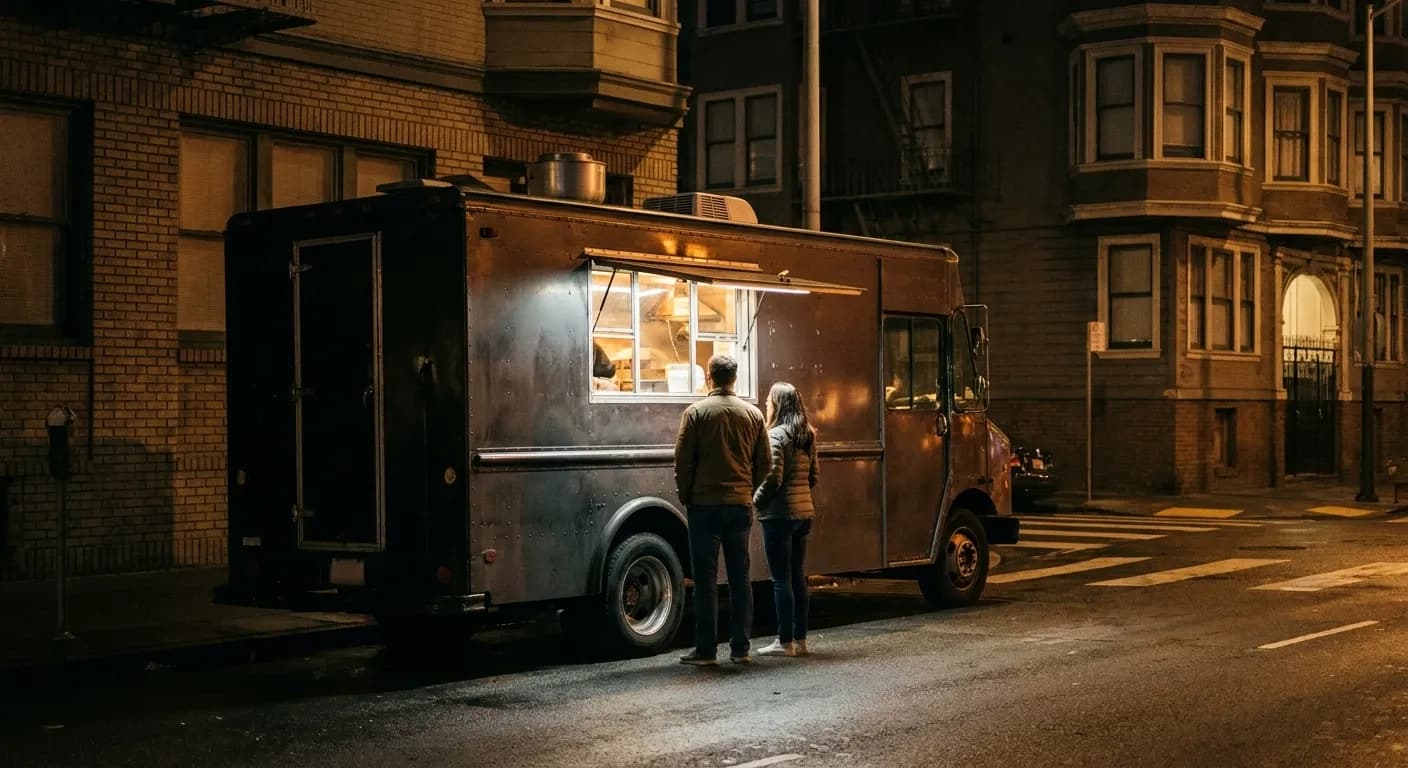
Chinatown is a morning and early-afternoon neighbourhood. The markets are best before eleven, the bakeries before they sell out, and much of the district closes earlier than the rest of San Francisco. Arriving at eight in the evening expecting the full experience is the most common mistake visitors make here.
Cash remains useful, hours vary by day and change without notice, and several of the best rooms close one weekday a week. Confirm before travelling for a specific place, and rely on the density of the blocks rather than on any single door.
A route that covers all four zones
The efficient version is a loop of about forty minutes on foot. Start at the downtown edge, walk up the market street while the crates are still out, cut through one of the alleys halfway along, rejoin the main spine for the bakeries, and finish on the upper streets where the neighbourhood shades into North Beach. That covers every zone once and never doubles back uphill.
Doing it in reverse works badly, because you arrive at the market street after it has wound down and you climb the steepest section at the end. If you only have an hour and want the most characteristic version of the neighbourhood, do the market street between nine and eleven and skip everything else.
Eating cheaply across the whole loop
The neighbourhood is one of the few places in San Francisco where ten dollars is still a real lunch. A plate of roast meat over rice from a counter, a bag of buns from a bakery, or a bowl of noodles from a small room all sit comfortably under that, and all three are better food than most of what the same money buys elsewhere in the city.
Assembling lunch from three counters as you walk is the most enjoyable way to do it and costs less than one sit-down meal. Buy one thing at each stop rather than a full portion, and eat as you go — this is a neighbourhood built for that rather than for lingering.
Tags: #SanFrancisco #SF #BayArea #NeighborhoodGuide #LocalGuide #ByTheBlock #Chinatown #SFEats #SFGuide #ExploreSF #SFLocal #SFWeekend #SFNights #SFFood
Sources consulted: sfchronicle.com · eater.com · sfstandard.com
All trademarks are the property of their respective owners.
Ask Karpo first
Karpo is a proactive AI assistant that lives in iMessage. Tell it the hour and the craving and it will pick the street.