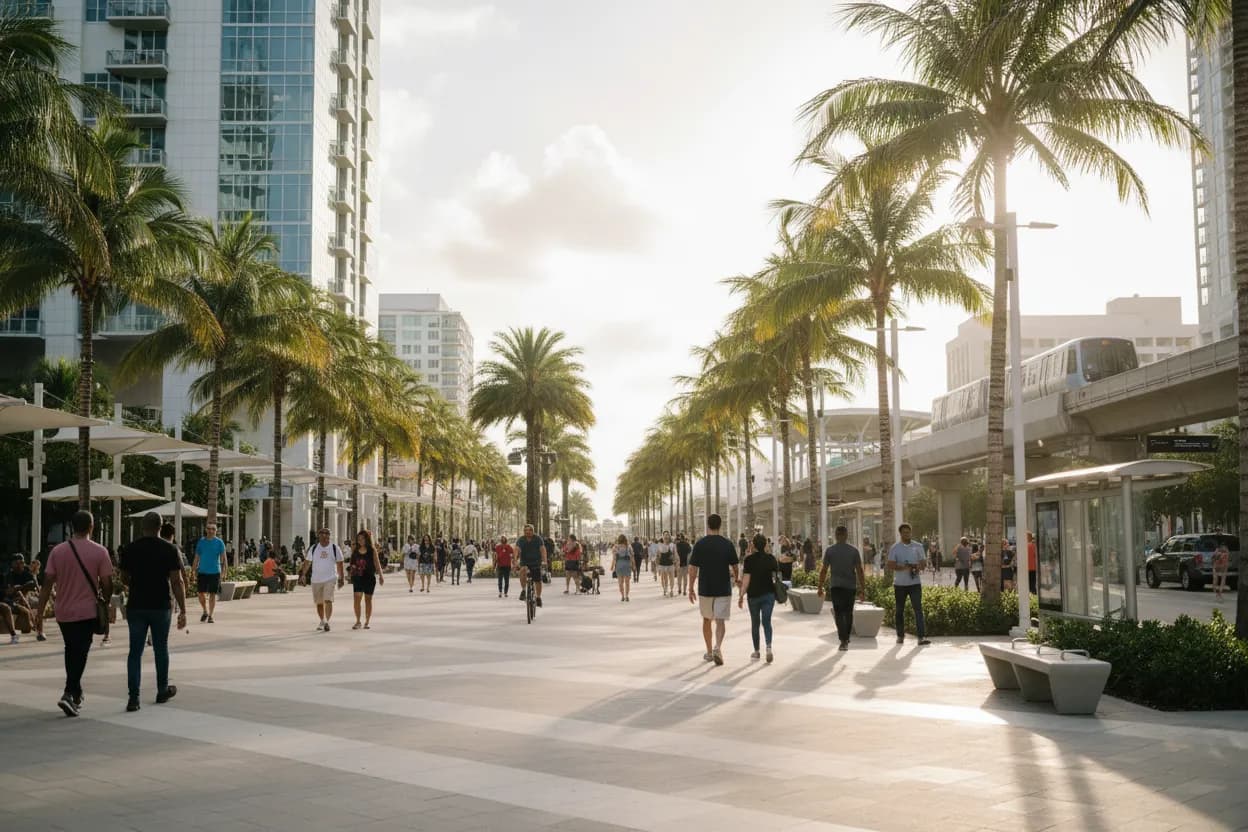
Miami rewards people who plan by neighborhood instead of by vague enthusiasm. The official city and visitor pages frame Greater Miami & Miami Beach as a destination of distinct areas, from South Beach and Downtown Miami to Wynwood, Little Havana, and the beaches. That matters if you found your way here by typing 7 brew app and want a real-world plan rather than a rumor. In Miami, the useful question is not whether a search term is trending; it is which district fits your errand, meal, or outing, how you will move between areas, and what you will do if transit, weather, or crowds make the first choice awkward. Build from the ground up and verify each step before you leave.
Want a calmer Miami plan before you leave home? Text Karpo and get a neighborhood-by-neighborhood check on transit, backups, and the official pages worth opening first.

Translate the headline into a neighborhood question
The phrase 7 brew app is only useful in Miami if it helps you ask a better question: which neighborhood are you actually trying to reach, and what is the public route there? The official Miami and Miami Beach site says each city and neighborhood has its own character, so a beach plan, an arts plan, and a downtown plan should not be treated as the same outing.
If you are chasing a simple yes-or-no answer, do not let a search term do the deciding for you. South Beach is one kind of day, Downtown Miami another, and Wynwood or Little Havana are different again. Use the headline as a reminder to verify the place, then choose the neighborhood that matches the task.
Choose the area by the actual task
For a beach-first visit, the official site points you toward Miami’s beaches and South Beach’s white-sand shoreline. For culture, it highlights arts and culture across Greater Miami, including museums, galleries, Wynwood Walls, live music, theater, dance, and festivals year-round. For a local-food-and-history day, Little Havana and Calle Ocho are the more natural starting points.
August is not a blank slate on the official calendar. Miami Beach and the broader destination pages highlight Miami Spa Months, Miami Spice, and August Events, but those are listings to verify rather than guarantees to build around blindly. If you want dinner, a spa slot, or a daytime attraction, check the current page for the neighborhood first, then decide whether the trip still makes sense.
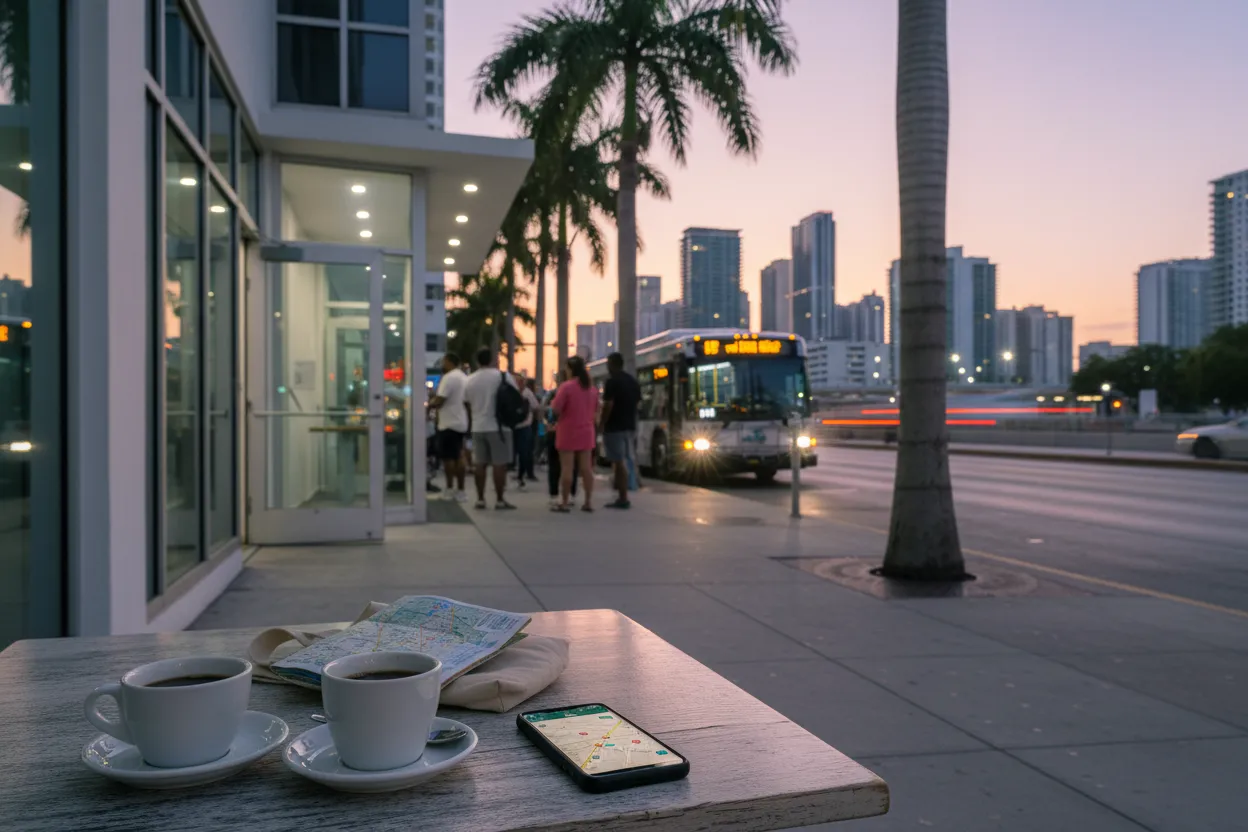
Use transit exits as planning anchors
Miami-Dade Transit says to read service updates, rider alerts, plan your route, and track buses and trains in real time. The GO Connect app can plan trips, track rides, and purchase a mobile pass, while the county also posts elevator and escalator status for access checks. That is the practical layer that keeps a city plan from collapsing on the platform.
One current note matters if your route depends on Metromover: the county says that on Saturday, Aug. 15, Metromover service will begin operating at 2 p.m. while upgrades continue. If you are crossing downtown that day, verify the alert before you commit. If your plan involves the airport, the county says the Orange Line serves the Miami International Airport station for $2.25 each way.
Add one indoor and one outdoor backup
A good Miami plan has a weather-safe pivot. For an indoor backup, use the official arts-and-culture lane: museums, galleries, Wynwood Walls, live music, theater, dance, or a festival listing that still makes sense once you check the current page. That kind of backup helps when you do not want your whole day to depend on sun, parking, or a crowded beach entrance.
For an outdoor backup, keep a public waterfront option in reserve. The official pages and webcams point to places such as South Beach, Bayfront Park, and other open-air anchors across the city. If your first choice feels too dense, too hot, or too slow, move to a simpler outdoor stop rather than forcing the original plan to work.
Avoid treating online attention as a local promise
A hot search does not create a Miami partnership, appearance, or opening. If you are using 7 brew app as your entry point, treat it as a browsing habit, not proof that a place is in your neighborhood, affiliated with a Miami venue, or ready to serve your exact plan. The city pages are good for context; they are not a substitute for the business’s own official information.
That skeptical habit saves time. It keeps you from crossing the city on the basis of hype, and it keeps you from assuming an event, special, or local tie-in that was never confirmed on the official page. In a city with so many neighborhoods, the disciplined move is to verify before you go.

Verify conditions before crossing the city
Right before you leave, open the county’s trip planner, service updates, transit tracker, and rider alerts. If the trip requires accessibility support, check accessible transit services and the elevator and escalator status rather than assuming the station layout will cooperate. If you are traveling from one neighborhood to another, that five-minute check can save a whole hour.
Then confirm the destination itself on the official Miami and Miami Beach site. Look at the neighborhood page, the current events listing, and the live webcams if you want a quick read on the public scene. The safest city plan is still a simple one: pick the neighborhood, pick the line, pick the backup, and verify every piece the day you travel.
Tags: #AskKarpo #BeforeYouGo #Miami #MiamiBeach #SouthBeach #DowntownMiami #Wynwood #LittleHavana #TransitTips #NeighborhoodGuides #AccessibleTravel #MiamiDadeTransit #CityPlanning #VerifyBeforeYouGo
Sources consulted: miamiandbeaches.com · miamidade.gov · miamidade.gov
All trademarks are the property of their respective owners.
Ask Karpo first
Ask Karpo first if you want a Miami plan that starts with the neighborhood, not the headline. I can help you verify the transit line, backup stop, and official page to check before you cross town.