Culture / Collection
The Joyce Is the Benchmark. Queens Is the Afternoon.
 Marcus Hale
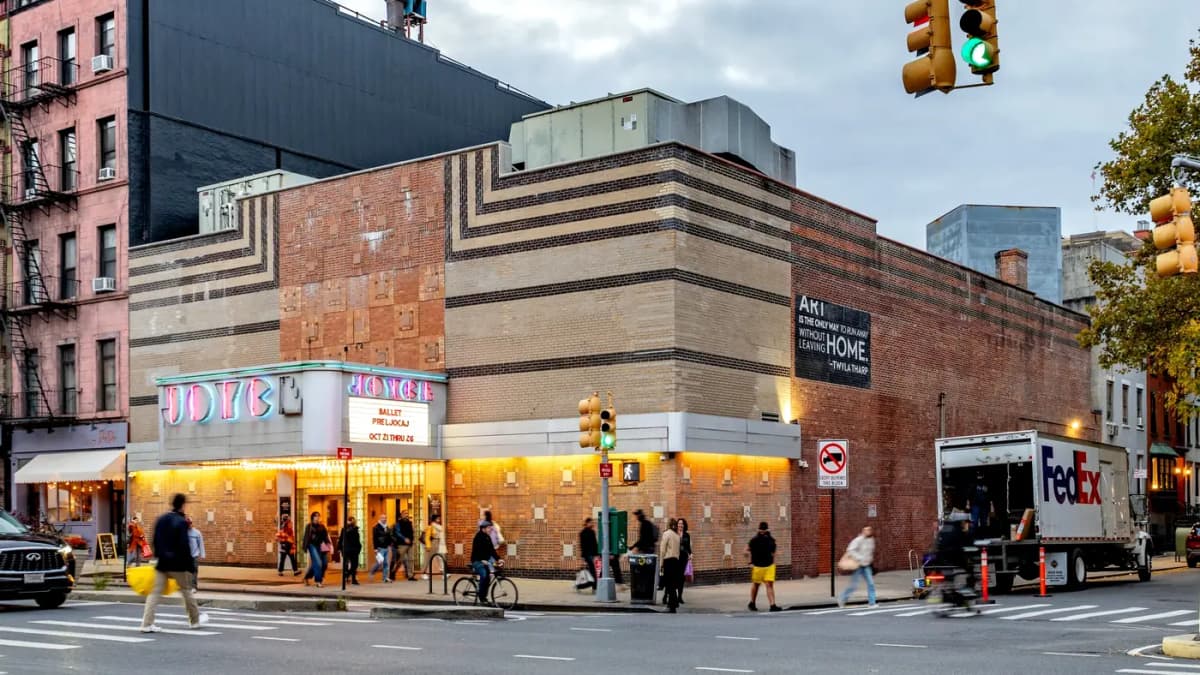
Real photo: The Joyce Theater on Eighth Avenue, Chelsea. Photo: ajay_suresh / Wikimedia Commons, CC BY 4.0.
The Joyce is the right room when the question is dance. Queens is the right afternoon when the question is space, art, and staying in the borough.
Do not swap one for the other.
That is the useful correction here. A reader asking for contemporary dance is not asking for a museum with good programming. A reader asking for a Queens culture plan is not necessarily asking to cross into Chelsea at curtain time. The job is to sort the ask before the recommendation starts doing damage.
Start With The Ask
There are three different readers hiding inside this page.
One wants dance specificity: a company name, a choreographer, a program title, a curtain time, a seat that does not punish the first-timer, and enough context to know whether they will be lost by minute ten.
One wants a Queens art afternoon: a room to move through, a current exhibition, a little civic scale, and a plan that does not depend on getting a theater ticket.
One wants the easiest honest answer: whether The Joyce can be used as a standard without turning Queens Museum or MoMA PS1 into something they are not.
The answer is yes. Use The Joyce as the measuring stick. Then let Queens be Queens.
If You Need Dance, Cross To The Joyce
The Joyce sits at 175 Eighth Avenue in Chelsea, close enough to the subway that the decision is not about geography. It is about intent.
On the date of this article, The Joyce calendar is concrete: Mark Morris Dance Group is there from July 14 to July 25, 2026, with three programs under Dances to American Music. That is what a dance recommendation should look like before it asks for someone's evening. Company, program, dates, ticket path, curtain time. No mist.
The first-timer test is simple:
• Can the reader tell what kind of movement they are buying a ticket for?
• Can they find the date and program without decoding a festival grid?
• Can they buy a full-view seat without turning the night into a splurge?
• Can they leave knowing they saw dance, not just "culture"?
The Joyce passes that test because the room is built around dance as the main event. Individual tickets currently start at USD 17 for partial-view seats and USD 27 for full-view seats before required fees. That price floor matters. It lets a curious reader enter the room without pretending they are already fluent.
The seat truth: for a first dance night, the cheaper seat is not always the smarter seat. A partial view can be fine if you already know the company, or if the price is the only reason you are going. For a first-timer, buy the clearest full-view seat you can afford. Sightlines are not a luxury in dance. They are the text.
What The Joyce Teaches You To Ask
The Joyce is useful even when the final recommendation stays in Queens, because it exposes the questions a vague culture page usually skips.
Ask for program notes. Not an academic essay, just enough scaffolding for the body onstage. A good dance night gives the reader something to hold before the lights go down.
Ask for length. Ninety minutes of dance and two hours of gallery wandering are different forms of attention. They should not be sold with the same sentence.
Ask for seating. A museum can absorb wandering. A theater cannot. Late arrival, obstructed view, and the wrong balcony decision change the work.
Ask whether the piece welcomes first-timers. Not every work has to. But the page should say who it is for.
Ask whether there is actually a performance. This sounds obvious until a Queens page tries to make an art institution carry a dance promise it never made.
Crowds are a curatorial choice. So is clarity.
If You Want Contemporary Art, Use PS1 As The Tight 90
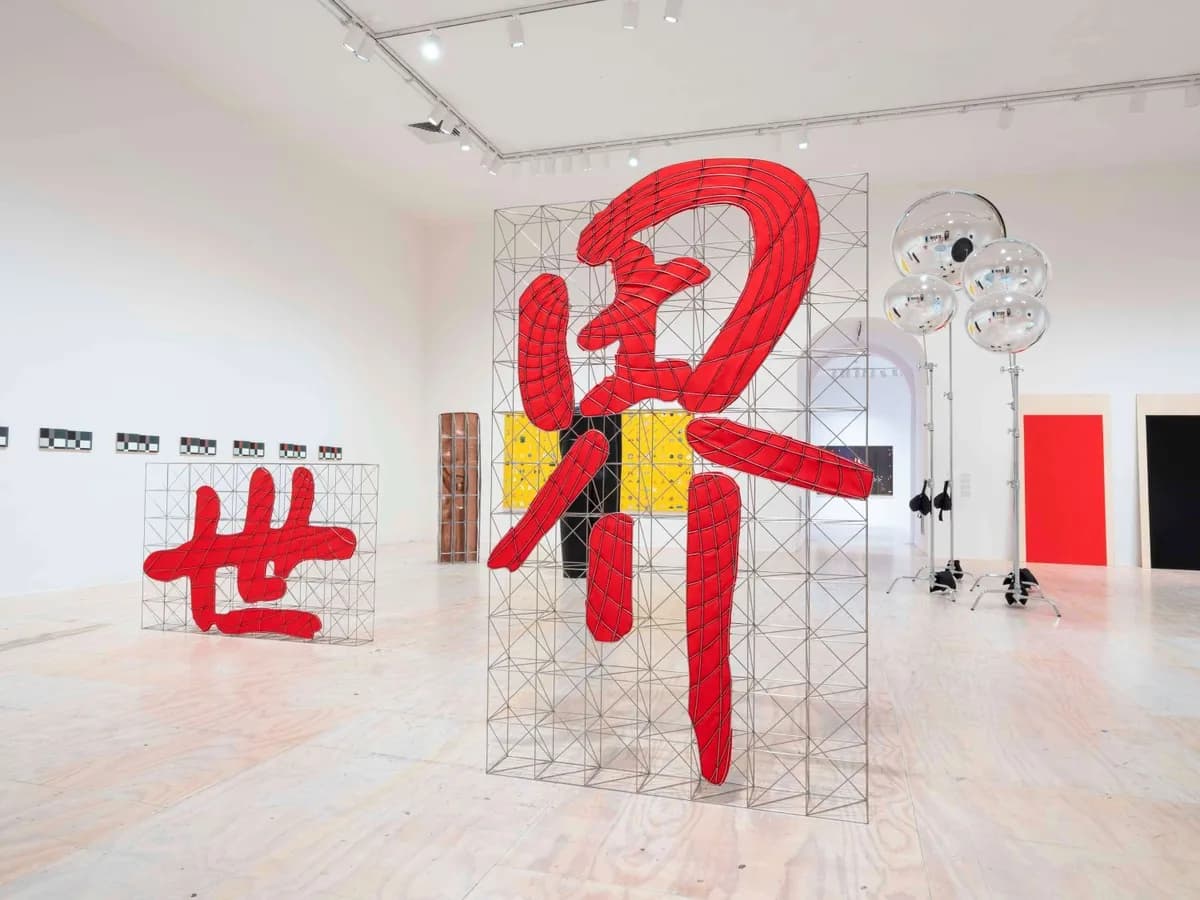
Real photo: installation view of Greater New York 2026 at MoMA PS1. Image courtesy MoMA PS1; photo by Kris Graves.
MoMA PS1 is the stronger Queens answer when the reader wants contemporary art with a sharper present-tense edge. It is in Long Island City at 22-25 Jackson Avenue, and currently opens Thursday through Monday, with Saturday starting earlier than the other public days.
The useful 90-minute version is not complicated.
Start with the current exhibition that made you choose PS1 in the first place. If that is Greater New York 2026, treat it as a city-temperature reading, not a checklist. Give the first thirty minutes to the room that slows you down. Give the next forty-five to one more floor, not three. Spend the last fifteen deciding whether you have enough attention left for the courtyard or whether the room has already done its job.
PS1 is not The Joyce. That is the point. It is better when the reader wants contemporary art, city friction, and a room where the work can sprawl. It is weaker when the reader wants a named dance program and a curtain time.
Ticket truth: MoMA PS1 is free for New Yorkers, with adult general admission at USD 15 for visitors outside that bucket. That makes it a strong low-friction Queens plan, especially when the reader is not ready to commit to a fixed performance slot.
Save the best room for last only if you know the exhibition. If you do not, reverse the rule: let the first room tell you whether this is a full visit or a clean ninety.
If You Want Queens Space, Use Queens Museum As The Half-Day
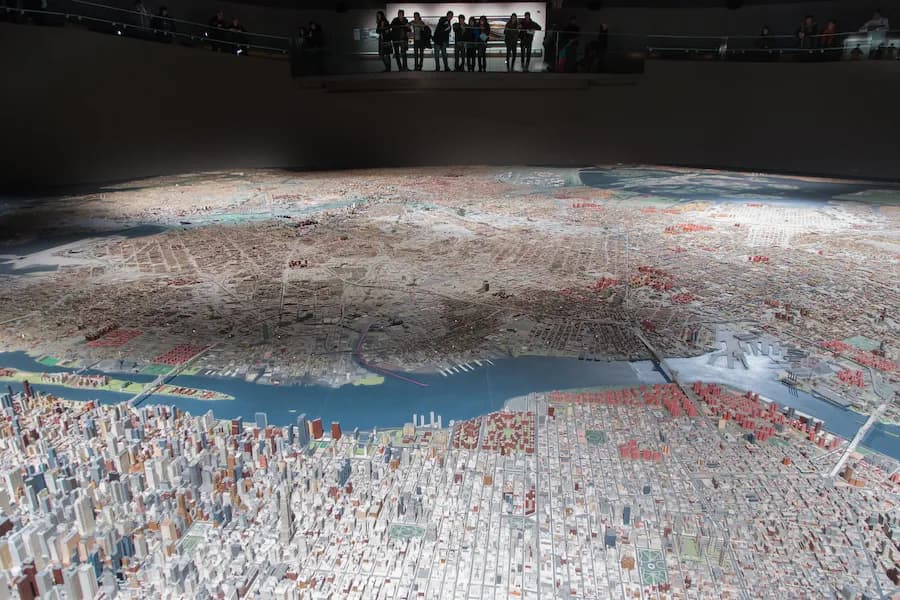
Real photo: The Panorama of the City of New York at Queens Museum. Photo: Scott Rudd / Queens Museum.
Queens Museum is the more generous Queens answer. It sits inside Flushing Meadows Corona Park, and the trip already feels different before the first wall label. The approach has park air, families, soccer fields, the Unisphere, and the sense that the museum is part of a civic landscape rather than a stand-alone art stop.
The half-day version should be honest:
Start with one current exhibition. Do not make the reader "cover" the museum. Then give The Panorama of the City of New York the time it deserves. The 9,335-square-foot model was built for the 1964-65 World's Fair, with 895,000 buildings and the five boroughs gathered into one room. That is not a side attraction. That is the room.
If you are bringing someone who thinks museums are homework, start with the Panorama. If you are bringing someone who already likes exhibition rooms, save it for last. The scale works either way. It just changes the emotional order of the afternoon.
Admission is the cleanest part: Queens Museum currently keeps entry always free. Hours are tighter than PS1, with public hours Wednesday through Sunday and closures on Monday and Tuesday. Check the day before you send someone across Queens. A free museum can still waste a trip if the calendar is wrong.
This is the Queens recommendation when the reader wants space, municipal memory, and a plan that can spill into the park. It is not the Queens answer when the reader asked for dance.
The Decision Line
Use this rule and the page gets stronger immediately.
Go to The Joyce when the ask is dance-first. The reader wants a performance, not a cultural substitute. Name the company. Name the program. Say the date. Say the ticket reality. If the seat matters, say the seat matters.
Go to MoMA PS1 when the ask is contemporary-art-first. The reader wants present-tense rooms, Long Island City access, and a 90-minute plan that does not require theater etiquette.
Go to Queens Museum when the ask is Queens-afternoon-first. The reader wants scale, free admission, park adjacency, and a room that makes New York legible from above.
Wait for a verified Queens performance when the ask is specifically dance in Queens. That is the only clean option. A misplaced recommendation is not generous. It is lazy.
Reality Check
The Joyce is not a borough-neutral recommendation. It is Chelsea. If the page is supposed to serve Queens, say why the crossing is worth it.
PS1 is not a dance venue just because it is experimental. Do not borrow dance language unless the program actually has dance.
Queens Museum is not a consolation prize. It is a different assignment: civic scale, free entry, and a room that rewards slow looking.
The cleanest version of this article is not "Queens has its own Joyce." It does not. The cleanest version is this: The Joyce tells you what a serious dance recommendation must answer. Queens Museum and MoMA PS1 tell you what a Queens culture afternoon can be when you stop forcing the wrong category onto it.
Save the best room for last. But first, pick the right building.
Places in this guide


3 places