
A Colonial African Burial Ground You Can Visit for Free
Two halves a block apart, a free museum in a federal building and a granite memorial at Duane Street, steps from City Hall.
🕯️ What 1991 Uncovered
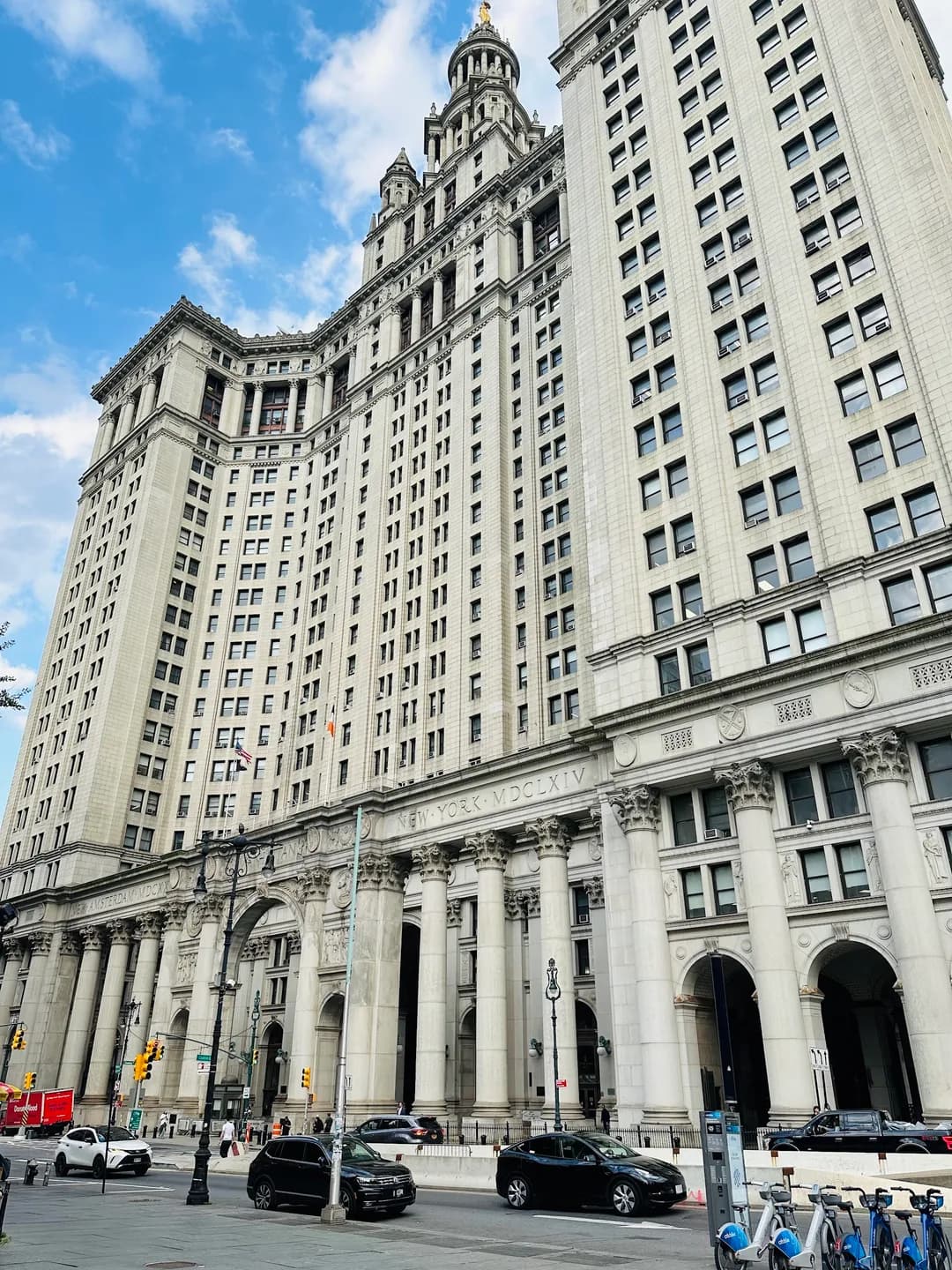
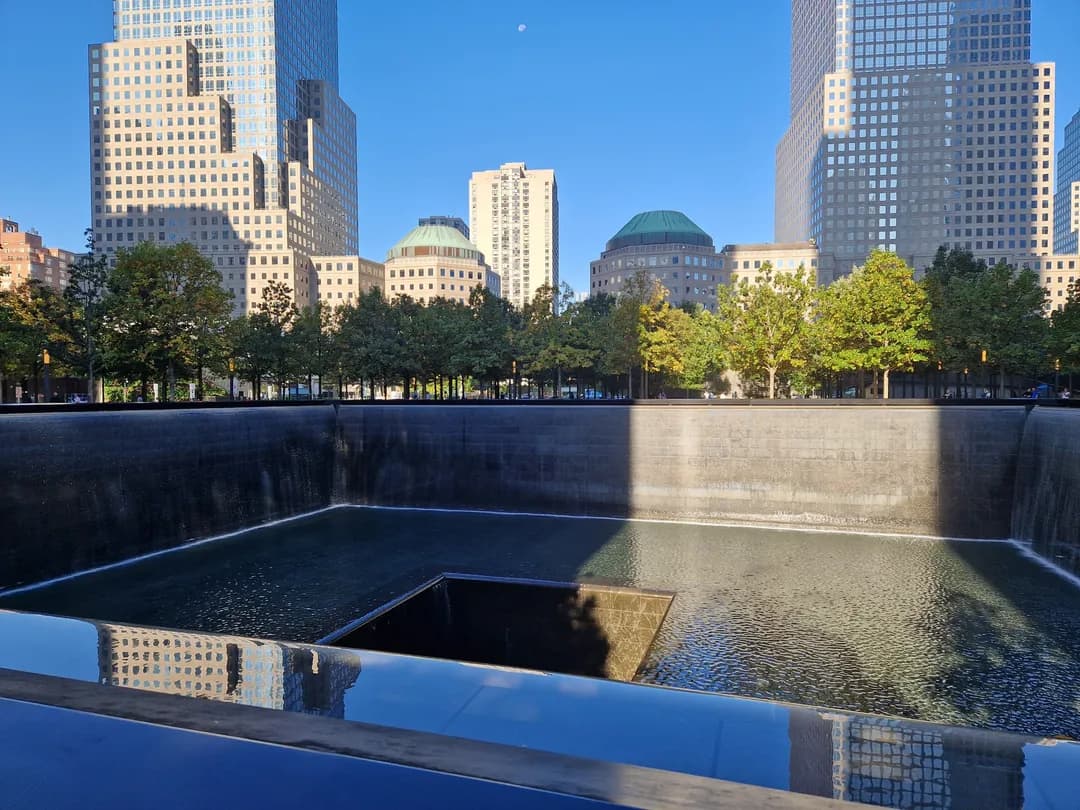
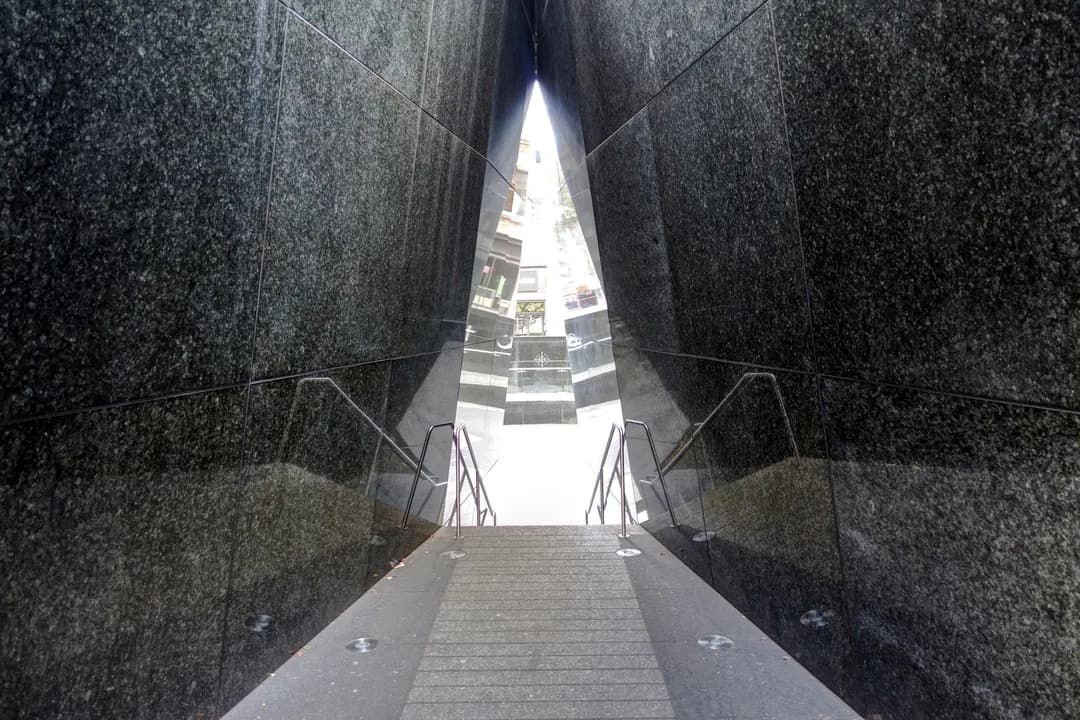
Enslaved and free Africans were buried here from the middle 1630s to 1795, an estimated 15,000 people in a six-acre ground outside the colonial city. In 1991, crews digging the foundation of a 34-story federal tower at 290 Broadway found intact remains 30 feet below street level. Archaeologists established the largest colonial African burial ground rediscovered in the United States. 419 individuals came back to this ground in 2003, each in a hand-carved coffin lowered into seven crypts under seven mounds. Rodney Leon's memorial, completed in 2007, marks the place: a polished granite wall facing Duane Street, a ramp that drops four feet below the street, and the Ancestral Chamber, open to the sky.
🧭 Planning the Visit
Two parts, one block apart. The visitor center sits on the first floor of the Ted Weiss Federal Building at 290 Broadway. The outdoor memorial is at Duane Street and African Burial Ground Way. Google Maps points only to the memorial; enter the Broadway address for the exhibits. Expect airport-style screening at 290 Broadway, sometimes shoes off and photo ID out. Inside are four exhibit areas on archeology, colonial enslavement and civic engagement, a 20-minute park film, a 40-seat theatre, restrooms and a bookstore. Both halves are free and open Wednesday to Sunday, 10 a.m. to 4 p.m., closed Thanksgiving, Christmas and New Year's Day. The memorial stays open through winter, weather permitting. Walk in without a booking and rangers answer questions. Ranger-led tours last 90 minutes and are for groups of 10 or more, booked on recreation.gov at least two weeks ahead.