 Where to Eat Near Penn Station That Isn't a Chain
US Open 2026
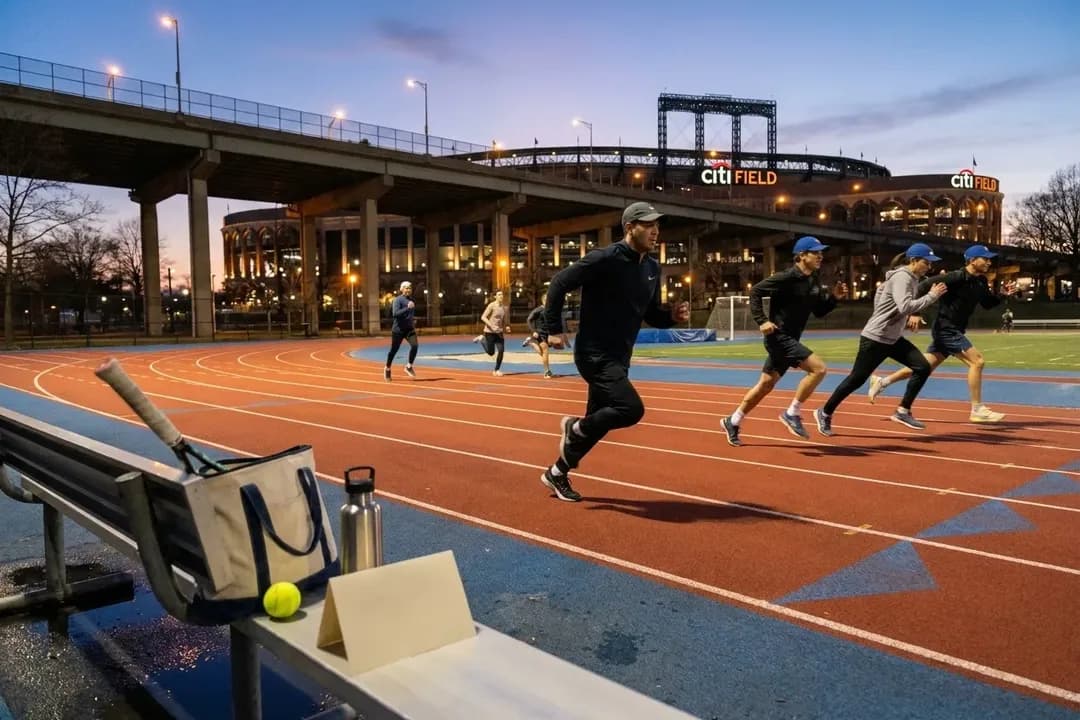
Zay Flowers Speed Training Tracks Near US Open Venue
A practical guide to public running tracks, sprint training zones, and cross-training spaces near the Billie Jean King National Tennis Center for athletes and fitness enthusiasts…
Zay Flowers' reputation for explosive speed and dedicated sprint work has made him a reference point for athletes focused on acceleration training—and if you're planning to keep up your own running routine while attending the 2026 US Open in Queens, you'll want to know where the public tracks and open training spaces are near Flushing Meadows Corona Park. The tournament runs from late August into early September, and the Billie Jean King National Tennis Center sits inside one of New York City's largest parks, surrounded by miles of paths, fields, and dedicated athletic facilities. Whether you're cross-training between matches, warming up before a morning session, or simply maintaining your fitness routine while traveling, the 7 train corridor offers a surprising number of public running tracks, open turf areas, and sprint-friendly straightaways within walking distance of the tennis grounds.
Text Karpo with your US Open session time and Queens starting point, and we’ll turn this Public running tracks and sprint training areas in Flushing for athletes cross-training during tournament week into a practical local plan.
Flushing Meadows Corona Park running paths and track access
Flushing Meadows Corona Park spans more than 890 acres and contains multiple running loops, paved paths, and open fields suitable for sprint intervals and agility drills. The park's perimeter loop is roughly 3.5 miles and takes you past the Unisphere, the Queens Museum, Citi Field, and the US Open grounds themselves. Early mornings before the tournament gates open—typically around 10 or 11 a.m. depending on the schedule—are the quietest times for uninterrupted running. The park's official page on the NYC Parks website lists amenities, field permits, and seasonal maintenance schedules, so check close to your visit for any closures or events that might affect access to specific zones.
The park also includes the Flushing Meadows Corona Park Track & Field, a public facility with a regulation 400-meter track that's open to the public during designated hours. It's located on the park's eastern side, a short walk from the Mets–Willets Point station on the 7 train. The track is popular with local high school teams, club runners, and individual athletes, so expect company during weekday afternoons and weekend mornings. If you're planning sprint repeats or tempo work, aim for early morning or late afternoon slots when the track is less crowded. Always confirm current access policies and hours through NYC Parks before heading out, as track availability can shift during school seasons and special events.
Sprint training zones and open turf near the tennis center
If you prefer grass or open turf for plyometric drills, cone work, or acceleration sprints, the park's Great Lawn and the fields near the Hall of Science offer flat, open spaces suitable for short bursts and agility training. These areas are not marked or measured, so bring your own cones or markers if you're working on specific distances. The turf quality varies by season—late August can be dry and firm, which is ideal for speed work but harder on joints than a rubberized track. Bring your own water and plan for limited shade; the park's tree cover is generous along paths but sparse in the open field zones.
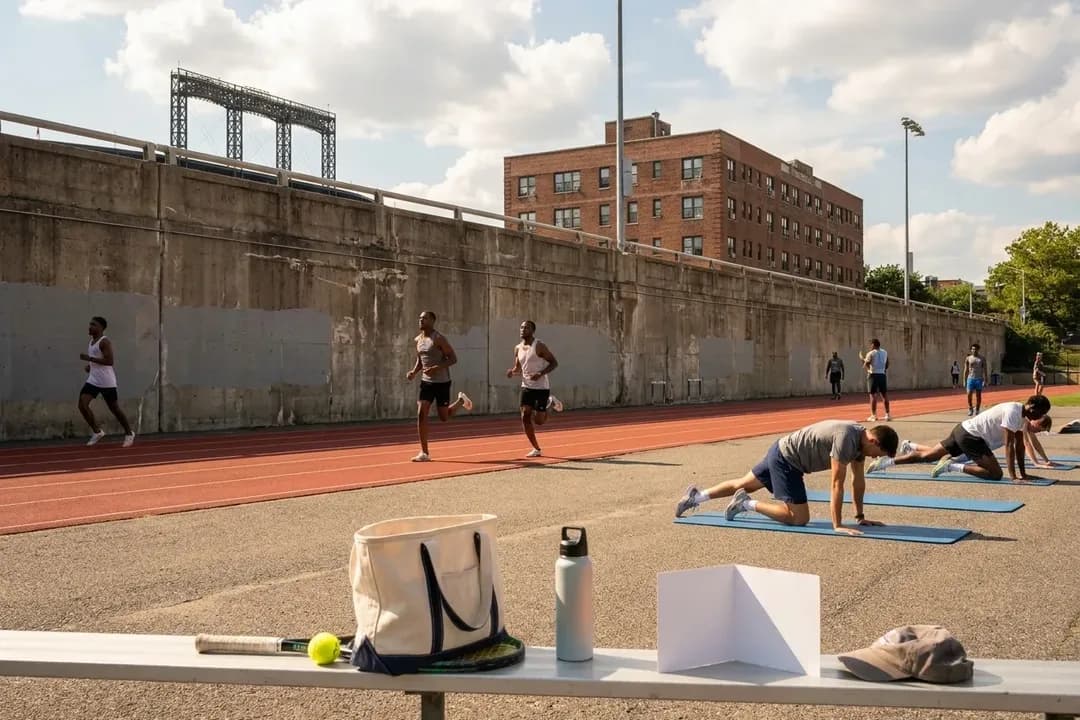
During US Open week, the park sees increased foot traffic, especially near the tennis center and along the main pedestrian routes from the 7 train. If you're training in the morning, you'll share the paths with local joggers, dog walkers, and early-arriving tournament staff. By midday, the crowds thicken considerably, so plan your workout window accordingly. The park's northern and eastern edges tend to be quieter than the central zones near the Unisphere and the museum complex.
7 train corridor fitness stops: Jackson Heights to Flushing
If you're staying along the 7 train corridor—Jackson Heights, Woodside, Corona, or Flushing—you'll find additional public track and running options within a short subway ride of the US Open venue. The Jackson Heights athletic fields near 78th Street and Northern Boulevard include a public track that's open during daylight hours, though it's often busy with youth leagues and community programs. Corona Park's western edge, accessible from the 111th Street or Junction Boulevard stops, offers quieter paths and smaller loops if you want to avoid the main tourist flow around the Unisphere.
Flushing itself has several smaller parks and schoolyard tracks that open to the public outside of school hours. Kissena Park, a short bus ride or bike trip from downtown Flushing, features a paved loop around Kissena Lake and wooded trails suitable for tempo runs and longer aerobic sessions. The park is less crowded than Flushing Meadows and offers a more secluded training environment if you're looking to escape the tournament buzz. Check the NYC Parks website for current conditions and any permit requirements for organized group training.
Cross-training logistics: gear, hydration, and timing
If you're planning to train before or after attending US Open sessions, pack your running gear in a small backpack or gym bag. The US Open's prohibited-items policy, detailed on the official usopen.org visitor guide, restricts large bags and certain items, so review the list before you pack. Lockers and bag check are not always available, and re-entry policies vary by ticket type, so plan to complete your workout before entering the grounds or after you've left for the day.
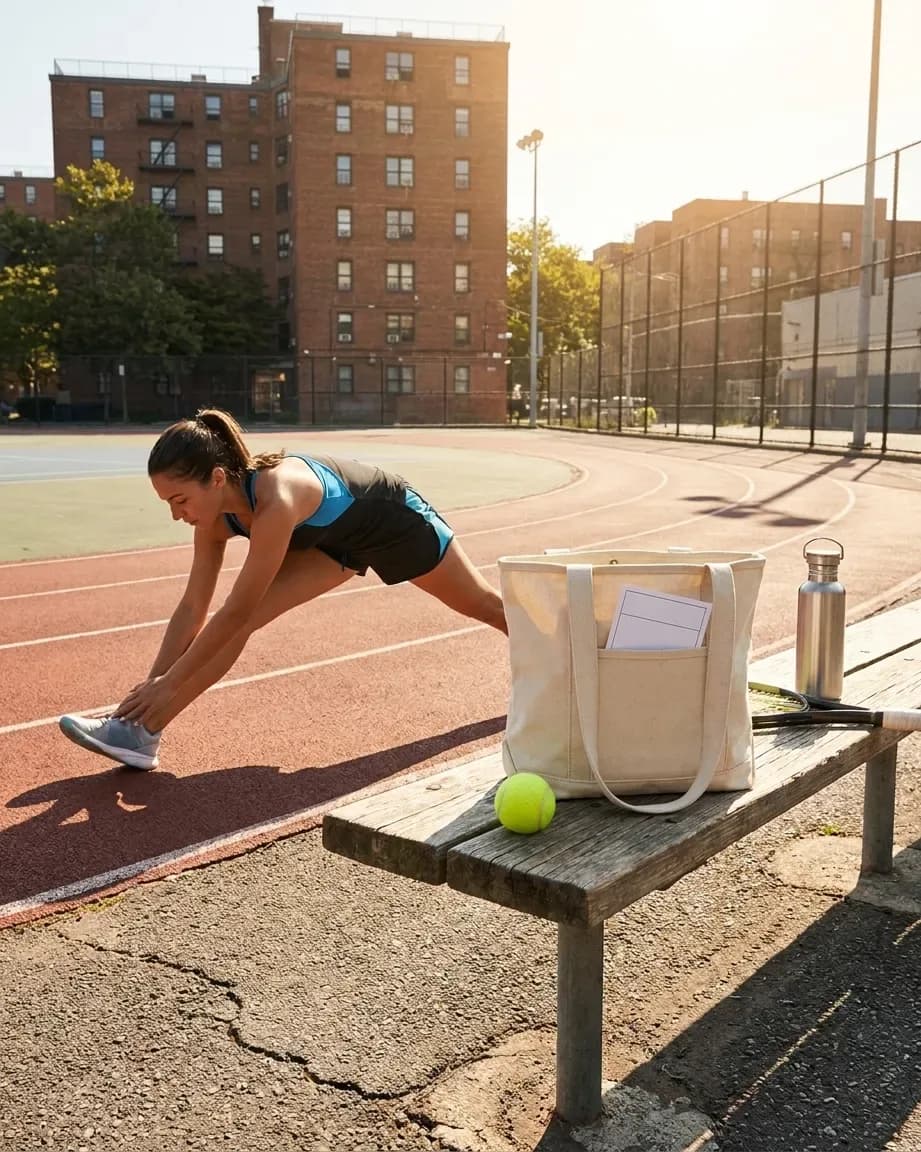
Hydration is critical during late-summer training in New York. Public water fountains are available throughout Flushing Meadows Corona Park, but they're not always conveniently located near the track or open fields. Carry your own water bottle and plan for refills at park facilities or nearby delis and cafes along Roosevelt Avenue or Main Street in Flushing. If you're training in the afternoon, factor in heat and humidity—Queens in late August can be warm and sticky, so adjust your intensity and volume accordingly.
Post-workout recovery and fueling in Queens
After a morning track session or sprint workout, the neighborhoods along the 7 train offer a wide range of fueling options. Flushing's downtown core is packed with bakeries, juice bars, and casual restaurants serving everything from dumplings to smoothie bowls. Jackson Heights and Corona have their own dense clusters of delis, taquerias, and cafes where you can grab a quick post-run meal before heading to the tennis center. Many spots are cash-friendly and fast, ideal for athletes on a tight schedule between training and tournament sessions.
If you're staying near Long Island City or Astoria, both neighborhoods have fitness-focused cafes and juice spots that cater to the local running and cycling communities. These areas are a bit farther from the US Open venue but offer quieter, more residential training routes along the East River waterfront and Astoria Park, which also features a public track and pool complex. The 7 train connects all these neighborhoods efficiently, making it easy to mix training, sightseeing, and tournament attendance into a single day.
Practical notes for athletes training during US Open week
- Check NYC Parks and the official US Open transportation guide for any temporary path closures or restricted zones during tournament week.
- Arrive at public tracks early in the morning or late afternoon to avoid peak youth league and school team hours.
- Bring your own cones, markers, and timing tools if you're doing structured sprint or agility work on open turf.
- Pack light if you plan to attend US Open sessions after training—review the prohibited-items list on usopen.org before you go.
- Carry your own water and snacks; park concessions and nearby delis are available but not always convenient mid-workout.
- Confirm current track access policies and hours through NYC Parks close to your visit, as schedules shift seasonally.
- Plan your training window around tournament session times and 7 train service patterns to avoid the heaviest crowds.
- Consider Kissena Park or Astoria Park for quieter, less tourist-heavy running environments if Flushing Meadows feels too busy.
Connecting speed training culture to Queens public spaces
The conversation around athletes like Zay Flowers and their commitment to speed development highlights the value of accessible, high-quality training environments—and Queens offers exactly that for visitors willing to explore beyond the tennis center gates. Flushing Meadows Corona Park and the surrounding neighborhoods provide a practical, no-cost infrastructure for maintaining your fitness routine while traveling, whether you're a competitive runner, a recreational athlete, or simply someone who prefers to start the day with a hard workout before settling in for hours of live tennis. The park's scale, the 7 train's reach, and the borough's density of public athletic facilities make Queens an unexpectedly strong destination for cross-training during major events.
By planning your training sessions around the US Open schedule, checking official sources for current access and transit details, and packing appropriately for New York's late-summer conditions, you can build a visit that balances world-class tennis with serious athletic work. The tracks, paths, and open fields are there—you just need to know where to look and when to show up.
Tags: #USOpen2026 #Queens #FlushingMeadows #KarpoFinds #Karpo #zayflowers #NewYorkLocal #TennisTravel #NYCLocalLife #TennisTravel
Sources consulted: usopen.org — Official event schedule · usopen.org — Official visitor A-Z guide · usopen.org — Official transportation directions · usopen.org — Official prohibited-items guide · MTA — Official US Open transit guide · NYC Parks — Flushing Meadows Corona Park · New York Mets — Citi Field · NYC Tourism — Queens
All trademarks are the property of their respective owners.
Ask Karpo first
Want to know what is actually open, how to time the trip, and where to pause around Queens? Ask Karpo for the latest public US Open context, a respectful visitor plan, and a live route around Flushing Meadows before you head out.
Ask Karpo for more information.
Keep reading
- Where to Eat Near Penn Station That Isn't a Chain
 Andytown Coffee in the Outer Sunset: The Snowy Plover Explained
- Best Things to Do in Chicago: What the City Gives Away