 Andytown Coffee in the Outer Sunset: The Snowy Plover Explained
US Open 2026
Best Things to Do in Chicago: What the City Gives Away
Chicago hands out an unusual amount of its best days out for nothing. But the free tier runs on two different systems, and only one of them works for everybody.
Most lists of the best things to do in Chicago are sorted by fame. Chicago rewards sorting by calendar instead. An unusual share of this city's best days out cost nothing at all — but the free tier splits into two systems that behave completely differently, and mixing them up is how people end up paying full adult admission at a museum desk on a Tuesday afternoon when the same building was free the night before.
Ask Karpo what's free in Chicago on the day you actually have off, and what you need to bring with you to get in.
The tier that asks nothing of you
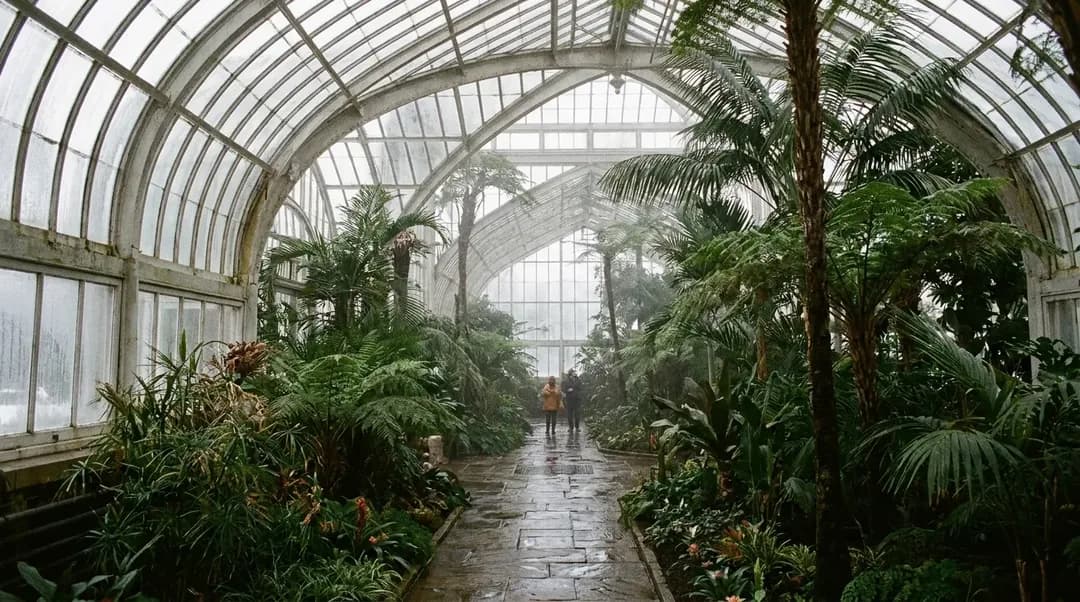
A handful of Chicago's headline attractions are simply free, to anyone, on any day, with no ticket and no conditions. Lincoln Park Zoo is the clearest case — the city's only zoo, free every day of the year, ten minutes from downtown and open in weather that would close a zoo anywhere else. The Garfield Park Conservatory on the West Side is free as well, and is one of the largest glasshouses in the country: several acres of palms, ferns and desert rooms under iron and glass, which makes it the single best place in Chicago to be in February.
Downtown, the Chicago Cultural Center was the nation's first free municipal cultural center and still runs on that premise — rotating exhibitions, free performances and free guided tours of a building whose two stained-glass domes are the reason most people come. In Pilsen, the National Museum of Mexican Art has never charged admission. Millennium Park is open from six in the morning until eleven at night, and Cloud Gate — the Bean — is free, outdoors and available at any hour; the construction that walled off the area around the sculpture is finished, so the arch underneath is walkable again.
Then there is the lakefront itself: twenty-six miles of shoreline and public beaches, none of which charge anything to stand on.
The tier that checks your ID
The second system is where the money is, and it is gated by residency rather than by price. Most of Chicago's big-ticket museums give away free basic admission on designated days — but to Illinois residents specifically, with proof. The Field Museum waives basic admission every Wednesday through 2026, though that free ticket does not cover the 3D films or the ticketed special exhibitions. The Museum of Contemporary Art runs pay-what-you-can for Illinois residents every Tuesday from five to nine in the evening. The Art Institute has resident free hours on third Thursdays from five to eight, plus a run of free summer Thursday evenings across June, July, August and into mid-September.
Shedd Aquarium and the Museum of Science and Industry work the same way but on scattered dates rather than a weekly rhythm, which means they need checking rather than remembering. The operational detail that catches people is the proof: an Illinois driver's license, a state ID or official mail with your address on it. Saying you live here does not work, and the person at the desk has no discretion. Several of these also require a reservation released in advance, which goes fast on the popular dates.
Separately, and regardless of the calendar, a long list of people get in free year-round at most of these institutions: children and teenagers, Illinois teachers, active-duty military, and Chicago police officers and firefighters. It is worth checking whether you are already on that list before you buy anything.
The one ticket that earns its price
If you buy exactly one thing in Chicago, buy the river. The Chicago Architecture Center's ninety-minute cruise leaves from the dock at East Wacker Drive and is narrated by the Center's trained volunteer docents rather than by a microphone with a script — which is the whole difference, because the questions they answer are the ones you actually have. The season runs roughly mid-March to late November, and the boat is the only vantage point from which the city's argument about itself makes sense: you are below the skyline rather than in front of it, and the buildings arrive in chronological order.
Book an afternoon departure in shoulder season rather than a summer evening one. Same river, a third of the crowd, and the light is better.
Getting between things is the activity
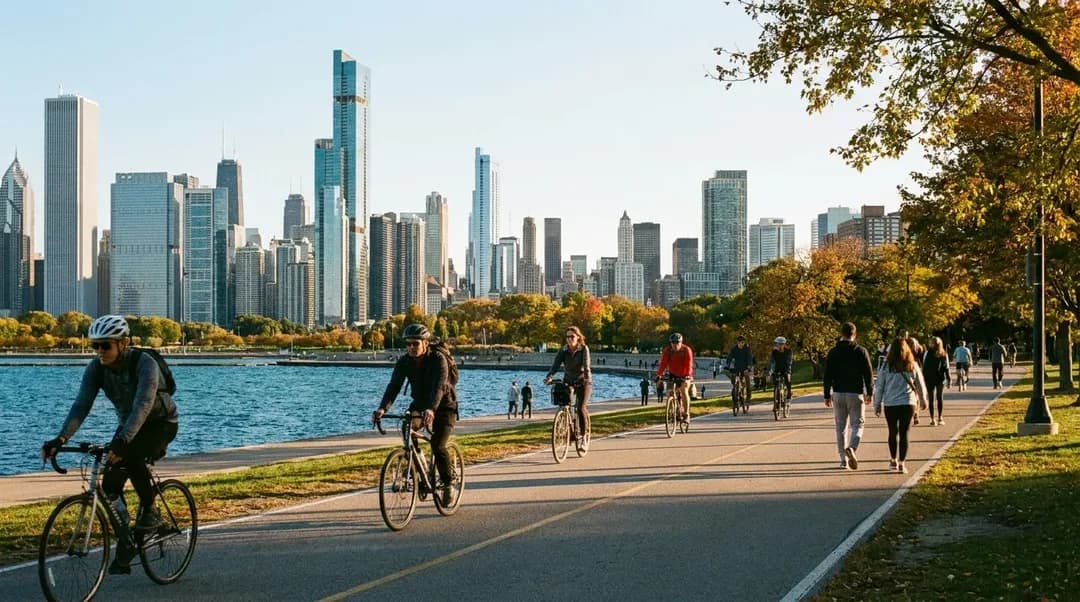
Chicago is unusually good at the connective tissue, and the routes are free. The Lakefront Trail runs eighteen and a half miles along Lake Michigan, linking four major parks, and it is the fastest way to understand how the city is organized — downtown to the beaches to the South Side without once looking at a map. On the Northwest Side, The 606 is a 2.7-mile elevated path built on an abandoned rail embankment, reachable from the Blue Line at Western or Damen, with ramps down into Wicker Park, Bucktown, Humboldt Park and Logan Square.
Both are better on a bike than on foot, and the city's bike-share system has docks at either end of each. A day pass costs less than two museum tickets and converts the distance between neighbourhoods from a problem into the good part.
Sunday has a specific shape
The Maxwell Street Market has been running in some form for well over a century, and since its return to its original ground at Maxwell and Halsted it has operated on a much tighter schedule: one Sunday a month, May through October, roughly ten in the morning to three in the afternoon, on Maxwell Street between Halsted and Union. This is not a farmers' market with a taco stand attached. It is the oldest street food economy in the city — Mexican and Central American cooking made on folding tables — plus tools, records and objects of genuinely uncertain provenance.
Because it runs six days a year rather than every weekend, it has to go in the calendar rather than be stumbled upon. Go early, bring cash, and eat before you shop.
And then the night
The Green Mill in Uptown is the least ironic room in Chicago. It has been a jazz club since the 1900s, it still books working musicians seven nights a week, and the house rule is the point: you do not talk over the band. On weekend nights the last set starts well after one in the morning and turns into a jam session. On Sunday afternoons the room hands itself over to the Uptown Poetry Slam — the format's birthplace — for a couple of hours from three.
Take the Red Line. Parking in Uptown on a Saturday night is a genre of disappointment.
Practical notes
- Bring Illinois ID: nearly every free museum day is residency-gated and requires proof at the desk.
- Reserve where offered: free resident tickets at the Field and the Art Institute are released in advance and go quickly.
- Always free, no conditions: Lincoln Park Zoo, Garfield Park Conservatory, the Chicago Cultural Center, the National Museum of Mexican Art, Millennium Park and the lakefront.
- Check the date, not the day: Shedd and the Museum of Science and Industry use scattered free dates rather than a weekly one.
- Maxwell Street Market: one Sunday a month, May to October, 10am to 3pm, at Maxwell and Halsted. Cash.
- River cruise season is roughly mid-March to late November. Shoulder-season afternoons beat summer evenings.
The reason Chicago reads as generous is not that it is cheap. It is that the good things are unusually well distributed — a conservatory in a neighbourhood that tourism forgets, a free zoo in the middle of the North Side, a lakefront that belongs to everyone by law. The skill is not finding them. It is turning up on the right day, with the right card in your wallet, having booked the one thing that needed booking.
Tags: #BestThingsToDoInChicago #ThingsToDoChicago #ChicagoGuide #FreeChicago #FreeMuseumDays #Chicago #Lakefront #Pilsen #Uptown #WickerPark #TheLongWayHome #CityExploring #ChicagoWeekend #UrbanDiscovery
All trademarks are the property of their respective owners.
Ask Karpo first
Before you build a Chicago weekend around a museum, ask Karpo which ones are free on the day you are actually going, which need a reserved ticket, and what to do with the hours in between.
Ask Karpo for more information.
Keep reading
- Andytown Coffee in the Outer Sunset: The Snowy Plover Explained
 US Open Draw Explained: Seeds, Wild Cards and Qualifying
 Farmers Almanac Winter Weather Ideas Around US Open 2026 Quiet Cafe New York