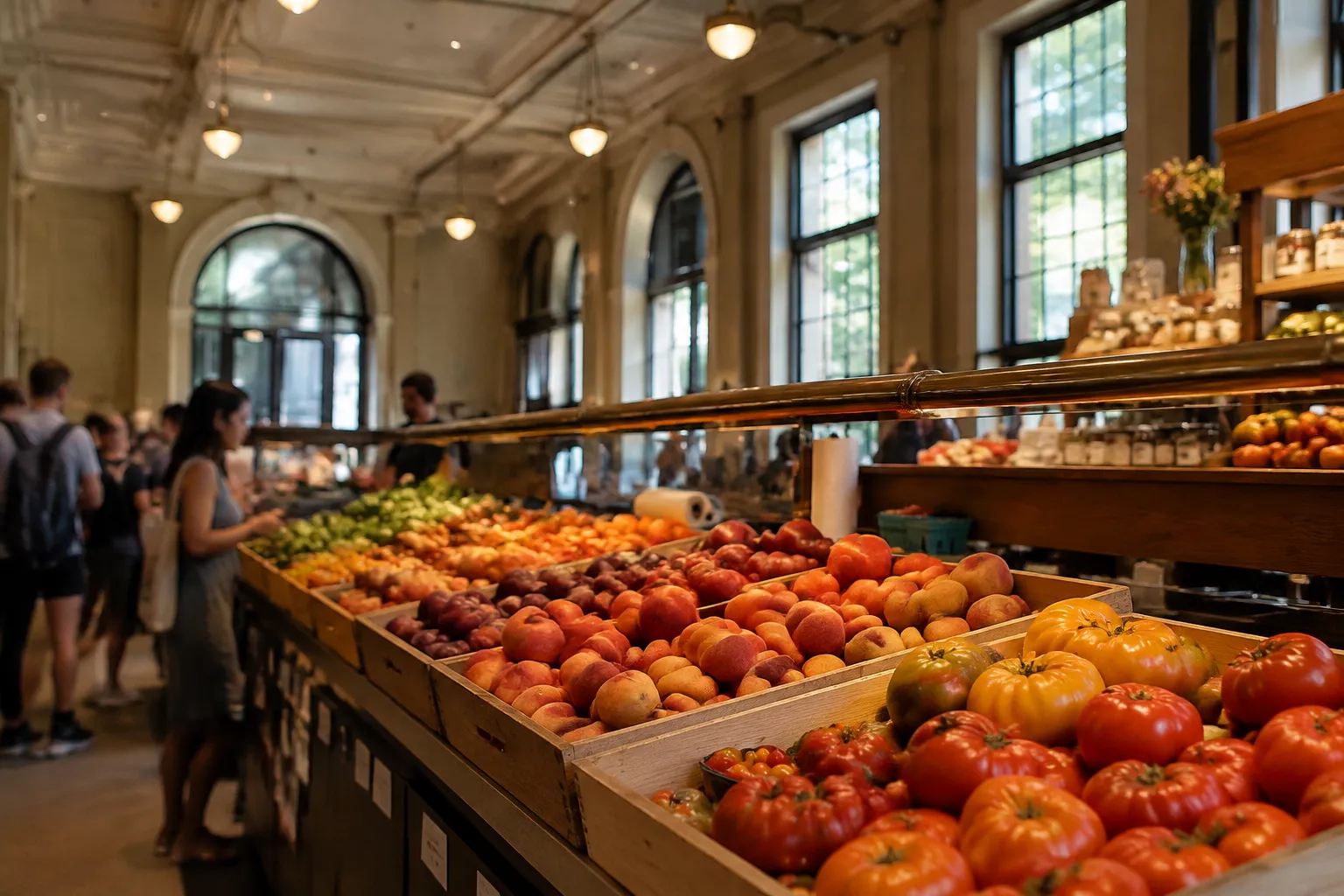
Someone texts from a hotel near Union Square at seven thirty on a Saturday morning, asking which farmers market is worth the early alarm. The question is never really about vegetables. It is about whether San Francisco still feels like the place where food matters in a way that requires getting out of bed before the fog lifts, where a peach variety has a waiting list, where the person selling olive oil can tell you which hillside the olives came from. The short answer is yes, but only if you know which market to choose and what time to arrive before the best vendors pack up.
Karpo checks which stalls are setting up this Saturday, maps the route from your hotel that skips the Embarcadero wind tunnel, and holds a backup if the weather turns.

Why people search farmers markets before booking flights
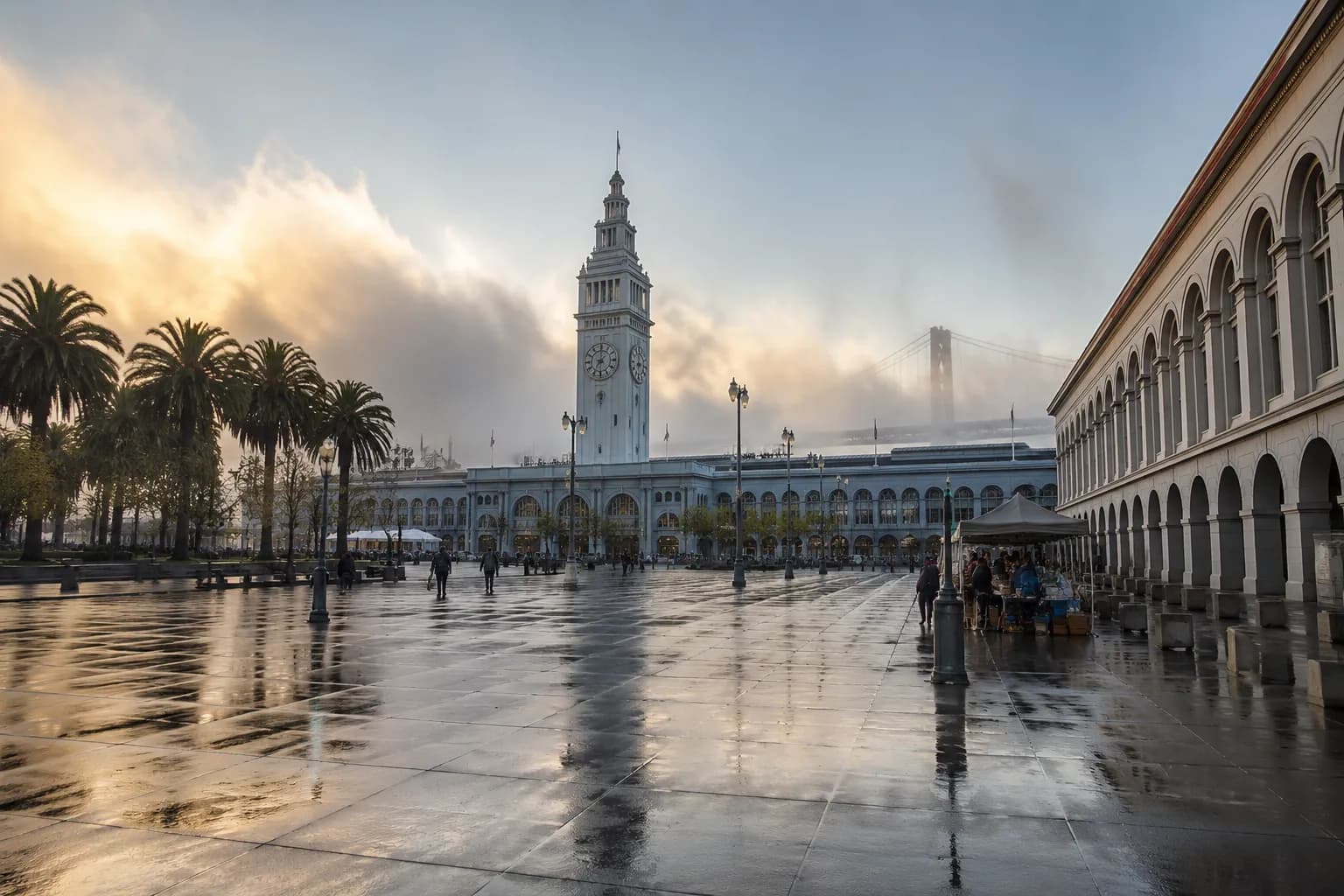
Ferry Plaza Farmers Market, held at the foot of Market Street along the Embarcadero, opens at eight on Saturday mornings. By nine the light has usually broken through and the stalls selling stone fruit, dry-farmed tomatoes, and still-warm bread have lines that move slowly because people ask questions. By ten thirty, some of those vendors are gone. The timing is not punishing, but it is specific. If you want the morning everyone talks about, you need to be walking through the entrance near the clock tower by eight fifteen, and you need a route that does not involve waiting twenty minutes for a Muni bus that may or may not show up on weekend schedules.
North Beach as your staging ground
Staying in or near North Beach makes Saturday morning farmers market runs straightforward. The walk from Washington Square Park down Columbus to the Embarcadero takes about twenty-five minutes if you do not stop, less if you cut through the eastern edge of the Financial District on side streets that empty out on weekends. The advantage is not just distance. North Beach cafes open early, so you can leave your hotel, get coffee at a counter on Grant or Stockton, and still reach the market before the peak crowd arrives.
The other advantage is the hill factor. If you are coming from the Marina or Russian Hill, you are walking downhill to the water, which feels easy in the morning but punishing on the return trip when you are carrying bags of produce. North Beach sits at a middle elevation, meaning the walk back is manageable even with weight. You also have the option to stop halfway for a second coffee or to sit in Washington Square if your legs need a rest. That flexibility matters more than people expect when they are planning a weekend that includes multiple walking segments in a city where the hills are not metaphorical.
One other detail: if you are relying on rideshare to get to the market, expect surge pricing and slow pickup times on Saturday mornings in North Beach. Locals know this and either walk or take the 30 Stockton bus down to the Embarcadero, but that bus runs infrequently on weekends. The walk is more reliable, and it lets you see the produce stalls from the north end first, where the flower vendors set up and the crowds are lighter.
The wind corridor and the two-hour window
The Embarcadero is a wind tunnel. Even when the rest of the city feels calm, the stretch of waterfront where the Ferry Building sits can be cold enough that you will want a jacket in July. The farmers market runs from eight until two on Saturdays, but the experience changes significantly depending on when you arrive. Early morning is cold and quiet. By ten, the sun is usually out and the walkways between stalls are crowded enough that you have to navigate around strollers and people stopping abruptly to taste samples. By noon, some of the best vendors have sold out and left, and the remaining crowd skews toward tourists who arrived late and are now buying whatever is still available.
If your goal is to actually shop, not just walk through, arrive by eight thirty and start at the north end of the building, near the Slanted Door entrance. The bread bakers and the egg sellers are usually there, and those stalls run out fastest. Work your way south toward the main Ferry Building entrance, where the prepared food vendors cluster. That route lets you buy the perishable items first and carry them for the shortest amount of time before you head back to your hotel or apartment. It also means you are moving against the flow of people who enter from the Ferry Building side and walk north, so the aisles feel less jammed.
One timing note that surprises people: Ferry Plaza draws chefs and serious home cooks, which means the quality is high and the prices reflect that. If you are expecting prices comparable to a regular grocery store, you will be surprised. If you are expecting the kind of produce that makes you rethink what a tomato should taste like, you will not be disappointed. Bring cash for the smaller vendors who do not take cards, and bring your own bags because the market is not set up for handing out disposable ones.
Alemany when Ferry Plaza feels like too much
Alemany Farmers Market, located in the Bernal Heights neighborhood, has posted Saturday hours that you should check before you go. It is older than Ferry Plaza, less polished, and significantly cheaper. The vendors are more likely to be selling in bulk, the crowd is more neighborhood-focused, and the setting is a paved lot next to a freeway onramp rather than a waterfront plaza. That makes it sound worse than it is. Alemany is where San Francisco residents who cook every day go to buy produce for the week, and the quality is serious even if the presentation is not.
Getting to Alemany from North Beach requires either a car or a combination of Muni lines that takes about forty minutes. The 30 Stockton to the J Church is one option; check the current schedule because weekend service is unpredictable. If you have access to a car or are willing to take a rideshare, Alemany is worth the trip, especially if you are staying somewhere with a kitchen and want to buy enough food to cook for several days. The lot has free parking, and the early opening time means you can be back in your neighborhood by nine, which leaves the rest of the day open.
One other reason to consider Alemany: it is the market that feels least like a tourist attraction. Ferry Plaza has become a destination in its own right, which is not a criticism but does change the atmosphere. Alemany is still primarily a place where people go to buy food, not to take photos of food. If that distinction matters to you, it is worth the extra logistics.
What to confirm before you leave
Farmers markets in San Francisco occasionally close for weather, though it is rare. More common is a vendor you were counting on not showing up, or a seasonal item being sold out earlier than expected. The Ferry Plaza market posts vendor lists on its website, but those lists are not always updated day-of. If you are planning your weekend around a specific stall or product, it is worth checking social media or calling ahead if a phone number is available. The market itself does not take calls about individual vendors, so you need to contact the farm or bakery directly if you want certainty.
Transit timing is the other variable. Weekend Muni schedules are less frequent than weekday schedules, and delays are common. If you are relying on public transit to get to the market, build in an extra twenty minutes. BART runs more reliably, but the closest BART stop to Ferry Plaza is Embarcadero, which is a short walk but involves navigating through the Ferry Building itself. On Saturday mornings that building is crowded, so factor in the time it takes to move through a space where people are stopping to look at shop windows.
One last detail about the markets themselves: neither Ferry Plaza nor Alemany allows dogs inside the vendor area, though you will see people with dogs on the perimeter. If you are planning to bring a dog, check the current rules before you go. The same applies to large bags or backpacks, which some vendors ask you to leave outside their stall area because of space constraints. These are small logistical points, but they can derail a morning if you are not prepared.
Practical notes
- Ferry Plaza opens at 8 a.m. Saturdays; best selection before 10 a.m., some vendors gone by 10:30 a.m.
- Embarcadero waterfront is cold and windy even in summer; bring a jacket and reusable bags.
- Alemany opens at 6 a.m. Saturdays, bulk-focused, requires car or 40-minute Muni connection from North Beach.
- Weekend Muni runs infrequently; walking from North Beach to Ferry Plaza takes 25 minutes and is more reliable.
- Bring cash for smaller vendors; card readers are common but not universal.
- Confirm vendor attendance and seasonal item availability on market websites or vendor social media before leaving.
Tags: #karpo #sanfrancisco #sfweekendplan #ferryplazamarket #sffarmers #northbeach #embarcadero #alemanymarket #saturdaymorningsf #sfproduce #weekendplans #bayareafood #sflocal #farmersmarketsf #realfood
Sources consulted: Ferry Plaza Farmers Market · Alemany Farmers Market
All trademarks are the property of their respective owners.
Ask Karpo first
Text Karpo before you leave your hotel to confirm which vendors are setting up this Saturday, get a walking route from your block that avoids the windiest part of the Embarcadero, and check if Alemany is running on schedule if Ferry Plaza feels too crowded. Karpo pulls current market status and holds a backup plan if weather changes.


