 Stonestown Winter Farmers Market Picker for Student Cooks
Weekend Plans
Fort Mason Winter Farmers Market Picker for Citrus Bakers
Baking with winter citrus? Shop Fort Mason's farmers market for Meyer lemons, blood oranges and mandarins, learn what to taste first, then walk the bay.
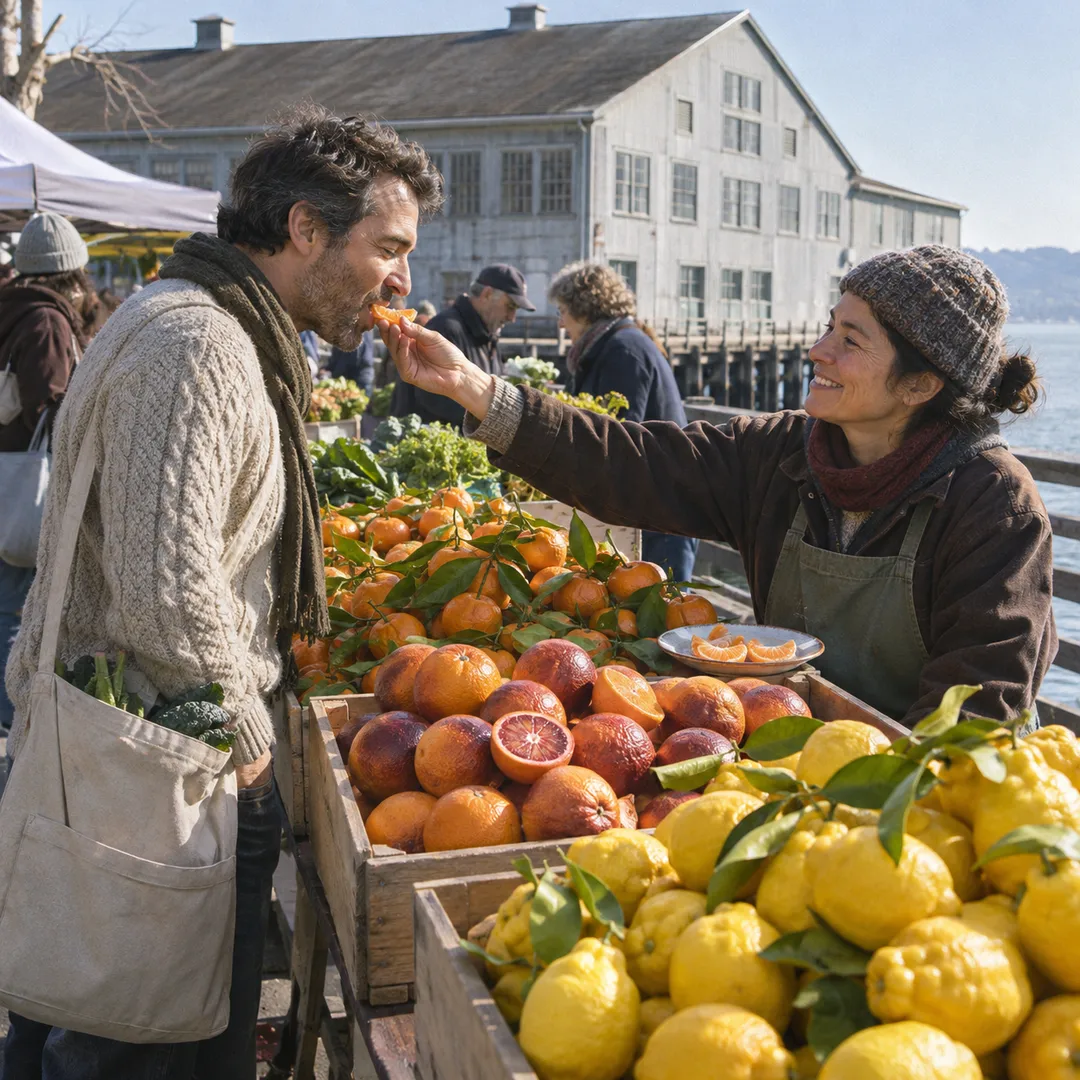
Fort Mason Center Farmers' Market sets up beside the old army piers on the Marina waterfront, and from December onward its tables turn yellow and orange with the California citrus harvest. This winter farmers market picker is for home bakers who want to spend a weekend making marmalade, lemon curd or a blood orange tart, and who need to know which fruit to choose, how to taste it at the stall, and how to carry a heavy bag of it home.
Why Fort Mason Works for a Citrus Weekend
Fort Mason began life as a military post and later a busy army port, and the long warehouses on its piers have since been turned into theatres, galleries, studios and schools. The market brings a different kind of traffic to that setting: families from the Marina and Cow Hollow, cooks from nearby restaurants and visitors walking the bay trail. Because the growers here often come from the Central Valley and inland foothills, winter is when their citrus tables look fullest.
For a baker, the attraction is variety in one place. You can compare several kinds of lemon side by side, taste a mandarin from one farm against another and talk to the people who picked the fruit. Supermarket citrus all tastes oddly similar by the time it reaches the shelf. Here, a sharp, thin-skinned lemon and a sweet, floral one sit next to each other, and the difference decides your recipe.
Matching the Fruit to the Recipe
Meyer lemons are the classic winter purchase. Their thin skins and gentle acidity make a soft, fragrant curd and a marmalade that does not need much bitterness balancing. For a sharper tart or a lemon drizzle cake, look for standard Eureka or Lisbon lemons instead, which have more bite. Pick fruit that feels heavy for its size, with taut, glossy skin and no soft patches, because that means plenty of juice.
Blood oranges arrive a little later in the season and vary from orange flecked with red to deep crimson all the way through. For a tart where the colour matters, ask the grower to cut one open before you buy a dozen. Mandarins are wonderful for eating and for candied peel, but they are rarely the right choice for marmalade, because the pith is thin and the flavour fades during long cooking.
Tasting Before You Buy a Full Bag
Most citrus growers put out a tasting plate or will cut a fruit if you ask. Take advantage of that. Taste a segment of each variety you are considering, and notice the balance of sweet and sour as well as the perfume of the peel. If a lemon is very sweet, plan to add less sugar to the curd. If an orange is sharp, it will shine in a tart with a rich pastry case.
Talk to the grower about timing. Some varieties are at their peak only for a few weeks, and a farmer will happily tell you whether the blood oranges are just starting or nearly finished. That helps you decide whether to make marmalade now or wait. Skip the pre-packed bags if you can choose loose fruit, because you want every piece to pass the weight and skin test.

Carrying a Heavy Haul Without Bruising It
Citrus is heavy, and a marmalade batch can mean a surprising amount of fruit. Bring a sturdy tote or a small rolling cart, and lay the fruit in a single layer if you can, with softer mandarins on top. Paper bags from the stall tear easily if the morning is damp, so slip them inside your own bag rather than carrying them by the folded tops.
If you are taking the bus, sit near the door with the bag on your lap rather than on the floor. If you are driving, park as close as you can before shopping and drop the heavy fruit off before wandering further along the waterfront. Mandarins bruise easily, so buy them last and keep them away from the lemons, which are tougher than they look.
Turning the Fruit Into a Baking Weekend
Start the marmalade the day you shop. Wash and slice the fruit, soak it overnight to soften the peel, and cook it the next morning when the kitchen is quiet. While it soaks, make a lemon curd with a few Meyer lemons, which keeps for a week in the fridge and fills tarts, pancakes and yoghurt bowls. Juice any fruit you cannot use straight away and freeze it in small portions.
Save the blood oranges for the second day. Slice them thinly for the top of an upside-down cake or a tart, where their colour shows, and use any leftover juice in a simple syrup for cocktails or tea. Do not throw away the peel. Candied strips make a lovely gift in a small jar, and dried zest adds brightness to biscuits and bread for weeks.
Walking the Bay After Shopping
The market sits at the start of one of the loveliest waterfront walks in the city. Climb the stairs to the Great Meadow, the open lawn above the piers, where people fly kites and walk dogs with views across the water to the Marin hills. From there, a path leads down to Aquatic Park, with its curved beach, the historic ships moored at Hyde Street Pier and the swimmers who brave the cold bay all winter.
If you prefer flat ground, head west instead along Marina Green, where the paths run past sailing clubs and the yacht harbour to the Wave Organ at the end of the breakwater. Winter mornings can be bright and clear, but the wind off the water is sharp, so bring a warm layer even if the sun is out. The citrus can wait in the car.
Planning Your Citrus Market Run With Karpo
Citrus season lasts several months, so you can return for a second batch when a new variety appears. The Karpo APP can help you find other farmers' markets and produce shops near your home where winter citrus is sold, so you can pick up more lemons midweek without crossing the city. Save the stalls you liked and note the varieties that worked well in your recipes.
You can also use Karpo to plan a full Saturday around Fort Mason, with the market, a walk to Aquatic Park and a cafe stop in the Marina, and to look up kitchenware shops when you need more jars. A winter of baking with fresh California citrus brightens the darkest weeks of the year, and it starts with choosing the right fruit at the stall.
Ask Karpo for more information.
Keep reading
- Stonestown Winter Farmers Market Picker for Student Cooks
 Clement St Winter Farmers Market Picker for Lunar New Year
 UN Plaza Winter Farmers Market Picker for Studio Cooks