Every four years, 32 nations gather with one impossible dream: lifting the most coveted trophy in sports. But in nearly a century of World Cup history, only eight countries have ever managed to call themselves champions. From Uruguay's pioneering victory in 1930 to the tantalizing question mark that awaits us in 2026, the World Cup winners list reads like a roll call of soccer royalty, where legends are born and entire nations find their identity in 90 minutes of beautiful chaos.
The Founding Fathers: Uruguay Sets the Standard
When FIFA decided to stage the first World Cup in 1930, they turned to Uruguay, the tiny South American nation that had already conquered the soccer world by winning Olympic gold in 1924 and 1928. Playing on home soil in Montevideo's Estadio Centenario, Uruguay delivered a performance worthy of their pioneering status, defeating Argentina 4-2 in a final that established the tournament's dramatic DNA.
The Uruguayans would claim their second title 20 years later in Brazil, pulling off one of the greatest upsets in World Cup history. Needing only a draw against heavily favored Brazil in the final group match of 1950, Uruguay stunned the home crowd at the Maracanã with a 2-1 victory that left 200,000 Brazilians in stunned silence.
The Beautiful Game's Crown Jewel: Brazil's Five-Star Dynasty
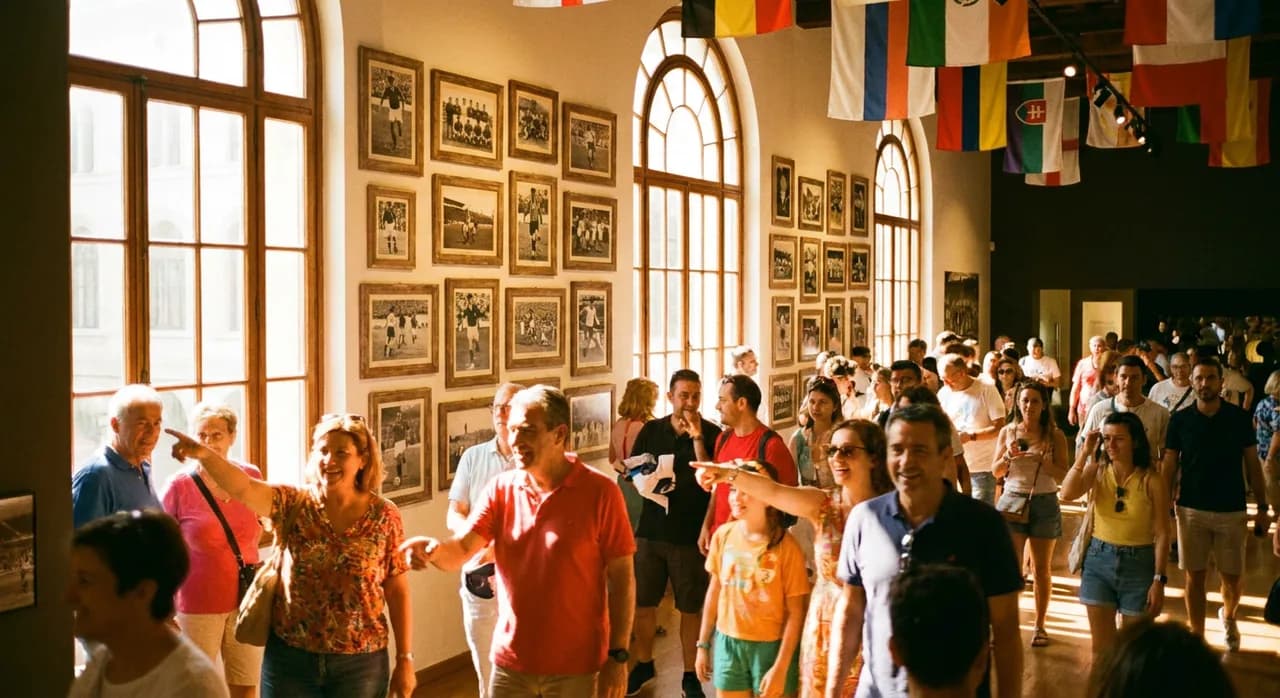
No discussion of World Cup winners can begin anywhere but Brazil, the only nation to win five titles and appear in every tournament since 1930. The Seleção's first triumph came in 1958 when a 17-year-old named Pelé announced himself to the world, scoring six goals including a hat-trick in the semifinal and two more in the final against Sweden.
Brazil's 1970 team in Mexico remains the gold standard for World Cup champions. With Pelé, Jairzinho, Carlos Alberto, and Tostão leading a symphony of attacking soccer, they demolished Italy 4-1 in the final, cementing their status as perhaps the greatest national team ever assembled. Later victories in 1994 and 2002 added to their mystique, with the 2002 squad featuring Ronaldo, Ronaldinho, and Roberto Carlos in a tournament where they scored 18 goals across seven matches.
European Elegance: Germany and Italy's Tactical Mastery
Germany's four World Cup titles span seven decades, showcasing their remarkable ability to reinvent themselves while maintaining their core identity of tactical discipline and mental toughness. The breakthrough came in 1954 with the "Miracle of Bern," when they overcame the seemingly invincible Hungarian team 3-2 in Switzerland. Home soil provided their second title in 1974, followed by Italia '90 where they ground out results with typical German efficiency.
Their 2014 triumph in Brazil represented the perfect fusion of German organization with Brazilian flair, culminating in a 7-1 semifinal demolition of the hosts that remains one of the most shocking results in World Cup history. Italy matches Germany with four titles, built on the foundation of catenaccio defense and tactical brilliance. From their first victory in 1934 through their dramatic penalty shootout win over England at Euro 2021, the Azzurri have always found ways to win when it matters most.
Tango and Triumph: Argentina's Emotional Journey
For Argentina, the World Cup has always been deeply personal. Their first title in 1978 came on home soil during a politically turbulent time, with Mario Kempes leading them to victory. But it was 1986 in Mexico where Argentina and Diego Maradona created World Cup legend, combining the infamous "Hand of God" with the greatest individual goal in tournament history against England.
The 2022 victory in Qatar felt like destiny finally catching up with Lionel Messi, as Argentina survived a dramatic final against France that many consider the greatest World Cup match ever played. Messi's tears of joy after finally claiming his elusive World Cup trophy reminded the world why this tournament remains the ultimate prize in sports.
The Outliers Who Crashed the Party
Two nations have managed to break into the exclusive champions' club despite the overwhelming dominance of South American and European soccer powers. France claimed their first title on home soil in 1998, with Zinedine Zidane's masterclass in the final against Brazil launching Les Bleus into soccer immortality. Their 2018 victory in Russia, led by Kylian Mbappé's teenage brilliance, proved their 1998 triumph was no fluke.
England's lone World Cup victory remains one of the tournament's most controversial and celebrated moments. The 1966 final at Wembley against West Germany featured Geoff Hurst's disputed goal that may or may not have crossed the line, but England's 4-2 victory after extra time gave them their only taste of World Cup glory. Spain joined the winners' club in 2010, playing the most possession-heavy style in World Cup history as they tiki-taka'd their way past the Netherlands in a physical, scoreless final decided by Andrés Iniesta's extra-time winner.
2026: The Next Chapter in World Cup History
The 2026 World Cup promises to be unlike any before it, expanding to 48 teams across three host nations: the United States, Canada, and Mexico. This format change could shake up the traditional world cup winners list, giving smaller nations more pathways to glory while potentially creating the most unpredictable tournament in decades.
With matches spanning from Vancouver to Mexico City, the 2026 tournament will test teams' adaptability across different climates, time zones, and cultures. The expansion means more opportunities for breakthrough nations to make their mark, while traditional powers like Brazil, Germany, and Argentina will face increased pressure to navigate a more complex tournament structure.
Practical Notes
Following World Cup history becomes easier when you understand the four-year cycle and how geopolitics have shaped the tournament. The 1942 and 1946 tournaments were canceled due to World War II, while various boycotts affected participation throughout the Cold War era. For casual fans wanting to appreciate World Cup legacy, focus on watching highlight reels from Brazil 1970, Argentina 1986, and Germany 2014 to understand how the game's tactical evolution mirrors each era's champions.
Tags: #WorldCup2026 #FIFA2026 #WorldCupWinners #Brazil #Germany #Argentina #Italy #France #England #Spain #Uruguay #Soccer #Football #WorldCupHistory #Messi
Sources consulted: fifa.com · espn.com
All trademarks are the property of their respective owners.
Ask Karpo first
Want to keep following the World Cup 2026 story as it unfolds? Ask Karpo for a personalized bracket, live score alerts, and a match schedule tailored to your teams and your city.