Planning vacaciones around the 2026 FIFA World Cup means choosing from sixteen host cities spread across North America, each with its own character, accessibility, and family appeal. Unlike previous tournaments concentrated in a single country, this tri-nation event lets families combine match attendance with broader travel goals—whether that's exploring Mexico City's museums, enjoying Toronto's waterfront, or discovering Kansas City's barbecue culture. The challenge isn't finding a suitable destination; it's matching your family's priorities to the right host city. Walkability, public transit access, stadium proximity, and the density of family-oriented attractions vary dramatically from one venue to the next, and understanding these differences early shapes everything from accommodation strategy to daily logistics.
Karpo helps families navigate the complexity of multi-city World Cup planning with personalized itineraries that account for match schedules, transit connections, and age-appropriate activities. Text Karpo to compare host-city options based on your family's specific needs—whether you're traveling with toddlers who need frequent breaks, teens interested in local culture, or grandparents who prefer compact walking distances. Get tailored recommendations for stadium access routes, pre-match dining near fan zones, and backup plans for rest days between games.
Stadium Location and Transit Infrastructure
Host cities differ significantly in how easily families can reach match venues using public transportation. Toronto's BMO Field sits directly on the city's streetcar line, allowing families to avoid parking challenges and traffic entirely. Similarly, MetLife Stadium in New Jersey connects to Manhattan via dedicated rail service, though the journey requires a transfer and takes roughly an hour from midtown. Philadelphia's Subaru Park benefits from a regional rail stop steps from the entrance, making it one of the most transit-accessible venues in the tournament. These cities reward families who plan around public systems rather than rental cars.
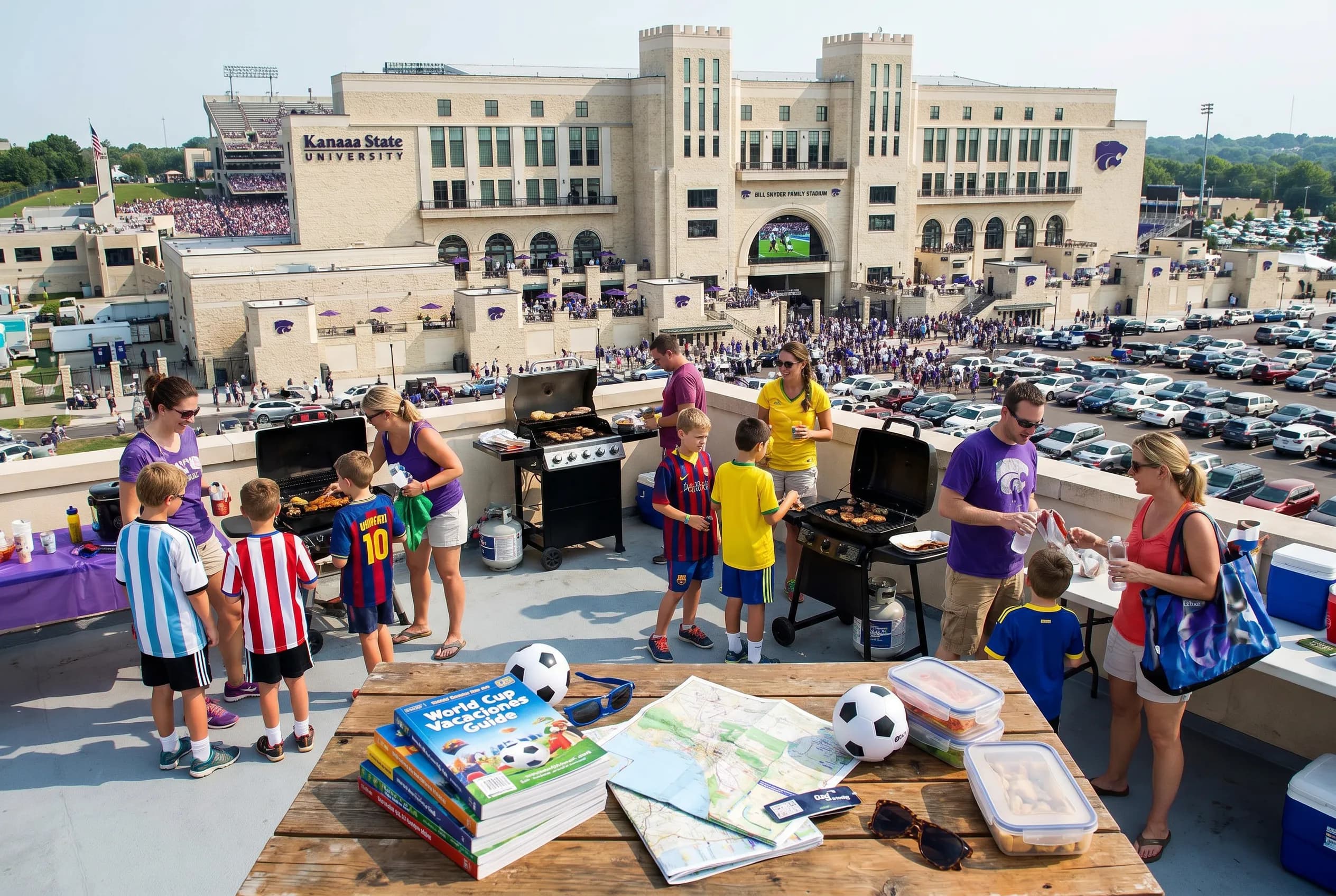
Other host cities present different transit realities that require advance planning. AT&T Stadium in Arlington, Texas, sits between Dallas and Fort Worth with limited direct public transit, making ride-sharing or driving the practical choice for most families. Arrowhead Stadium in Kansas City similarly requires a car, though the venue offers extensive parking that simplifies logistics for families with young children who need flexible timing. Levi's Stadium in Santa Clara connects to Bay Area transit, but the journey from San Francisco involves multiple transfers that can challenge families managing strollers or tired children after evening matches.
Walkable Neighborhoods Near Venues
The distance between stadiums and pedestrian-friendly districts shapes daily family routines during World Cup trips. Boston's Gillette Stadium sits in Foxborough, roughly thirty miles from downtown, creating a clear separation between match days and city exploration. Families staying in Boston proper enjoy exceptional walkability for non-match activities but face a significant commute to games. Seattle presents the opposite scenario—Lumen Field sits in the city's core, surrounded by Pike Place Market, the waterfront, and downtown hotels, allowing families to walk to pre-match meals and return to accommodations quickly after final whistles.
Mexico City offers dense urban fabric around Estadio Azteca, with neighborhoods like Coyoacán providing family-friendly plazas, markets, and museums within short taxi rides of the stadium. Guadalajara's Estadio Akron sits farther from the historic center, but the city's compact colonial core rewards families who dedicate non-match days to exploring Tlaquepaque and the cathedral district on foot. Vancouver's BC Place enjoys a downtown location similar to Seattle's, with Stanley Park, Granville Island, and Canada Place all reachable via short walks or single transit connections, maximizing the efficiency of limited vacation days.
Climate Considerations for June and July
The 2026 tournament spans early summer across dramatically different climate zones, affecting everything from packing lists to daily activity timing. Northern venues like Toronto, Boston, and Vancouver typically offer mild temperatures in June and July, with daytime highs in the comfortable range for walking and outdoor activities. These cities allow families to maintain normal sightseeing schedules without heat-related adjustments. Rain remains possible in Vancouver and Boston, making light waterproof layers sensible additions to family packing lists.
Southern and central host cities require more deliberate heat management strategies. Dallas, Houston, and Atlanta regularly experience temperatures well into the nineties during summer months, with high humidity adding to the challenge. Families visiting these cities benefit from planning indoor activities during peak afternoon heat—museums, aquariums, and shopping districts with air conditioning become practical midday refuges. Mexico City's elevation moderates temperatures despite its southern latitude, though afternoon thunderstorms are common during summer months. Monterrey tends toward hot, dry conditions that make morning and evening the preferred windows for outdoor exploration between matches.
Accommodation Density and Neighborhood Options
Host cities vary in how many distinct neighborhoods offer viable accommodation bases for families. New York, Toronto, and Mexico City provide dozens of neighborhood options, each with different proximity trade-offs between stadiums, attractions, and transit hubs. This abundance creates flexibility but requires more research to identify the right fit. Families prioritizing stadium access might choose East Rutherford area hotels near MetLife Stadium, while those emphasizing broader sightseeing would likely prefer Manhattan or Brooklyn bases despite longer match-day commutes.
Smaller host cities offer fewer but often clearer choices. Kansas City's accommodation clusters around the downtown Power & Light District and Country Club Plaza both provide straightforward access to family restaurants and activities, with similar driving times to Arrowhead Stadium. Philadelphia's Center City and Rittenhouse Square neighborhoods concentrate hotels within walking distance of Reading Terminal Market and Independence Hall, with direct transit to the stadium. Miami's accommodation spreads across South Beach, downtown, and Coral Gables, each serving different family priorities—beach access, cruise port proximity, or cultural institutions respectively.
Non-Soccer Attractions for Rest Days
Successful family World Cup trips balance match attendance with recovery time and alternative activities for children whose soccer enthusiasm has limits. Cities with strong museum districts and outdoor spaces provide built-in flexibility. San Francisco offers Golden Gate Park, the Exploratorium, and California Academy of Sciences as full-day options that require no stadium-related logistics. Washington DC's National Mall museums provide free, air-conditioned exploration that appeals to wide age ranges, with the added benefit of metro access that keeps families comfortable with public transit before applying those skills to match days.
Coastal host cities add beach and waterfront options that serve as natural pressure valves for active children. Miami's beaches need no introduction, while Vancouver's proximity to mountains and water creates unusual variety within short distances. Toronto's Harbourfront and Island Park ferry offer contained outdoor experiences that feel like adventures without requiring extensive travel. Even non-coastal cities often provide signature family draws—Kansas City's Negro Leagues Baseball Museum and Science City, Philadelphia's Please Touch Museum, or Monterrey's Parque Fundidora with its industrial-heritage playground and green space.
Language and Cultural Navigation
The three Mexican host cities—Mexico City, Guadalajara, and Monterrey—add cultural richness to World Cup vacaciones but require different preparation than U.S. or Canadian destinations. Families with Spanish speakers gain obvious advantages, though major hotels and tourist districts in all three cities maintain English-language services. The real consideration involves children's comfort with immersive foreign travel. Mexico City's size and density can overwhelm first-time international travelers, while Guadalajara's more manageable scale and strong expat community often feel more approachable for families testing their adaptability.
Canadian host cities present minimal language barriers for English-speaking families, though Toronto and Vancouver's multiculturalism creates its own form of enrichment through diverse neighborhoods and cuisine. Signage, transit announcements, and tourist services operate bilingually in Toronto, adding French visibility without creating navigation challenges. U.S. host cities span their own cultural range—Miami's bilingual character differs substantially from Kansas City's Midwestern directness or Seattle's Pacific Northwest informality. These distinctions matter less for basic logistics than for the overall family experience and whether the destination itself becomes part of the trip's educational value beyond the matches.
Tags: #WorldCup2026 #FamilyTravel #NorthAmerica #Vacaciones #SoccerTravel #FIFA2026 #FamilyVacation #TravelPlanning
Sources consulted: FIFA host destinations
All trademarks are the property of their respective owners.
Ask Karpo First
Choosing among sixteen host cities requires weighing factors that shift in importance depending on your children's ages, your family's travel experience, and whether you're attending multiple matches or building a tournament trip around a single game. Text Karpo with your group size, match interests, and must-have features—whether that's beach access, museum density, or minimal transit complexity—and receive a comparison of the two or three host cities that best match your priorities, complete with neighborhood recommendations and realistic daily schedules.