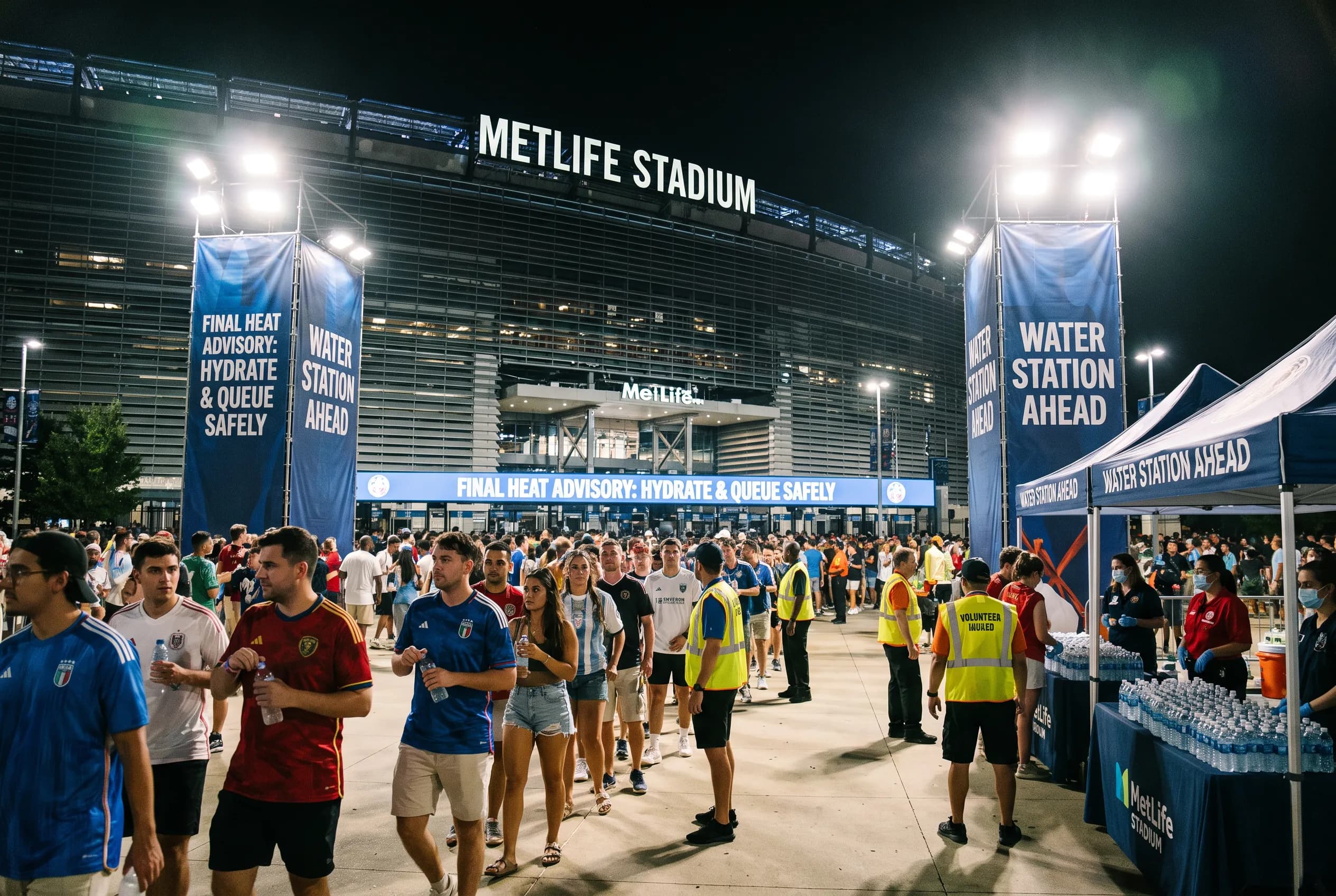
MetLife Stadium in East Rutherford sits exposed to the elements, with parking lots, entry plazas and concourse queues offering limited shade during summer events. When the National Weather Service issues a heat advisory for the New York and New Jersey region, the combination of asphalt surfaces, crowd density and extended wait times creates conditions that demand proactive planning. Even without an active advisory, temperatures in the mid-80s and above warrant attention to hydration, sun exposure and early symptom recognition. The stadium's open design and vast footprint mean visitors often spend significant time outdoors before reaching their seats, making weather awareness a practical component of any event-day checklist.
Karpo helps you build a personalized game-day plan that accounts for current weather conditions, optimal arrival windows to minimize queue exposure, and nearby hydration stops before you reach the stadium. Text Karpo to receive tailored routing that considers real-time heat advisories, shaded parking options, and concourse layouts that keep you comfortable from departure to final whistle. Whether you're planning around a forecast or adjusting on the fly, Karpo delivers the specific details that turn weather awareness into actionable strategy.
Checking National Weather Service Forecasts
The National Weather Service New York office issues heat advisories when the combination of temperature and humidity creates potentially dangerous conditions, typically when the heat index reaches 95 to 99 degrees Fahrenheit for two or more hours. These advisories appear on the weather.gov/okx homepage and through NOAA Weather Radio, providing advance notice that allows visitors to adjust plans. Checking the forecast the morning of an event reveals whether an advisory is active or likely, and the NWS site includes hourly breakdowns that show when temperatures will peak relative to kickoff or event start times.
Heat advisory is currently trending as a top search term nationwide, reflecting widespread attention to summer weather patterns and public awareness of heat-related risks. For MetLife Stadium visitors, the practical value lies in understanding that an advisory signals conditions requiring extra preparation rather than event cancellation. The stadium remains operational during advisories, but individual comfort and safety depend on personal readiness. Bookmark the NWS New York page and refresh it the day of your event to see the latest outlook, including any watches or warnings that might escalate from earlier forecasts.
Hydration Strategy Before and During Events
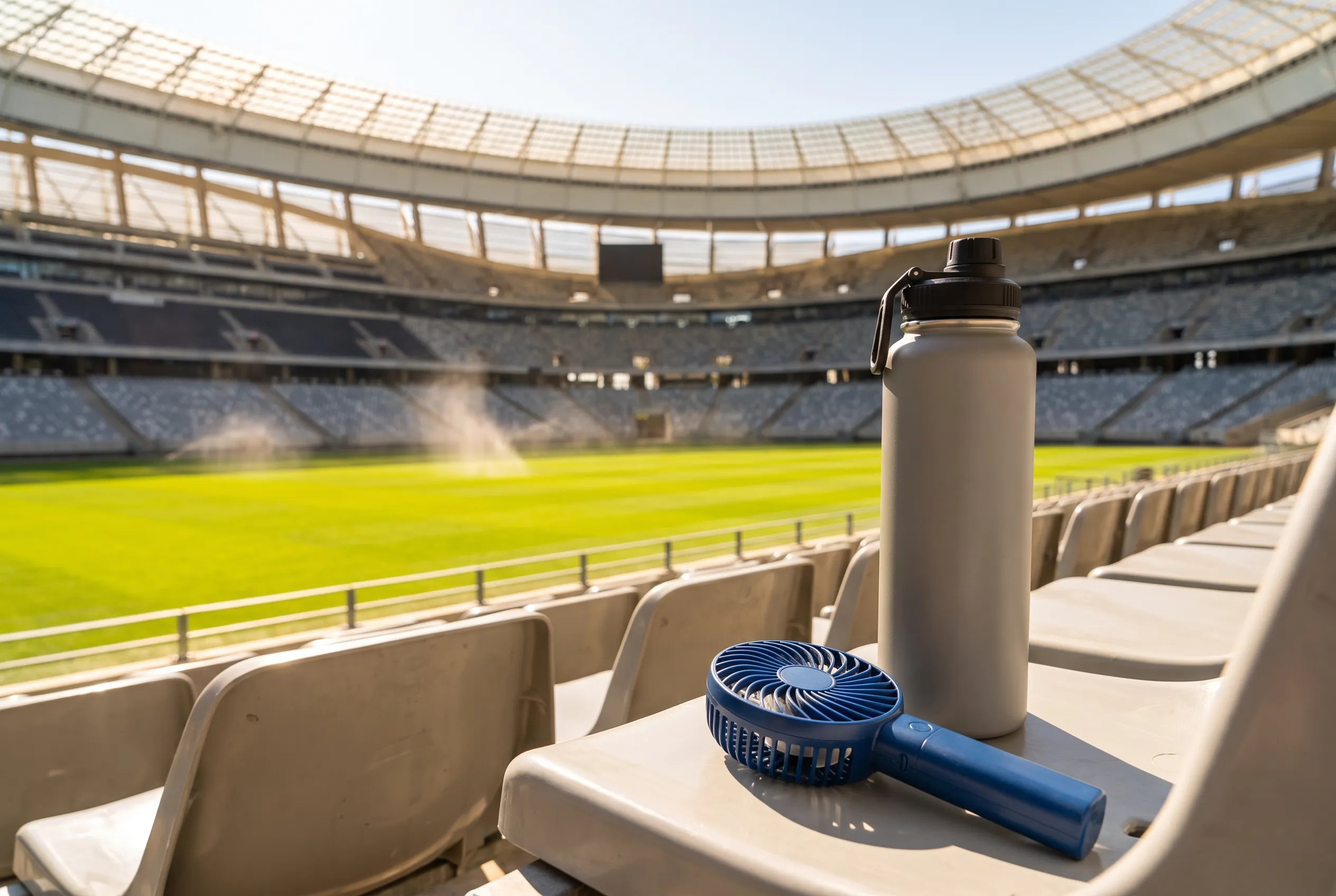
Effective hydration begins hours before arrival, not at the gate. Drinking water steadily throughout the morning and early afternoon ensures your body enters the stadium environment already prepared for heat stress. The goal is pale yellow urine and no sensation of thirst by the time you leave home. Avoid relying solely on beverages purchased inside the venue, where lines and prices can discourage adequate intake. Bringing a sealed, clear plastic water bottle up to one liter is permitted under MetLife Stadium's bag policy, and filling it before you enter saves time and money.
Once inside, prioritize water over alcohol and sugary drinks, which accelerate dehydration. Concession stands throughout the stadium sell bottled water, and refill stations are available near restrooms on each level. Plan to drink at least eight ounces every 20 minutes during warm weather, more if you're in direct sun or consuming alcohol. If you notice decreased urination, dizziness or a headache developing, increase water intake immediately and move to a shaded or air-conditioned area. The stadium's club lounges and indoor concourses offer climate-controlled spaces where your body can recover from heat exposure accumulated in the seating bowl.
Queue Exposure and Timing Your Arrival
MetLife Stadium's security checkpoints and entry gates create bottlenecks during peak arrival windows, typically 60 to 90 minutes before kickoff. These queues snake across open asphalt with minimal overhead cover, exposing visitors to direct sun and radiant heat from the pavement. On days when temperatures exceed 85 degrees, standing in these lines for 20 to 30 minutes adds significant heat load, especially for children, older adults and anyone with pre-existing health conditions. The stadium's east and west sides receive different sun exposure depending on time of day, but neither offers substantial natural shade during afternoon events.
Arriving earlier or later than the peak window reduces queue time but requires balancing other factors. Gates typically open two hours before events, and early arrivals face shorter lines but longer overall exposure once inside. Arriving 30 minutes before start time means briefer queues but risks missing opening moments. The optimal strategy depends on your heat tolerance and event priorities. Wear a wide-brimmed hat, apply sunscreen before leaving home, and consider bringing a small handheld fan. If you're traveling with vulnerable individuals, prioritize minimizing their time in unshaded queues even if it means adjusting your preferred arrival routine.
Recognizing Heat Exhaustion Symptoms
Heat exhaustion develops when your body loses excessive water and salt through sweating, and early recognition prevents progression to heat stroke. Symptoms include heavy sweating, weakness, cold and clammy skin, a fast but weak pulse, nausea, and dizziness. You might notice confusion or irritability in yourself or companions, and muscle cramps often appear in the legs or abdomen. These signs indicate your body's cooling system is struggling, and immediate action is required. Move to a cooler environment, drink water slowly, and loosen tight clothing. The stadium's first aid stations are located on the main concourse of each seating level and staffed with personnel trained in heat-related illness.
Heat stroke represents a medical emergency and occurs when body temperature rises above 103 degrees, sweating stops, and skin becomes hot and dry. Symptoms include throbbing headache, confusion, loss of consciousness, and rapid pulse. If you or someone nearby shows these signs, call 911 immediately and move the person to shade while waiting for help. Do not give fluids to someone who is unconscious. Stadium security can summon medical personnel quickly, and knowing the difference between exhaustion and stroke helps you communicate urgency. Most heat-related illness at outdoor venues is preventable through hydration and awareness, but recognizing when self-care is insufficient protects everyone in your group.
Parking Lot Considerations and Vehicle Preparation
MetLife Stadium's parking lots are vast expanses of asphalt that absorb and radiate heat, creating microclimates several degrees warmer than surrounding areas. Vehicles parked in direct sun for several hours become ovens, with interior temperatures reaching 130 to 150 degrees even when outside air is in the 80s. Before leaving your car, crack windows slightly if security allows, and use a windshield sunshade to reduce interior heat buildup. Note your parking location carefully, because heat exhaustion often strikes during the post-event walk back to the car when fatigue and dehydration are highest.
If you're tailgating, position your setup to maximize available shade, even if it means parking farther from the stadium. Canopies and pop-up tents create essential relief, and placing coolers in shaded areas keeps drinks colder longer. Monitor everyone in your group for heat symptoms during tailgating, as alcohol consumption combined with sun exposure accelerates dehydration. When it's time to head inside, pack up earlier than usual on hot days to allow a slower walk to the gates. Rushing across hot pavement while already warm from tailgating increases heat stress, and the few extra minutes of buffer time make a measurable difference in how you feel once inside.
Stadium Resources and Climate-Controlled Spaces
MetLife Stadium's design includes multiple climate-controlled areas that provide respite from heat. The main concourses are partially enclosed and benefit from air circulation, though they're not fully air-conditioned. Club seat holders have access to indoor lounges with full climate control, and these spaces offer the most effective cooling when you need a break. The stadium's mobile app includes a map showing first aid stations, water refill locations, and shaded seating areas, though true shade is limited in the seating bowl itself. Familiarize yourself with these resources before you need them, so you can act quickly if symptoms develop.
Restrooms provide temporary cooling and a chance to wet your face and neck, which helps lower body temperature through evaporation. The stadium's guest services desks, located on each main concourse, can direct you to the nearest first aid station or quiet area if you're feeling unwell. Stadium staff are trained to recognize heat-related distress and can provide assistance or summon medical help. Don't hesitate to ask for help if you or someone in your group is struggling. The combination of crowd density, noise and heat can make it difficult to self-assess your condition accurately, and staff members offer an objective perspective on whether you need medical attention.
Tags: #WorldCup2026 #MetLifeStadium #NewYork #NewJersey #WeatherSafety #HeatAdvisory #StadiumGuide #EventPlanning
Sources consulted: National Weather Service New York · MetLife Stadium
All trademarks are the property of their respective owners.
Ask Karpo First
Karpo tracks real-time National Weather Service alerts for the MetLife Stadium area and integrates them into your personalized event-day plan, suggesting optimal departure times, shaded parking strategies, and hydration checkpoints based on current conditions. Text Karpo with your event details to receive a custom itinerary that accounts for heat advisories, queue patterns, and your specific heat tolerance, ensuring you stay safe and comfortable from your front door to your seat and back again.