The barrier to wine is almost never the wine. It is the worry about ordering wrong in front of someone who does this professionally, which is a completely reasonable worry and also, in practice, unfounded — the people pouring are usually delighted when someone admits they are starting out, because it means they get to do the interesting part of their job. What follows is the script and the mechanics, so that the first flight is about what is in the glass rather than about not looking foolish.
Karpo can find beginner-friendly tasting rooms near you and tell you what the first flight costs.
How a flight menu is built
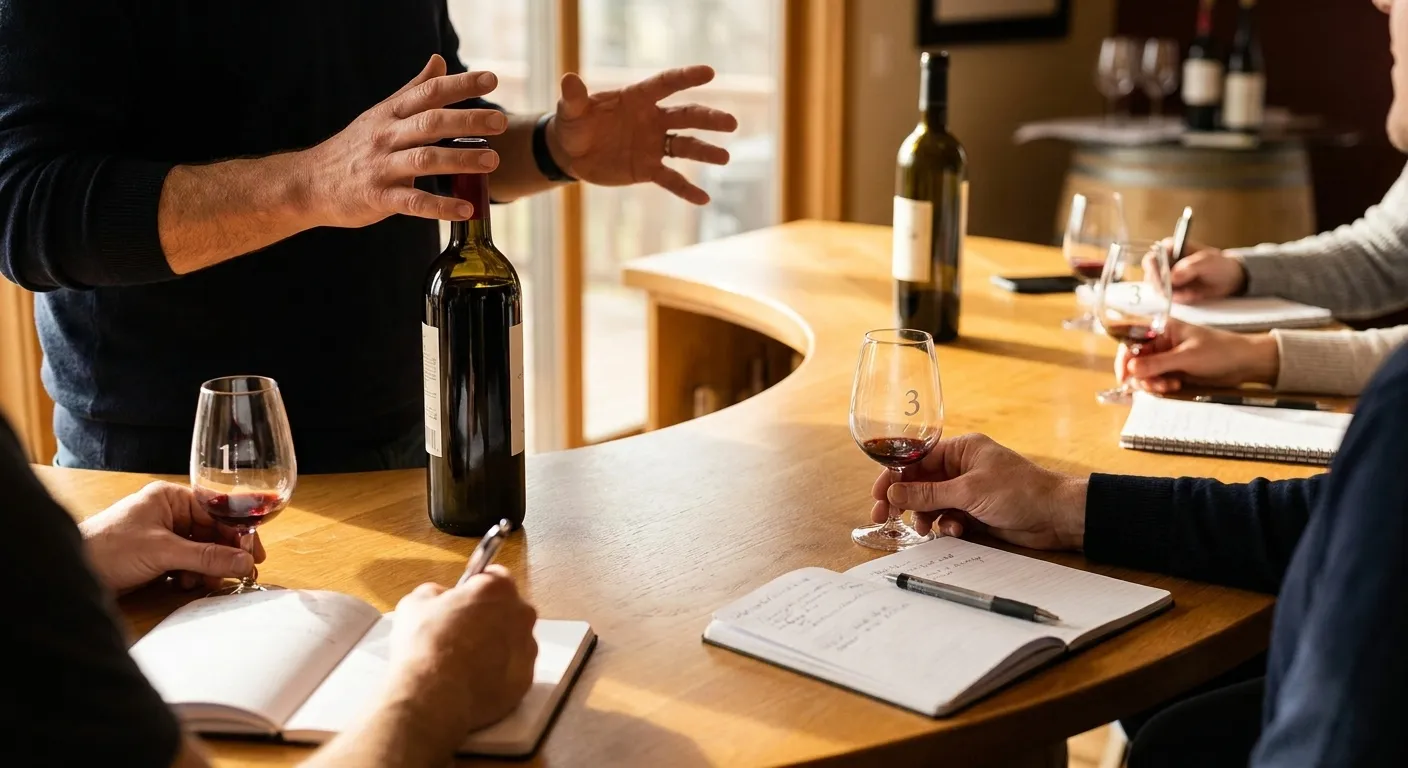
A flight is three to six small pours, usually an ounce and a half to two ounces each, grouped by a theme. The common themes are one grape across several regions, several grapes from one region, a light-to-heavy progression, or simply the room's current favourites. The theme is the point: a flight is designed to show you a difference.
The order matters and is not arbitrary. You will generally be poured lighter before heavier, dry before sweet, and white before red, because tasting in the other direction flattens everything that follows. If the glasses arrive together on a mat, work left to right unless told otherwise.
What to say when you order
The most effective sentence is honest and specific: it is my first time doing this, I usually drink something light, and I would like to spend about twenty-five dollars. That gives a professional a budget, a starting point and permission to teach, which is everything they need.
If you have no reference at all, describe a drink you do like. Preferring strong black coffee, or sour beer, or fizzy water over still, all tell an experienced person something real about your palate. Nobody expects you to name a region, and pretending to is the only genuine way to have a worse time.
Spit or swallow, and the honest answer
The bucket on the counter is there for a reason and using it is completely normal, not a performance. A six-pour flight is roughly two glasses of wine; two flights across an afternoon in a driving city is a serious amount. Professionals spit at tastings constantly and think nothing of it.
The practical middle ground most people settle on: taste, swallow a little of what you like, and spit the rest. Drink water alongside, eat something before you start, and eat again during. In Los Angeles specifically, where someone has to drive home, this is not fussiness, it is the difference between a good afternoon and a very bad decision.
A tasting routine that takes ten seconds
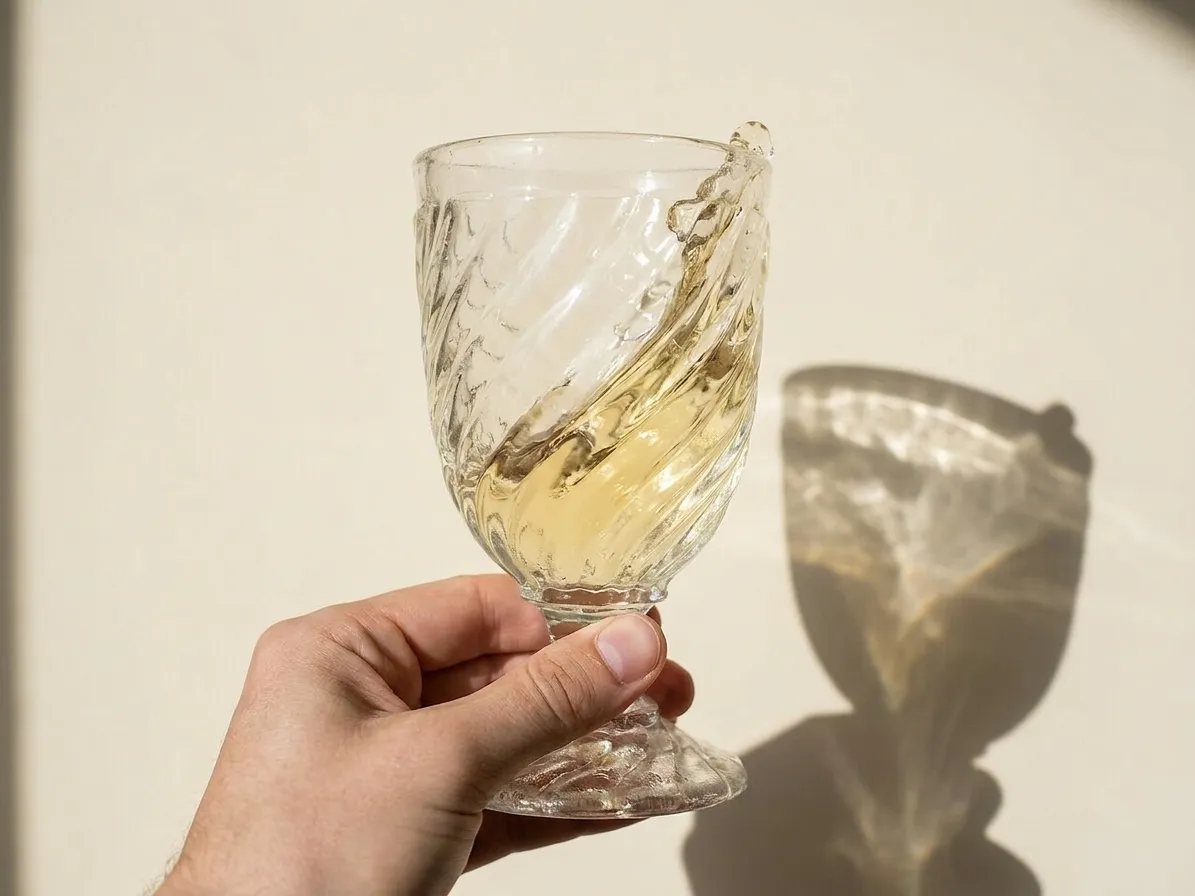
Look at it, tilt the glass against something pale and notice the colour and how deep it is. Swirl gently and smell — the swirl releases aroma and the smell is most of what you experience as taste. Take a small sip and let it sit for a moment before swallowing or spitting.
Then ask yourself three plain questions: is it sweet or dry, does it make my mouth water, does it dry my mouth out. Those three answers cover sugar, acidity and tannin, which is the entire structural vocabulary. Everything else — the fruit, the flowers, the flint — is description, and description is optional.
One more piece of etiquette that saves confusion: it is entirely normal to ask to try something again at the end. Palates shift over the course of a flight and a wine that seemed unremarkable first can read completely differently after five others. Anyone pouring will happily give you a second small taste of one you want to revisit, and asking signals interest rather than indecision. The same goes for asking what a wine costs by the bottle if you enjoyed it, which is information every room is happy to give and almost nobody requests.
Price tiers and what changes as you go up
Flights in this city run roughly fifteen to thirty-five dollars. At the lower end you are tasting the room's everyday wines, which are frequently the most enjoyable and are chosen to be drunk rather than admired. In the middle you get single-vineyard bottlings and older vintages. At the top you are usually paying for scarcity as much as for quality.
For a first flight, the cheapest one is the right choice, and not for budget reasons. Expensive wine is often built to be complex rather than immediately pleasurable, which makes it a poor teacher. Learn what you like on the everyday tier and then move up deliberately.
Rooms in Los Angeles that are good at this
The Eastside shops and small tasting bars around Highland Park and Eagle Rock, the working urban wineries in the industrial blocks near downtown, and the shop-plus-bar hybrids scattered across the city are all comfortable places to be a beginner. The tell is a room where the person pouring is behind a counter rather than across a table, and where the list is short.
Avoid, for a first visit, the seated reservation-only rooms with long lists and a formal service style. They are not unfriendly, but the format encourages you to keep quiet, and keeping quiet is the opposite of what a first flight is for.
Afterwards, which is where it sticks
Photograph the labels of anything you liked before you leave. This is the one habit that separates people who develop a palate from people who repeatedly enjoy wine and forget it, and it takes four seconds. A note on the photograph about why you liked it is even better.
Then buy one bottle. Not a case, not the expensive one — a single bottle of the thing you liked most, to open at home in a week. Tasting it again in an ordinary setting is what converts an afternoon out into something you actually know, and it is how everyone who is now confident about this got there.
Tags: #LAWine #WineTasting #Beginners #LosAngeles #WineFlight #TastingRoom #HighlandPark #ArtsDistrict #DrinkResponsibly #WineLovers #BarsAndNightsOut #DateNight #WeekendLA #WineGuide
Please drink responsibly. Must be of legal drinking age.
All trademarks are the property of their respective owners.
Ask Karpo first
Nervous about the first one? Ask Karpo for a beginner-friendly room near you and just turn up.