 Downtown LA Comedy Club Night Picker for a Team Outing
Bars & Nights Out

Fairfax Comedy Club Night Picker for Aspiring Comedy Writers
Learning to write comedy in LA? Pick a Fairfax or Melrose show by format, sit where you can watch the crowd, then walk past the old Farmers Market to debrief.
Every comedy writing class eventually says the same thing. Go and watch live comedy, as often as you can, and pay attention to what the room does. Reading scripts and watching specials only takes you so far. The shape of a joke only becomes clear when you hear a crowd breathe in, laugh, go quiet and laugh again. The streets around Fairfax and Melrose sit close to some of the most storied comedy stages in Los Angeles, which makes the area a perfect classroom. This comedy club night picker is for writers who want to treat a night out as study without losing the fun.
Decide What You Want to Learn
Start by choosing a focus for the night. Maybe you are working on openers and want to see how comics grab a room in the first thirty seconds. Maybe you struggle with endings and want to watch how strong sets build to a closer. You could be studying crowd work, callbacks, act-outs or the rhythm of a long story. A single focus turns a fun night into a useful one.
Writing partners can split the job. One watches structure and timing, the other watches the audience. Afterwards you compare notes and often find you saw two completely different shows. That conversation is worth more than any single joke, because it trains you to notice what usually slips by when you are simply laughing along.
Pick the Right Kind of Night
Different formats teach different lessons. A showcase with several short sets is perfect for studying openers and closers, since you see the same challenge solved many times in one evening. A headliner night shows you how a polished hour holds together, with recurring themes, slow builds and confident pauses. New material nights let you watch jokes that are still being shaped, which is the closest you will get to seeing a draft.
Workshop and sketch shows are worth adding to the rotation too. The neighbourhood has long been home to sketch and improv training, and watching performers who came up through that tradition teaches character, status and scene building in a way stand-up never will. Mixing formats across a month gives you a broader toolkit than seeing the same kind of show every week.
Sit Where You Can Watch the Room
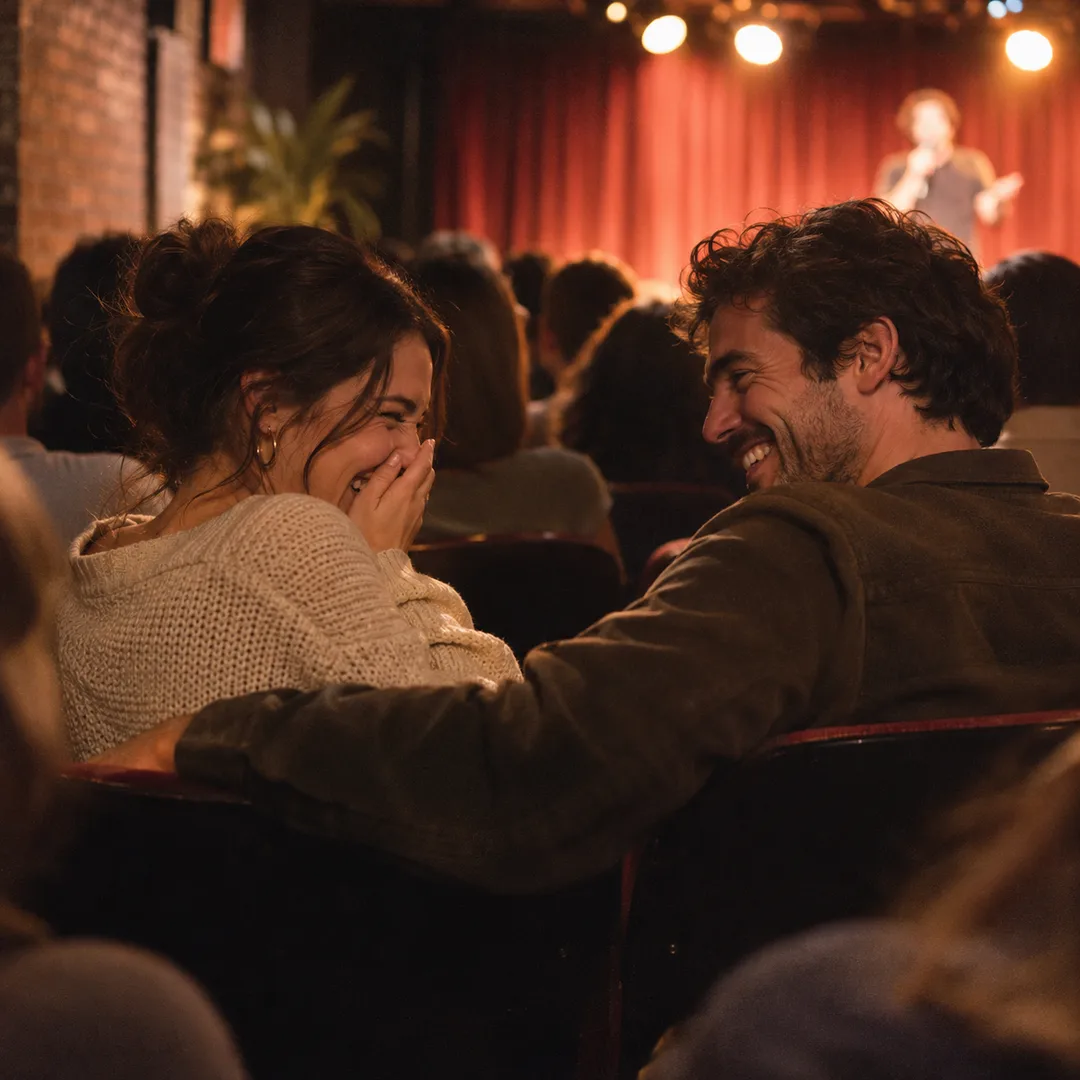
For study, the best seat is not the front row. Sit slightly to the side and a few rows back, where you can see both the comic and a good slice of the audience. Watching faces tells you when a premise has landed, when people are waiting for the turn and when a tag has gone one beat too far. That view is impossible from the very front, where all you see is the stage.
Keep it discreet. A small pad is fine if you write quietly between laughs, but many rooms ask that phones stay away during sets, and a glowing screen is distracting for everyone around you. Better still, try to memorise one or two observations per comic and write them down on the walk home. That habit sharpens your attention and keeps you present in the room.
What to Listen For
Listen for the economy of each line. Strong comics cut every word that does not move the joke forward, and you can often hear them tighten a phrase as the set goes on. Notice how quickly a premise is set up, how much time passes before the first laugh and whether the punchline sits at the very end of the sentence, where it usually works best. These details are the craft beneath the charisma.
Pay attention to recoveries too. Every comic bombs sometimes, and how they handle silence is one of the most useful things you can learn. Some acknowledge it with a quick line, some push straight into the next bit, and some turn the silence itself into a joke. Seeing that in person teaches you that a set is a living thing, not a script recited from memory.

Be a Generous Audience
Studying comedy does not mean sitting with arms crossed. The best way to learn is to be a good audience member first. Laugh honestly, clap for every act and give new comics the warmth you would want on your own first night. Comics feel a cold table instantly, and a room full of silent analysts makes a worse show for everyone, including you.
Avoid the temptation to talk shop during sets. Save the analysis for afterwards. Never heckle, never call out a joke you recognise from somewhere else and never try to join in. If you get a chance to speak with a comic after the show, keep it short and kind. A specific compliment on one line means more to them than general praise.
Walk Home Past the Old Market
The neighbourhood is ideal for a debrief on foot. Walk along Fairfax toward the historic Farmers Market and The Grove, or drift down Melrose past the late-night shop windows. The streets are flat and lively, and moving keeps the conversation going. This is where you swap the moments that stood out and the lines you wish you had written.
Make the walk part of the method. Each person names the best joke of the night, the clearest structural lesson and one thing they want to try in their own writing. Keep the list short. By the time you get home, you will have a few precise notes that are far more useful than pages of half-remembered jokes.
Turn the Night Into Pages
The lesson only sticks if you use it. Within a day, sit down and write a short bit using one technique you watched, whether it is a tighter opener, a callback at the close or a bold act-out. Do not copy material. Borrow the shape, not the words. Then read it aloud to your writing partner and see whether the structure works with your own voice.
Over a few weeks, these short exercises add up. You will start to hear rhythm in your own drafts, cut lines you would have kept before and build sets with clearer beginnings and endings. Going out to watch comedy becomes part of a routine rather than a treat, and Fairfax becomes the neighbourhood where your writing improves one show at a time.
Plan Study Nights With Karpo
Tell Karpo APP that you are learning to write comedy, what you want to focus on and which nights you are free. Karpo can suggest comedy shows around Fairfax and Melrose that fit your goal, from showcases and new material nights to sketch and improv, plus somewhere nearby to grab food and talk afterwards. Share the plan with your writing partner and rotate formats each week.
Karpo will not critique your jokes or save you a seat, but it can help you build a steady habit of watching live comedy with purpose. That is the real value of this comedy club night picker. Choose a focus, pick the right format, sit where you can see the room and turn every walk home into a writing session, and the stage will start to feel a little closer.
Ask Karpo for more information.
Keep reading
- Downtown LA Comedy Club Night Picker for a Team Outing
 Santa Monica Comedy Club Night Picker for a Shy Date
 Silver Lake Comedy Club Night Picker for a Solo Newcomer