Typing wine tasting near me into a search bar returns wine bars with by-the-glass lists and prix-fixe menus, but the East Village's best-value tastings happen at retail shops on fixed weeknights. These shops open bottles for free, pour samples at a counter, and apply a same-day discount if you buy. Others operate as hybrid spaces where you can drink a retail bottle for a corkage fee that undercuts restaurant pricing. The model is learn-while-you-shop, not lounge-and-linger, and the savings are measurable.
Karpo maps every shop-with-seating and Friday-night pour schedule in the East Village, then builds a walk that puts you at the right counter at the right hour. Save addresses and opening times for the venues in this article.
Friday-night free pours at retail shops
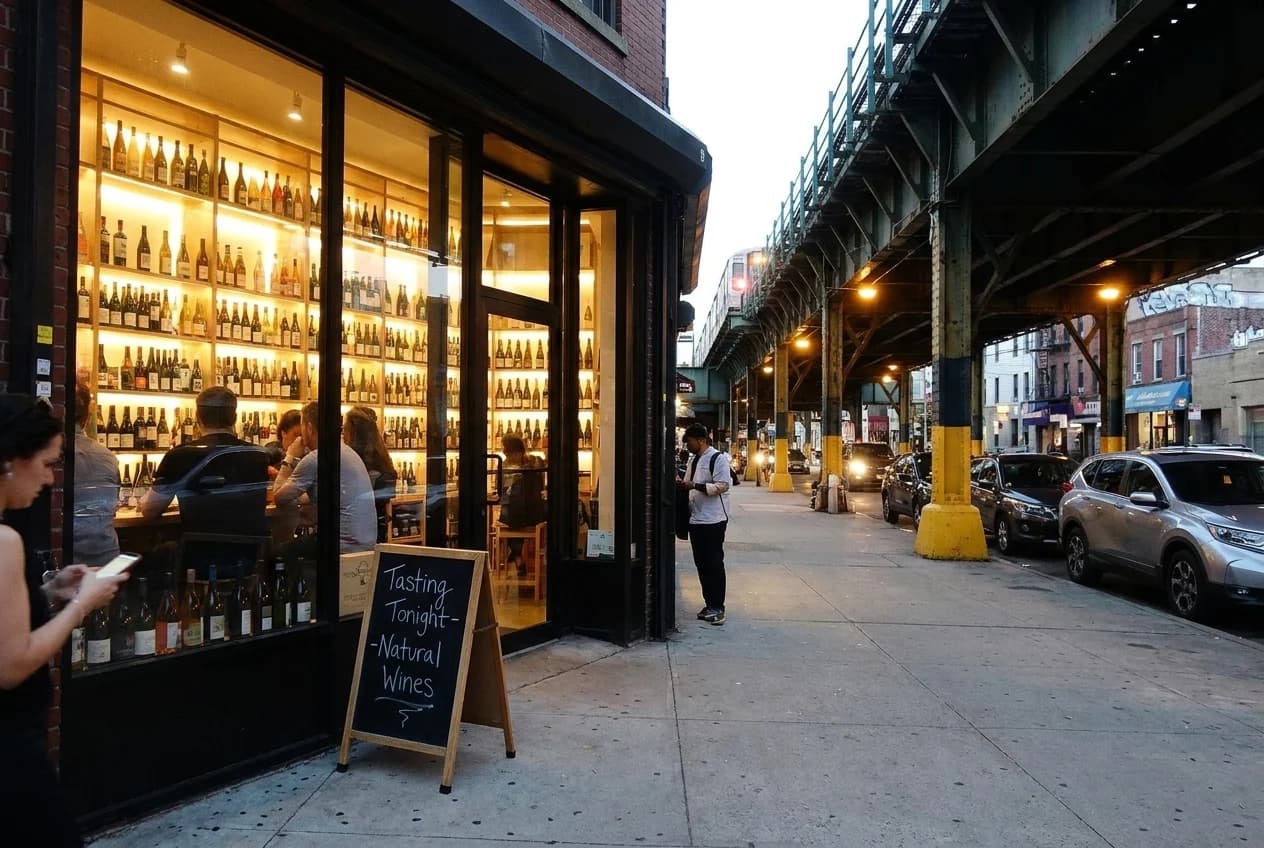
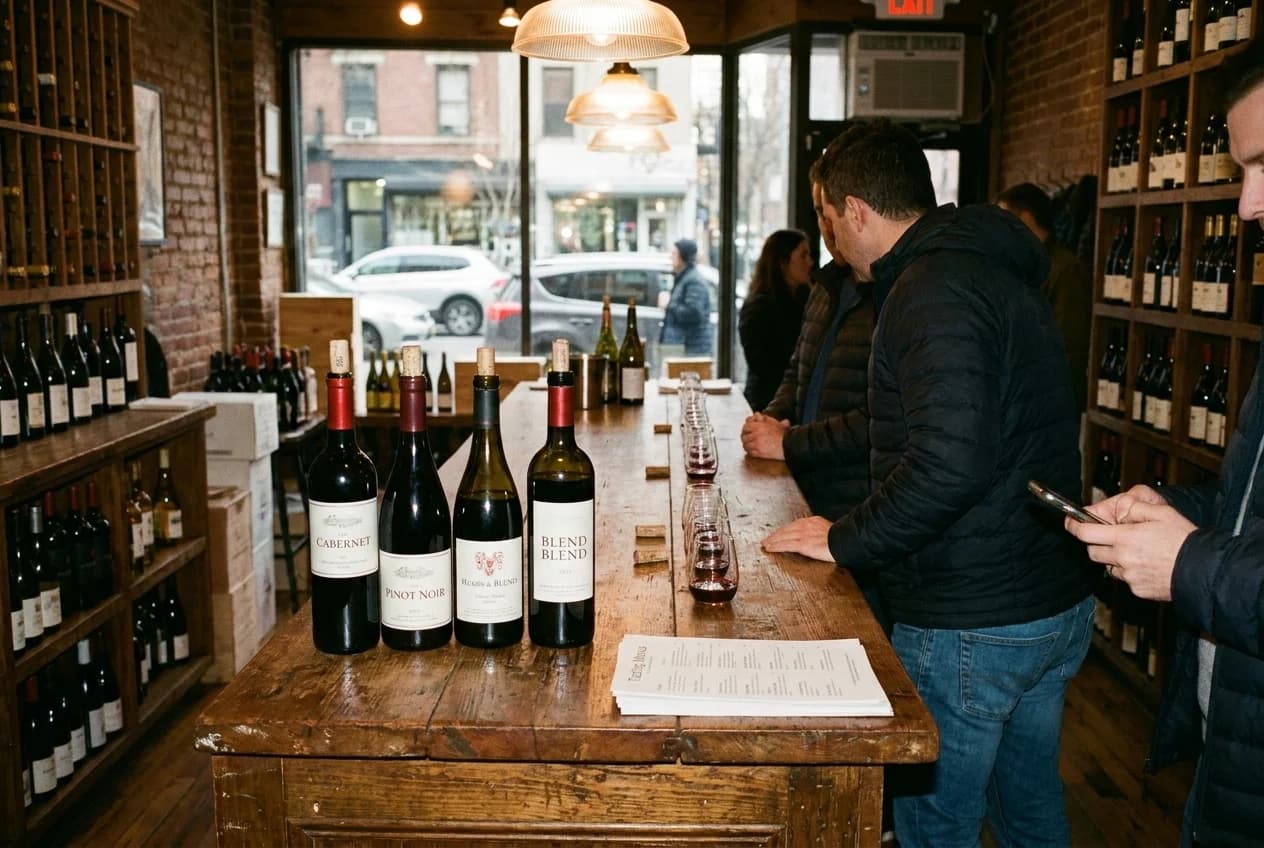
Discovery Wines at 16 Avenue B runs tastings every Friday from 6 to 8 p.m. The shop has been pouring since 2004, and the format is unchanged: four to six bottles opened on a counter near the magnums, no ticket, no reservation. The staff will tell you what is being poured and why it is in stock. You taste, you ask questions, you buy a bottle that day and the discount is fifteen per cent. The shop is open Sunday and Monday from 1 to 8 p.m., Tuesday through Saturday from 1 to 9 p.m. Temperature-controlled delivery is free in Manhattan and Brooklyn on orders over three hundred dollars pre-tax.
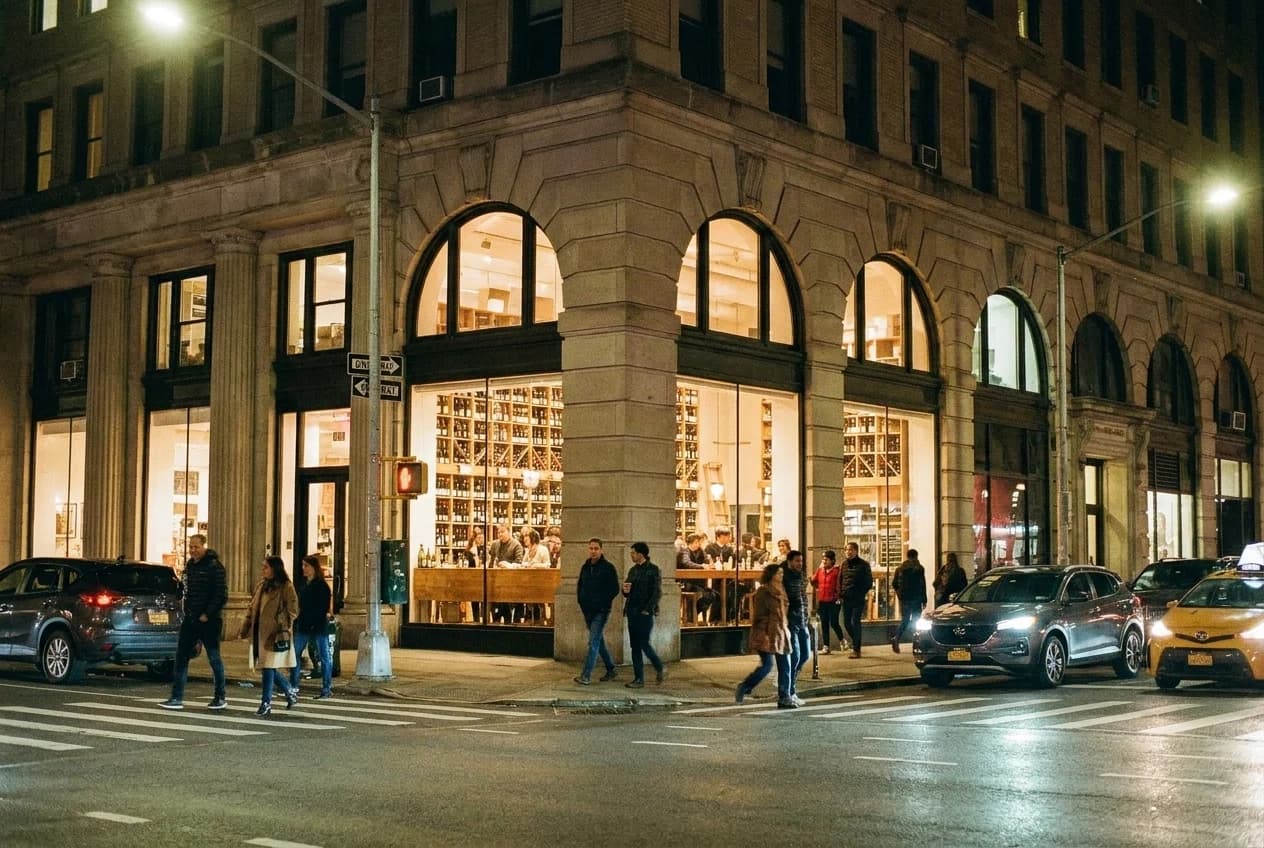
Astor Wines & Spirits at 399 Lafayette Street—on the corner of East 4th Street—runs free tastings most weekdays and Saturdays. The schedule changes weekly, so the company sends email alerts and posts the calendar on its website. The format is the same as Discovery: stand at a counter, taste three to five wines or sakés or spirits, ask the buyer who chose them, and take fifteen per cent off if you purchase the same day. The shop occupies the 1885 De Vinne Press Building, a New York City landmark, and houses over five thousand bottles. The Cool Room holds wines at 57 degrees Fahrenheit regardless of price; the decision to store a bottle there is based only on temperature sensitivity.
St. Marks Wine and Liquor at 16 St. Marks Place posts its free tasting schedule on its website. The shop is located between Second and Third Avenues, close to the Astor Place number 6 train and the Eighth Street R train. The storefront has been serving the East Village for years, and the rotating tasting events give customers a chance to sample before committing to a full bottle. Check the website or call ahead for the current week's schedule, as times and featured wines vary.
Retail-plus-corkage hybrid rooms
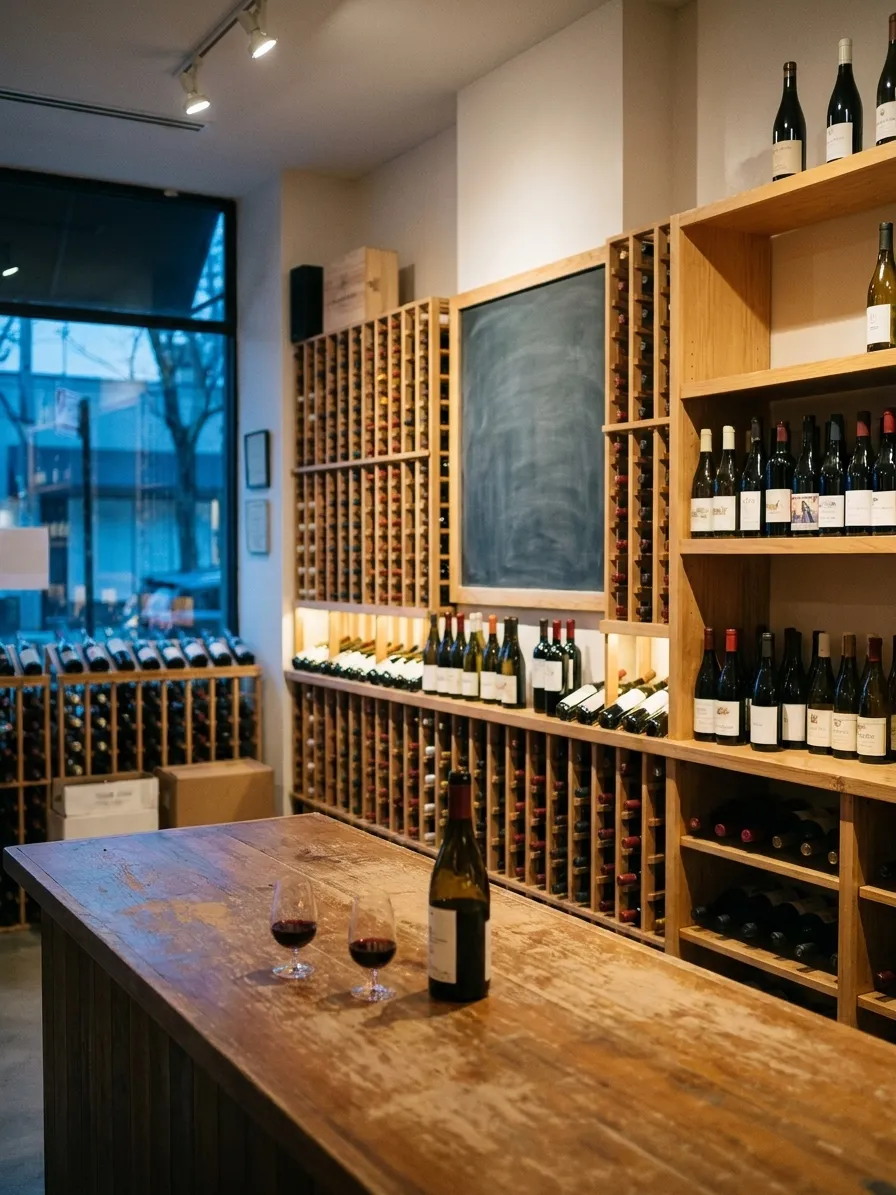
Alphabet City Wine Co. at 100 Avenue C, between 6th and 7th Streets, is a retail shop that also operates as a drinking space. The owners stock small-production bottles at low retail prices. On Friday nights the shopkeepers play records on a vintage stereo and pour free tastings at a communal wood table. The shop is open Monday through Thursday from 3 to 10 p.m., Friday and Saturday from 1 to 11 p.m., and Sunday from 1 to 8:30 p.m. If you buy a bottle from the shelves, you can drink it in the shop for a corkage fee that is typically lower than the markup at a restaurant. The staff will confirm the fee at the counter before you open the bottle.
Brix Wine Shop at 170 Avenue B has operated since November 2007. The shop opened with twenty handpicked wines and now carries over three hundred bottles of wine and spirits, plus cheese. The stated mission is quality wines at fair prices in a welcoming atmosphere. Hours are Monday through Thursday from noon to 9 p.m., Friday and Saturday from noon to 10 p.m., and Sunday from noon to 8 p.m. The shop does not advertise a formal corkage programme on its website, but the counter staff will explain the house rules if you ask about drinking a purchase on the premises.
Amor y Amargo at 443 East 6th Street is a bitters-and-amaro bar with a handful of seats, all stirred and spirit-forward cocktails, no shakers. While not a wine shop, it operates on a similar principle of expertise-driven retail: the bartenders are deep specialists in a narrow category, and every drink is an education. The bar reopened at its original East 6th Street address in January 2025 after a renovation. It is a useful model for understanding how the East Village supports retail spaces that double as tasting rooms—whether the product is wine, amaro, or small-batch spirits.
Structured classes with fixed prices
Astor Center, on the floor above Astor Wines & Spirits at 399 Lafayette Street, opened in 2008 and offers classes in wine, spirits and cocktails in facilities purpose-built for tasting education. The calendar lists single-session classes with titles such as Wines of the Rhône, The Elements of Wine, Sparkling Wine Uncorked, and The Wonderful World of Rosé. Each class runs for a fixed length—typically ninety minutes or two hours—and includes a set number of poured samples with instruction from a buyer or invited expert. Tickets are sold in advance, and prices are posted on the event page. A single class costs less than a full tasting menu at a wine-focused restaurant, and the format is lecture-plus-tasting rather than free-form conversation.
The value proposition is simple: you pay a one-time fee, you taste six to ten wines in a controlled sequence, and you leave with tasting notes and a handout that names the producers and explains what you tasted. If you want to replicate a wine at home, you walk downstairs to the shop and buy the bottle at retail. The class fee does not include a retail discount, but it does include the cost of opening and pouring wines that might retail for thirty to one hundred dollars per bottle.
How to read a tasting flight menu
When a shop hands you a tasting menu—whether at a Friday-night pour or a paid class—the format is consistent. The menu lists the wines in the order you will taste them, lightest and driest first, then moving to fuller body, higher alcohol, or sweeter residual sugar. Each entry includes the producer name, the appellation or region, the vintage if relevant, and sometimes the grape variety. If the menu includes tasting notes, they describe the wine's structure and flavour profile, not the story of the winemaker.
At a free tasting, the pour is typically one to two ounces per wine, enough to evaluate the nose and the palate but not enough to constitute a full glass. At a paid class, the pour may be larger—two to three ounces—because the ticket price covers the cost of the bottles. In both cases, spit cups or dump buckets are provided, and you are not expected to finish every pour. The goal is to compare the wines, not to drink your way through the flight.
If the menu lists a retail price next to each wine, that price is what you would pay to take a full bottle home. If the menu lists a corkage fee, that fee is what you would pay to open and drink the bottle in the shop instead of at home. The arithmetic is straightforward: retail price plus corkage fee equals your total cost to drink the wine on the premises. Compare that total to the price of a single pour at a wine bar, and the shop-with-corkage model is almost always cheaper.
What to ask the counter staff
At a retail-shop tasting, the staff are buyers, not sommeliers. They chose the wines because they believe those wines are worth stocking, and they will explain why. Ask what is typical for the appellation, what is unusual about the producer, or what food the wine is meant to accompany. Ask whether the wine needs decanting, how long it will hold after opening, or whether it will improve with a year of cellar age. Do not ask for a wine that tastes like another wine; ask instead what structural qualities you prefer, and the buyer will point you to a producer who delivers them.
If you are drinking a bottle you bought at retail, ask the staff to confirm the corkage fee before you open it. Ask whether glassware is provided or whether you should drink from a tumbler. Ask whether you can take the unfinished bottle home in a sealed bag or whether New York open-container laws require you to finish or forfeit it. These are operational questions with factual answers, and the staff will give you those answers without judgment.
Practical notes
Discovery Wines, 16 Avenue B, holds free tastings every Friday from 6 to 8 p.m. and offers a fifteen per cent same-day discount on poured wines. Astor Wines & Spirits, 399 Lafayette Street at East 4th Street, runs free tastings most weekdays and Saturdays; check the website calendar for the schedule and sign up for email alerts. Astor Center, on the floor above the shop, sells tickets to structured wine classes at fixed prices. Alphabet City Wine Co., 100 Avenue C between 6th and 7th Streets, pours free tastings on Friday nights and allows on-premise drinking of retail purchases for a corkage fee. Brix Wine Shop, 170 Avenue B, is open Monday through Thursday until 9 p.m., Friday and Saturday until 10 p.m., and Sunday until 8 p.m. St. Marks Wine and Liquor, 16 St. Marks Place, posts its free tasting schedule on its website and is close to the Astor Place number 6 train and the Eighth Street R train.
Tags: #EastVillage #WineTasting #DiscoveryWines #AstorWines #AlphabetCityWineCo #BrixWineShop #RetailWineShops #CorkageFee #WineClasses #FridayTastings #WineEducation #NYCWine #AvenueBWine #AstorCenter #FreeWineTasting
Please drink responsibly. Must be of legal drinking age.
All trademarks are the property of their respective owners.
Ask Karpo first
Ask Karpo to map the East Village wine shops that run Friday-night tastings, then build a walk that puts you at each counter during pour hours. Save the addresses and opening times for shops that charge corkage fees for on-premise drinking, and compare those fees to restaurant pricing. Karpo will also show you the subway stops closest to each shop and the walking time between them.