The door sticks a little in winter. A bell rings overhead—brass, not electronic—and the smell hits first: motor oil, sawdust, the faint metal tang of cut keys still warm from the machine. This is not a hardware store that became something else. It's a hardware store that quietly became a record of the neighborhood itself, one framed photograph and one hand-built shelf at a time, all of it still selling screws and paintbrushes on a corner of Windsor Terrace that has outlasted three landlords and two recessions.
The Archive Above the Aisles
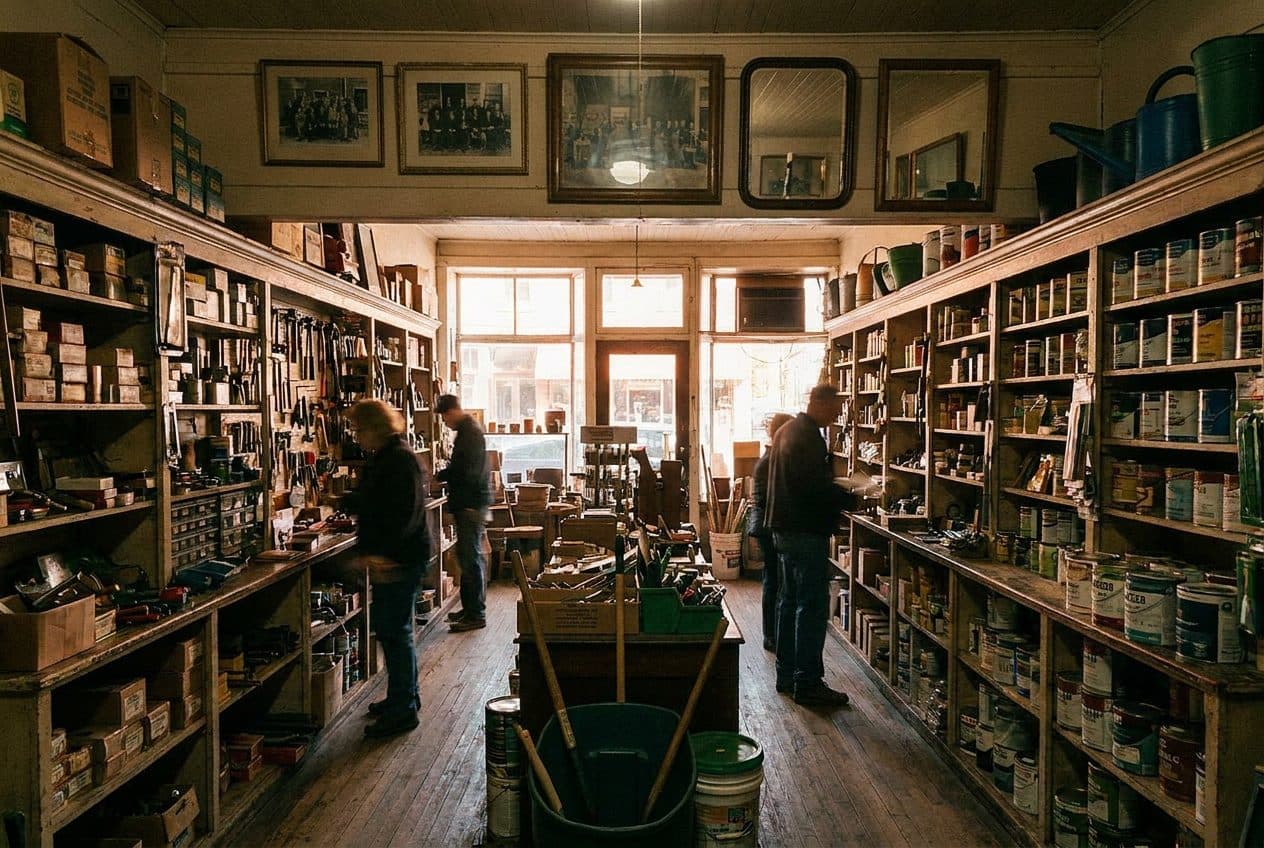
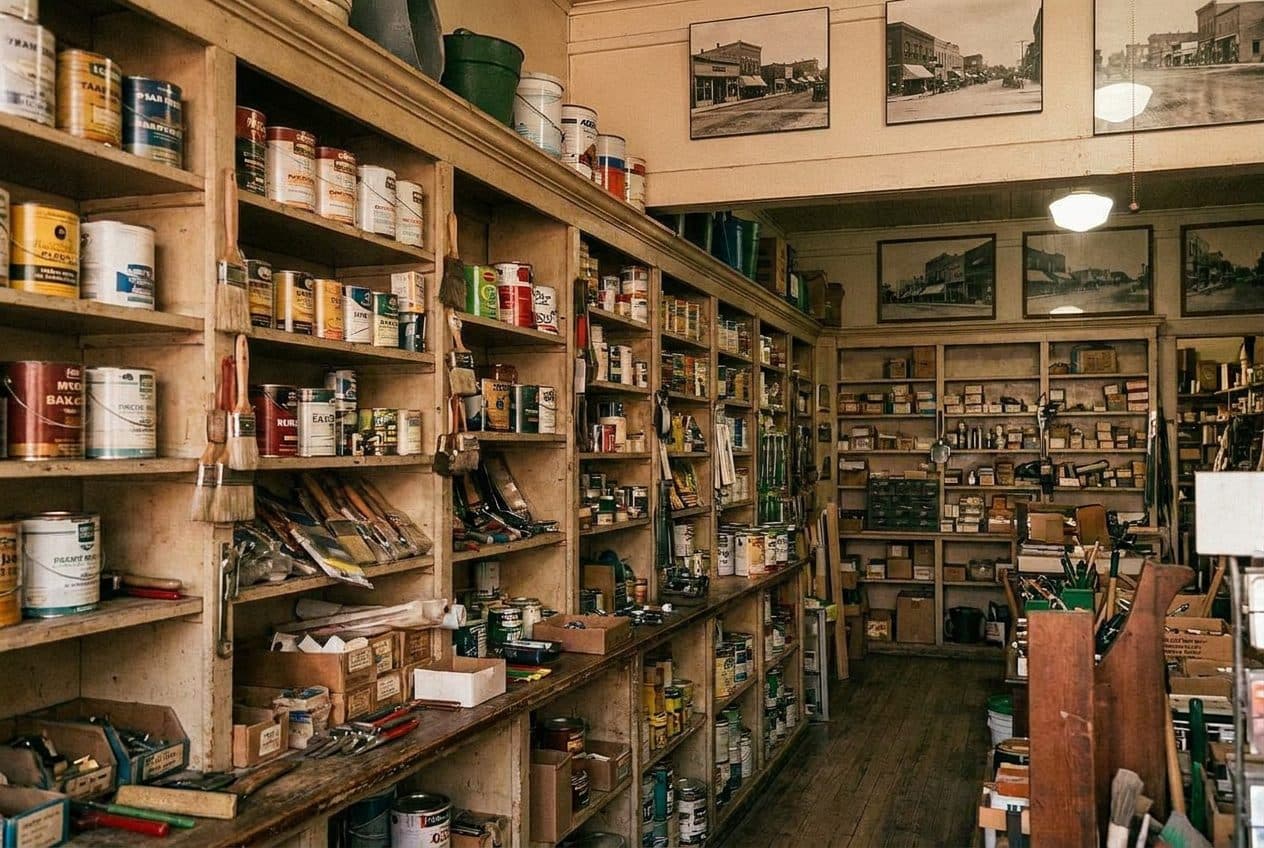
The photographs start about seven feet up, just above eye level if someone's reaching for a box of nails. Black-and-white, matted in simple frames, dated in pencil on the back: 1962, 1964, 1968. They show Prospect Park West before the bike lane, the old movie theater that became a bank that became a CVS, storefronts with awnings in scripts no one reads anymore. The owner mounted them himself, drilling into the original plaster, and he's been adding to the collection for forty years. No formal curation, no artist statement on the wall. Just the accumulated visual memory of a neighborhood that keeps changing around a shop that hasn't moved an inch. First-timers often miss them entirely, focused on finding the right size washer. Regulars know to look up.
What the Space Actually Does
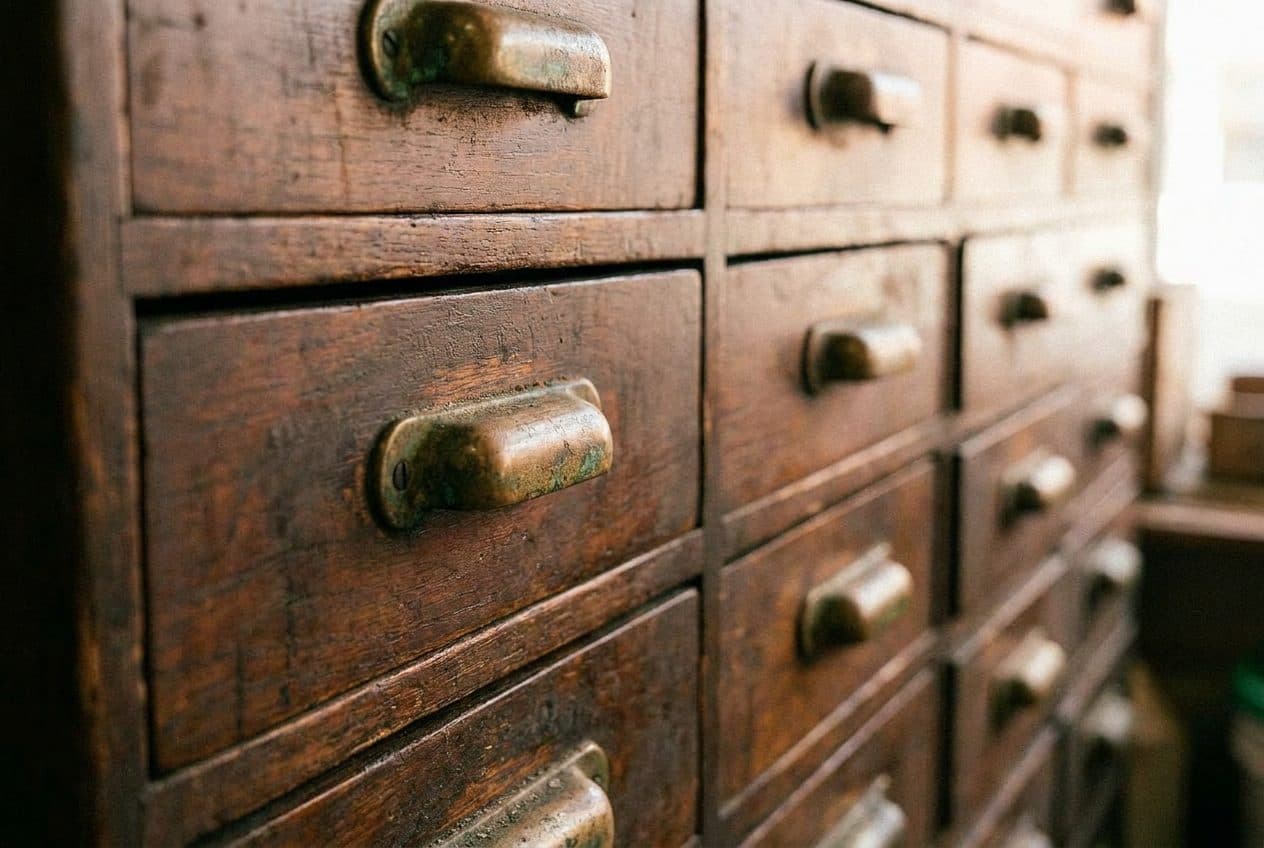
This is a working hardware store first—the kind where someone behind the counter knows the difference between a carriage bolt and a lag screw without looking it up. The layout is narrow and deep, aisles formed by floor-to-ceiling shelving the owner built in sections over decades, each one slightly different in joinery as his skill improved. Paint chips are still organized by brand in wooden drawers near the front. The key-cutting station sits by the window, a 1970s machine that still works better than the digital models, and there's a small selection of household goods in the back: brooms, light bulbs, the kinds of things people realize they need at eight-thirty on a weeknight. The crowd skews local—contractors who've been coming since the nineties, young families who moved in during the past decade, older residents who remember when this block had three other hardware stores and none survived.
The Rhythm of Discovery
The photographs reveal themselves slowly. Someone walks in looking for picture hooks, scans the wall, and realizes the wall itself is pictures. The chronology isn't strict—a 1975 shot of a snowstorm sits next to a 1990 street fair—but the geography is precise. Every image was taken within a six-block radius. Some show the store itself in earlier incarnations: different awning, different paint, same location. The owner doesn't narrate unless asked, and even then he keeps it brief. A question about a particular photo might get a two-sentence answer and a return to ringing up a transaction. The effect is cumulative. By the third or fourth visit, the space starts to feel like a double exposure: the present-day hardware run and the layered past of the neighborhood happening simultaneously, separated only by the height of a shelf.
The Crowd and Its Tells
Morning brings the contractors—the ones who know to call ahead if they need something pulled from the basement stock. Mid-afternoon is quieter, sometimes just the owner and the low hum of the refrigerator case stocked with cold drinks, a concession added sometime in the 2000s. Late afternoon and early evening pull in the after-work crowd, people who need a spare key cut or forgot to buy sandpaper for a weekend project. Weekends are busiest, a steady flow that peaks around ten-thirty on Saturday mornings. The regulars have a shorthand with the counter staff—a nod, a "the usual?", transactions that take thirty seconds because both sides know the drill. Those who find it early, before they've lived in Windsor Terrace long enough to have a usual, often linger near the photographs, piecing together the visual argument the walls are quietly making about continuity and change.
The Shelves as Structure
Every shelf was built on-site, fitted to the specific dimensions of the room, which is why the store feels less like a retail space and more like a very organized workshop. The wood is pine, mostly, stained dark and showing forty years of wear in the high-traffic sections. Some shelves are deeper than others, adjusted to fit the inventory that actually moves: more space for electrical supplies, less for the specialty fasteners that turn over slowly. The owner never hired a contractor for the buildout. He did it in stages, closing early a few nights a week in the early years, adding sections as the business grew. The result is a space that feels handmade because it is, every joint and bracket a decision made by someone who had to live with it. There's no wasted space, no decorative flourishes. Function dictated form, and form became its own kind of record.
The Non-Obvious Details
The key machine has a wooden tray underneath, decades of brass shavings swept into a small pile that gets emptied once a month but never fully clears. The owner keeps a binder behind the counter—a handwritten inventory system that predates the computerized register by two decades and still gets updated in parallel, a backup in case the power goes out. And the photographs aren't random acquisitions. Most came from estate sales and neighborhood cleanouts, images the owner bought or was given when families moved or older residents downsized. A few are his own, taken with a camera he no longer owns. One shot, tucked in the back near the brooms, shows the interior of the store in 1985, the shelves half-empty during a slow season. It's the only photograph in the collection that faces inward instead of outward, a reminder that the archive includes the archivist.
Practical Notes
The store sits on the Windsor Terrace side of Prospect Park West, a few blocks south of the main commercial stretch near Prospect Avenue. The F and G trains get close enough—Seventh Avenue is the nearest stop, about a ten-minute walk west. Hours run roughly nine to six on weekdays, shorter on Sundays, closed Mondays. No appointment needed, no website to check. Cash works, cards work. The owner still cuts keys by hand while customers wait, a process that takes three minutes if the blank is in stock. For anyone planning a project, calling ahead about specialty items saves a trip—the phone number is listed, and someone usually picks up during business hours. This is not a place that does same-day delivery or online ordering. The transaction requires showing up.
Tags: #TheOddEdit #WindsorTerrace #BrooklynHardware #NeighborhoodArchive #LocalHistory #IndependentRetail #ProspectParkWest #SmallBusinessNYC #VintagePhotography #HandmadeSpaces #BrooklynCommunity #WorkingHardware #NYCLocal #HiddenBrooklyn #EvergreenShops
Sources consulted: atlasobscura.com · timeout.com · nytimes.com
All trademarks are the property of their respective owners.
Ask Karpo first
Want to know what the 1962 photos show and which original tools are still for sale?
Ask Karpo for the store's hours and the story behind the framed block photos before you head out.