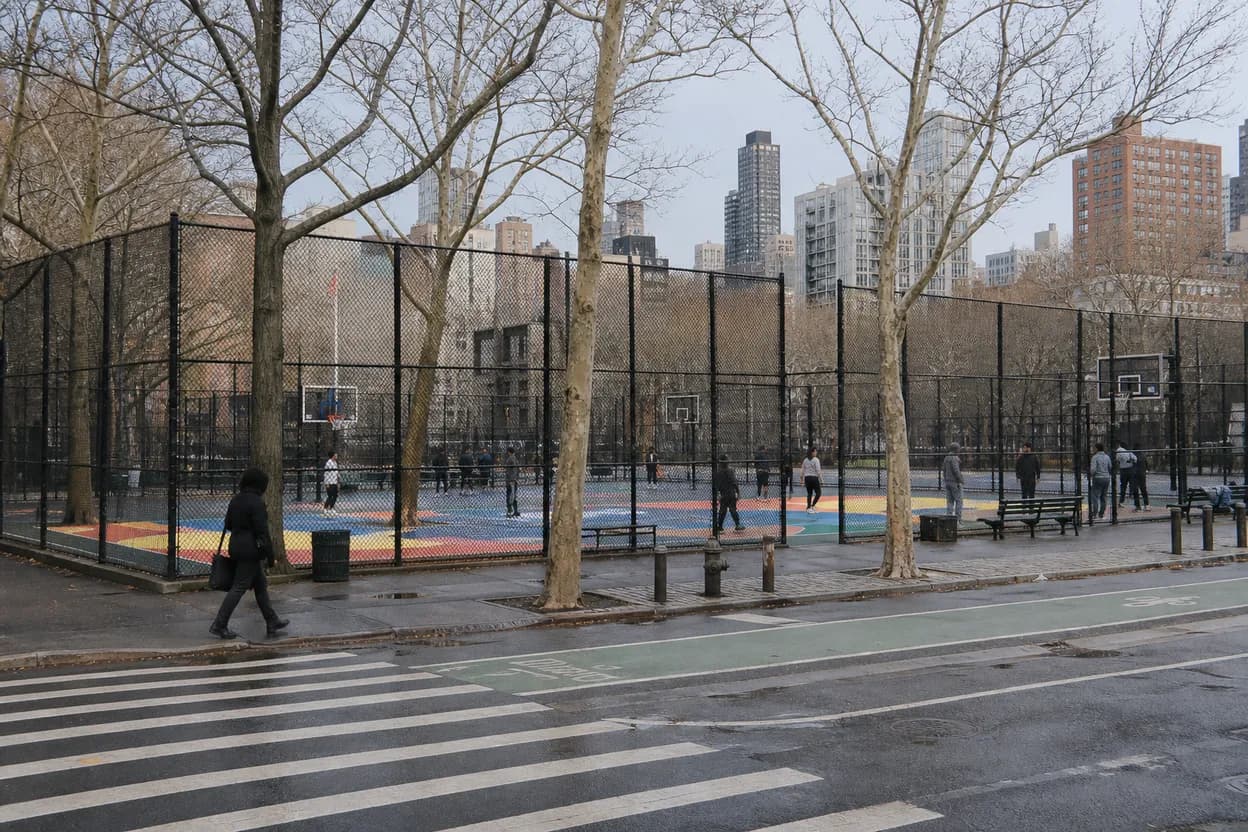
Sara D. Roosevelt Park is one of those Lower East Side spaces that works best when you already know the rhythm: arrive with a ball, a backup plan, and enough flexibility to handle crowding. For a player searching enes kanter-adjacent NYC context, the useful question is not hype but access. This park sits at Chrystie and Grand Streets, near Chinatown and the Delancey-Essex transit complex, so it can fit a solo afternoon loop without turning into a long project. The value here is practical: a public court in a dense neighborhood, with enough nearby activity to make the trip worth the effort.
Want the fastest way to turn a Lower East Side court hunt into a clean afternoon run? Text Karpo for the latest NYC route and permit check before you head to Sara D. Roosevelt Park.

Chrystie and Grand Streets put you in the right zone
Start by treating Sara D. Roosevelt Park as a neighborhood court stop, not a destination built around one marquee game. NYC Parks places the park at Chrystie and Grand Streets in Manhattan, which makes it easy to fold into a Lower East Side walk from Chinatown or the Delancey corridor. That matters for a solo player: you can arrive, check the scene, and decide whether the court is worth your time before you have committed to a long trip.
The tradeoff is density. A park in this part of Manhattan can be active, which is good for pickup but bad for certainty. If you need uninterrupted play, assume you may have to wait or move on. For an active afternoon, though, that same density helps: it creates more foot traffic, more possible runs, and more nearby exits if the court is full or the first look feels off.
Delancey St/Essex St is the simplest transit fallback
The cleanest transit anchor is the Delancey St/Essex St area. MTA Bus Time lists the DELANCEY ST/ESSEX ST stop with B39 and B106 service, which is enough to make a straightforward approach plan without guessing. If you are coming in from another borough or crossing town, this is the kind of stop that keeps the trip short and the last-mile walk manageable. In practice, that means less friction and more time on court.
Do not build your day around a single service pattern unless you have checked it again right before leaving. New York transit changes enough that a route that looks fine at noon can feel messy by late afternoon. The backup logic is simple: use the MTA stop as a transit anchor, then keep one alternate approach in mind if your first bus is slow or the court looks too crowded to justify waiting.
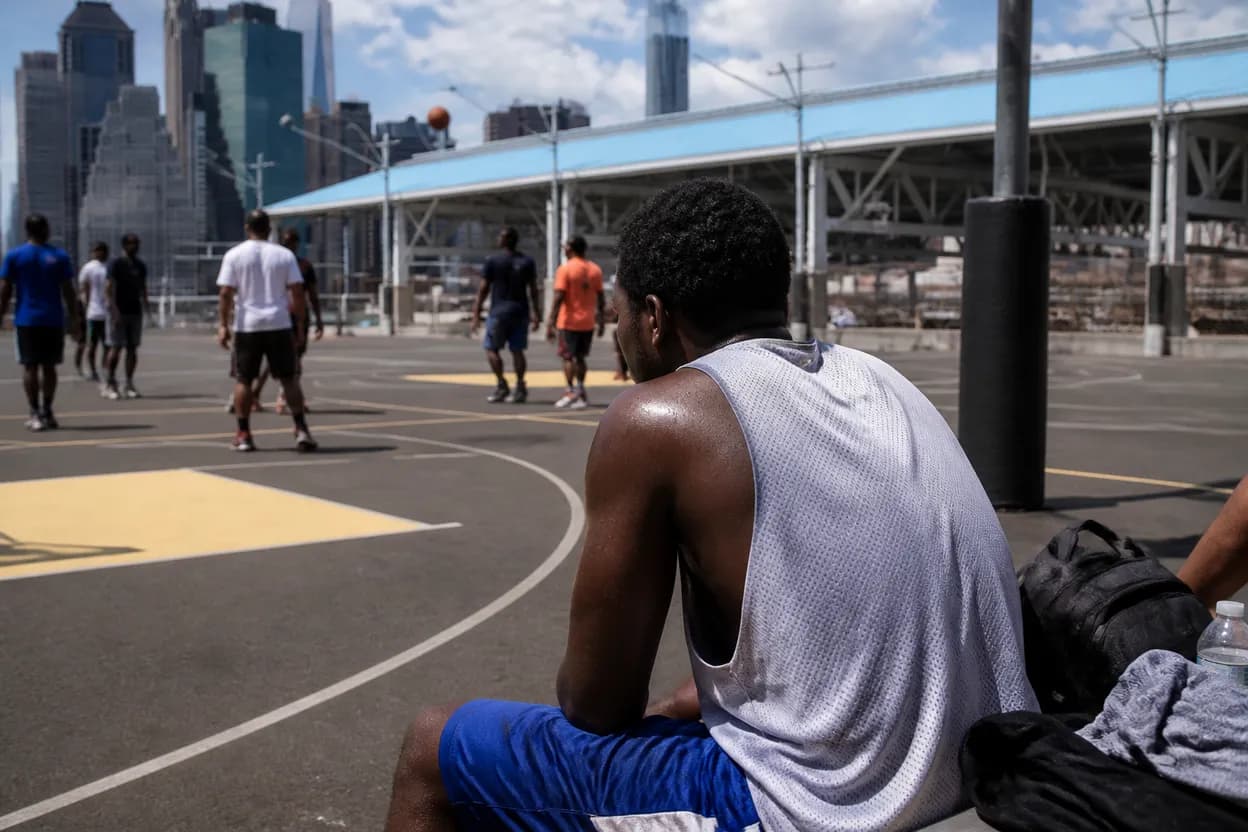
M'Finda Kalunga Garden changes the feel of the park edge
One reason this park reads as a hidden-gem stop rather than a generic court is the surrounding character. NYC Parks identifies M'Finda Kalunga Garden inside Sara D. Roosevelt Park, and the site carries a strong community history tied to the Lower East Side and Chinatown edge. That context matters because it affects how you move through the park: keep your footprint light, stay aware of others using the space, and treat the area as shared civic ground.
For basketball, that means the right pace is steady, not aggressive. A solo player can warm up, read the space, and then decide whether to stay for a run or use the visit as a scouting trip. The failure mode is obvious: if you arrive expecting a private-feeling gym experience, you will be disappointed. If you arrive expecting a public neighborhood park with layered use, the trip makes sense.
NYC Parks permit rules matter when the run stops being casual
If you are just shooting around informally, the park framework is different from an organized league event. NYC Parks says field and court use for each group of players must be covered by a permit, and it also maintains a permit request system and a field-and-court availability map. That distinction is the one to keep straight: casual public use when available versus organized or reserved use when you need control over time and space.
This is where hidden-court planning gets practical. If your visit is a solo workout, you can stay flexible. If you are bringing a group, running drills, or expecting a fixed window, verify the permit path before you go. The backup plan is not complicated: if the main court is occupied or permitted, shift to another public court nearby rather than forcing a contested setup.
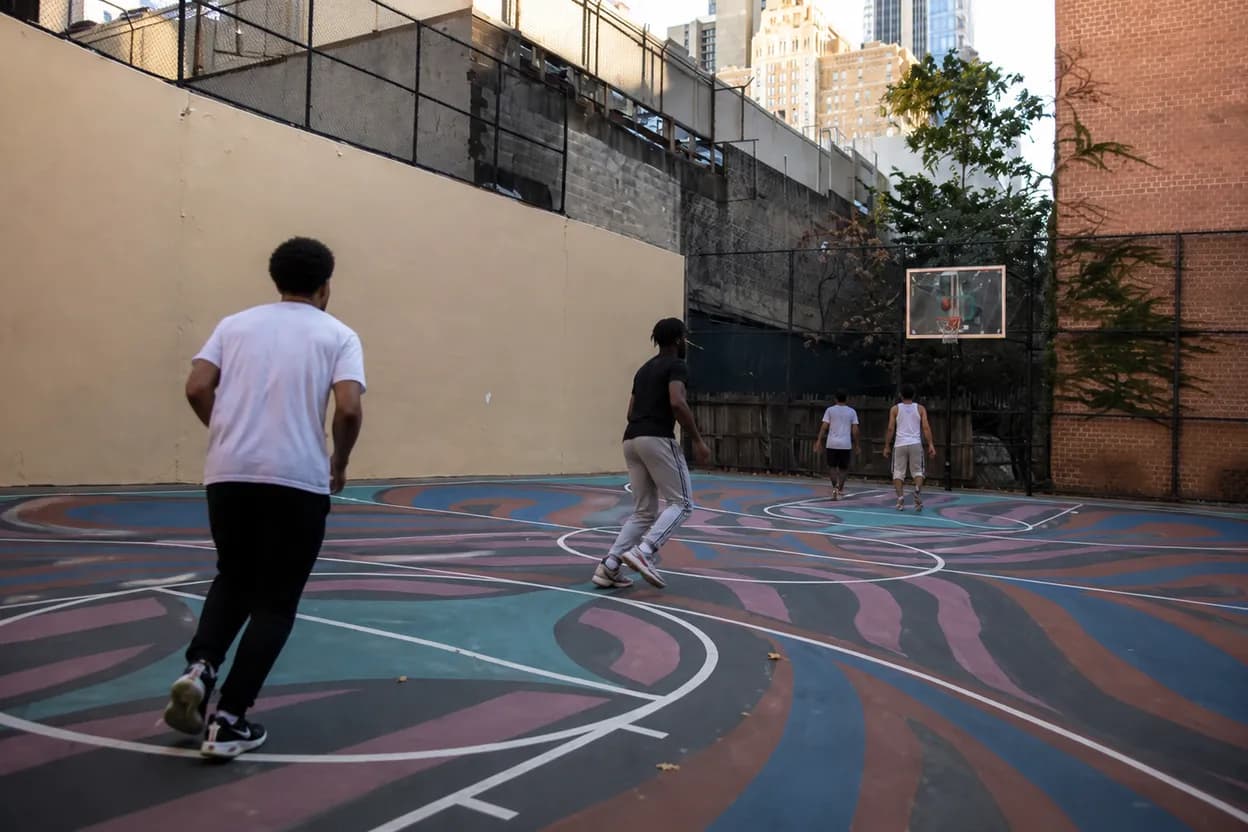
Lower East Side afternoon timing works best when you stay loose
A mild afternoon is a good window for this part of Manhattan because it gives you daylight without forcing a rushed start. That helps with a court like this, where you may need a short read on traffic, surface conditions, and whether there is an open run. The best users here are people who can absorb a little uncertainty and still get a useful session out of a thirty- to forty-five-minute stop.
The pacing tradeoff is that a later arrival may bring more neighborhood activity, while an earlier visit may be easier for warmups and solo shooting. Neither is universally better. Choose based on what you need from the session. If the point is to actually play, not just check a box, keep your first objective modest: one clean look at the court, one backup option, then make the call.
Grand Street gives you a simple backup if the court is full
When Sara D. Roosevelt Park is busy, the smartest move is usually to treat the visit as one option in a small Lower East Side circuit. The surrounding street grid makes that workable, and the neighborhood has enough density that a second stop does not feel like a detour. That matters on a solo afternoon, because the time cost of waiting can exceed the value of staying put.
This is also where verification beats assumption. A court that looks available from a distance may be tied up by pickup, a league, or another public use pattern you cannot predict from the sidewalk. If the first look fails, do not overthink it. Move to your backup, check for open play there, and keep the day moving instead of trying to force one location to fit every use case.
Check the park page before you leave and close the loop on arrival
The final move is to verify instead of assume. NYC Parks’ Sara D. Roosevelt Park pages confirm the park identity, location, and ongoing public use, while the permit pages set the rulebook for anything organized. That is enough to make a good same-day decision: confirm the park, confirm your transit path, confirm whether you are playing casually or reserving space, then go. This keeps the trip grounded in real conditions rather than a search result.
For a city guide like this, the last check should happen right before departure. Reconfirm the park page, recheck the MTA stop, and if you are bringing others, recheck the permit requirement. That final verification action is the difference between a useful Lower East Side run and a wasted cross-town trip. If anything looks off, use the backup court or reschedule rather than gambling on a bad arrival.
Tags: #AskKarpo #BeforeYouGo #NYC #LowerEastSide #Basketball #PublicParks #HiddenGems #Streetball #Manhattan #Transit #SaraDRooseveltPark #CourtCheck #NYCparks #NYCGuide
Sources consulted: Source 1: php1-84.nycgovparks.org · Source 2: php1-84.nycgovparks.org · Source 3: php1-84.nycgovparks.org · Source 4: bt.mta.info
All trademarks are the property of their respective owners.
Ask Karpo first
Tell Karpo your date, group size, budget, and starting point. We’ll check current access, timing, transit, and the cleanest New York City plan for Sara D. Roosevelt Park Basketball Courts before you head out.